Quick Verdict: The Telluride Goes Turbo-Hybrid
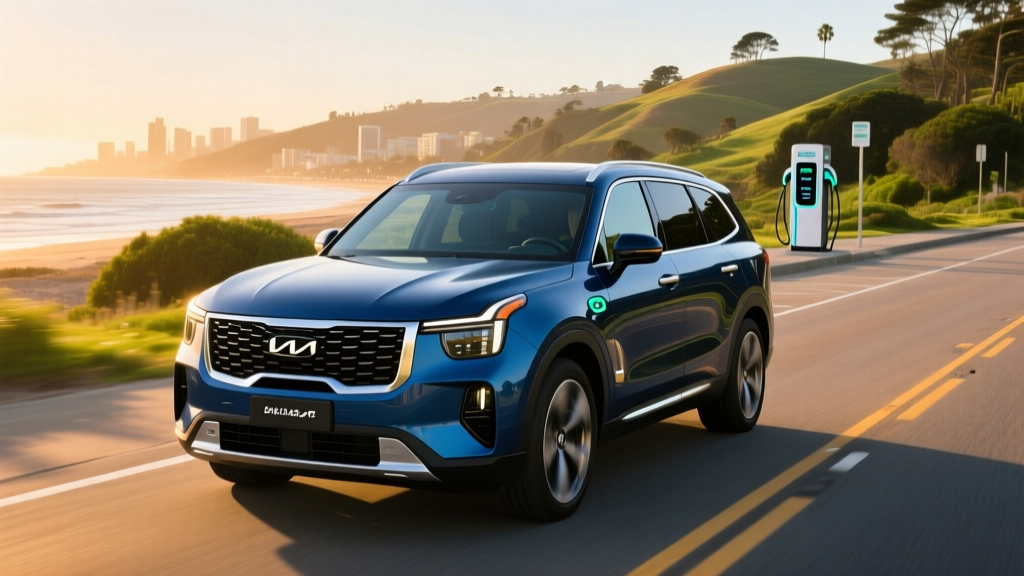
For years, the Kia Telluride has dominated the three-row SUV segment with its upscale interior, practical packaging, and value-oriented pricing. The 2026 Kia Telluride Turbo Hybrid brings a turbocharged 2.5-liter four-cylinder paired with an electric motor to one of America's best-selling family haulers — promising meaningful fuel savings without sacrificing the cargo space and towing capability buyers expect.
This is a conventional hybrid (HEV), not a plug-in hybrid. You never plug it in. The battery charges through regenerative braking and the engine, and it delivers fuel economy gains across all driving conditions — particularly in city traffic where the electric motor does the heavy lifting at low speeds.
Here's everything you need to know about real-world efficiency, powertrain specs, pricing, and whether this hybrid SUV fits your garage.
HEV vs PHEV: What the Telluride Turbo Hybrid Actually Is
Before diving into specs, let's clear up a common source of confusion. The 2026 Telluride Turbo Hybrid is a conventional hybrid (HEV). Kia does not currently offer a plug-in hybrid (PHEV) Telluride variant in the U.S. market.
HEV vs PHEV — Key Differences
| Feature | HEV (Telluride Turbo Hybrid) | PHEV (e.g., Sorento PHEV) |
|---|---|---|
| Plugs in? | No | Yes |
| Electric-only range | ~1 mile at low speed | 25–35 miles typical |
| Battery size | ~1.5 kWh | ~13–18 kWh |
| Federal tax credit | Not eligible (§30D) | Up to $7,500 if eligible |
| Home charging needed | No | Recommended (Level 2) |
| Fuel savings vs gas | 25–40% | 50–80% (with regular charging) |
The Telluride Turbo Hybrid saves fuel without any change to your routine — just fill up with gas as usual.
Fuel Economy: EPA MPG and Real-World Expectations
The headline number for the 2026 Kia Telluride Turbo Hybrid is its EPA-estimated fuel economy. Based on the turbocharged 2.5L hybrid powertrain, here's what the EPA sticker shows:
| Cycle | EPA Estimated | Real-World Expectation |
|---|---|---|
| City | 27 MPG | 28–30 MPG |
| Highway | 26 MPG | 24–26 MPG |
| Combined | 26 MPG | 25–28 MPG |
Why real-world city MPG often beats the EPA sticker: Hybrids excel in stop-and-go traffic. Every time you brake, the regenerative system recovers energy and stores it in the battery. At low speeds and during idling, the electric motor takes over entirely. Drivers who commute in heavy urban traffic frequently report exceeding the EPA city estimate by 2–3 MPG.
Why highway MPG may fall short: At sustained highway speeds (70–80 mph), the electric motor provides less assistance and aerodynamic drag dominates. The Telluride's boxy three-row profile works against it here. Expect highway numbers to land at or slightly below the EPA estimate on long, flat interstate runs.
Cold-weather impact: In sub-freezing temperatures, expect a 10–15% drop in fuel economy. The engine runs more frequently to maintain cabin heat and battery temperature, reducing the hybrid system's electric-assist advantage. Source: fueleconomy.gov cold-weather data.
Powertrain Specs: Turbo Four Meets Electric Motor
| Specification | Detail |
|---|---|
| Engine | 2.5L turbocharged inline-4 |
| Engine output | 277 HP / 311 lb-ft torque |
| Electric motor | Integrated (transmission-mounted) |
| Combined system output | 329 HP |
| Transmission | 6-speed automatic |
| Drivetrain | FWD standard; AWD available |
| Hybrid battery | ~1.5 kWh lithium-ion |
| 0–60 mph (est.) | ~6.8 seconds |
| Towing capacity | 5,000 lbs (with tow package) |
| Fuel tank | 18.8 gallons |
The turbocharged 2.5L replaces the naturally aspirated 3.8L V6 from the gas-only Telluride. While the V6 produced 291 HP, the hybrid system's combined output of 329 HP actually delivers more total power — and significantly more low-end torque thanks to instant electric motor response. The result is confident merging and passing, even when the SUV is fully loaded with passengers and cargo.
The 6-speed automatic transmission is a deliberate choice over a CVT. Many hybrid buyers find CVTs buzzy and disconnected under acceleration. Kia's conventional automatic provides familiar shift feel and better towing manners — a practical decision for a family SUV that may pull a trailer on weekends.
Pricing, Trims, and Tax Credit Eligibility
The 2026 Telluride Turbo Hybrid is available across multiple trims. Here's the approximate MSRP breakdown:
| Trim | MSRP (est.) | AWD Add-On |
|---|---|---|
| S Hybrid | $41,500 | +$2,000 |
| EX Hybrid | $45,500 | +$2,000 |
| SX Hybrid | $49,000 | +$2,000 |
| SX-Prestige Hybrid | $53,000 | +$2,000 |
Federal Tax Credit: Not Eligible
The Telluride Turbo Hybrid is a conventional hybrid (HEV), not a plug-in. Under current IRS §30D rules, only plug-in electric vehicles (BEVs and PHEVs with ≥4 kWh battery capacity and plug-in capability) qualify for the federal clean vehicle credit of up to $7,500.
What this means: You will not receive a federal tax credit for purchasing the Telluride Turbo Hybrid. However, the fuel savings over the gas-only V6 model — approximately $400–$600 per year at 15,000 miles driven — offset a portion of the hybrid premium over 5–7 years of ownership. Some states offer their own hybrid incentives; check your state's energy office for current programs.
Battery Warranty, Reliability, and Replacement Cost
Hybrid battery longevity is consistently the top concern among first-time hybrid buyers. Here's what Kia provides:
Kia Hybrid Battery Warranty
- Hybrid battery: 10 years / 100,000 miles (whichever comes first)
- Hybrid system components: 10 years / 100,000 miles
- Powertrain warranty: 10 years / 100,000 miles
- Basic warranty: 5 years / 60,000 miles
Kia's hybrid battery warranty is among the strongest in the industry, matching Hyundai's coverage and exceeding Toyota's 10-year/150,000-mile hybrid battery warranty on some models. Check your specific model year documentation for exact terms.
Real-world degradation data: Modern hybrid batteries in vehicles like the Telluride use a relatively small (~1.5 kWh) battery that operates in a narrow state-of-charge window — typically between 40% and 80%. This shallow cycling dramatically reduces wear. Toyota Prius and Hyundai Sonata Hybrid owners routinely report 150,000–200,000+ miles on original hybrid batteries with minimal capacity loss.
Battery replacement cost: If the hybrid battery does fail outside warranty, replacement costs for a Telluride-class hybrid battery typically range from $2,000 to $4,000 including parts and labor. This is far less than a full EV battery replacement ($8,000–$20,000+) because the hybrid battery is much smaller. Refurbished and aftermarket options may reduce this cost further.
Overall reliability outlook: Kia's turbocharged 2.5L engine (Smartstream G2.5T) has been in production since 2021 across multiple models (Sorento, K5, Santa Fe). The hybrid variant adds complexity with the electric motor and power electronics, but Kia's hybrid systems have proven durable in the Niro and Sorento Hybrid. Consult IIHS and NHTSA for the latest safety and reliability data as it becomes available for the 2026 model year.
Who Should Choose the Telluride Turbo Hybrid?
Pros
- 26+ MPG combined in a 3-row SUV — 25–40% better than gas V6
- 329 HP combined — more power than the gas-only model
- No plug-in required — zero lifestyle change
- 10-year/100,000-mile hybrid battery warranty
- 5,000-lb towing capacity maintained
- Strong low-end torque from electric motor assist
- Proven 6-speed automatic (no CVT drone)
Cons
- No federal tax credit (HEV, not PHEV)
- Hybrid premium adds ~$2,000–$3,000 vs gas trims
- Highway MPG advantage narrows at 75+ mph
- No electric-only driving beyond very low speeds
- AWD availability may be limited at launch
- Real-world cold-weather MPG drops 10–15%
Decision Framework: Hybrid vs PHEV vs Full EV
Choose the Telluride Turbo Hybrid if:
- You can't install a home charger (apartment, street parking, no garage)
- You tow regularly and want maintained towing capacity
- You want fuel savings with zero routine changes
- Your budget doesn't stretch to a full EV three-row SUV
Choose a PHEV (like the Kia Sorento PHEV) if:
- You have home Level 2 charging and a commute under 30 miles
- You want to drive mostly electric on weekdays and gas on road trips
- You want to qualify for the up-to-$7,500 federal tax credit
Choose a full EV (like the Kia EV9) if:
- You have reliable home charging access
- You want the lowest per-mile fuel cost (~$0.04–$0.06/mile vs ~$0.12–$0.15/mile hybrid)
- You want zero tailpipe emissions and minimal maintenance
- You can absorb the higher upfront cost ($55,000+ for three-row EVs)
Ownership Economics: Hybrid vs Gas Telluride
| 5-Year Cost Factor | Gas V6 Telluride | Turbo Hybrid | Difference |
|---|---|---|---|
| Fuel (75,000 mi @ $3.40/gal) | $12,750 (20 MPG) | $9,808 (26 MPG) | -$2,942 |
| Hybrid premium (purchase) | $0 | +$2,500 | +$2,500 |
| Maintenance (5 yr est.) | $3,200 | $3,000 | -$200 |
| Net 5-year difference | — | — | ~-$642 savings |
The hybrid pays for its premium in roughly 4–5 years through fuel savings alone at current gas prices. If gas prices rise above $4.00/gallon, the payback period shortens to 3–4 years. Over a 10-year ownership period, the hybrid saves approximately $3,000–$4,000 in fuel costs compared to the V6 — meaningful money that can be redirected toward insurance, maintenance reserves, or your next vehicle.
Frequently Asked Questions
How many MPG does the 2026 Kia Telluride Turbo Hybrid get?
The EPA estimates 27 city / 26 highway / 26 combined MPG. In real-world driving, expect 28–30 MPG in city traffic (where hybrids excel) and 24–26 MPG on sustained highway runs. Cold weather reduces these figures by roughly 10–15%.
Does the Telluride Turbo Hybrid need to be plugged in?
No. This is a conventional hybrid (HEV). The battery charges automatically through regenerative braking and the gasoline engine. You simply fill up at the gas station as you would with any other vehicle. There is no plug, no charging cable, and no home charger requirement.
How far can the Telluride Hybrid drive on electric power alone?
Like all conventional hybrids, the Telluride Turbo Hybrid can only travel very short distances (roughly 1 mile or less) at low speeds (under 25 mph) on electric power alone. The electric motor's primary role is to assist the gas engine, not replace it. If you need meaningful electric-only range, consider a PHEV like the Kia Sorento PHEV (32 miles electric-only) or a full EV.
Is the hybrid battery reliable and what does replacement cost?
Kia covers the hybrid battery with a 10-year/100,000-mile warranty. Real-world data from similar Hyundai/Kia hybrid systems shows batteries routinely lasting 150,000+ miles with minimal degradation. If replacement is needed out of warranty, expect $2,000–$4,000 for parts and labor — far less than a full EV battery swap.
Does the Telluride Turbo Hybrid qualify for any tax credit?
No federal tax credit applies. The IRS §30D clean vehicle credit is limited to plug-in vehicles (BEVs and PHEVs). Conventional hybrids like the Telluride Turbo Hybrid do not qualify. Some states may offer separate hybrid incentives — check your state energy office or the fueleconomy.gov incentives database for local programs.
How does the hybrid affect towing and cargo capacity?
The Telluride Turbo Hybrid maintains the 5,000-lb towing capacity of the gas model (with tow package) and does not compromise cargo volume. The hybrid battery is compact and positioned to preserve the flat load floor and third-row seating. You get the same practical SUV with better fuel economy.
Hybrid vs PHEV vs EV — which is right for my family?
If you lack home charging access, tow regularly, or want zero lifestyle changes, the HEV Telluride Hybrid is the right call. If you have a garage with a 240V outlet and a short commute, a PHEV gives you electric weekday driving plus gas road-trip range and may qualify for a $7,500 federal credit. If you want the lowest operating cost and have reliable charging, a full EV like the Kia EV9 eliminates gas entirely — at a higher purchase price.