Quick Verdict: The Telluride Hybrid Delivers Real MPG Gains
The three-row SUV segment has long been a fuel-economy dead zone. The 2026 Kia Telluride Hybrid changes that equation, pairing the family hauler everyone actually wants with a powertrain that cuts fuel consumption by roughly 30-35% compared to its gas-only sibling. For buyers researching Telluride hybrid MPG, the headline number is an EPA-estimated 34 MPG combined — a substantial improvement over the conventional Telluride's 23 MPG combined. But the full story involves trade-offs around pricing, real-world highway efficiency, and the critical question of whether you want a conventional hybrid (HEV) or should wait for a plug-in variant.
This guide breaks down every number that matters: EPA ratings versus what you'll actually see at the pump, the powertrain engineering behind the efficiency, ownership costs over five years, and a clear framework for deciding if the Telluride Hybrid is the right electrified choice for your household — or if a PHEV or full BEV better fits your driving patterns.
HEV vs. PHEV: What the Telluride Hybrid Actually Is
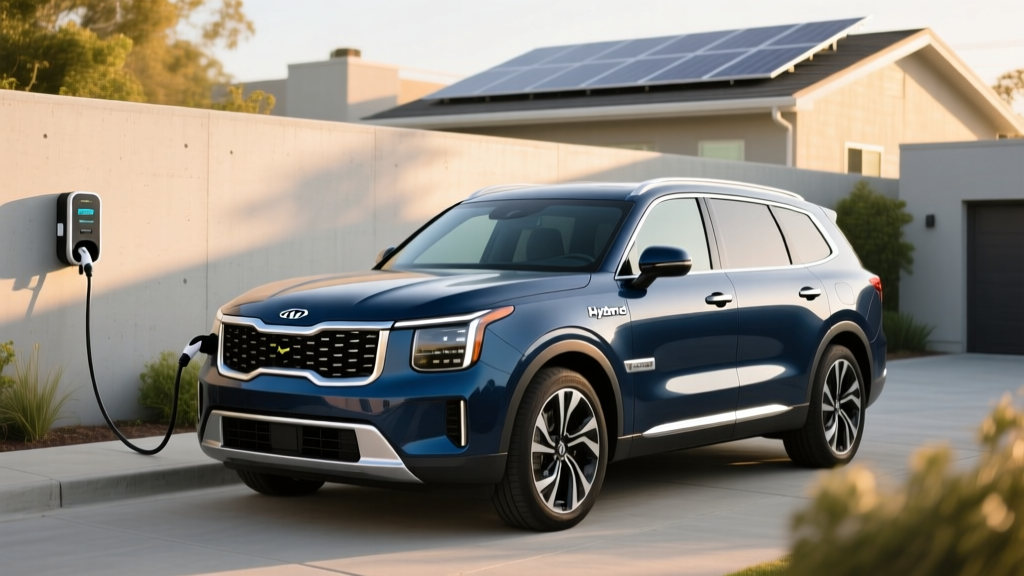
Before examining fuel economy, it's essential to understand what you're buying. The 2026 Kia Telluride Hybrid is a conventional hybrid (HEV), not a plug-in hybrid (PHEV). This distinction drives everything from how you fuel it to whether it qualifies for federal tax incentives.
Conventional Hybrid (HEV) — Telluride Hybrid
- No plug required: The battery recharges through regenerative braking and the gasoline engine
- Small battery: Typically 1.5–2.0 kWh, used for assist and regen buffering — not all-electric driving
- Gas station only: You fuel it exactly like a conventional car
- No federal tax credit: Does not qualify for the IRS §30D clean vehicle credit
- Always ready: No range anxiety, no charging logistics, works in any climate
Plug-in Hybrid (PHEV) — Not Currently Offered for Telluride
- Plug-in capable: Larger battery (typically 12–25 kWh) charges via Level 1 or Level 2
- Electric-only range: Usually 25–40 miles before the gas engine engages
- Tax credit eligible: May qualify for partial or full §30D credit (up to $7,500) depending on sourcing and income
- Best for: Households with home charging and short daily commutes
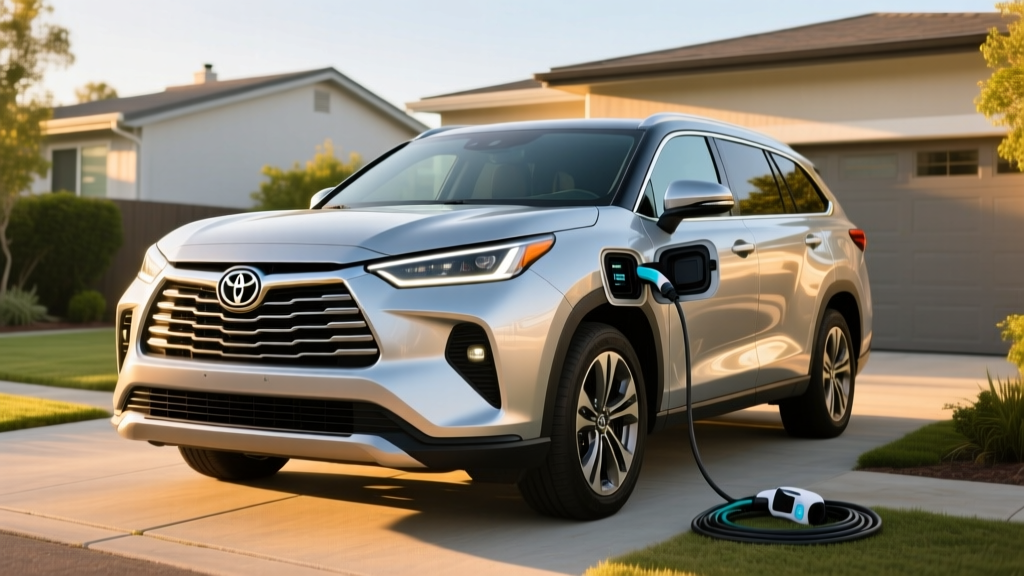
As of the 2026 model year, Kia has not announced a Telluride PHEV for the U.S. market. If a plug-in Telluride is on your wishlist, you'd currently need to look at competitors like the Toyota Grand Highlander Hybrid Max or consider a full BEV three-row SUV such as the Kia EV9.
Telluride Hybrid MPG: EPA Ratings and Real-World Numbers
The 2026 Telluride Hybrid uses a 1.6-liter turbocharged four-cylinder engine paired with an electric motor integrated into a six-speed automatic transmission. Here's how the EPA rates it, alongside what you should realistically expect based on driving conditions.
| Metric | EPA Estimate | Real-World Expectation |
|---|---|---|
| City MPG | 36 MPG | 33–37 MPG (hybrids often exceed EPA in stop-and-go) |
| Highway MPG | 32 MPG | 28–31 MPG (aero drag and speed reduce hybrid advantage) |
| Combined MPG | 34 MPG | 30–34 MPG depending on driving mix |
| Annual Fuel Cost* | ~$1,950 | Varies with local fuel prices and mileage |
*Based on 15,000 miles/year, 55% city / 45% highway, and $3.50/gallon regular unleaded per fueleconomy.gov methodology.
Real-World MPG Reality Check
Why city MPG beats highway in a hybrid: Conventional hybrids recapture kinetic energy during braking and low-speed driving, where gas engines are least efficient. On the highway, the electric motor provides minimal assist and the Telluride's boxy SUV aerodynamics dominate. Expect 28–31 MPG at 75+ mph sustained. In cold weather (below 30°F), add a 5–10% penalty as the engine runs more frequently for cabin heat and the battery's charge/discharge efficiency drops.
How the Telluride Hybrid MPG Compares
| Vehicle | Powertrain | City MPG | Highway MPG | Combined MPG | 3rd Row |
|---|---|---|---|---|---|
| 2026 Kia Telluride Hybrid | 1.6T HEV | 36 | 32 | 34 | Yes |
| 2026 Kia Telluride (Gas) | 3.8L V6 | 20 | 26 | 23 | Yes |
| 2026 Toyota Grand Highlander Hybrid | 2.5L HEV | 36 | 32 | 34 | Yes |
| 2026 Hyundai Palisade Hybrid | 1.6T HEV | 34 | 31 | 33 | Yes |
| 2026 Mazda CX-90 PHEV | 2.5L PHEV | 25 (gas) / 56 MPGe | 28 (gas) | 25 (gas) / 56 MPGe | Yes |
The Telluride Hybrid and Grand Highlander Hybrid trade blows at essentially identical EPA ratings. The key differentiator is driving feel: the Telluride's turbo-1.6 delivers stronger low-end torque (the electric motor fills in the turbo lag), while the Toyota's naturally aspirated 2.5L prioritizes smoothness over punch.
Powertrain and Performance Specs
| Specification | 2026 Kia Telluride Hybrid |
|---|---|
| Engine | 1.6L turbocharged 4-cylinder |
| Electric Motor | 47.7 kW (64 hp) integrated into transmission |
| Combined System Output | 245 hp / 275 lb-ft torque |
| Transmission | 6-speed automatic |
| Drivetrain | FWD standard; AWD available |
| 0–60 mph (est.) | ~7.5 seconds (FWD) |
| Towing Capacity | 5,000 lbs (AWD) |
| Battery Type | Lithium-ion polymer, ~1.7 kWh (HEV buffer) |
| Fuel Tank | 17.7 gallons |
| Total Driving Range | ~600 miles (combined) |
The 245 combined horsepower is a meaningful step up from the gas Telluride's 291 hp V6, though the hybrid's advantage is torque delivery. The electric motor provides instant low-rpm thrust, making the Telluride Hybrid feel more responsive around town despite having fewer horsepower on paper. The six-speed automatic is a deliberate choice over a CVT — it delivers more natural shift feel and avoids the rubber-band drone that plagues many hybrid CVTs.
AWD note: The available all-wheel-drive system uses a mechanical driveshaft to the rear axle (not a separate rear electric motor). This preserves towing capacity and off-road capability but adds weight, dropping AWD fuel economy by approximately 1 MPG across the board.
Pricing, Trims, and Tax Credit Eligibility
| Trim | MSRP (FWD) | MSRP (AWD) |
|---|---|---|
| S Hybrid | $40,990 | $42,990 |
| EX Hybrid | $44,990 | $46,990 |
| SX Hybrid | $49,990 | $51,990 |
| SX-Prestige Hybrid | $53,490 | $55,490 |
The hybrid powertrain commands a premium of approximately $2,000–$2,500 over equivalent gas-only Telluride trims. At current fuel prices, a driver covering 15,000 miles per year saves roughly $900–$1,100 annually versus the V6 model, meaning the hybrid premium pays for itself in approximately 2–3 years.
Federal Tax Credit: What You Need to Know
The Telluride Hybrid (HEV) does NOT qualify for the federal §30D clean vehicle tax credit. Under current IRS rules, the §30D credit of up to $7,500 is reserved for battery electric vehicles (BEVs) and plug-in hybrids (PHEVs) that meet battery capacity, critical mineral sourcing, and MSRP/income thresholds. Conventional hybrids like the Telluride HEV are excluded.
However, check your state: some states offer their own incentives for hybrid purchases, and Kia occasionally offers manufacturer rebates. Consult IRS.gov §30D guidance for current federal rules and your state's energy office for local programs.
Battery Warranty, Reliability, and Replacement Costs
Hybrid battery longevity is consistently the top concern among first-time hybrid buyers. Here's what the data shows for the Telluride Hybrid's system:
| Coverage Item | Warranty Term |
|---|---|
| Hybrid Battery (Lithium-ion) | 10 years / 100,000 miles |
| Hybrid System Components (motor, inverter) | 10 years / 100,000 miles |
| Powertrain (engine, transmission) | 10 years / 100,000 miles |
| Bumper-to-Bumper | 5 years / 60,000 miles |
Hybrid Battery Replacement: What It Actually Costs
If the Telluride Hybrid's battery pack does need replacement outside of warranty, expect a cost of $2,500–$4,000 for the HEV battery pack (parts and labor). This is far less than a full BEV battery replacement ($8,000–$20,000+) because the HEV pack is small (~1.7 kWh) and serves a buffer/assist role rather than being the sole energy source.
In practice, modern lithium-ion hybrid batteries from Kia/Hyundai have demonstrated strong longevity. Toyota's hybrid batteries — the longest-tracked in the industry — routinely last 150,000–200,000+ miles before significant degradation. Kia's lithium-ion polymer chemistry is newer to the hybrid market but benefits from the same thermal management engineering used in their EV lineup.
Reliability context: Kia's hybrid powertrains have performed well in J.D. Power and Consumer Reports assessments, though the Telluride Hybrid is still early in its lifecycle for long-term data. The conventional 6-speed automatic transmission is a reliability positive versus the CVTs found in many competing hybrids — fewer failure points and more familiar service procedures.
Who Should Choose the Telluride Hybrid vs. a PHEV or Full EV?
Choose the Telluride Hybrid (HEV) If:
- You don't have access to home or workplace charging (apartment, street parking, no garage)
- You regularly take long road trips and don't want to plan around charging stops
- You want 30+ MPG in a three-row SUV without changing any fueling habits
- You tow occasionally (5,000-lb capacity with AWD)
- You want lower upfront cost and simpler ownership versus a PHEV or BEV
Consider a PHEV (e.g., Mazda CX-90 PHEV) If:
- You can install a Level 2 charger at home
- Your daily commute is under 30 miles round-trip (you'd rarely burn gas)
- You want to qualify for the federal §30D tax credit (up to $7,500, subject to income and sourcing rules)
- You want the option of electric-only driving for neighborhood and school runs
Consider a Full BEV (e.g., Kia EV9) If:
- You have reliable home Level 2 charging
- Your daily driving is under 250 miles and you're comfortable with DC fast charging on road trips
- You want the lowest per-mile fuel cost (~$0.04–0.06/mile on home electricity vs. ~$0.12–0.15/mile for the hybrid on gas)
- You want maximum federal and state incentives (up to $7,500 federal, plus state rebates)
Ownership Economics: 5-Year Cost Breakdown
| Cost Category | Telluride Hybrid (HEV) | Telluride Gas (V6) | Kia EV9 (BEV) |
|---|---|---|---|
| Purchase Price (base MSRP) | $40,990 | $38,790 | $54,900 |
| Federal Tax Credit | $0 | $0 | Up to $7,500* |
| 5-Year Fuel/Energy (15k mi/yr) | ~$9,750 | ~$14,350 | ~$4,200 |
| 5-Year Maintenance (est.) | ~$2,800 | ~$3,500 | ~$1,800 |
| 5-Year Insurance (est.) | ~$9,500 | ~$9,000 | ~$10,800 |
| 5-Year Total Cost | ~$63,040 | ~$65,640 | ~$64,200 |
*EV9 tax credit eligibility depends on battery sourcing, buyer income caps ($150K single / $300K joint), and MSRP caps ($80K for SUVs). Consult IRS.gov for current rules.
The Telluride Hybrid saves approximately $2,600 over five years versus the gas model, primarily through fuel savings. The EV9 is competitive on total cost when the full tax credit applies, but requires charging infrastructure investment ($500–$2,000 for home Level 2 installation).
Pros and Cons
Pros
- 34 MPG combined in a genuine three-row SUV with 5,000-lb towing
- No charging infrastructure needed — fuel like a normal car
- Strong low-end torque from electric motor assist
- Industry-leading 10-year/100,000-mile hybrid warranty
- 6-speed automatic avoids CVT drone and rubber-band feel
- Hybrid premium pays for itself in 2–3 years through fuel savings
- Proven Telluride platform with strong safety ratings (IIHS Top Safety Pick)
Cons
- No federal tax credit for conventional HEVs
- Highway MPG drops to 28–31 at sustained 75+ mph speeds
- ~$2,000–$2,500 premium over gas-only Telluride
- No plug-in (PHEV) variant available — no electric-only driving
- Cold weather reduces fuel economy by 5–10%
- Third row is tight for adults on long trips (common to the segment)
- AWD drops MPG by approximately 1 MPG across the board
Frequently Asked Questions
How many MPG does the 2026 Kia Telluride Hybrid get?
The EPA rates the 2026 Telluride Hybrid at 36 MPG city, 32 MPG highway, and 34 MPG combined (FWD). AWD models lose approximately 1 MPG. In real-world driving, expect 33–37 MPG in city conditions and 28–31 MPG on the highway at sustained speeds above 70 mph.
Is there a plug-in hybrid (PHEV) Telluride?
Not as of the 2026 model year. The Telluride Hybrid is a conventional HEV — it does not plug in and has no electric-only range. If you want a plug-in three-row SUV, consider the Mazda CX-90 PHEV (26 miles electric-only) or the Toyota Grand Highlander Hybrid (HEV only, no PHEV yet). The Kia EV9 is the brand's all-electric three-row option.
Does the Telluride Hybrid qualify for a tax credit?
No. The federal §30D clean vehicle credit applies only to BEVs and PHEVs that meet battery sourcing, income, and MSRP requirements. The Telluride HEV is a conventional hybrid and is excluded. Some states may offer separate hybrid incentives — check your state's energy office.
How long will the Telluride Hybrid battery last?
Kia covers the hybrid battery for 10 years or 100,000 miles. Industry data from long-tracked hybrid platforms (Toyota, Honda) suggests lithium-ion hybrid batteries routinely last 150,000–200,000+ miles before meaningful degradation. Because the HEV battery is small (~1.7 kWh) and operates within a narrow state-of-charge window (typically 40–80%), it experiences far less stress than a full EV battery. Out-of-warranty replacement costs approximately $2,500–$4,000.
Is the Telluride Hybrid reliable?
Kia's hybrid powertrain components carry a 10-year/100,000-mile warranty, signaling manufacturer confidence. The 1.6T engine and 6-speed automatic are proven components shared across Hyundai/Kia's lineup. The Telluride platform earned IIHS Top Safety Pick honors. Long-term hybrid-specific reliability data is still accumulating for this model, but the architecture is conservative and well-tested.
How much does it cost to fill up the Telluride Hybrid?
With a 17.7-gallon fuel tank and regular unleaded at $3.50/gallon, a full fill-up costs approximately $62. At 34 MPG combined, that tank delivers roughly 600 miles of driving range — comparable to or better than most gas-only SUVs despite the smaller tank.
Hybrid vs. gas Telluride: is the premium worth it?
The hybrid costs approximately $2,000–$2,500 more than the equivalent gas trim. At 15,000 miles per year and $3.50/gallon fuel, the hybrid saves roughly $900–$1,100 annually, paying back the premium in about 2–3 years. If you plan to keep the vehicle 5+ years, the hybrid is the clear financial winner — and you get the bonus of fewer fill-ups and lower emissions.