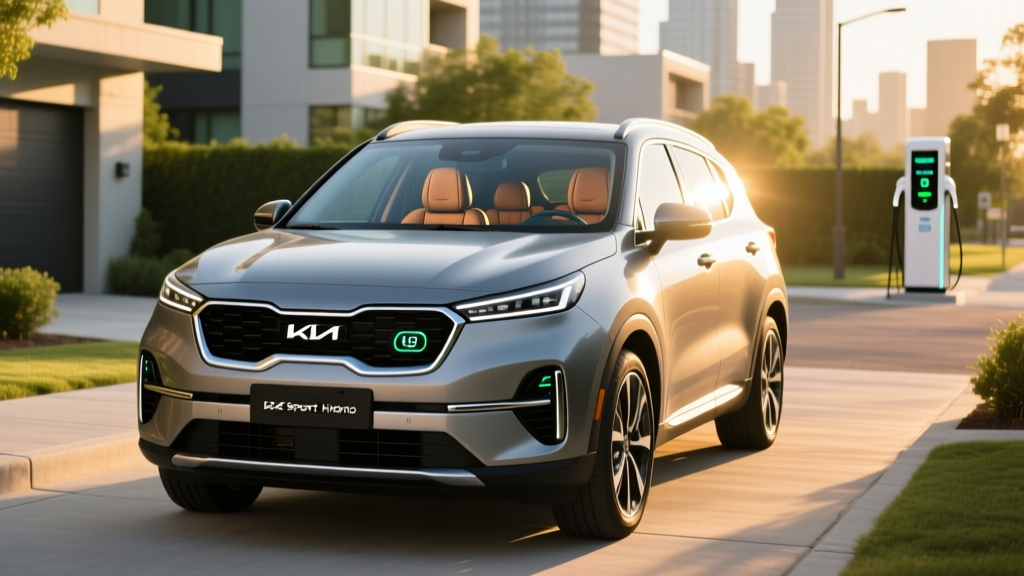
Quick Verdict: Which 2026 Kia Sportage Hybrid Has Rear Heated Seats?
If you're searching for a hybrid Kia Sportage with rear heated seats, you'll find them exclusively on the top-tier Sportage Hybrid SX-Prestige trim and the Sportage PHEV X-Line Prestige. Lower trims like the LX and EX offer front heated seats but do not include rear-seat heating. The Sportage Hybrid lineup gives buyers three electrified flavors: a conventional hybrid (HEV) that never needs plugging in, a plug-in hybrid (PHEV) with roughly 34 miles of electric-only range, and the turbocharged HEV for those wanting more passing power. All three share the same spacious cabin, strong warranty coverage, and a combined output that outperforms most compact crossover rivals.
Below, we break down every powertrain option, exact EPA fuel economy, real-world MPG expectations, battery warranty specifics, and whether any Sportage Hybrid qualifies for a federal tax credit in 2026.
HEV vs PHEV: Understanding the Sportage Hybrid Lineup
Kia offers the Sportage in three electrified configurations, and confusing them is the most common buyer mistake. Here's how they differ:
| Feature | Sportage HEV (Hybrid) | Sportage PHEV (Plug-In Hybrid) |
|---|---|---|
| Needs to be plugged in? | No — self-charging via regenerative braking | Yes — for full electric range benefit |
| Battery capacity | 1.49 kWh (lithium-ion) | 13.8 kWh (lithium-ion) |
| Electric-only driving | Brief low-speed EV mode only | ~34 miles EPA electric-only |
| Combined horsepower | 232 hp | 261 hp |
| Drivetrain | AWD standard | AWD standard |
| EPA combined MPG / MPGe | 38 MPG combined | 84 MPGe (electric+gas) / 35 MPG (gas only) |
| DC fast charging | N/A | No — Level 2 AC only (7.2 kW) |
The conventional HEV captures energy from braking and the engine to charge its small battery. You drive it exactly like a gas car — just fill up and go. The PHEV adds a larger battery and more powerful electric motor, letting you complete short commutes entirely on electricity before the gas engine kicks in. If you don't plug in a PHEV regularly, you're carrying 500+ lbs of dead battery weight and getting worse fuel economy than the lighter HEV.
Fuel Economy: EPA MPG and Real-World Numbers
Fuel efficiency varies by powertrain and driving conditions. Here's the full EPA breakdown from fueleconomy.gov:
| Powertrain | City | Highway | Combined |
|---|---|---|---|
| Sportage HEV AWD | 38 MPG | 38 MPG | 38 MPG |
| Sportage HEV FWD | 42 MPG | 44 MPG | 43 MPG |
| Sportage PHEV AWD (gas only) | 36 MPG | 35 MPG | 35 MPG |
| Sportage PHEV AWD (combined MPGe) | 84 MPGe | ||
Real-World MPG: What to Actually Expect
Hybrids shine in stop-and-go traffic where regenerative braking recaptures energy constantly. In real-world city driving, many Sportage HEV owners report 40–45 MPG, slightly exceeding the EPA city estimate. Highway driving at 75+ mph reduces the hybrid advantage — expect 33–36 MPG on extended interstate trips, below the sticker number.
Cold weather also impacts hybrid efficiency. Below 40°F, the engine runs more frequently to heat the cabin and bring the catalytic converter to operating temperature. Expect a 10–15% MPG reduction in winter months, bringing real-world combined figures closer to 32–34 MPG for AWD models. The PHEV's electric-only range drops similarly in cold weather — from 34 miles to roughly 25–28 miles when temperatures dip below freezing.
Powertrain Specs: Horsepower, Engine, and Electric Motors
| Specification | Sportage HEV | Sportage PHEV |
|---|---|---|
| Engine | 1.6L turbocharged 4-cylinder | 1.6L turbocharged 4-cylinder |
| Engine output | 178 hp / 195 lb-ft | 178 hp / 195 lb-ft |
| Electric motor output | 64 hp (47 kW) | 97 hp (72 kW) |
| Combined system output | 232 hp / 258 lb-ft | 261 hp / 258 lb-ft |
| Transmission | 6-speed automatic | 6-speed automatic |
| 0–60 mph | ~7.2 seconds | ~6.7 seconds |
| Towing capacity | 2,000 lbs | 2,000 lbs |
Both powertrains use a turbocharged 1.6-liter four-cylinder paired with an electric motor integrated into the transmission housing. The PHEV's larger motor gives it a meaningful power advantage — 29 additional horsepower that you'll notice during highway merging and uphill passes. The 6-speed automatic (not a CVT) is a deliberate choice by Kia, delivering more natural acceleration feel compared to the rubber-band sensation common in CVT-equipped hybrids from Toyota and Honda.
PHEV Electric Range, Charging, and Battery Details
The Sportage PHEV's 13.8 kWh battery delivers an EPA-rated 34 miles of electric-only range. That covers most daily commutes and school runs without burning a drop of gasoline. Total combined range (electric + full gas tank) reaches approximately 430 miles.
Charging the Sportage PHEV
| Charging Method | Power | 0–100% Time | Notes |
|---|---|---|---|
| Level 1 (120V household) | 1.4 kW | ~10 hours | Standard outlet; overnight top-up |
| Level 2 (240V home charger) | 7.2 kW | ~2 hours | Recommended for daily use |
| DC Fast Charging | N/A | N/A | Sportage PHEV does NOT support DCFC |
A critical limitation: the Sportage PHEV cannot DC fast charge. The maximum charge rate is 7.2 kW via Level 2 AC charging. This means public DC fast chargers (50–350 kW) won't provide any speed benefit — the vehicle's onboard charger caps the input. For PHEV buyers, this is standard; most PHEVs lack DC fast charging because the battery is small enough to refill quickly on Level 2.
Battery Warranty and Replacement Cost
Kia covers both the HEV and PHEV hybrid battery with a 10-year/100,000-mile warranty (in states following federal emissions warranty standards; California-emissions states may extend to 10 years/150,000 miles). This warranty covers defects and capacity loss below a specified threshold — typically around 70% of original capacity.
If a battery replacement is needed out of warranty, expect costs between $2,000–$3,500 for the HEV's smaller 1.49 kWh pack and $5,000–$8,000 for the PHEV's 13.8 kWh pack (parts and labor). In practice, hybrid batteries from Hyundai-Kia have shown strong longevity, with most lasting well beyond 150,000 miles before significant degradation. Data from fleet operators and owner surveys indicates less than 5% of Hyundai-Kia hybrid batteries require replacement within the warranty period.
Rear Heated Seats: Trim Availability and Pricing
Not every Sportage Hybrid comes with heated rear seats. Here's exactly where they appear in the 2026 lineup:
| Trim | Powertrain | Rear Heated Seats | Approx. MSRP |
|---|---|---|---|
| LX | HEV | No | ~$30,090 |
| EX | HEV | No | ~$32,590 |
| SX-Prestige | HEV | Yes | ~$37,490 |
| X-Line Prestige | PHEV | Yes | ~$43,090 |
The SX-Prestige HEV at roughly $37,490 is the most affordable way to get a hybrid Sportage with rear heated seats. It also includes ventilated front seats, a panoramic sunroof, a 12.3-inch digital instrument cluster, leather-trimmed seats, and Kia's Highway Driving Assist 2. The X-Line Prestige PHEV adds the plug-in powertrain, rugged exterior cladding, and a slightly elevated ride height, but costs nearly $6,000 more.
Federal Tax Credit Eligibility
Under current IRS §30D rules for 2026, the Sportage PHEV may qualify for a partial or full $7,500 federal tax credit, but eligibility depends on several factors:
- MSRP cap: SUVs must be under $80,000 — the Sportage PHEV qualifies.
- Buyer income cap: Modified AGI must not exceed $150,000 (single) / $300,000 (joint).
- Battery sourcing: Critical minerals and battery components must meet phased-in domestic-content thresholds that tighten each year. Kia has been working to shift supply chains, but check the IRS's current eligible vehicle list at the time of purchase.
- Point-of-sale transfer: The credit can now be applied at the dealership as an upfront discount rather than waiting for a tax refund.
The conventional HEV does not qualify for the §30D federal credit — only plug-in vehicles with at least 7 kWh of battery capacity are eligible. Some states and utilities offer separate rebates for PHEVs; check your local programs via the AFDC state incentive database.
Reliability, Ownership Costs, and Long-Term Value
Kia's hybrid powertrain has matured significantly since its early Optima Hybrid days. The 1.6T hybrid system in the Sportage shares architecture with the Hyundai Tucson Hybrid and Santa Fe Hybrid, which have accumulated millions of fleet and consumer miles. Key reliability considerations:
- Hybrid system: The electric motor, inverter, and battery have fewer moving parts than a conventional powertrain. No starter motor, no alternator to replace.
- Turbo engine: The 1.6L turbo requires synthetic oil changes at 7,500-mile intervals. Turbo longevity has been strong in this engine family, though carbon buildup on intake valves (common to direct-injection engines) may require walnut blasting around 80,000–100,000 miles.
- Transmission: The 6-speed automatic is a conventional torque-converter unit — proven and straightforward compared to CVTs or dual-clutch designs.
- Warranty: Kia's 5-year/60,000-mile basic warranty and 10-year/100,000-mile powertrain warranty remain among the best in the segment.
Total Cost of Ownership: 5-Year Estimate
| Cost Factor | Sportage HEV SX-Prestige | Sportage PHEV X-Line Prestige |
|---|---|---|
| MSRP | ~$37,490 | ~$43,090 |
| Federal tax credit | $0 | Up to $7,500 (if eligible) |
| Net purchase price | ~$37,490 | ~$35,590 |
| Fuel cost (5 yr / 75k mi) | ~$6,200 (at 38 MPG, $3.15/gal) | ~$3,100 (mix of electricity + gas) |
| Estimated maintenance (5 yr) | ~$2,800 | ~$2,600 |
| 5-year total (purchase + fuel + maint.) | ~$46,490 | ~$41,290 |
The PHEV's higher sticker price is substantially offset by the tax credit and lower fuel costs — if you can charge daily at home. Without regular plug-in charging, the PHEV's fuel savings disappear and the HEV becomes the smarter financial choice.
Sportage Hybrid vs. Full EV vs. Gas: Which Fits You?
Choose the Sportage HEV If:
- You don't have access to home or workplace charging
- You want better fuel economy with zero lifestyle changes
- Your budget tops out around $38,000
- You drive a mix of city and highway miles
- You want rear heated seats without paying PHEV premium
Choose the Sportage PHEV If:
- You can install a Level 2 charger at home
- Your daily commute is under 30 miles round-trip
- You qualify for the §30D tax credit
- You want near-EV daily driving with gas flexibility for road trips
- You value the extra 29 hp from the larger electric motor
What About a Full EV Instead?
If you're considering the Sportage Hybrid, you might also cross-shop the Kia EV6 or Hyundai Ioniq 5 — both offer 300+ miles of range, DC fast charging at 230–240 kW (10–80% in ~18 minutes), and similar interior quality. A full EV makes sense if: (1) you can charge at home, (2) your longest regular trip is under 250 miles or you're comfortable with one charging stop, and (3) you want to eliminate oil changes and reduce maintenance further. The trade-off is a higher starting price ($42,000+ for EV6) and cold-weather range loss of 20–30%.
Frequently Asked Questions
How many MPG does the Kia Sportage Hybrid get?
The 2026 Sportage HEV achieves an EPA-estimated 42 city / 44 highway / 43 combined MPG in FWD form, and 38 city / 38 highway / 38 combined with AWD. Real-world city driving often yields 40–45 MPG, while sustained highway speeds above 75 mph may return 33–36 MPG.
How far can the Sportage PHEV go on electric only?
The EPA rates the Sportage PHEV at 34 miles of electric-only range. In real-world conditions — especially below 40°F or at highway speeds — expect 25–30 miles before the gas engine engages.
Does the Kia Sportage Hybrid qualify for a tax credit?
The conventional HEV does not qualify for any federal tax credit. The PHEV may be eligible for up to $7,500 under IRS §30D, subject to income limits ($150K single / $300K joint), the $80K SUV MSRP cap, and battery-sourcing requirements that change annually. Confirm eligibility on the IRS website or with your tax professional before purchasing.
Is the Sportage Hybrid reliable, and what does battery replacement cost?
Kia's hybrid system has proven reliable, backed by a 10-year/100,000-mile hybrid battery warranty. Out-of-warranty battery replacement runs $2,000–$3,500 for the HEV and $5,000–$8,000 for the PHEV. Most Hyundai-Kia hybrid batteries last well beyond 150,000 miles with minimal degradation.
Which Sportage Hybrid trims have rear heated seats?
Rear heated seats are standard on the SX-Prestige (HEV, ~$37,490) and X-Line Prestige (PHEV, ~$43,090). They are not available on the LX or EX trims, even as a standalone option.
Can I charge the Sportage PHEV at a DC fast charger?
No. The Sportage PHEV only supports Level 1 (120V) and Level 2 (240V) AC charging, with a maximum rate of 7.2 kW. A full charge on Level 2 takes approximately 2 hours. DC fast charging is not supported on any current Sportage PHEV.
Do I need to plug in the Sportage HEV?
No. The conventional Sportage HEV charges its 1.49 kWh battery through regenerative braking and the gasoline engine. You never plug it in — just refuel at any gas station as normal.