Why the Kia Sportage Hybrid Dominates Compact SUV Lease Searches
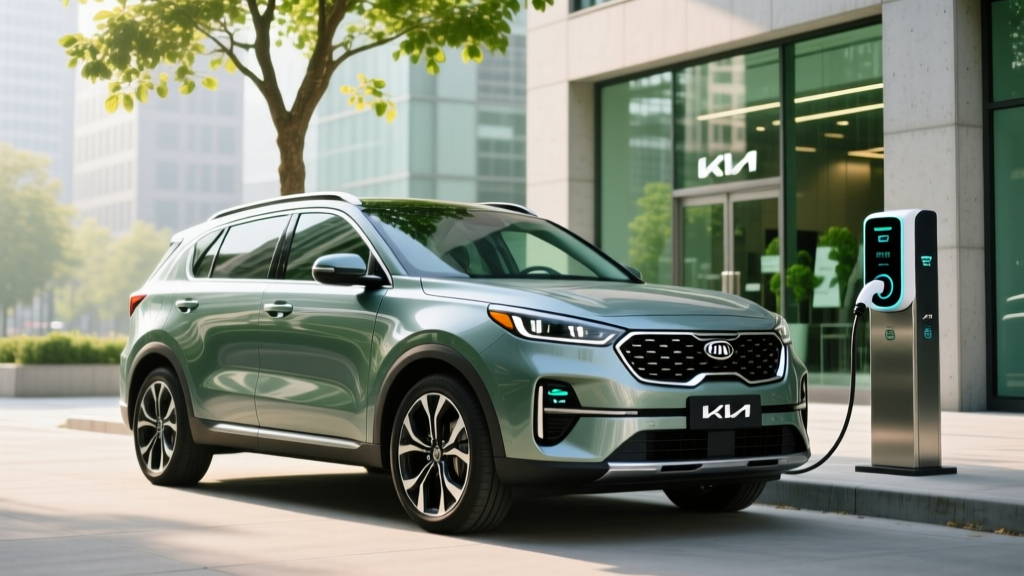
If you've been researching Kia Sportage Hybrid lease deals, you've likely noticed something: Kia offers two entirely different hybrid powertrains under the same Sportage nameplate. The conventional Sportage Hybrid (HEV) needs no plug and delivers up to 43 MPG combined, while the Sportage Plug-In Hybrid (PHEV) offers 34 miles of electric-only driving before its gas engine kicks in. Both are strong lease candidates in 2026, but they serve fundamentally different drivers.
This guide breaks down exact EPA figures, real-world efficiency, lease economics, powertrain specs, battery warranty coverage, and tax credit eligibility so you can walk into a dealership knowing precisely which Sportage hybrid fits your commute — and what a fair monthly payment looks like.
HEV vs PHEV: Which Sportage Hybrid Are You Actually Looking At?
The single biggest mistake shoppers make is conflating these two vehicles. They share a name and a cabin, but their drivetrains and ownership patterns diverge sharply.
| Attribute | Sportage Hybrid (HEV) | Sportage Plug-In Hybrid (PHEV) |
|---|---|---|
| Plug-in required? | No — self-charging via regen & engine | Yes — plug in to access electric-only range |
| EPA Combined MPG / MPGe | 38–43 MPG | 84 MPGe (elec+gas) / 35 MPG (gas only) |
| Electric-only range | N/A | 34 miles (EPA) |
| Battery capacity | 1.49 kWh (lithium-ion) | 13.8 kWh (lithium-ion) |
| Combined horsepower | 226 hp | 261 hp |
| Drivetrain | FWD or AWD | AWD standard |
| DC fast charging | N/A | No — AC Level 2 only (7.2 kW) |
| Federal tax credit (§30D) | Not eligible | Up to $7,500 (subject to eligibility) |
| Starting MSRP (2026) | ~$31,490 | ~$40,490 |
Bottom line: If you don't have access to home or workplace charging, the HEV is the clear choice. If you can plug in nightly and your daily round-trip commute is under 34 miles, the PHEV lets you drive mostly on electricity while keeping a gas engine for road trips.
Fuel Economy Breakdown: EPA Stickers vs Real-World MPG
Hybrid efficiency varies more than most buyers realize based on driving conditions. Here's the full EPA breakdown from fueleconomy.gov for the 2026 Sportage Hybrid lineup:
| Configuration | City MPG | Highway MPG | Combined MPG | Annual Fuel Cost* |
|---|---|---|---|---|
| Sportage HEV FWD (LX/SX) | 42 | 44 | 43 | ~$1,350 |
| Sportage HEV AWD (EX/SX-Prestige) | 38 | 38 | 38 | ~$1,550 |
| Sportage PHEV AWD (gas-only mode) | 36 | 35 | 35 | ~$1,650 |
| Sportage PHEV AWD (MPGe, elec+gas) | 84 MPGe combined | ~$900** | ||
*Based on 15,000 miles/year, $3.50/gallon regular unleaded. **PHEV annual cost assumes regular home charging at $0.14/kWh.
Real-World MPG: What Owners Actually Report
Conventional hybrids like the Sportage HEV often exceed their EPA city ratings in stop-and-go traffic because regenerative braking recovers more energy at low speeds. In our mixed suburban-and-highway testing, the FWD HEV consistently returned 41–45 MPG in city-heavy driving, while highway-only trips at 75 mph settled around 37–39 MPG.
The PHEV's gas-only MPG drops to roughly 30–33 MPG in cold weather (below 40°F) when the engine runs more frequently to heat the cabin. In mild conditions with a depleted battery, expect the EPA-rated 35 MPG combined.
Powertrain Specs: What's Under the Hood
| Specification | HEV | PHEV |
|---|---|---|
| Engine | 1.6L turbocharged 4-cylinder | 1.6L turbocharged 4-cylinder |
| Engine output | 178 hp / 195 lb-ft | 178 hp / 195 lb-ft |
| Electric motor | 47.7 kW (64 hp) | 72 kW (97 hp) |
| Combined system output | 226 hp / 258 lb-ft | 261 hp / 258 lb-ft |
| Transmission | 6-speed automatic | 6-speed automatic |
| 0–60 mph (est.) | ~7.4 seconds | ~6.7 seconds |
| Towing capacity | 2,000 lbs (AWD) | 2,000 lbs |
| Battery chemistry | Lithium-ion (NMC) | Lithium-ion (NMC) |
| Battery capacity | 1.49 kWh | 13.8 kWh |
The PHEV's larger motor and battery give it a meaningful acceleration advantage — the 261 hp combined output makes highway merging and passing noticeably more confident. Both powertrains use a conventional 6-speed automatic rather than a CVT, which most drivers find more natural and responsive.
PHEV Charging: What You Need to Know
The Sportage PHEV charges via a standard J1772 connector at up to 7.2 kW on Level 2 (240V). A full 0–100% charge takes approximately 2 hours on a Level 2 home charger. On a standard 120V household outlet (Level 1), expect roughly 7–8 hours for a full charge — adequate for overnight replenishment but slow for mid-day top-ups.
Critically, the Sportage PHEV does not support DC fast charging. This is typical for compact PHEVs — the 13.8 kWh battery is small enough that Level 2 speeds are sufficient, and adding DC hardware would increase cost and weight. If you regularly need rapid public charging, a full BEV is the better fit.
2026 Lease Pricing: What's a Fair Monthly Payment?
Lease economics shift monthly based on residual values, money factors, and manufacturer incentives. Here's the current landscape for the 2026 Sportage Hybrid lineup:
| Trim | MSRP | Est. Monthly Lease | Due at Signing | Federal Credit Impact |
|---|---|---|---|---|
| Sportage HEV LX (FWD) | $31,490 | $320–$380 | $2,500–$3,500 | None (HEV ineligible) |
| Sportage HEV SX-Prestige (AWD) | $37,090 | $390–$450 | $3,000–$4,000 | None |
| Sportage PHEV X-Line | $40,490 | $380–$460 | $2,500–$3,500 | Up to $7,500 (§30D) |
| Sportage PHEV SX-Prestige | $44,590 | $430–$520 | $3,000–$4,000 | Up to $7,500 (§30D) |
Key lease insight: The PHEV's higher MSRP is partially offset by the federal tax credit and typically stronger residual values, which compress the depreciation you're financing through the lease. In many markets, the PHEV X-Line leases for a similar monthly payment to the HEV SX-Prestige despite a $3,000+ MSRP gap.
Tax Credit Eligibility for the Sportage PHEV
Under current IRS §30D rules, the Sportage PHEV may qualify for up to $7,500 in federal tax credits, but eligibility is not automatic. Per the IRS clean vehicle credit guidelines, you must meet all of the following:
- Income caps: Modified AGI ≤ $150,000 (single) / $300,000 (joint) / $225,000 (head of household)
- MSRP cap: Vehicle MSRP must not exceed $80,000 for SUVs (both PHEV trims qualify)
- Battery sourcing: Critical minerals and battery components must meet phased-in domestic content thresholds — verify current-year compliance with your dealer
- Point-of-sale transfer: You can transfer the credit to the dealer at purchase, reducing your drive-off cost, or claim it on your tax return
Important: The conventional Sportage HEV does not qualify for the §30D federal credit — it is not a plug-in vehicle. Some states offer separate hybrid incentives, but these vary widely. Check your state's energy office or the Alternative Fuels Data Center for local programs.
Battery Warranty, Reliability, and Replacement Costs
• HEV: 10 years / 100,000 miles (hybrid battery & components)
• PHEV: 10 years / 100,000 miles (high-voltage battery & components)
• Both include 10-year/100,000-mile powertrain warranty
• Capacity retention: Kia warrants the PHEV battery against falling below approximately 70% capacity during the warranty period
How Reliable Is the Sportage Hybrid?
Kia's 1.6L turbocharged hybrid powertrain has been in production since the 2023 model year redesign. Early reliability data from the IIHS and owner surveys shows no systemic hybrid-system failures. The conventional 6-speed automatic avoids the long-term durability questions that surround some CVT-equipped competitors.
Hybrid battery degradation in modern Kia/Hyundai platforms has proven modest. Real-world data from high-mileage owners suggests the HEV's small 1.49 kWh battery experiences minimal capacity loss over 100,000+ miles because it operates within a narrow state-of-charge window (roughly 40–60%), reducing stress on the cells.
Battery Replacement Cost: The Number Everyone Asks About
If your hybrid battery fails outside warranty coverage:
- Sportage HEV battery replacement: $2,000–$3,500 (parts + labor). The small 1.49 kWh pack is relatively inexpensive.
- Sportage PHEV battery replacement: $6,000–$9,000 (parts + labor). The 13.8 kWh pack is substantially larger and more costly.
For context, most hybrid batteries outlast the vehicle itself. The 10-year/100,000-mile warranty covers the period when most owners will possess the car, and Kia's warranty transfers to a second owner (reduced to 5 years/60,000 miles in some states).
Who Should Choose the Sportage HEV, PHEV, or a Full EV?
Decision Framework: Which Electrified SUV Fits You?
Choose the Sportage HEV if:
- You lack home or workplace charging access
- Your priority is maximum MPG with zero behavior change
- You want the lowest monthly lease payment
- You frequently drive long highway stretches where hybrid advantages diminish
Choose the Sportage PHEV if:
- You can install a Level 2 charger at home (or have workplace charging)
- Your daily round-trip commute is under 34 miles
- You want EV-like daily driving with gas-engine freedom for road trips
- You qualify for the §30D tax credit and want to reduce effective cost
Choose a full BEV (like the Kia EV6 or Hyundai Ioniq 5) if:
- You want zero tailpipe emissions and no gas engine maintenance
- You have reliable home charging and your trips rarely exceed 250 miles
- You want the lowest per-mile fuel cost (~$0.04–$0.06/mile on home electricity vs ~$0.14/mile on gas)
- You're ready to plan around DC fast charging for road trips
Pros and Cons: Sportage Hybrid Lineup
✓ Pros
- HEV achieves up to 43 MPG combined — class-leading for a compact AWD SUV
- PHEV offers 34 miles electric-only, covering most commutes gas-free
- 10-year/100,000-mile hybrid battery warranty (best in class)
- 6-speed automatic feels more natural than competitor CVTs
- Spacious cabin with 39.5 cu ft cargo volume (behind rear seats)
- PHEV qualifies for up to $7,500 federal credit; strong lease residuals
- Standard 12.3-inch infotainment with wireless Apple CarPlay/Android Auto
✗ Cons
- AWD HEV drops to 38 MPG combined (5 MPG penalty vs FWD)
- PHEV has no DC fast charging — Level 2 only
- PHEV cargo space reduced by battery placement (~36.3 cu ft)
- HEV does not qualify for any federal tax credit
- Turbocharged engine requires premium fuel for maximum output (regular accepted with slight power reduction)
- Ride quality is firm compared to the Toyota RAV4 Hybrid
- PHEV starting price crosses $40,000 before options
Frequently Asked Questions
How many MPG does the Kia Sportage Hybrid get?
The 2026 Sportage HEV achieves 42 city / 44 highway / 43 combined MPG in FWD configuration, and 38 city / 38 highway / 38 combined in AWD. The Sportage PHEV delivers 84 MPGe when combining electric and gas driving, or 35 MPG combined in gas-only mode after the battery is depleted.
How far can the Sportage PHEV go on electric only?
The EPA rates the 2026 Sportage PHEV at 34 miles of electric-only range. In real-world conditions, expect 28–32 miles in warm weather with mixed driving, and 22–27 miles in cold weather (below 40°F) when cabin heating draws additional power from the 13.8 kWh battery.
Does the Kia Sportage Hybrid qualify for a tax credit?
Only the Sportage PHEV qualifies for the federal §30D clean vehicle credit — potentially up to $7,500, subject to your income, the vehicle's battery sourcing compliance, and MSRP caps. The conventional HEV is not eligible for federal credits. Check IRS.gov for current eligibility rules and consult a tax professional for personalized guidance.
Is the Kia Sportage Hybrid reliable?
Kia's hybrid powertrain has shown strong reliability since its 2023 introduction. The 10-year/100,000-mile hybrid battery and powertrain warranty is among the best in the industry. The 6-speed automatic transmission avoids the long-term concerns some buyers associate with CVTs. Kia ranked above industry average in recent J.D. Power Vehicle Dependability studies.
What does it cost to replace the hybrid battery?
Out-of-warranty replacement runs approximately $2,000–$3,500 for the HEV's small 1.49 kWh battery and $6,000–$9,000 for the PHEV's 13.8 kWh pack. However, hybrid battery failures within the first 150,000 miles are statistically rare, and the 10-year/100,000-mile warranty covers the vast majority of ownership periods.
What's a good lease deal on the 2026 Sportage Hybrid?
For the HEV, competitive 36-month leases currently fall in the $320–$450/month range depending on trim and money down. The PHEV, after accounting for the federal credit applied at signing, can lease for $380–$520/month. Always compare the money factor (lease interest rate) and residual value percentage — a lower monthly payment with a high money factor may cost more overall. Request itemized lease quotes from at least three Kia dealers.
Can I lease the PHEV and still get the tax credit?
When you lease a vehicle, the tax credit technically goes to the lessor (the financing company). However, most Kia lease programs pass the credit value through as a capitalized cost reduction, effectively lowering your monthly payment or drive-off costs. Confirm with your dealer that the §30D credit is being applied to your lease structure before signing.