If you're researching Kia Sportage hybrid gas mileage, you're likely weighing the standard hybrid (HEV) against the plug-in hybrid (PHEV) — or wondering whether either beats a full EV for your daily routine. The current-generation Sportage offers both electrified variants, each with distinct efficiency profiles, powertrain outputs, and ownership costs. This guide breaks down every number that matters: EPA ratings, real-world fuel economy, electric-only range, charging logistics, battery longevity, and federal tax-credit eligibility under current IRS §30D rules.
HEV vs PHEV: Which Sportage Hybrid Are We Talking About?
Kia sells two electrified Sportage models, and confusing them is the most common buyer mistake. Here's the essential distinction:
Sportage Hybrid (HEV)
A conventional self-charging hybrid. It pairs a gasoline engine with an electric motor and a small battery that recharges through regenerative braking and the engine. You never plug it in. It operates exactly like a traditional gas car at the pump — the hybrid system simply makes every gallon go further, especially in stop-and-go city driving.
Sportage Plug-In Hybrid (PHEV)
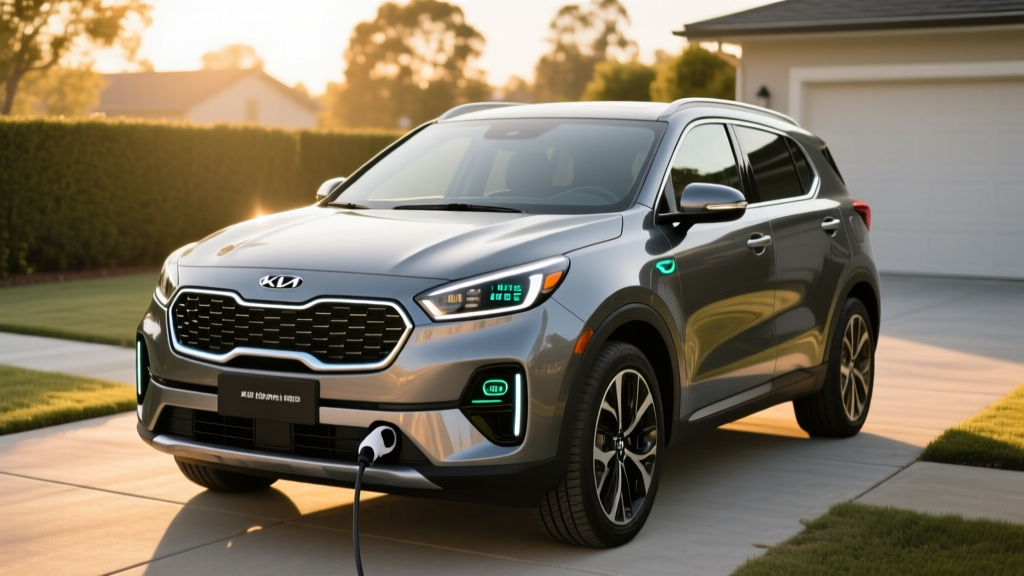
A plug-in hybrid with a significantly larger battery (13.8 kWh) that you charge via a wall outlet or Level 2 charger. It delivers 34 miles of pure electric driving before the gas engine engages. Once the battery depletes, it functions as a conventional hybrid. If you can charge at home nightly, many daily commutes use zero gasoline.
Kia Sportage Hybrid Gas Mileage: EPA Ratings and Real-World MPG
According to fueleconomy.gov, the EPA assigns the following ratings to the current Sportage lineup:
| Model | City MPG | Highway MPG | Combined MPG | MPGe (PHEV Electric Mode) |
|---|---|---|---|---|
| Sportage Hybrid (FWD) | 42 | 44 | 43 | |
| Sportage Hybrid (AWD) | 38 | 38 | 38 | |
| Sportage PHEV (AWD) | 36 (hybrid mode) | 35 (hybrid mode) | 35 (hybrid mode) | 84 MPGe |
Real-World MPG vs. EPA Sticker
Hybrids routinely exceed their EPA city rating in actual driving because regenerative braking recovers energy the EPA test cycle only partially captures. Owners report 44–47 MPG in urban and suburban driving with the FWD HEV. Highway driving is the weak point for all hybrids — at sustained 70+ mph speeds, the electric motor contributes less and aerodynamic drag dominates. Expect 37–40 MPG highway in the FWD HEV and 33–35 in the AWD HEV. Cold weather (below 35°F) reduces MPG by roughly 8–12% as the engine runs longer to heat the cabin and the battery operates less efficiently.
Sportage PHEV: Electric-Only Range and Total Range
The Sportage PHEV's 13.8 kWh lithium-ion battery delivers an EPA-rated 34 miles of electric-only range. That figure assumes moderate temperatures and mixed driving; in practice:
- City/suburban (spring/fall): 32–36 miles electric-only
- Highway (65–70 mph): 27–30 miles electric-only
- Cold weather (20–35°F): 24–28 miles electric-only — the battery's usable capacity shrinks, and cabin heating draws significant energy
Once the battery depletes, the PHEV operates as a conventional hybrid with the combined 35 MPG EPA rating. The 13.7-gallon fuel tank gives a total combined range of approximately 430 miles (gas + electric), making it road-trip-capable without range anxiety.
Charging the PHEV Battery
| Charging Level | Power | 0–100% Time | Connector |
|---|---|---|---|
| Level 1 (120V household outlet) | ~1.4 kW | ~10–11 hours | J1772 |
| Level 2 (240V home/public charger) | ~7.2 kW (onboard charger max) | ~2 hours | J1772 |
| DC Fast Charge | Not supported — the Sportage PHEV has no DC fast-charging capability | ||
This is a critical ownership detail: Level 1 charging overnight is barely sufficient for a full recharge in 10+ hours. Most PHEV owners install a 240V Level 2 outlet (a standard NEMA 14-50 or a hardwired wallbox) to achieve the practical ~2-hour recharge. Installation typically costs $600–$1,800 depending on electrical panel proximity and local permit fees — consult a licensed electrician for a site-specific quote.
Powertrain Specs: Horsepower, Engine, and Drivetrain
| Specification | Sportage Hybrid (HEV) | Sportage PHEV |
|---|---|---|
| Engine | 1.6L turbocharged 4-cylinder | 1.6L turbocharged 4-cylinder |
| Electric Motor | 44 kW (59 hp) | 66.9 kW (90 hp) |
| Combined System Output | 226 hp / 258 lb-ft torque | 261 hp / 258 lb-ft torque |
| Transmission | 6-speed automatic | 6-speed automatic |
| Drivetrain | FWD or AWD | AWD (standard, all trims) |
| 0–60 mph | ~7.5 seconds (FWD) | ~7.1 seconds |
| Battery Capacity | 1.49 kWh (not plug-in) | 13.8 kWh (plug-in) |
| Towing Capacity | 2,000 lbs | 2,000 lbs |
The PHEV's larger motor gives it a meaningful power advantage — 261 hp versus 226 hp — and the standard AWD provides all-weather traction. The HEV offers a FWD option that maximizes fuel economy at 43 MPG combined, which is the efficiency sweet spot for buyers in mild climates who don't need AWD.
Pricing, Trims, and Federal Tax Credit Eligibility
Current MSRP pricing for the Sportage hybrid lineup (destination included):
| Trim | HEV MSRP | PHEV MSRP |
|---|---|---|
| LX / Base | ~$29,990 | — |
| EX | ~$32,590 | ~$40,490 |
| SX-Prestige | ~$36,590 | ~$44,090 |
Federal Tax Credit (§30D) for the PHEV
The Sportage PHEV may qualify for a partial or full federal tax credit under IRS §30D, but eligibility depends on several factors that change frequently:
- Battery capacity: Must be ≥7 kWh — the Sportage PHEV's 13.8 kWh battery qualifies ✓
- MSRP cap: SUVs/vans must be ≤$80,000 — all Sportage PHEV trims qualify ✓
- Buyer income cap: AGI ≤$150,000 (single) / $225,000 (head of household) / $300,000 (joint) ✓ for most buyers
- Battery component sourcing: A percentage of battery components must be manufactured or assembled in North America — this is where many PHEVs lose partial or full credit
- Critical minerals sourcing: A percentage of critical minerals must come from the U.S. or FTA partners — requirements tighten annually
As of current IRS guidance, the Sportage PHEV's credit amount varies based on the latest battery-sourcing determinations. The HEV does not qualify for §30D credits (the law requires ≥7 kWh plug-in batteries). Always verify current eligibility on the IRS Clean Vehicle credit page or consult a tax professional before purchasing — sourcing rules are updated periodically and can change mid-year.
Battery Warranty, Reliability, and Replacement Costs
Kia Hybrid Battery Warranty
Kia provides one of the strongest hybrid battery warranties in the industry:
- Hybrid/EV battery: 10 years / 100,000 miles (whichever comes first)
- Hybrid system components (motor, inverter, converter): 10 years / 100,000 miles
- Bumper-to-bumper: 5 years / 60,000 miles
- Powertrain: 10 years / 100,000 miles
The warranty covers battery capacity falling below a specified threshold (typically 70% of original capacity) during the warranty period. If the battery degrades prematurely, Kia replaces it at no cost.
Long-Term Reliability and Replacement Cost
Modern hybrid batteries — particularly the lithium-ion packs Kia uses — are engineered for 150,000–200,000+ miles of service life. The Sportage's hybrid system is mechanically simpler than a conventional transmission (no torque converter, fewer friction brakes due to regen), which reduces long-term maintenance costs.
If the battery does require out-of-warranty replacement (typically after 12–15 years), current estimates for the Sportage hybrid battery pack range from $3,000 to $5,500 including labor, depending on whether you source OEM or refurbished cells. The PHEV's larger 13.8 kWh pack will trend toward the higher end of that range. However, data from older Hyundai/Kia hybrids shows that catastrophic battery failure before 150,000 miles is uncommon — gradual capacity loss (5–10% over 10 years) is the typical pattern, and the vehicle remains fully drivable.
Sportage Hybrid vs. PHEV vs. Full EV: Which Fits You?
Choose the Sportage HEV (Standard Hybrid) If:
- You cannot install a home charger (apartment, street parking, no garage)
- You want maximum MPG with zero behavior change — just drive and fuel up normally
- Your budget is under $37,000 and you don't want the PHEV price premium
- You prioritize city fuel economy (42+ MPG in urban driving)
Choose the Sportage PHEV If:
- You have access to Level 2 charging at home or work
- Your daily round-trip commute is ≤30 miles (you'll rarely use gas on weekdays)
- You want 261 hp and standard AWD
- You can benefit from a federal tax credit to offset the ~$8,000–$10,000 price premium over the HEV
- You take occasional long road trips and don't want EV range anxiety
Choose a Full EV (e.g., Kia EV6, Hyundai Ioniq 5) If:
- You can install Level 2 home charging and have reasonable public DC fast-charging access
- You want zero gasoline costs and minimal drivetrain maintenance (no oil changes, no spark plugs)
- Your daily driving is under 250 miles and you're comfortable planning road-trip charging stops
- You qualify for the full $7,500 §30D credit, narrowing the effective price gap with PHEVs
Sportage HEV Pros
- 43 MPG combined (FWD) with no plug-in required
- Lower starting price than PHEV
- Proven 10-year/100,000-mile battery warranty
- Strong city MPG that exceeds EPA in real driving
- Spacious cargo area (39.6 cu ft behind rear seats)
Sportage HEV Cons
- AWD drops combined MPG to 38
- No federal tax credit eligibility
- Modest 226 hp — adequate but not quick
- Highway MPG unremarkable vs. diesel or efficient gas SUVs
Sportage PHEV Pros
- 34 miles electric-only covers most daily commutes
- 261 hp with standard AWD
- ~430 miles total range (gas + electric)
- Potential federal tax credit (verify current sourcing rules)
- 84 MPGe in electric mode — dramatically lower per-mile energy cost
Sportage PHEV Cons
- $8,000–$10,000 price premium over HEV
- No DC fast charging — Level 2 only
- Level 1 (120V) charging takes 10+ hours — Level 2 install strongly recommended
- 35 MPG in hybrid mode is less than the HEV's 43 MPG combined
- Cargo space slightly reduced due to larger battery pack
Frequently Asked Questions
How many MPG does the Kia Sportage Hybrid get?
The FWD Sportage Hybrid achieves an EPA-rated 42 city / 44 highway / 43 combined MPG. The AWD version is rated at 38/38/38. In real-world city driving, many owners report 44–47 MPG thanks to regenerative braking. Highway driving at sustained speeds yields 37–40 MPG for the FWD model.
How far can the Sportage PHEV go on electric only?
The EPA rates the Sportage PHEV at 34 miles of electric-only range. Real-world results vary: expect 32–36 miles in moderate city/suburban driving, 27–30 miles on the highway, and 24–28 miles in cold weather below 35°F. Once depleted, the vehicle operates as a conventional hybrid with 35 MPG combined.
Does the Kia Sportage Hybrid qualify for a federal tax credit?
The conventional Sportage HEV does not qualify — federal §30D credits require a plug-in vehicle with at least 7 kWh of battery capacity. The Sportage PHEV may qualify for a partial or full credit (up to $7,500), but eligibility depends on current battery component and critical mineral sourcing rules, buyer income limits, and MSRP caps. Always check the IRS Clean Vehicle credit page for the latest determination before purchasing.
Is the Sportage Hybrid reliable, and what does battery replacement cost?
Kia's hybrid systems have demonstrated strong reliability, backed by a 10-year/100,000-mile hybrid battery warranty — one of the best in the industry. Out-of-warranty battery replacement, typically needed after 150,000+ miles or 12–15 years, costs approximately $3,000–$5,500 depending on pack size and parts sourcing. Gradual capacity loss (5–10% over a decade) is the normal pattern, and the vehicle remains fully functional.
Do I need to plug in the Sportage Hybrid?
No. The standard Sportage HEV charges its battery entirely through regenerative braking and the gasoline engine — you never plug it in. Only the Sportage PHEV requires plugging in to access its 34-mile electric-only range. If you don't plug in the PHEV, it simply operates as a conventional hybrid (albeit with lower MPG than the HEV due to the extra battery weight).
How long does it take to charge the Sportage PHEV?
On a standard 120V household outlet (Level 1), a full charge takes approximately 10–11 hours. On a 240V Level 2 charger — either a home wallbox or public station — the Sportage PHEV's 7.2 kW onboard charger replenishes the battery in about 2 hours. DC fast charging is not supported on this model.
How does the Sportage Hybrid compare to a full EV like the Kia EV6?
The EV6 offers 232–310 miles of EPA range (depending on battery and drivetrain), 200+ kW DC fast charging, and zero gasoline use — but requires reliable home or public charging access and a higher starting price (~$42,000+). The Sportage Hybrid is the pragmatic choice for buyers who lack charging infrastructure, drive long highway miles regularly, or want a lower purchase price. The PHEV splits the difference: electric commuting with gas-powered road-trip flexibility.
Bottom Line: What the Numbers Actually Mean for Your Wallet
At 15,000 miles per year and $3.40/gallon gasoline, the Sportage HEV (FWD, 43 MPG) costs approximately $1,186 annually in fuel. A comparable gas-only compact SUV averaging 28 MPG combined would cost $1,821 — a savings of $635/year, or roughly $3,175 over five years, which partially offsets the hybrid's modest price premium.
The PHEV calculus depends heavily on your charging habits. If you charge nightly at home (average U.S. electricity rate ~$0.16/kWh) and commute within the 34-mile electric range, your weekday fuel cost drops to near zero. Weekend road trips use gasoline, but total annual fuel expenditure can fall below $600 for a mixed-use driver. Factor in a potential federal tax credit, and the PHEV's effective cost of ownership becomes compelling — provided you can install Level 2 charging at home.
The Sportage Hybrid lineup's strongest selling point is flexibility: genuine efficiency gains without the infrastructure commitment a full EV demands. Whether you choose the no-plug HEV for simplicity or the PHEV for electric commuting, Kia's 10-year battery warranty provides long-term peace of mind that few competitors match.