Kia Sorento Hybrid Interior: Space, Tech, and Three-Row Practicality
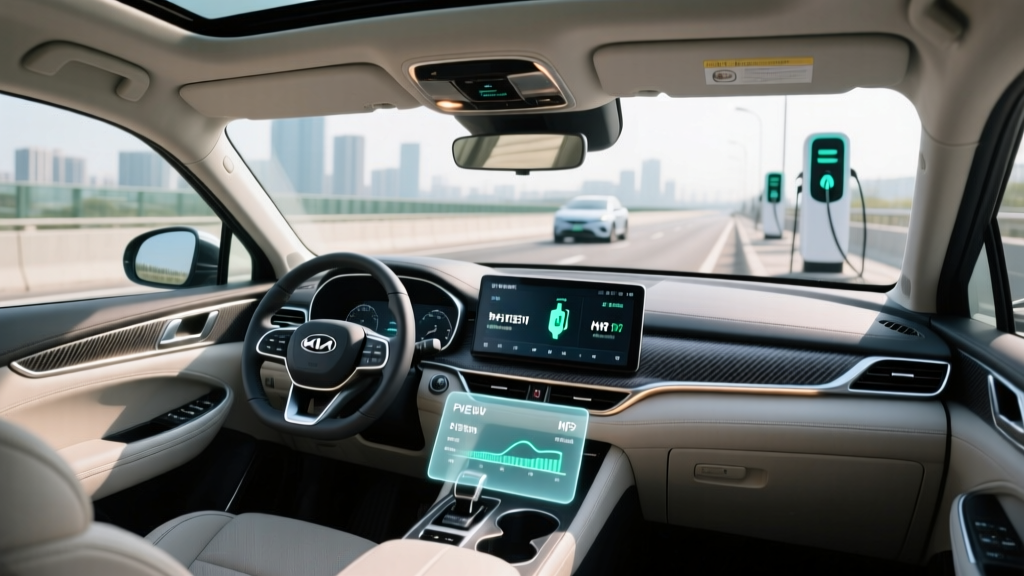
The 2026 Kia Sorento Hybrid occupies a specific niche: a three-row midsize SUV that sips fuel without demanding a lifestyle change. Unlike a pure BEV, the Sorento HEV requires no charging infrastructure, while the Sorento PHEV adds roughly 32 miles of electric-only commuting. For buyers researching the Kia Sorento Hybrid interior, the cabin is the real draw — premium materials for the segment, a 12.3-inch digital cluster, a 12.3-inch infotainment touchscreen running Kia's latest Connect interface, wireless Apple CarPlay and Android Auto, and available second-row captain's chairs.
Let's be direct about third-row space: the Sorento's rearmost seats accommodate children or short trips. Adults will find it tight compared to the Telluride. Cargo volume behind the third row is approximately 12.6 cubic feet, expanding to 45 cu ft with the third row folded and 75.5 cu ft with both rear rows down. That's competitive with the Toyota Highlander Hybrid and Honda CR-V Hybrid (though the CR-V lacks a third row).
Interior material quality has crept upward for 2026. The EX trim adds SofTex-style synthetic leather, heated front seats, and a panoramic sunroof option. Fit and finish punch above the Sorento's price bracket, with soft-touch surfaces on the dash and door uppers. Road noise is well-managed at highway speeds — a common weakness in hybrid SUVs that Kia has addressed with acoustic laminated front glass on upper trims.
HEV vs PHEV: Which Sorento Hybrid Fits Your Drive?
Kia offers two electrified Sorento variants. Confusing them is common, so here's the clearest breakdown:
| Attribute | Sorento Hybrid (HEV) | Sorento Plug-In Hybrid (PHEV) |
|---|---|---|
| Needs to be plugged in? | No — self-charging via engine + regen | Yes — plug in to access electric-only range |
| Battery size | 1.49 kWh (small, buffer-style) | 13.8 kWh usable |
| Electric-only range | ~1 mile at low speed (not practical) | EPA-est. 32 miles |
| DC fast charging? | No | No — AC Level 2 only (7.2 kW onboard charger) |
| Level 2 charge time (0–100%) | N/A | ~3 hours 25 minutes at 7.2 kW |
| Combined horsepower | 232 hp | 261 hp |
| Drivetrain | AWD standard | AWD standard |
| Federal tax credit | None | Up to $7,500 (subject to §30D rules) |
The HEV is the simpler play: buy it, fill it with gas, and enjoy 34–36 MPG combined without changing habits. The PHEV rewards owners who can charge at home or work — if your round-trip commute is under 32 miles, you may burn almost no gasoline on weekdays.
EPA Fuel Economy and Real-World MPG
According to fueleconomy.gov, the 2026 Sorento Hybrid carries the following EPA estimates:
| Powertrain | City MPG | Highway MPG | Combined MPG |
|---|---|---|---|
| Sorento HEV (AWD) | 34 | 34 | 34 |
| Sorento PHEV (AWD, charge-sustaining) | 33 | 34 | 33 (gas-only mode) |
| Sorento PHEV (charge-depleting, MPGe) | 79 MPGe combined (gas + electric) | ||
For the PHEV, total combined range is approximately 420 miles (32 electric + ~390 gas). Once the battery is depleted, it operates as a conventional hybrid — there is no range cliff.
Powertrain Specs: What's Under the Hood
| Spec | Sorento HEV | Sorento PHEV |
|---|---|---|
| Engine | 1.6L turbocharged I-4 | 1.6L turbocharged I-4 |
| Electric motor | 47.7 kW (64 hp) | 72 kW (97 hp) |
| Combined output | 232 hp / 258 lb-ft | 261 hp / 258 lb-ft |
| Transmission | 6-speed automatic | 6-speed automatic |
| 0–60 mph (est.) | ~7.8 sec | ~7.0 sec |
| Towing capacity | 2,000 lbs | 2,000 lbs |
The PHEV's more powerful electric motor delivers noticeably stronger off-the-line acceleration and smoother electric-only operation. Both variants use a traditional 6-speed automatic rather than a CVT, which gives a more natural driving feel under hard acceleration — a preference point for many buyers put off by CVT drone.
Pricing, Trims, and Federal Tax Credit Eligibility
2026 Kia Sorento Hybrid pricing (MSRP, destination included):
- Sorento HEV LX: ~$38,590
- Sorento HEV EX: ~$42,490
- Sorento HEV SX Prestige: ~$47,190
- Sorento PHEV EX: ~$51,590
- Sorento PHEV SX Prestige: ~$55,590
- The Sorento PHEV may qualify for up to $7,500 under IRS §30D, but eligibility depends on multiple factors that change regularly.
- MSRP cap: SUVs must be under $80,000 — the Sorento PHEV clears this easily.
- Buyer income cap: AGI must not exceed $150,000 (single) / $300,000 (joint). Check IRS.gov §30D rules for current-year limits.
- Battery sourcing: The credit splits into $3,750 for critical minerals + $3,750 for battery components. Kia's supply chain sourcing determines partial vs. full credit — verify with your dealer at purchase.
- Point-of-sale transfer: As of 2024+, the credit can be transferred to the dealer as an upfront discount rather than claimed at tax time.
- The Sorento HEV does NOT qualify for the §30D federal credit (it's not a plug-in vehicle).
Consult a tax professional to confirm eligibility for your specific situation. State incentives vary — check your state energy office for additional rebates.
Battery Warranty, Longevity, and Replacement Cost
Hybrid battery longevity has proven strong across the industry. Toyota's hybrid systems routinely exceed 150,000–200,000 miles without pack replacement, and Kia's lithium-ion polymer packs have shown similar durability in the Niro and Optima Hybrid lineages. The 1.49 kWh HEV pack operates within a narrow state-of-charge window (roughly 40–80%), which dramatically reduces degradation stress. The PHEV's larger 13.8 kWh pack sees deeper cycling but benefits from active thermal management.
If replacement is needed out of warranty, industry estimates for a Sorento-class hybrid battery range from $2,500–$4,500 for the HEV pack and $5,000–$8,000 for the PHEV pack (parts + labor). Refurbished or remanufactured packs may reduce this by 30–40%. These costs have trended downward as hybrid volumes increase.
Who Should Choose the Sorento Hybrid — and Who Shouldn't
- 34 MPG combined with AWD and three rows — rare combo
- No charging infrastructure required (HEV)
- Premium interior at mainstream pricing
- 10-year/100k battery and powertrain warranty
- PHEV version offers 32-mile electric commute
- 6-speed automatic avoids CVT feel
- Third row is tight for adults
- No DC fast charging on PHEV
- 2,000-lb towing capacity is low for the segment
- PHEV premium is ~$9,000 over HEV base
- Cargo space behind 3rd row is modest (12.6 cu ft)
- HEV does not qualify for federal tax credit
- Choose the Sorento HEV if: You want three rows, AWD, and 34 MPG without plugging in. Ideal for apartment dwellers without home charging access, or buyers who drive a mix of city and highway miles and want simplicity.
- Choose the Sorento PHEV if: You have home Level 2 charging, a commute under 32 miles round-trip, and want to run mostly on electricity weekdays while keeping gas flexibility for road trips. The $7,500 potential credit narrows the price gap with the HEV significantly.
- Choose a full EV (e.g., Kia EV9, Hyundai Ioniq 5) if: You have reliable home charging, drive under 250 miles daily, want the lowest per-mile fuel cost, and don't need a third row (or can accept the EV9's higher price).
- Choose a gas-only SUV if: You tow over 3,500 lbs regularly, drive extremely low annual miles (under 5,000), or live in a remote area with no hybrid service infrastructure.
Frequently Asked Questions
How many MPG does the Kia Sorento Hybrid get?
The 2026 Sorento HEV is EPA-rated at 34 city / 34 highway / 34 combined MPG. Real-world city driving often yields 35–38 MPG thanks to regenerative braking, while sustained highway driving at 75 mph may drop to 30–32 MPG. Cold weather reduces efficiency by roughly 10–15%.
How far can the Sorento PHEV go on electric only?
The EPA rates the Sorento PHEV at 32 miles of electric-only range. Real-world results vary: gentle city driving in mild weather can stretch it to 35 miles, while aggressive highway driving or cold temperatures may reduce it to 24–27 miles. Once depleted, the PHEV operates as a conventional hybrid with no range interruption.
Does the Sorento PHEV support DC fast charging?
No. The Sorento PHEV charges via AC only, with a 7.2 kW onboard charger. A full charge on a Level 2 home charger (240V, 32A) takes approximately 3 hours and 25 minutes. Level 1 (120V household outlet) charging takes roughly 11–12 hours — feasible for overnight top-ups. The HEV has no plug at all.
Is the Kia Sorento Hybrid reliable?
Kia's hybrid powertrains have demonstrated strong reliability in recent model years. The 10-year/100,000-mile hybrid battery and powertrain warranty is among the best in the industry, providing significant peace of mind. IIHS has historically rated the Sorento well for crash safety. For the most current reliability data, consult Consumer Reports or J.D. Power ratings for the specific model year.
What does a hybrid battery replacement cost?
Out-of-warranty replacement for the Sorento HEV battery is estimated at $2,500–$4,500; the PHEV's larger pack runs $5,000–$8,000. However, most hybrid batteries outlast 150,000+ miles, and the 10-year/100,000-mile warranty covers premature failures. Many owners never face a battery replacement.
Does the Sorento Hybrid qualify for a tax credit?
Only the Sorento PHEV qualifies for the federal §30D clean vehicle credit — potentially up to $7,500, subject to buyer income limits, battery sourcing requirements, and the $80,000 MSRP cap. The conventional Sorento HEV does not qualify for the federal credit. Some states offer additional incentives for PHEVs — check your state's energy office. Always verify current rules at IRS.gov.
Hybrid vs PHEV vs EV — which is right for me?
It comes down to charging access and daily mileage. No home charging? The HEV gives you strong MPG with zero behavior change. Home charging + short commute? The PHEV lets you drive electric most days with gas backup. Home charging + predictable daily miles under 250? A full BEV like the Kia EV9 delivers the lowest running costs and smoothest drive — at a higher purchase price.