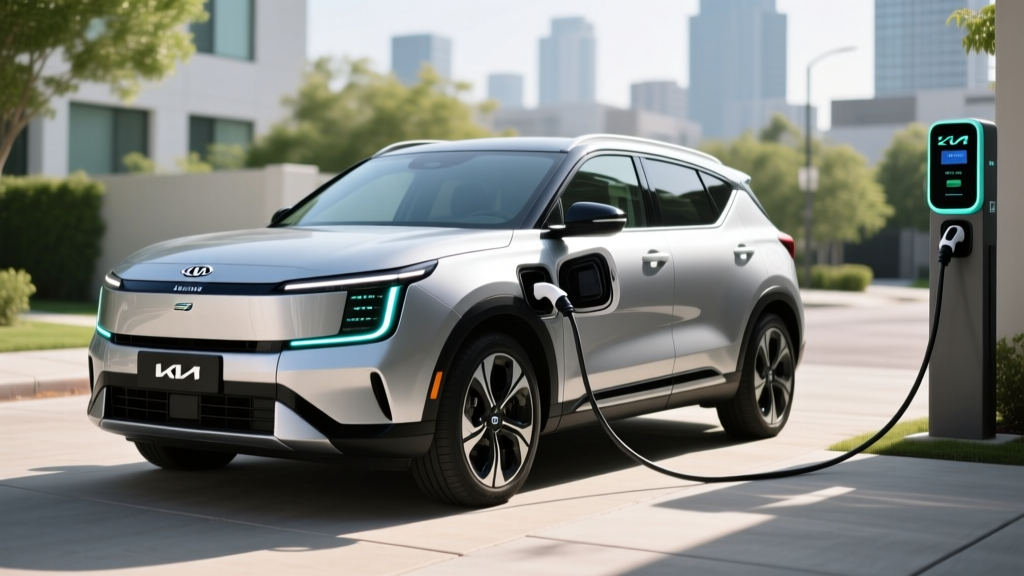
The Kia Seltos has been a strong seller in the subcompact crossover segment since its introduction, but one thing has been conspicuously absent from the U.S. lineup: a hybrid powertrain. For the 2026 model year, Kia is addressing that gap. The Kia Seltos hybrid arrives as buyers increasingly seek fuel-efficient alternatives that don't require plugging in or committing to a full battery-electric vehicle. Here's everything we know about the Seltos Hybrid's efficiency, powertrain, pricing, and whether it deserves a spot on your shortlist.
What Is the Kia Seltos Hybrid? HEV vs. PHEV Explained
Before diving into specs, it's essential to distinguish between the two hybrid architectures Kia employs across its lineup, because the Seltos nameplate may eventually encompass both:
Conventional Hybrid (HEV)
A standard hybrid pairs a gasoline engine with a small electric motor and a compact battery pack (typically 1.5–2.0 kWh). The battery recharges through regenerative braking and the engine — you never plug it in. The electric motor assists during acceleration and enables low-speed electric-only driving for brief distances. The primary benefit is significantly improved fuel economy, especially in city driving.
Plug-In Hybrid (PHEV)
A plug-in hybrid uses a larger battery (typically 10–18 kWh) and a more powerful electric motor. You do plug it in to a Level 1 or Level 2 charger to fill the battery, granting 25–40 miles of electric-only range before the gasoline engine kicks in. Once the battery depletes, it operates like a conventional hybrid. PHEVs qualify for federal tax credits under IRS §30D if they meet battery sourcing, MSRP, and buyer income requirements.
For 2026, Kia has confirmed the Seltos Hybrid for international markets (notably South Korea and Europe) as a conventional HEV. U.S. availability remains under evaluation. Kia has not announced a Seltos PHEV for any market as of early 2026. This guide covers the HEV variant and what U.S. buyers should expect if and when it arrives stateside.
Powertrain and Performance Specs
The Seltos Hybrid uses Kia's proven Smartstream hybrid architecture, shared with the Niro and Sportage Hybrid in various configurations. Here's what the powertrain delivers:
| Specification | 2026 Kia Seltos Hybrid (HEV) |
|---|---|
| Engine | 1.6L GDI 4-cylinder |
| Engine Output | ~105 hp / 109 lb-ft torque |
| Electric Motor | ~32 kW (43 hp) permanent-magnet synchronous |
| Combined System Output | ~141 hp / 195 lb-ft torque |
| Transmission | 6-speed dual-clutch automatic (DCT) |
| Drivetrain | Front-wheel drive (FWD); AWD TBD for U.S. |
| Hybrid Battery | ~1.56 kWh lithium-ion (HEV) |
| 0–60 mph (est.) | ~9.0 seconds |
| Towing Capacity | Not rated (subcompact class) |
The 6-speed DCT is a deliberate choice over the continuously variable transmissions (CVTs) used by Toyota and Honda in their hybrids. The DCT provides more natural shift feel and better highway passing response, though it can exhibit slight low-speed hesitation — a trade-off we've noted across Kia's hybrid lineup.
Fuel Economy: EPA Estimates and Real-World MPG
Fuel efficiency is the primary reason buyers cross-shop hybrids, and the Seltos Hybrid delivers competitive numbers. Based on Kia's published figures for international markets and EPA testing patterns for similar Kia HEVs (Niro, Sportage Hybrid), here are the projected U.S. EPA estimates:
| Driving Condition | EPA MPG (Projected) |
|---|---|
| City | 42–45 MPG |
| Highway | 38–40 MPG |
| Combined | 40–43 MPG |
Hybrids consistently outperform their EPA city estimates in stop-and-go traffic, where regenerative braking and electric-motor assist do the heavy lifting. Expect 44–48 MPG in urban driving during mild weather. Highway fuel economy tends to run closer to or slightly below the sticker — plan for 36–39 MPG at 70–75 mph. In cold weather (below 30°F), overall MPG may drop 8–12% as the engine runs more frequently for cabin heat and battery thermal management.
For comparison, the gas-only 2026 Seltos with the 2.0L engine and CVT returns an EPA-estimated 29 city / 34 highway / 31 combined, according to fueleconomy.gov. That makes the hybrid roughly 30–35% more fuel-efficient in mixed driving — a meaningful savings over a 5-year ownership period.
Pricing, Trims, and Tax Credit Eligibility
Kia has not published U.S. MSRP figures for the Seltos Hybrid as of early 2026. However, using pricing from the Korean market and positioning relative to the Sportage Hybrid and Niro, we can project the following:
- Seltos Hybrid LX (base): ~$27,500–$29,000
- Seltos Hybrid EX: ~$30,000–$32,000
- Seltos Hybrid SX/SX-Prestige: ~$33,000–$35,500
These prices represent a $2,500–$3,500 premium over equivalent gas-only Seltos trims. At current fuel prices (~$3.30/gallon national average) and 12,000 miles/year, the hybrid's fuel savings would pay back that premium in approximately 3.5–4.5 years for a typical driver.
Does the Seltos Hybrid Qualify for a Federal Tax Credit?
No. Conventional hybrids (HEVs) like the Seltos Hybrid do not qualify for the IRS §30D Clean Vehicle Credit. That credit — up to $7,500 — applies only to plug-in electric vehicles (BEVs and PHEVs) that meet battery component and critical mineral sourcing requirements, MSRP caps ($55,000 for SUVs), and buyer income limits. See the IRS §30D guidelines for full eligibility details.
Some states and utilities offer rebates for conventional hybrids, but these are increasingly rare as incentive programs shift toward plug-in vehicles. Check your state's energy office or utility provider for any local programs.
Battery Warranty, Reliability, and Replacement Cost
Hybrid battery longevity remains a top concern for buyers, even though two decades of real-world data from Toyota, Honda, and Hyundai/Kia have demonstrated excellent durability.
- Hybrid battery: 10 years / 100,000 miles (original owner); 10 years / 100,000 miles in CARB states for subsequent owners
- Hybrid system components: 10 years / 100,000 miles
- Bumper-to-bumper: 5 years / 60,000 miles
- Powertrain (engine/transmission): 10 years / 100,000 miles
Kia's hybrid battery warranty is among the strongest in the industry, matching or exceeding Toyota's 10-year/150,000-mile coverage in CARB states. The Seltos Hybrid's ~1.56 kWh battery is small and operates within a conservative state-of-charge window (roughly 40–80%), which minimizes degradation stress.
Replacement cost: If the hybrid battery fails outside of warranty, replacement runs approximately $2,000–$3,500 including parts and labor. However, hybrid battery failures before 150,000 miles are uncommon based on data from Kia's Niro and Sportage Hybrid platforms. Individual cell module replacement (rather than the full pack) is sometimes possible, reducing costs further.
Kia's overall reliability ratings have improved significantly. The brand earned average to above-average scores in J.D. Power's 2025 Vehicle Dependability Study, and the Smartstream hybrid powertrain has accumulated millions of real-world miles across the Kia/Hyundai fleet with few systemic issues.
How the Seltos Hybrid Compares to Alternatives
The subcompact hybrid SUV segment is growing, but options remain limited. Here's how the Seltos Hybrid stacks up against its closest competitors:
| Attribute | Kia Seltos Hybrid | Toyota Corolla Cross Hybrid | Honda HR-V (gas only) |
|---|---|---|---|
| Combined MPG | ~40–43 (HEV) | 42 (HEV) | 28 (gas) |
| Horsepower | ~141 hp | 196 hp | 158 hp |
| Drivetrain | FWD (AWD TBD) | AWD standard | FWD/AWD |
| Cargo Volume | ~26 cu ft (rear seats up) | 25 cu ft | 24.4 cu ft |
| Base Price (est.) | ~$27,500 | ~$30,000 | ~$25,000 |
| Tax Credit | None (HEV) | None (HEV) | None |
The Corolla Cross Hybrid is the Seltos Hybrid's most direct rival, offering standard AWD and slightly higher combined output. However, the Seltos provides more cargo space and Kia's longer warranty coverage. The HR-V remains gas-only in the U.S., making it significantly less efficient.
Who Should Choose the Seltos Hybrid vs. an EV or Gas Car?
Choose the Seltos Hybrid if:
- You want 40+ MPG without changing your fueling habits — no plugs, no range planning
- Your daily commute is 20–60 miles with a mix of city and highway driving
- You don't have reliable access to home or workplace EV charging
- You want a subcompact SUV with strong warranty coverage and competitive pricing
- You drive 12,000–15,000 miles/year and want to reduce fuel costs by ~$500–$700 annually
Choose a Plug-In Hybrid (e.g., Kia Niro PHEV) if:
- You can charge at home (Level 1 or Level 2) and your commute is under 30 miles
- You want electric-only daily driving with gas-engine flexibility for road trips
- You qualify for the §30D federal tax credit (up to $7,500 for eligible PHEVs)
Choose a Full EV (e.g., Kia EV6, Hyundai Kona Electric) if:
- You have home Level 2 charging and rarely drive more than 250 miles in a single day
- You want zero tailpipe emissions and the lowest per-mile fuel cost (~$0.04–$0.06/mile vs. ~$0.12/mile for the hybrid)
- You qualify for the full $7,500 federal tax credit, which can erase the EV price premium
Stick with the Gas Seltos if:
- You drive fewer than 8,000 miles/year — the hybrid premium won't pay back quickly enough
- You need AWD now and the Seltos Hybrid AWD isn't yet available in the U.S.
- Upfront cost is the primary deciding factor
What We Still Don't Know (U.S. Availability)
As of early 2026, Kia has not confirmed a U.S. launch date for the Seltos Hybrid. The model is confirmed for South Korea and select European markets. U.S. buyers who want a Kia hybrid in this size class currently look to the Kia Niro (available as HEV, PHEV, and EV) or step up to the Kia Sportage Hybrid, which starts around $32,000 and offers 34–38 MPG combined with available AWD.
If Kia does bring the Seltos Hybrid to the U.S., expect an announcement in late 2026 for a 2027 model-year arrival. We'll update this guide with confirmed EPA figures, pricing, and trim details as they become available from Kia's U.S. newsroom.
Frequently Asked Questions
How many MPG does the Kia Seltos Hybrid get?
The Seltos Hybrid is projected to deliver approximately 42–45 MPG city, 38–40 MPG highway, and 40–43 MPG combined (EPA estimates pending U.S. certification). Real-world city driving in mild conditions can yield 44–48 MPG thanks to regenerative braking.
Does the Kia Seltos Hybrid need to be plugged in?
No. The Seltos Hybrid is a conventional HEV. Its small battery charges through regenerative braking and the gasoline engine. You fuel it like any other car — there is no plug and no electric-only range to manage.
Is the Kia Seltos Hybrid reliable?
Kia's Smartstream hybrid system has been deployed across the Niro, Sportage, and Sorento lineups with strong durability records. The hybrid battery is warrantied for 10 years / 100,000 miles, and failures before 150,000 miles are uncommon based on fleet data.
What does it cost to replace the hybrid battery?
Out-of-warranty replacement costs approximately $2,000–$3,500 for the complete pack. Individual cell module repairs may cost less. Given the 10-year warranty and conservative battery management, most owners will never face this expense.
Does the Seltos Hybrid qualify for any tax credit?
No. Conventional hybrids do not qualify for the federal §30D Clean Vehicle Credit, which is reserved for plug-in vehicles (BEVs and PHEVs). Check with your state energy office or utility for any local hybrid incentives, though these are increasingly rare.
Will the Seltos Hybrid be available in the U.S.?
Kia has confirmed the Seltos Hybrid for international markets but has not announced U.S. availability as of early 2026. The closest U.S. alternatives are the Kia Niro Hybrid and Kia Sportage Hybrid.
How does the Seltos Hybrid compare to a full EV?
A full EV like the Kia EV6 offers lower per-mile fuel costs (~$0.04–$0.06/mile vs. ~$0.10–$0.12/mile for the hybrid) and zero tailpipe emissions, but requires home charging access and a higher upfront investment (partially offset by the $7,500 federal tax credit for eligible buyers). The hybrid offers 40+ MPG with zero lifestyle changes.