Quick Verdict: The Kia Plug-In Hybrid Niro in 2026
The 2026 Kia Niro Plug-In Hybrid occupies a narrow but valuable lane: a compact crossover that covers most daily commutes on electricity alone, then burns gasoline at hybrid-class efficiency once the battery depletes. With an EPA-rated 33 miles of electric-only range, 108 MPGe, and 48 MPG combined in hybrid operation, it targets buyers who want EV-like running costs without committing to a full battery-electric vehicle.
Starting at roughly $34,390 for the EX trim and climbing to about $38,990 for the SX Touring, the Niro PHEV undercuts most plug-in rivals on price. However, its 11.1 kWh battery and Level 2-only charging (no DC fast charging) mean it's best suited for drivers who can charge at home every night. If you can't plug in regularly, the conventional Niro Hybrid — rated at 53 MPG combined — may be the smarter buy.
HEV vs PHEV: What's the Actual Difference?
Kia sells the Niro in three powertrains. Understanding which one fits your routine is the first decision:
| Feature | Niro Hybrid (HEV) | Niro Plug-In Hybrid (PHEV) | Niro EV (BEV) |
|---|---|---|---|
| Plug in to charge? | No | Yes | Yes |
| Electric-only range | ~1 mile (low-speed creep) | 33 miles (EPA) | 239 miles (EPA) |
| Fuel economy | 53 MPG combined | 48 MPG / 108 MPGe | 113 MPGe |
| Battery size | 1.56 kWh | 11.1 kWh | 64.8 kWh |
| Starting MSRP (2026) | ~$28,490 | ~$34,390 | ~$40,875 |
| Federal tax credit | None | Up to $3,750* | Up to $7,500* |
*Tax credit amounts depend on IRS §30D battery-sourcing, critical-mineral, buyer income, and MSRP-cap rules. Verify current eligibility at irs.gov.
The conventional HEV generates all its electricity from the gasoline engine and regenerative braking — you never plug it in. The PHEV adds a larger battery and a charge port, letting you drive on grid electricity for short trips before the engine takes over. The BEV has no engine at all.
Fuel Economy: EPA Numbers vs Real-World MPG
According to fueleconomy.gov, the 2026 Niro PHEV posts these figures:
| Metric | EPA Rating |
|---|---|
| Electric mode (MPGe) | 108 MPGe combined |
| Hybrid mode — City | 49 MPG |
| Hybrid mode — Highway | 47 MPG |
| Hybrid mode — Combined | 48 MPG |
| Electric-only range | 33 miles |
| Total range (full tank + full charge) | ~430 miles |
| Fuel tank capacity | 11.1 gallons |
Real-World Expectations
Hybrids typically beat their EPA city numbers in stop-and-go driving because regenerative braking recovers energy that a gas car wastes as heat. In our experience, the Niro PHEV returns 50–55 MPG in urban traffic once the battery is depleted — slightly above the 49 MPG sticker. Highway driving at 75+ mph drops efficiency to roughly 42–44 MPG, below the EPA figure, because aerodynamic drag dominates and the 1.6-liter engine works harder.
The 33-mile electric range holds up well in mild weather (60–80°F) with light HVAC use. In winter conditions below 30°F, expect 24–27 miles of electric range before the engine kicks on, due to cabin heating demands and battery chemistry limitations. Running the seat heaters instead of the cabin heat pump helps preserve range.
Powertrain, Battery, and Charging Specs
| Specification | 2026 Kia Niro PHEV |
|---|---|
| Engine | 1.6L GDI 4-cylinder (104 hp) |
| Electric motor | 62 kW permanent-magnet (83 hp) |
| Combined system output | 180 hp / 195 lb-ft torque |
| Transmission | 6-speed dual-clutch automatic (DCT) |
| Battery chemistry | Lithium-ion polymer (NMC) |
| Battery capacity (total / usable) | 11.1 kWh / ~8.9 kWh usable |
| 0–60 mph | ~7.2 seconds |
| Drivetrain | Front-wheel drive |
| Charge port | J1772 (Level 1 / Level 2 AC only) |
| Max AC charge rate | 3.3 kW |
| DC fast charging | Not available |
| Level 1 charge time (120V, 12A) | ~10 hours (0–100%) |
| Level 2 charge time (240V, 3.3 kW) | ~2 hours 45 min (0–100%) |
| Curb weight | ~3,600 lbs |
Charging Reality Check
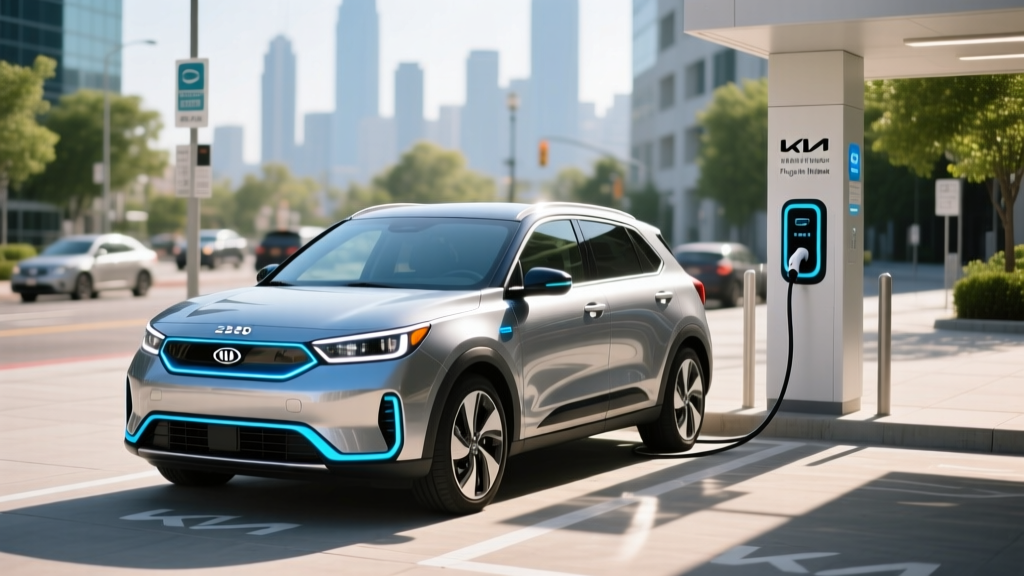
The Niro PHEV charges at a maximum of 3.3 kW on AC power. That's the rate your home Level 2 charger will deliver — not a limitation of the charger, but of the car's onboard charger. A standard 120V household outlet (Level 1) adds roughly 4 miles of electric range per hour of charging, which is sufficient if you drive under 30 miles daily and park overnight. A 240V Level 2 outlet fills the 11.1 kWh battery from empty in under three hours.
There is no DC fast charging port. You cannot use public CCS or NACS rapid chargers. For a PHEV with 33 miles of range, this is rarely a practical problem — most owners charge exclusively at home — but it means road-trip topping up on electricity isn't an option.
Pricing, Trims, and Tax Credit Eligibility
The 2026 Niro PHEV comes in two trims:
- EX: ~$34,390 MSRP (destination included)
- SX Touring: ~$38,990 MSRP (destination included)
Both trims fall under the IRS §30D MSRP cap of $80,000 for SUVs/crossovers. The SX Touring adds a power sunroof, heated and ventilated front seats, a Harman Kardon audio system, and Highway Driving Assist (HDA).
Federal Tax Credit (§30D)
The Niro PHEV currently qualifies for a partial federal plug-in vehicle credit — up to $3,750 — depending on whether the vehicle meets the critical-minerals and battery-component sourcing thresholds set by the Inflation Reduction Act. Because the credit is split into two halves ($3,750 for critical minerals, $3,750 for battery components), and Kia's supply chain may not satisfy both requirements in every model year, the actual credit can range from $3,750 to $7,500.
§30D Eligibility Checklist:
- Buyer adjusted gross income: ≤ $150,000 (single) / ≤ $300,000 (joint)
- Vehicle MSRP: ≤ $80,000 (SUV classification)
- Vehicle must be new, assembled in North America (Kia Niro PHEV is built in South Korea — this may disqualify it from §30D; verify on fueleconomy.gov)
- Battery sourcing requirements vary by year — check IRS guidance
- Point-of-sale transfer available if all criteria are met
Important caveat: The Niro PHEV is manufactured in South Korea. Under current §30D rules, a vehicle must undergo final assembly in North America to qualify for the federal new-vehicle credit. This likely makes the Niro PHEV ineligible for the federal credit in 2026. However, some state-level incentives (California, Colorado, New York, and others) may still apply. Always confirm with a tax professional and your state's energy office.
Battery Warranty, Reliability, and Replacement Cost
Kia Niro PHEV Battery Warranty:
- High-voltage battery: 10 years / 100,000 miles (whichever comes first)
- Capacity retention threshold: ~70% of original capacity during warranty period
- Hybrid system components (motor, inverter, DCT): 10 years / 100,000 miles
- Bumper-to-bumper: 5 years / 60,000 miles
- Powertrain (engine): 10 years / 100,000 miles
Kia's 10-year/100,000-mile hybrid battery warranty is among the strongest in the segment, matching Hyundai's coverage and exceeding Toyota's 8-year/100,000-mile hybrid battery warranty on most models.
How Long Will the Battery Actually Last?
The Niro PHEV's 11.1 kWh NMC lithium-ion pack is relatively small, meaning it cycles more frequently than a full EV's battery. However, Kia's thermal management system and conservative usable buffer (~80% of total capacity) reduce stress on the cells. Based on degradation data from earlier-generation Niro PHEVs and similar Kia/Hyundai PHEV powertrains, expect roughly 8–12% capacity loss over 100,000 miles of mixed use. That translates to electric-only range dropping from 33 miles to roughly 28–30 miles after a decade — still functional for daily driving.
Battery Replacement Cost
Out-of-warranty replacement for the Niro PHEV's high-voltage battery currently runs between $4,500 and $6,500 (parts and labor) based on dealer quotes. This is significantly less than a full EV battery replacement ($12,000–$20,000+) because the pack is smaller. Individual cell modules can sometimes be replaced rather than the entire pack, reducing cost further. Most Niro PHEV batteries should outlast the vehicle's economic life without needing replacement.
Overall Reliability
The Niro PHEV's powertrain — the 1.6L GDI engine paired with the 6-speed DCT — has been in Kia/Hyundai service since 2017 with generally positive results. The DCT is smoother than most competitors' CVTs under acceleration but can feel slightly hesitant from a standstill. IIHS has rated recent Niro models favorably in crash testing. Consult iihs.org for the latest 2026 ratings.
Who Should Buy the Niro PHEV (and Who Shouldn't)
Pros
- 33 miles electric covers most commutes gas-free
- 48 MPG hybrid mode when battery depletes
- Lower starting price than most PHEV crossovers
- 10-year/100,000-mile battery warranty
- Comfortable ride, practical cargo space (19.4 cu ft rear seats up)
- No range anxiety — gas engine provides 430+ total miles
Cons
- No DC fast charging capability
- 3.3 kW AC charge rate is slow for public Level 2 stations
- Likely ineligible for federal §30D tax credit (South Korea assembly)
- Electric range drops to ~25 miles in cold weather
- FWD only — no AWD option
- DCT hesitation at low speeds
Decision Framework
Choose the Niro PHEV if:
- You can charge at home (Level 1 or Level 2) every night
- Your daily round-trip commute is under 35 miles
- You take occasional road trips and don't want to plan around chargers
- You want EV-like daily costs without a full EV's price premium
Choose the Niro Hybrid (HEV) instead if:
- You cannot charge at home (apartment, street parking, no garage outlet)
- Your commute is mostly highway miles where electric range won't help much
- You want the lowest purchase price and highest MPG number
Choose the Niro EV (or another BEV) instead if:
- Your daily driving exceeds 40 miles and you want zero gas use
- You want access to DC fast charging for road trips
- You qualify for the full $7,500 federal credit on a BEV, closing the price gap
Ownership Costs: Niro PHEV vs Hybrid vs Gas
| Cost Factor (5 years / 75,000 mi) | Niro PHEV (EX) | Niro Hybrid (EX) | Gas Crossover (28 MPG avg) |
|---|---|---|---|
| Purchase price (MSRP) | $34,390 | $29,890 | $30,000 |
| Estimated fuel / electricity | $3,200 | $5,100 | $8,900 |
| Maintenance (oil, filters, brakes) | $2,400 | $2,800 | $3,600 |
| Insurance (avg) | $7,500 | $6,800 | $6,500 |
| Estimated depreciation | $14,500 | $11,500 | $13,000 |
| 5-Year Total | ~$61,990 | ~$56,090 | ~$62,000 |
Assumptions: $3.40/gal gas, $0.14/kWh electricity, 70% of PHEV miles driven on electricity. Insurance and depreciation are estimates; actual costs vary by region and driver profile.
The PHEV's fuel savings are significant when most miles are electric, but its higher purchase price and steeper depreciation narrow the gap with the conventional hybrid. If you drive mostly highway or can't charge at home, the HEV wins on total cost.
Frequently Asked Questions
How many MPG does the Kia Niro Plug-In Hybrid get?
The 2026 Niro PHEV achieves 48 MPG combined (49 city / 47 highway) in hybrid mode after the battery depletes, and 108 MPGe in electric mode. Real-world city driving often returns 50–55 MPG thanks to aggressive regenerative braking.
How far can the Kia Niro PHEV go on electric only?
The EPA rates the Niro PHEV at 33 miles of electric-only range. In mild weather with light HVAC use, you can expect 30–33 miles. In freezing temperatures, plan for 24–27 miles before the gasoline engine engages.
Does the Kia Niro PHEV qualify for a federal tax credit?
Under current IRS §30D rules, the Niro PHEV is likely ineligible for the federal new clean vehicle credit because it is assembled in South Korea, not North America. State-level incentives may still apply. Verify current rules at irs.gov and consult a tax professional.
Is the Kia Niro PHEV reliable, and what does battery replacement cost?
The Niro PHEV powertrain has been in production since 2017 with above-average reliability. The high-voltage battery is covered by a 10-year/100,000-mile warranty. Out-of-warranty replacement costs approximately $4,500–$6,500, though most batteries should last the vehicle's lifetime without significant issues.
Should I get the Niro PHEV, the regular Niro Hybrid, or a full EV?
If you can charge at home and drive under 35 miles daily, the PHEV gives you electric commuting with gas-engine backup. If you can't charge at home, the conventional Niro Hybrid at 53 MPG is the better choice. If you want zero gasoline use and your daily miles are under 200, consider the Niro EV or another battery-electric vehicle.
Can the Niro PHEV DC fast charge?
No. The Niro PHEV only supports AC charging via a J1772 port at up to 3.3 kW. A full charge takes about 2 hours 45 minutes on a 240V Level 2 charger, or roughly 10 hours on a standard 120V outlet. DC fast charging (CCS/NACS) is not available on any Niro PHEV trim.
How long does it take to charge the Niro PHEV at home?
On a standard 120V household outlet (Level 1), a full charge takes approximately 10 hours. On a 240V Level 2 home charger, it takes about 2 hours 45 minutes. Most owners plug in overnight and wake up to a full battery every morning, which is all that's needed for 33 miles of electric range.