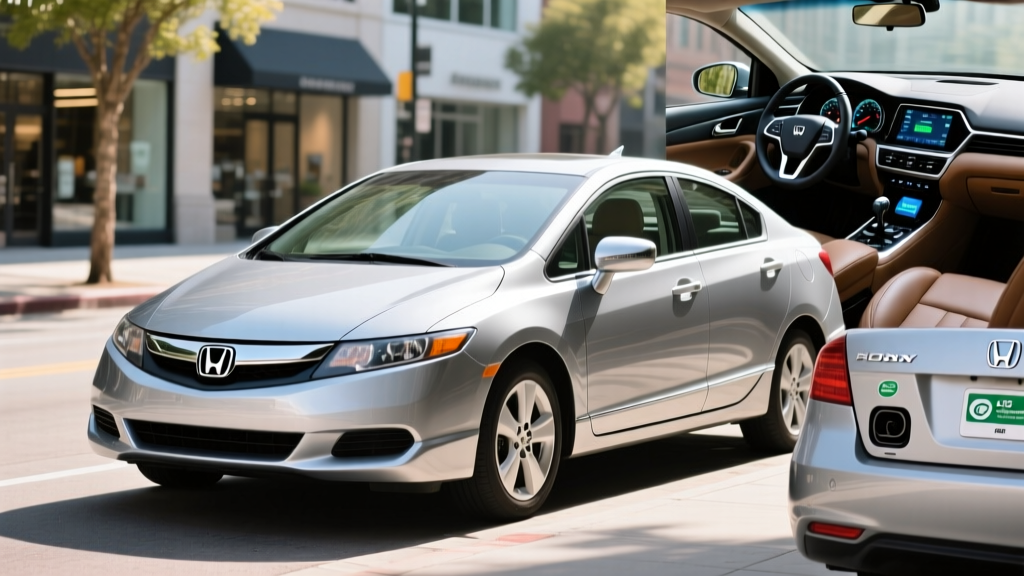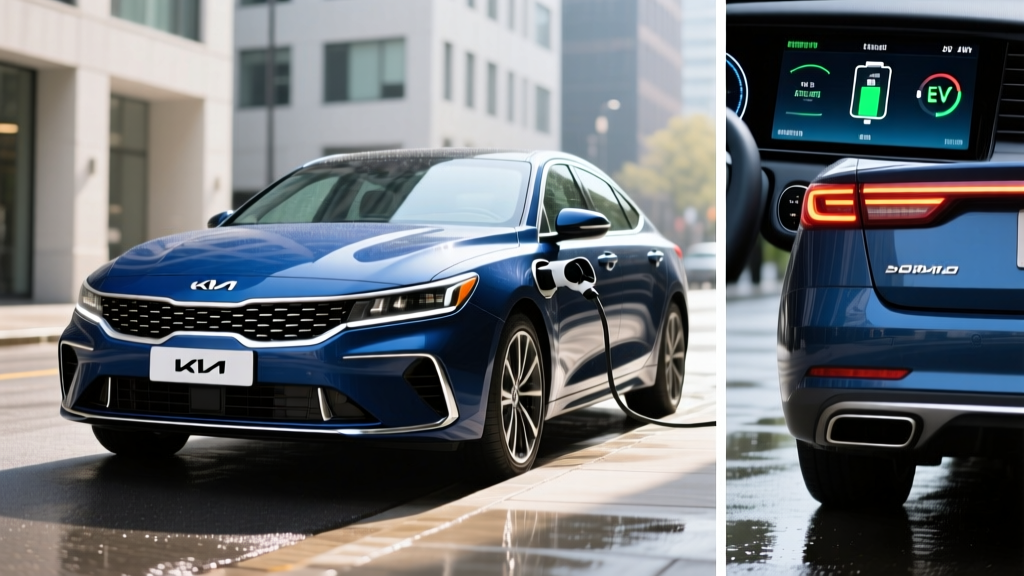
Quick verdict: The Kia Optima Plug-In Hybrid (PHEV) was discontinued after the 2020 model year when Kia replaced the Optima nameplate with the K5 — a sedan offered only with turbocharged gas engines. That means every Optima PHEV on the road today is a used vehicle (model years 2017–2020). For the right buyer — someone with home charging access and a short commute — a used Optima PHEV remains a compelling way to drive electric daily while keeping a gas engine for road trips. Here's everything you need to know before buying one in 2026.
HEV vs PHEV: What the Optima Plug-In Hybrid Actually Is
Before diving into specs, it's critical to distinguish the two electrified Optima variants Kia sold:
- Optima Hybrid (HEV): A conventional hybrid that charges its small battery through regenerative braking and the gasoline engine. You never plug it in. It cannot drive on electric power alone for meaningful distances. EPA-rated around 40–42 MPG combined.
- Optima Plug-In Hybrid (PHEV): A larger battery (9.8 kWh) that you plug in to charge, enabling roughly 29 miles of pure electric driving before the gas engine kicks in. After the battery depletes, it operates like a conventional hybrid.
This guide focuses exclusively on the Kia Optima Plug-In Hybrid. If you're looking at a used Optima and aren't sure which one it is, check for a charge port on the front fender — only the PHEV has one.
Electric-Only Range, MPGe, and Gas MPG
The EPA rated the 2017–2020 Kia Optima PHEV at 29 miles of electric-only range and 95 MPGe (miles per gallon equivalent) when operating on battery power. Once the battery is depleted, the combined gas-electric hybrid system delivers 41 MPG combined.
| Metric | EPA Rating | Real-World Expectation |
|---|---|---|
| Electric-only range | 29 miles | 22–27 mi (highway/cold weather); up to 31 mi (city, mild temps) |
| MPGe (electric mode) | 95 MPGe | 85–100 MPGe depending on driving style |
| MPG combined (hybrid mode) | 41 MPG | 36–43 MPG (hybrids often exceed EPA in city, fall short on highway) |
| MPG city | — | Often 43–46 MPG in stop-and-go (regen braking excels here) |
| MPG highway | — | 35–38 MPG at 70+ mph (aerodynamic drag reduces efficiency) |
| Total combined range | ~430 miles | ~380–450 mi depending on conditions |
Real-world range reality check: The EPA's 29-mile electric range is achievable in mild weather with city driving. In winter (below 40°F), expect a 20–30% reduction — roughly 20–23 electric miles — because lithium-ion batteries lose efficiency in cold and cabin heating draws significant power. On the highway at 75 mph, electric range drops to roughly 22–25 miles even in moderate temperatures. The 15.8-gallon fuel tank provides ample backup for longer trips.
Powertrain Specs: Engine, Motor, and Battery
The Optima PHEV pairs a 2.0-liter four-cylinder gasoline engine with a permanent-magnet synchronous electric motor, connected through a six-speed automatic transmission. This is a full parallel hybrid system — both the engine and motor can drive the wheels independently or together.
| Specification | Detail |
|---|---|
| Gas engine | 2.0L GDI 4-cylinder, 154 hp / 140 lb-ft |
| Electric motor | 50 kW (67 hp) permanent-magnet synchronous |
| Combined system output | 202 hp / 276 lb-ft |
| Transmission | 6-speed automatic (no CVT) |
| Battery capacity | 9.8 kWh (lithium-ion polymer, NMC chemistry) |
| Usable battery capacity | ~7.8 kWh (buffer protects longevity) |
| 0–60 mph | ~7.7 seconds |
| Drivetrain | Front-wheel drive |
| Curb weight | ~3,750 lbs |
The six-speed automatic is a notable differentiator. Many competitors (Toyota Prius Prime, Ford Fusion Energi) used CVTs or planetary gearsets that produce a rubber-band drone under acceleration. The Optima PHEV's conventional transmission delivers more natural shift feel, though it sacrifices a touch of efficiency.
Charging: Level 1, Level 2, and What It Can't Do
The Optima PHEV uses a standard J1772 connector for AC charging. Here's the critical limitation: it cannot DC fast charge. There is no CCS or CHAdeMO port. All charging is AC-only, which is typical for PHEVs of this era.
| Charging Level | Power | Time (0–100%) | Notes |
|---|---|---|---|
| Level 1 (120V household) | ~1.4 kW | ~9 hours | Trickle charge; works overnight for short commutes |
| Level 2 (240V, 3.3 kW onboard charger) | 3.3 kW | ~3 hours | Max AC rate — limited by onboard charger, not the station |
| DC Fast Charging | N/A | N/A | Not supported — no DC port |
The 3.3 kW onboard charger is the bottleneck. Even if you plug into a 7.2 kW or 11.5 kW Level 2 station, the car will only draw 3.3 kW. This means a full charge takes about 3 hours regardless of how powerful your home charger is. For daily use, this is rarely an issue — most owners plug in overnight and wake up to a full battery every morning.
Home charging setup: A standard 120V outlet works if your daily commute is under 20 miles. For faster replenishment, a 240V Level 2 home station (like a ChargePoint Home Flex or Emporia Vue) is ideal. Expect $500–$1,500 for equipment and electrician installation depending on your panel capacity and run distance, according to Energy.gov home charging guidelines.
Battery Warranty, Degradation, and Replacement Cost
Kia's battery warranty: The Optima PHEV's high-voltage battery is covered by Kia's 10-year/100,000-mile powertrain warranty (whichever comes first). This covers defects and capacity loss below a usable threshold. For original owners of 2017 models, that warranty extends through 2027. For 2020 models, coverage runs through 2030.
Important caveat for used buyers: Kia's 10-year/100,000-mile warranty is not fully transferable to second owners. Upon transfer, the powertrain warranty typically reverts to a 5-year/60,000-mile term from the original in-service date. Verify remaining coverage with a Kia dealer using the VIN before purchase.
Degradation reality: Kia's lithium-ion polymer batteries have proven durable in real-world use. Most Optima PHEV owners report minimal degradation — typically 5–10% range loss after 5–7 years. A 2017 model that originally delivered 29 electric miles might now provide 25–27 miles, which is still practical for short commutes. The NMC chemistry used in the pack is well-suited to the partial cycling pattern typical of PHEV use (daily charge-discharge between 20–100% SoC rather than deep cycling).
Battery replacement cost: If the battery does fail outside warranty, replacement runs approximately $4,000–$6,500 including parts and labor at a Kia dealership. Third-party hybrid battery rebuilders may offer refurbished packs for $2,500–$4,000. Given the warranty coverage and slow degradation rates, most owners will never face this expense — but it's a factor when evaluating high-mileage examples.
Used Pricing in 2026 and Tax Credit Eligibility
Because the Optima PHEV was discontinued after 2020, there is no new-vehicle MSRP to discuss. Here's what used pricing looks like in early 2026:
| Model Year | Mileage Range | Typical Used Price |
|---|---|---|
| 2017 | 70,000–100,000 mi | $12,000–$15,500 |
| 2018 | 55,000–85,000 mi | $14,000–$17,500 |
| 2019 | 40,000–70,000 mi | $16,000–$20,000 |
| 2020 | 30,000–55,000 mi | $18,500–$23,000 |
Federal tax credit (used EV credit, IRC §25E): The Optima PHEV qualifies for the federal used clean vehicle credit, which provides 30% of the sale price, up to $4,000. To be eligible, the vehicle must:
- Have a sale price of $25,000 or less (most Optima PHEVs qualify)
- Be purchased from a licensed dealer (private-party sales don't qualify)
- Be at least two model years old (all Optima PHEVs qualify)
- Buyer must meet income caps: $75,000 single / $112,500 head of household / $150,000 joint (per IRS §25E guidelines)
- Not have been previously transferred to you (first-time transfer only)
On a $16,000 Optima PHEV purchase, the credit would be $4,000 (30% of $16,000 exceeds the $4,000 cap, so you'd receive the max). This effectively brings a solid 2018–2019 example down to $10,000–$16,000 after the credit — exceptional value for a plug-in vehicle. Consult a tax professional to confirm your eligibility, as rules are subject to change.
Note on the new-vehicle §30D credit: When new, the Optima PHEV was eligible for approximately $4,902 in federal tax credits. That credit is no longer available since the vehicle is discontinued. Only the used-vehicle §25E credit applies now.
Who Should Choose the Optima PHEV vs a Full EV or Gas Car
Choose the Optima PHEV if:
- Your daily commute is under 25 miles round-trip (you'll drive electric most days)
- You can charge at home (Level 1 or Level 2)
- You take road trips longer than 200 miles a few times per year and don't want to plan around chargers
- You want EV-like daily driving at a sub-$20,000 price point (after the used credit)
- You need a roomy midsize sedan with a usable trunk (15.4 cu ft — the PHEV battery reduces this slightly vs. the gas model)
Choose a full BEV (like a used Chevy Bolt, Tesla Model 3, or Hyundai Ioniq Electric) if:
- You have reliable home charging and your daily driving rarely exceeds 150 miles
- You want to eliminate oil changes, spark plugs, and transmission fluid entirely
- You want access to DC fast charging for road trips
Choose a conventional gas car or HEV if:
- You cannot charge at home or at work
- Your daily commute is primarily highway (PHEVs benefit least from electric mode at sustained high speeds)
- You want a newer vehicle with current warranty coverage at a similar price point
Pros
- 29 mi electric range covers most daily commutes
- 41 MPG hybrid mode is excellent for a midsize sedan
- Conventional 6-speed auto feels natural (no CVT drone)
- Strong 202 hp combined output — confident highway merging
- Up to $4,000 used EV tax credit
- Spacious rear seat and decent trunk for a PHEV
- 10-year/100,000-mi original battery warranty (verify transfer terms)
Cons
- Discontinued — only available used
- No DC fast charging
- 3.3 kW onboard charger limits Level 2 speed
- Battery warranty may reduce on ownership transfer
- Electric range drops to ~20 mi in cold weather
- Infotainment and ADAS features dated vs. 2026 models
- Trunk space reduced by battery pack placement
Reliability and Common Issues
The Optima PHEV has a solid reliability record. The 2.0L GDI engine is a well-proven Hyundai-Kia powertrain with no widespread failure patterns. The electric motor and power electronics have been largely trouble-free across the Hyundai-Kia PHEV fleet (which includes the Sonata PHEV, sharing the same architecture).
Common issues reported on higher-mileage examples include:
- Brake caliper corrosion: Because regenerative braking handles most deceleration, the friction brakes see less use. Calipers can seize if the car sits for extended periods. Regular brake maintenance is essential.
- 12V auxiliary battery drain: Like many PHEVs, the 12V battery can discharge if the car sits unplugged for weeks. The high-voltage battery does not automatically maintain the 12V system when parked.
- Infotainment glitches: The 2017–2018 UVO system can be slow and occasionally freeze. A software update or head-unit reset typically resolves this.
For reliability data, consult NHTSA's recall database and enter the specific VIN to check for open recalls before purchasing.
Frequently Asked Questions
How many MPG does the Kia Optima Plug-In Hybrid get?
The EPA rates the Optima PHEV at 41 MPG combined in hybrid mode (after the battery is depleted). In real-world driving, expect 36–43 MPG depending on conditions. City driving often yields 43–46 MPG thanks to aggressive regenerative braking, while sustained highway driving at 70+ mph drops to 35–38 MPG. In electric mode, it achieves 95 MPGe.
How far can the Optima PHEV go on electric only?
The EPA rates it at 29 miles of electric-only range. Real-world results vary: 22–27 miles on the highway or in cold weather, and up to 31 miles in city driving during mild temperatures. The total combined range (electric + gas) is approximately 430 miles.
Does the Kia Optima PHEV qualify for any tax credit in 2026?
Yes — it qualifies for the federal used clean vehicle credit (IRC §25E), which provides 30% of the sale price up to $4,000. The car must be purchased from a dealer for $25,000 or less, and the buyer must meet income limits ($75K single / $150K joint). The original new-vehicle §30D credit is no longer available since the model is discontinued. Always verify current rules with a tax professional or the IRS used vehicle credit page.
Is the Optima PHEV reliable, and what does a battery replacement cost?
The Optima PHEV has a good reliability record. The powertrain is well-proven, and the battery degrades slowly — typically 5–10% over 5–7 years. Kia's original 10-year/100,000-mile battery warranty may reduce to 5-year/60,000-mile upon ownership transfer, so verify coverage with a dealer. Out-of-warranty battery replacement costs approximately $4,000–$6,500, though most owners never need one.
Can I DC fast charge the Optima PHEV?
No. The Optima PHEV supports only AC charging (Level 1 at 120V and Level 2 at 240V). Its onboard charger is limited to 3.3 kW, meaning a full charge takes about 3 hours on Level 2 or 9 hours on Level 1. This is standard for PHEVs of this era but means you cannot use public DC fast chargers.
Hybrid vs PHEV vs EV — which should I choose?
If you can charge at home and your daily driving is under 30 miles, the PHEV gives you electric daily driving with gas-engine backup — ideal if you also take longer road trips. A full EV (BEV) is better if you want zero maintenance on the powertrain, access to DC fast charging, and have predictable driving patterns. A conventional hybrid (HEV) is best if you cannot charge at home at all and simply want better fuel economy without any behavior change.
What's the difference between the Optima PHEV and the Kia Niro PHEV?
The Niro PHEV is a crossover with slightly less electric range (~26 mi for 2018–2022 models) but more cargo space and a higher seating position. The Optima PHEV offers more rear legroom, a more car-like driving experience, and slightly more electric range. Both use similar Hyundai-Kia PHEV powertrains. The Niro is still in production (newer models available), while the Optima PHEV is only available used.