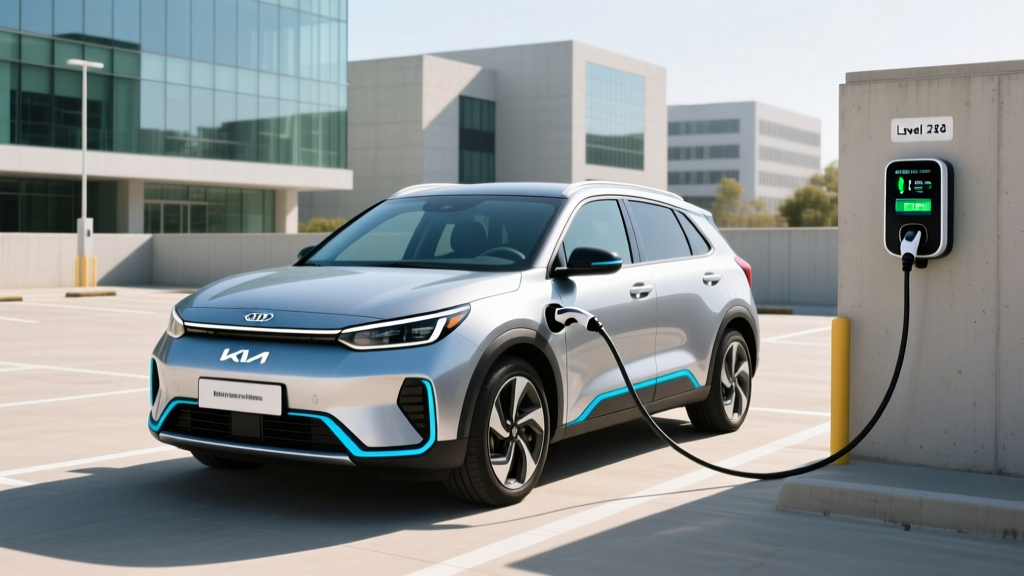
If you want electric commuting without range anxiety, the Kia Niro Plug-In Hybrid occupies a compelling middle ground. It pairs a usable electric-only range with a gasoline engine for longer trips, all in a practical subcompact crossover body. But how does the Kia Niro Plug-In Hybrid actually perform when you move past the EPA sticker? This guide covers the real-world numbers that matter: true electric range, observed fuel economy, charging logistics, tax credit eligibility, and long-term battery reliability.
HEV vs PHEV: Which Niro Are We Talking About?
Kia sells the Niro in three electrified flavors, and buyers frequently confuse them. The distinction matters enormously for your fuel budget and daily routine.
| Feature | Niro Hybrid (HEV) | Niro Plug-In Hybrid (PHEV) | Niro EV |
|---|---|---|---|
| Plugs in? | No | Yes | Yes |
| Electric-only range | None (EV assist only) | 33 miles (EPA) | 239 miles (EPA) |
| Battery capacity | 1.56 kWh | 11.1 kWh | 64.8 kWh |
| EPA combined MPG/MPGe | 53 MPG | 48 MPG / 108 MPGe | 113 MPGe |
| Starting MSRP (2026) | ~$28,500 | ~$35,590 | ~$40,875 |
| Federal tax credit | None | Up to $3,750 (§30D) | Up to $7,500 (§30D) |
The conventional Niro Hybrid captures energy through regenerative braking and engine operation — you never plug it in. The Niro Plug-In Hybrid adds a larger 11.1 kWh battery pack and a more powerful electric motor, enabling genuine electric-only driving at highway speeds. Once the battery depletes, it seamlessly transitions to hybrid operation. The Niro EV is a full battery-electric vehicle with no gasoline engine at all.
Electric-Only Range and Total Range: The Numbers That Matter
The EPA rates the 2026 Kia Niro Plug-In Hybrid at 33 miles of electric-only range. That figure comes from the combined city/highway driving cycle under fueleconomy.gov testing.
EPA estimate: 33 miles. In practice, expect 28–35 miles depending on conditions. City driving with frequent regenerative braking can push the range toward 35 miles. Highway driving at 70+ mph, cold weather below 40°F, or aggressive acceleration will reduce it to 25–28 miles. The Niro PHEV's heat pump (standard on EX and above) helps preserve range in winter, but cabin heating still draws from the battery.
Once the battery is depleted, the Niro PHEV operates as a conventional hybrid. The EPA rates it at 48 MPG combined (50 city / 46 highway) in charge-sustaining hybrid mode. With an 11.1-gallon fuel tank, total combined range — electric plus gasoline — lands around 480–510 miles.
Fuel Economy Breakdown: EPA vs Real World
Hybrid fuel economy varies more than most buyers expect based on driving patterns. Here is the official EPA breakdown alongside what owners typically report:
| Driving Scenario | EPA Estimate | Real-World Expectation |
|---|---|---|
| City (hybrid mode) | 50 MPG | 48–55 MPG |
| Highway (hybrid mode, 70 mph) | 46 MPG | 42–46 MPG |
| Combined (hybrid mode) | 48 MPG | 44–50 MPG |
| Electric-only (MPGe) | 108 MPGe | 95–115 MPGe |
The Kia Niro PHEV, like most plug-in hybrids, tends to exceed its EPA city estimate in stop-and-go traffic because regenerative braking recaptures energy that a gasoline car wastes as heat. Highway driving is where it falls slightly short of the sticker, as aerodynamic drag increases and regenerative opportunities decrease.
If your commute is under 30 miles round-trip and you charge nightly, you may burn gasoline only on weekend road trips. Owners who charge religiously report annual fuel consumption dropping to 100–200 gallons — a fraction of what a conventional vehicle requires.
Charging the Niro PHEV: Speed, Equipment, and Cost
The Niro PHEV's 11.1 kWh battery is small enough that charging is straightforward, but there are important limitations to understand.
| Charging Level | Power (kW) | Full Charge Time | Connector |
|---|---|---|---|
| Level 1 (120V household outlet) | ~1.4 kW | ~8–9 hours | J1772 |
| Level 2 (240V home/public) | 3.3 kW (onboard charger max) | ~2.5–3 hours | J1772 |
| DC Fast Charging | Not supported | N/A | N/A |
Critical detail: The Niro PHEV's onboard charger caps at 3.3 kW. Even if you plug into a 7.2 kW or 11.5 kW Level 2 station, the car will only draw 3.3 kW. A full 0–100% charge takes roughly 2.5 to 3 hours on Level 2. This means workplace charging or a quick shopping-trip top-up can add meaningful electric range, but you will not find DC fast charging capability — the PHEV battery is simply too small to justify the hardware cost and weight.
Charging cost is minimal. At the US average residential electricity rate of ~$0.16/kWh, a full charge costs approximately $1.78 — roughly equivalent to a third of a gallon of gasoline. Over a year of electric-predominant commuting, electricity costs typically run $300–$500 versus $1,500–$2,200 for gasoline in a comparable non-hybrid crossover.
Powertrain Specs and Performance
| Specification | 2026 Kia Niro Plug-In Hybrid |
|---|---|
| Engine | 1.6L GDI 4-cylinder |
| Engine output | 104 hp / 109 lb-ft torque |
| Electric motor output | 83 hp / 195 lb-ft torque |
| Combined system output | 180 hp / 195 lb-ft torque |
| Transmission | 6-speed dual-clutch automatic (DCT) |
| Drivetrain | Front-wheel drive |
| 0–60 mph | ~7.2 seconds |
| Battery capacity (gross) | 11.1 kWh (lithium-ion polymer) |
| Battery usable capacity | ~9.0 kWh |
| Fuel tank | 11.1 gallons |
| EPA electric range | 33 miles |
| EPA combined MPG (hybrid mode) | 48 MPG |
| EPA MPGe (electric mode) | 108 MPGe |
| Cargo volume (rear seats up) | 19.4 cu ft |
| Cargo volume (rear seats folded) | 53.6 cu ft |
The 180 combined horsepower is a meaningful upgrade over the conventional Niro Hybrid's 139 hp, and it shows in passing maneuvers and highway merging. The 6-speed dual-clutch transmission avoids the rubber-band feel common in CVT-equipped hybrids, delivering crisp shifts that feel more like a traditional automatic. Electric-only mode is viable at speeds up to roughly 75 mph, though aggressive throttle application will wake the gasoline engine.
Pricing, Trims, and Tax Credit Eligibility
The 2026 Kia Niro Plug-In Hybrid is available in three trims:
| Trim | MSRP (incl. destination) | Key Additions |
|---|---|---|
| LX | $35,590 | Base PHEV, 11.1 kWh battery, 8" touchscreen, wireless Apple CarPlay/Android Auto |
| EX | $37,190 | Heated front seats, heat pump, smart power liftgate, 10.25" display |
| X-Line | $38,490 | Sport styling, synthetic leather, heated steering wheel, ambient lighting |
Does the Kia Niro Plug-In Hybrid Qualify for a Federal Tax Credit?
Under current IRS §30D rules, the Niro PHEV may qualify for a partial federal tax credit of up to $3,750. The full $7,500 credit requires meeting both critical-minerals and battery-component sourcing thresholds that the Niro PHEV's supply chain has not fully satisfied as of the 2026 model year. Here is what determines your eligibility:
- MSRP cap: The Niro PHEV qualifies as an SUV under IRS rules (MSRP cap: $80,000). All trims clear this threshold.
- Buyer income limits: Modified AGI must not exceed $150,000 (single), $225,000 (head of household), or $300,000 (joint).
- Battery sourcing: The critical-minerals and battery-component requirements determine whether you receive $3,750 or $7,500. Check the latest IRS clean vehicle credit page and fueleconomy.gov tax credit lookup before purchasing, as sourcing compliance changes periodically.
- Point-of-sale transfer: You may transfer the credit to the dealer at purchase, reducing your out-of-pocket cost immediately rather than waiting for tax filing.
Some states offer additional PHEV incentives — California, Colorado, and Massachusetts have historically provided rebates or HOV-lane access for qualifying plug-in hybrids. Check your state energy office or AFDC state incentive database for current programs.
Battery Reliability, Warranty, and Replacement Cost
- High-voltage battery: 10 years / 100,000 miles (whichever comes first)
- Hybrid system components: 10 years / 100,000 miles
- Basic vehicle warranty: 5 years / 60,000 miles
- Powertrain warranty: 10 years / 100,000 miles
Kia defines battery failure as capacity dropping below approximately 70% of original capacity within the warranty period.
Kia's 10-year/100,000-mile hybrid battery warranty is among the strongest in the industry and directly addresses the top concern for hybrid buyers. The 11.1 kWh lithium-ion polymer pack uses a relatively conservative chemistry and charge/discharge strategy — the vehicle never uses the full battery capacity, maintaining top and bottom buffers to reduce degradation stress.
Based on data from earlier Niro PHEV model years (2019–2024), battery degradation has been modest. Most owners report 90%+ capacity retention at the 5-year mark. Out-of-warranty battery replacement for the Niro PHEV currently ranges from $3,500 to $5,500 including labor, though this cost has been trending downward as lithium-ion cell prices continue to decline.
Kia's hybrid reliability record, broadly, is strong. The Niro platform has consistently earned above-average reliability scores from consumer testing organizations. The dual-clutch transmission, while more engaging than a CVT, has had occasional low-speed hesitation complaints in earlier model years, though software updates have largely addressed this.
Who Should Buy the Niro PHEV — and Who Shouldn't?
Pros
- 33 miles electric covers most commutes gas-free
- 48 MPG hybrid mode when battery depletes
- No range anxiety — 480+ mile total range
- Strong 180 hp combined output
- 10-year/100,000-mile battery warranty
- Practical crossover cargo space (53.6 cu ft)
- Eligible for partial federal tax credit
Cons
- 3.3 kW onboard charger limits Level 2 speed
- No DC fast charging capability
- FWD only — no AWD option
- $7,000 premium over Niro Hybrid (HEV)
- Electric range drops to ~25 mi in cold weather
- Full $7,500 tax credit not currently available
Decision Framework: Is the Niro PHEV Right for You?
Choose the Niro PHEV if: Your round-trip commute is under 30 miles, you have access to Level 1 or Level 2 charging at home, and you regularly take road trips beyond 250 miles where you don't want to plan around charging stations.
Choose the Niro Hybrid (HEV) instead if: You cannot charge at home (apartment, street parking, no garage). The HEV requires zero behavior change and still delivers 53 MPG combined — better hybrid-mode economy than the PHEV because it carries less weight.
Choose the Niro EV (or another BEV) if: You have reliable home charging, your trips rarely exceed 200 miles, and you want zero gasoline expenses plus access to the full $7,500 federal tax credit (on qualifying models). The Niro EV's 239-mile range covers the vast majority of daily driving.
Hybrid vs PHEV vs EV: The Bigger Picture
The Niro lineup illustrates the broader decision facing electrified-vehicle shoppers. Here is a practical framework:
| Factor | HEV (Niro Hybrid) | PHEV (Niro Plug-In) | BEV (Niro EV) |
|---|---|---|---|
| Home charging required? | No | Recommended | Essential |
| Gasoline use | Always | Rarely (if charging daily) | Never |
| Long road trips | Easy (gas stops) | Easy (gas stops) | Requires DC charging planning |
| Maintenance complexity | Engine + hybrid system | Engine + hybrid + larger battery | Simplest (no engine) |
| 5-year fuel cost (est.) | ~$5,500 | ~$2,800–$4,200 | ~$2,200 |
| Upfront price premium | Baseline | + $7,000 | + $12,000 |
The PHEV is the "best of both worlds" compromise — but compromises have trade-offs. You carry the weight and maintenance burden of both a gasoline engine and a larger battery. For drivers who genuinely charge daily and take occasional road trips, the math works beautifully. For those who won't plug in regularly, the PHEV premium over the HEV never pays for itself.
Frequently Asked Questions
How many MPG does the Kia Niro Plug-In Hybrid get?
The EPA rates the 2026 Niro PHEV at 50 MPG city, 46 MPG highway, and 48 MPG combined in hybrid (charge-sustaining) mode. In electric-only mode, it achieves 108 MPGe. Real-world city driving often yields 48–55 MPG thanks to regenerative braking, while sustained highway driving at 70+ mph typically returns 42–46 MPG.
How far can the Kia Niro PHEV go on electric only?
The EPA rates the Niro PHEV at 33 miles of electric-only range. In real-world conditions, expect 28–35 miles depending on temperature, speed, and driving style. Cold weather (below 40°F) and sustained highway speeds above 70 mph reduce range to approximately 25–28 miles.
Does the Kia Niro Plug-In Hybrid qualify for a tax credit?
As of the 2026 model year, the Niro PHEV qualifies for up to $3,750 under the IRS §30D federal clean vehicle credit. It does not currently meet the full battery-component sourcing requirements for the maximum $7,500. Eligibility also depends on your income (AGI caps apply) and the vehicle's MSRP (which falls well under the $80,000 SUV cap). Check fueleconomy.gov for the latest qualification status before purchasing.
Is the Kia Niro PHEV reliable, and what does battery replacement cost?
Kia's hybrid reliability record is strong, and the Niro PHEV is backed by a 10-year/100,000-mile high-voltage battery warranty. Real-world degradation data from earlier model years shows modest capacity loss — typically 90%+ retention at 5 years. Out-of-warranty battery replacement currently costs between $3,500 and $5,500, though this figure continues to decline as cell prices drop.
Can I charge the Niro PHEV on a regular household outlet?
Yes. Level 1 charging on a standard 120V household outlet will fully recharge the Niro PHEV's 11.1 kWh battery in approximately 8–9 hours. For most owners who plug in overnight, this is sufficient. A 240V Level 2 charger reduces that to 2.5–3 hours but requires professional installation ($500–$2,000 depending on your electrical panel).
Should I get the Niro PHEV or just buy a full EV?
If you have home charging, rarely drive more than 200 miles in a day, and want zero gasoline costs, a full EV like the Niro EV or Hyundai Ioniq 5 will deliver lower running costs and a smoother driving experience. If you lack reliable charging access, frequently drive 300+ miles, or want one vehicle that handles every scenario without planning, the PHEV is the pragmatic choice.