Why Ground Clearance Matters on the Kia Niro PHEV
If you've been researching the ground clearance of the Kia Niro PHEV, you're likely weighing whether this plug-in hybrid crossover can handle your real-world roads — snow-covered driveways, steep parking-garage ramps, rutted gravel lanes to a trailhead, or speed bumps that seem to get taller every year. The 2026 Kia Niro PHEV offers 6.3 inches of ground clearance, a figure that places it squarely in car-like crossover territory: adequate for light-duty use, but not designed for off-road excursions.
That number matters more than you might think. Compared to the Toyota RAV4 Prime (8.1 inches) or the Subaru Crosstrek Hybrid (8.7 inches), the Niro PHEV rides noticeably lower. Compared to a Toyota Prius Prime sedan (5.3 inches), it offers an extra inch of buffer. For most suburban and urban drivers, 6.3 inches is perfectly sufficient. For those who regularly encounter deep snow, unpaved roads, or aggressive approach angles, it's a limitation worth understanding before you sign the paperwork.
This guide covers everything beyond ground clearance, too: the Niro PHEV's electric-only range, fuel economy, powertrain specs, battery warranty, tax-credit eligibility, and how it stacks up against full EVs and conventional hybrids.
Kia Niro PHEV Core Specs at a Glance
| Specification | Value |
|---|---|
| Ground Clearance | 6.3 inches |
| EPA Electric-Only Range | 33 miles |
| Total Combined Range (EV + Gas) | ~430 miles |
| EPA MPGe (EV mode) | 108 MPGe combined |
| EPA MPG (Hybrid mode, combined) | 48 MPG combined |
| Battery Capacity (usable) | 11.1 kWh (lithium-ion polymer) |
| Combined System Horsepower | 180 HP |
| Engine | 1.6L GDI 4-cylinder (104 HP) |
| Electric Motor | 83 HP permanent-magnet synchronous |
| Transmission | 6-speed dual-clutch automatic (DCT) |
| Level 2 Charge Time (10–100%) | ~2 hours 45 minutes |
| DC Fast Charging | Not available |
| 0–60 MPH | ~7.2 seconds |
| Cargo Volume (behind rear seats) | 19.4 cu ft |
| Drivetrain | Front-wheel drive (FWD only) |
| Base MSRP (EX trim) | $35,590 |
HEV vs PHEV: Which Kia Niro Are You Actually Looking At?
Kia sells the Niro in three distinct powertrains, and buyers frequently confuse them. Here's the breakdown:
| Attribute | Niro HEV (Hybrid) | Niro PHEV (Plug-In Hybrid) | Niro EV (Battery Electric) |
|---|---|---|---|
| Needs to plug in? | No — self-charging via regen | Yes — plug in for EV range | Yes — fully electric |
| Battery Size | 1.56 kWh | 11.1 kWh | 64.8 kWh |
| Electric-Only Range | None (EV assist only) | 33 miles EPA | 239 miles EPA |
| EPA Combined MPG/MPGe | 53 MPG | 48 MPG / 108 MPGe | 113 MPGe |
| System HP | 139 HP | 180 HP | 201 HP |
| Starting MSRP | $28,590 | $35,590 | $39,600 |
| Ground Clearance | 6.3 in | 6.3 in | 6.3 in |
The conventional Niro HEV never needs to be plugged in — it captures energy through regenerative braking and engine operation to recharge its small battery. The Niro PHEV has a much larger battery that you charge by plugging in, giving you 33 miles of pure electric driving before the gasoline engine engages. The Niro EV has no gasoline engine at all.
If you're searching for ground clearance information, all three Niro variants share the same 6.3-inch ride height. The difference is entirely under the hood and under the floor.
Fuel Economy: EPA Numbers vs Real-World MPG
The Kia Niro PHEV delivers two distinct efficiency figures depending on whether you're driving on battery or gasoline:
| Mode | City | Highway | Combined |
|---|---|---|---|
| EV Mode (MPGe) | 116 MPGe | 100 MPGe | 108 MPGe |
| Hybrid Mode (MPG) | 49 MPG | 47 MPG | 48 MPG |
Real-world expectation: In city driving with a charged battery, many Niro PHEV owners report exceeding the EPA city figure — 50–55 MPG is common in stop-and-go traffic where regenerative braking recaptures the most energy. On sustained highway trips at 70–75 MPH with a depleted battery, expect closer to 42–45 MPG. Cold weather (below 30°F) reduces EV range by roughly 20–25%, meaning your 33-mile electric range may shrink to 25–27 miles in winter.
The 33-mile EV range is the Niro PHEV's strongest asset for commuters. If your round-trip commute is under 30 miles and you charge at home overnight, you may use gasoline only on weekend road trips. According to fueleconomy.gov, the average American drives roughly 37 miles per day — meaning the Niro PHEV covers the vast majority of daily trips on electricity alone.
Powertrain, Battery, and Charging Details
The Niro PHEV pairs a 1.6-liter gasoline direct-injection (GDI) four-cylinder engine producing 104 HP with an 83 HP electric motor embedded in the 6-speed dual-clutch transmission. Combined system output is 180 HP and 195 lb-ft of torque, routed exclusively to the front wheels. There is no all-wheel-drive option — a consideration if you live in heavy snow country and were hoping the PHEV's extra weight would come with AWD traction.
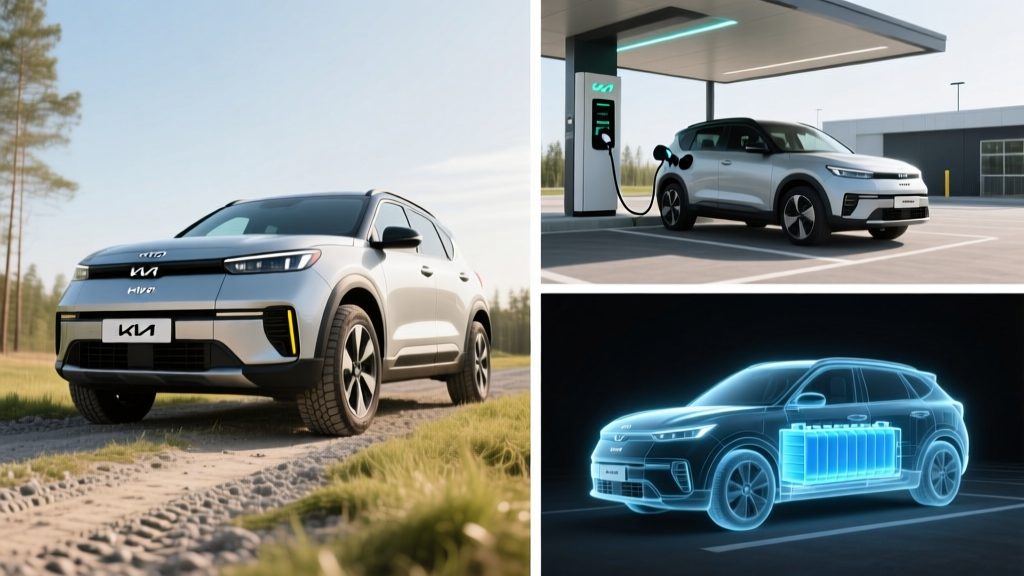
The 11.1 kWh lithium-ion polymer battery is positioned beneath the rear seat and cargo floor, which is why cargo volume (19.4 cu ft behind the rear seats) is slightly less than the Niro HEV's 22.8 cu ft. That battery provides the 33-mile EPA electric range and can be replenished via:
- Level 1 (120V household outlet): ~11 hours for a full charge — viable for overnight top-ups if your daily EV use is under 30 miles.
- Level 2 (240V home charger, 3.3 kW onboard): ~2 hours 45 minutes from empty to full. The Niro PHEV's onboard charger is limited to 3.3 kW, so even a 48-amp Level 2 station won't charge it faster.
- DC Fast Charging: Not supported. The Niro PHEV uses a J1772 connector for AC charging only. There is no CCS or NACS port.
The lack of DC fast charging is typical for PHEVs in this class. Since the battery is small, most owners charge at home or at work and rarely need public fast-charging infrastructure. If you're planning long road trips and want to charge quickly on the go, you'll be running on the gasoline engine anyway — which is the point of a plug-in hybrid.
Pricing, Tax Credits, and Ownership Costs
The 2026 Kia Niro PHEV starts at $35,590 for the EX trim, with the SX and SX Touring trims climbing to approximately $37,090 and $39,490 respectively (including destination charges).
Federal tax credit (§30D): Under current IRS rules, the Kia Niro PHEV does qualify for a federal tax credit — but the amount is not a guaranteed $7,500. The credit depends on critical-mineral sourcing and battery-component manufacturing requirements that phase in progressively. As of the 2026 tax year, qualifying Niro PHEV buyers may receive up to $3,750–$7,500 depending on whether the vehicle meets one or both sourcing thresholds. The credit is available as a point-of-sale transfer, meaning the dealer applies it as a down-payment reduction at purchase rather than waiting for you to claim it on your tax return.
Key eligibility requirements from the IRS:
- Buyer income caps: Modified AGI must not exceed $150,000 (single), $225,000 (head of household), or $300,000 (joint).
- MSRP cap: The vehicle's MSRP must not exceed $80,000 for SUVs/PHEVs classified as light trucks — the Niro PHEV clears this easily.
- Vehicle assembly: Final assembly must occur in North America (the Niro is assembled in South Korea, which may affect eligibility in certain tax years — verify with your tax professional and the fueleconomy.gov tax credit lookup).
Battery & Powertrain Warranty: Kia covers the Niro PHEV's high-voltage battery and hybrid-system components for 10 years or 100,000 miles (whichever comes first). The basic vehicle warranty is 5 years/60,000 miles, and the powertrain warranty is 10 years/100,000 miles. This is among the strongest hybrid battery warranties in the segment.
Reliability, Battery Degradation, and Replacement Cost
Kia's 1.6L GDI engine and dual-clutch transmission combination has been in the Niro lineup since 2017, giving the platform a long track record. The hybrid battery is a lithium-ion polymer pack — a chemistry known for stable thermal characteristics and gradual, predictable degradation rather than sudden capacity loss.
Expected battery lifespan: Most PHEV batteries in this class retain 85–90% of original capacity after 100,000 miles under normal use. Kia's warranty guarantees the battery against defects and excessive capacity loss (typically defined as dropping below ~70% state of health) for the full 10-year/100,000-mile term.
Out-of-warranty replacement cost: If the high-voltage battery requires replacement after the warranty period, expect a cost in the range of $4,500–$7,000 including parts and labor at a Kia dealership. This is comparable to the Toyota RAV4 Prime battery replacement cost and significantly less than a full EV battery replacement.
For most owners, the battery will outlast their ownership of the vehicle. PHEV batteries experience less stress than full EV batteries because they operate in a narrower state-of-charge window and are smaller, generating less heat during charging.
Who Should Choose the Niro PHEV — and Who Shouldn't
Pros
- 33-mile EV range covers most commutes gas-free
- 48 MPG hybrid mode eliminates range anxiety on road trips
- Strong 10-year/100,000-mile battery warranty
- No home charger installation required (Level 1 works, Level 2 is faster)
- Spacious cabin for its compact-crossover footprint
- Eligible for federal tax credit (verify current-year amount)
Cons
- 6.3-inch ground clearance limits rough-road capability
- FWD only — no AWD option for snow-belt buyers
- No DC fast charging
- Cargo space reduced vs. Niro HEV due to battery placement
- 3.3 kW onboard charger means slower Level 2 charging than some rivals
- Assembled in South Korea — verify §30D assembly requirement
Choose the Niro PHEV if: You have a commute under 35 miles, access to overnight charging (even a standard 120V outlet works), and want the security of a gasoline engine for longer trips. It's ideal for renters or condo-dwellers who may not have reliable home charging for a full EV but can plug in most nights.
Choose the Niro HEV instead if: You can't plug in at home or work and want maximum simplicity. You'll get 53 MPG combined without ever touching a charging cable, and you'll save $7,000 on the purchase price.
Choose the Niro EV instead if: You have reliable Level 2 home charging, your daily driving stays under 200 miles, and you want zero gasoline costs and zero tailpipe emissions. The 239-mile EPA range and available DC fast charging make it a viable one-car solution.
Look at a RAV4 Prime or Sportage PHEV if: You need more ground clearance (8.1 and 7.5 inches, respectively), AWD, or more cargo space. You'll pay a premium for it.
Frequently Asked Questions
How many MPG does the Kia Niro PHEV get?
The 2026 Kia Niro PHEV achieves an EPA-estimated 48 MPG combined (49 city / 47 highway) when operating as a hybrid after the battery is depleted. In EV mode, it earns 108 MPGe combined. Real-world city driving often yields 50–55 MPG thanks to aggressive regenerative braking, while sustained highway driving at 75+ MPH may return 42–45 MPG.
How far can the Kia Niro PHEV go on electric only?
The EPA rates the Niro PHEV at 33 miles of electric-only range. In mild weather (50–80°F) at moderate speeds, some drivers report 35–37 miles. In cold weather (below 30°F) or at sustained highway speeds, expect 25–28 miles before the gasoline engine engages.
Does the Kia Niro PHEV qualify for a federal tax credit?
It may qualify for up to $7,500 under IRS §30D, but eligibility depends on battery-component sourcing, critical-mineral requirements, buyer income limits, and the North American final assembly rule. Because the Niro is assembled in South Korea, verify current-year eligibility on fueleconomy.gov and consult a tax professional before relying on the credit in your purchase decision.
Is the Kia Niro PHEV reliable, and what does battery replacement cost?
The Niro PHEV platform has been in production since 2017 with generally strong reliability records. Kia's 10-year/100,000-mile hybrid battery warranty is among the industry's best. Out-of-warranty battery replacement typically costs $4,500–$7,000 at a dealership, though most batteries retain 85%+ capacity well past 100,000 miles.
What is the ground clearance of the Kia Niro PHEV?
The 2026 Kia Niro PHEV has 6.3 inches of ground clearance across all trims. This is adequate for paved roads, speed bumps, and light gravel, but it is lower than competitors like the Toyota RAV4 Prime (8.1 inches) and Subaru Crosstrek (8.7 inches). If you regularly drive on deeply rutted roads or in heavy unplowed snow, the Niro's ride height may be a limitation.
Can I charge the Niro PHEV at a DC fast-charging station?
No. The Niro PHEV supports AC charging only (Level 1 at 120V and Level 2 at 240V via a J1772 connector). It does not have a CCS or NACS port and cannot accept DC fast charging. This is standard for PHEVs — the small battery is designed for overnight home charging, not highway fast-charging stops.
Hybrid vs PHEV vs EV — which is right for me?
If you can charge at home and your daily driving is under 35 miles, the PHEV gives you electric commuting with gas-engine backup. If you can't charge at home, the conventional HEV offers excellent MPG with no behavior change. If you have home Level 2 charging and want to eliminate gasoline entirely, the EV is the lowest-operating-cost option — but requires planning for road trips beyond its 239-mile range.