The Kia Niro PHEV Is Gone — Here's What That Means for US Buyers
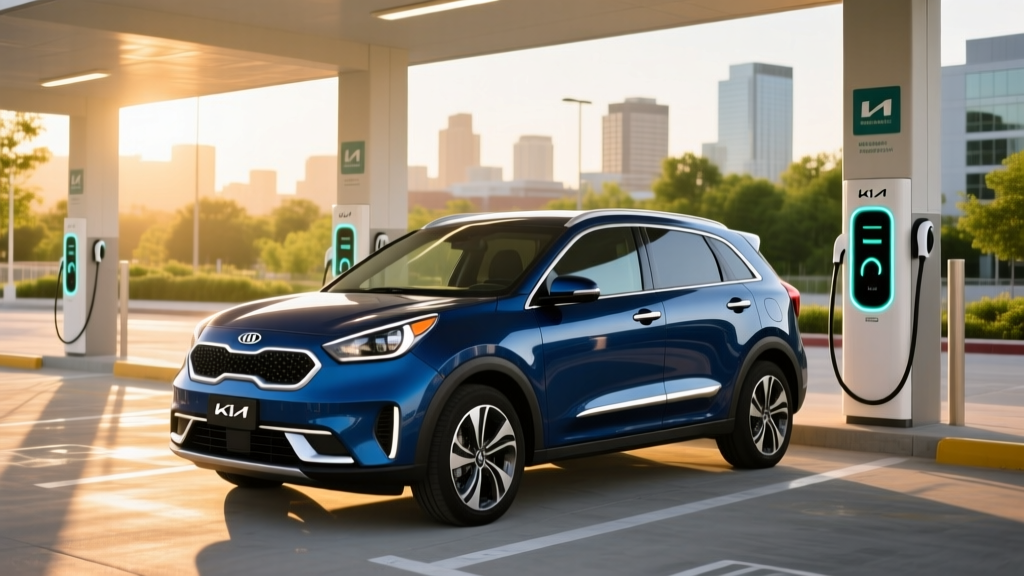
If you've been searching for a Kia Niro PHEV discontinued US confirmation, you've found it. After the 2024 model year, Kia officially pulled the plug-in hybrid variant of the Niro from the American market. The conventional hybrid (HEV) and all-electric (EV) versions of the redesigned second-generation Niro continue, but the PHEV — once a compelling middle ground for drivers who wanted electric commuting without range anxiety — is no longer available new in the United States.
This guide breaks down exactly what the Niro PHEV offered in its final model years, why Kia likely made the call, and — most importantly — what you should buy instead in 2026 if you were counting on this vehicle.
HEV vs PHEV vs EV: Understanding the Niro Lineup
The Niro family always offered three distinct powertrains under one roof. Confusion between them is common, so let's be precise:
| Attribute | Niro HEV (Hybrid) | Niro PHEV (Plug-In) | Niro EV (Battery Electric) |
|---|---|---|---|
| Needs to plug in? | No | Yes | Yes |
| Electric-only range | 0 mi (motor assists only) | 33 mi (EPA est.) | 239 mi (EPA est.) |
| Gas engine | 1.6L 4-cyl + electric motor | 1.6L 4-cyl + electric motor | None |
| Combined output | 139 hp | 180 hp | 201 hp |
| Battery size | ~1.56 kWh | 11.1 kWh usable | 64.8 kWh usable |
| EPA combined MPG / MPGe | 53 MPG combined | 46 MPG (gas) / 105 MPGe (elec) | 113 MPGe |
| Final US model year | Still available (2026) | Discontinued after 2024 | Still available (2026) |
| Federal tax credit (§30D) | Not eligible | Was eligible up to $7,500 (rules vary) | Eligibility depends on current IRS sourcing rules |
Key distinction: The conventional Niro HEV never needs to be plugged in. It captures energy through regenerative braking and the gas engine, storing it in a small battery that assists acceleration and enables brief low-speed electric driving. The Niro PHEV has a much larger battery (11.1 kWh) that can be charged from a wall outlet or public charger, enabling 33 miles of pure electric driving before the gas engine kicks in. Both are fundamentally different from the Niro EV, which has no gas engine at all.
Final Niro PHEV Specs: What You're Missing
For buyers who were targeting the Niro PHEV specifically, here are the definitive numbers from its final US model year (2024). These specs are relevant if you're shopping the used market or comparing against 2026 alternatives.
| Specification | 2024 Kia Niro PHEV |
|---|---|
| EPA electric-only range | 33 miles |
| Total range (electric + gas) | ~430 miles |
| EPA MPG (gas-only, combined) | 46 MPG (49 city / 43 highway) |
| MPGe (electric mode) | 105 MPGe combined |
| Battery capacity | 11.1 kWh (lithium-ion polymer) |
| Level 1 charging (120V) | ~11 hours (0–100%) |
| Level 2 charging (240V) | ~2 hr 45 min (0–100%) |
| DC fast charging | Not supported |
| Engine | 1.6L GDI 4-cylinder (104 hp) |
| Electric motor | 83 hp permanent-magnet synchronous |
| Combined system output | 180 hp / 195 lb-ft torque |
| Transmission | 6-speed dual-clutch automatic (DCT) |
| 0–60 mph | ~7.4 seconds |
| Cargo volume (rear seats up) | 19.4 cu ft |
| Final base MSRP (LX trim) | $34,390 |
| Final top MSRP (X-Line Touring) | $40,790 |
Why Kia Discontinued the Niro PHEV in the US
Kia never issued a detailed public explanation, but several converging factors make the decision understandable:
1. Marginal PHEV adoption in the US. While PHEVs are popular in Europe and South Korea, American buyers have largely split into two camps: conventional hybrid buyers (who don't want to plug in) and full EV buyers (who want maximum electric range). The PHEV's value proposition — plug in nightly for 33 miles of electric commuting — requires a specific lifestyle fit that hasn't scaled in the US market.
2. Shifting tax credit economics. The IRS §30D clean vehicle credit underwent major restructuring under the Inflation Reduction Act, adding battery-sourcing and critical-mineral requirements that made compliance complex and expensive for automakers producing PHEVs with smaller batteries. The Niro PHEV's 11.1 kWh pack faced tighter sourcing scrutiny than larger EV batteries where the credit offsets more cost.
3. Platform simplification. Kia's second-generation Niro platform supports three powertrains, but maintaining PHEV certification, emissions compliance, and supply chain for a low-volume variant in one market became difficult to justify when the HEV and EV versions were selling more predictably.
4. Competition from within. Kia's own Sportage PHEV (34 miles electric, $39,990 base in 2024) and the Hyundai Tucson PHEV offered more interior space and similar electric range, cannibalizing the Niro PHEV's appeal among buyers willing to pay slightly more.
2026 Alternatives: What to Buy Instead
If you were targeting the Niro PHEV's combination of compact size, electric commuting range, and gas-engine backup, here are the closest 2026 alternatives:
Plug-In Hybrid Alternatives (PHEV)
| Model | Electric Range | Combined MPG (gas) | Base MSRP (2026) | Notes |
|---|---|---|---|---|
| Hyundai Tucson PHEV | 33 mi | 35 MPG | ~$39,500 | More cargo room; same Hyundai/Kia powertrain DNA |
| Kia Sportage PHEV | 34 mi | 35 MPG | ~$40,500 | Larger than Niro; AWD standard |
| Toyota RAV4 Prime | 42 mi | 38 MPG | ~$44,500 | Best-in-class electric range; high demand, limited supply |
| Toyota Prius Prime | 44 mi | 48 MPG | ~$33,500 | Closest spiritual successor; lower, less cargo |
| Ford Escape PHEV | 37 mi | 40 MPG | ~$38,000 | FWD only; solid efficiency |
Our pick for Niro PHEV cross-shoppers: The Toyota Prius Prime is the closest match in philosophy — a compact, efficient PHEV with strong electric-only range (44 miles EPA, besting the Niro's 33). It sacrifices some cargo height compared to the Niro's crossover stance, but its 48 MPG combined on gas and lower starting price make it the most compelling replacement.
If You're Considering the Niro HEV Instead
The conventional 2026 Kia Niro HEV remains available and is worth considering if you don't have reliable access to a charging outlet. Its 53 MPG combined (EPA) is outstanding, and it starts around $28,000 — roughly $6,000 less than the Niro PHEV did. You won't get electric-only commuting, but you'll never need to change your fueling habits.
If You're Ready for a Full EV
The 2026 Kia Niro EV offers 239 miles of EPA range, DC fast charging up to 85 kW (10–80% in roughly 43 minutes), and a starting price around $39,600. If you can charge at home and your daily driving stays under 200 miles, the Niro EV eliminates gas entirely and has lower operating costs than any PHEV. The trade-off is road-trip charging logistics — something the Niro PHEV handled seamlessly.
Tax Credits: What Applies Now?
Since the Niro PHEV is discontinued, you cannot claim a new-vehicle federal tax credit on it. However, if you're shopping alternatives, here's the current landscape:
- Federal §30D credit for new PHEVs/EVs: Up to $7,500, but eligibility depends on battery sourcing, critical-mineral requirements, vehicle MSRP caps ($55,000 for sedans; $80,000 for SUVs/vans/trucks), and buyer income limits ($150K single / $300K joint). Verify current rules at irs.gov.
- Point-of-sale transfer: Eligible buyers can now transfer the credit to the dealer at purchase, reducing the sale price directly rather than waiting for a tax refund.
- Used EV/PHEV credit (§25E): Up to $4,000 or 30% of the sale price (whichever is less) on eligible used electrified vehicles priced under $25,000. Income caps are lower ($75K single / $150K joint). A used 2023–2024 Niro PHEV may qualify if priced under the cap.
- State incentives: Vary widely by jurisdiction. Check your state's energy office or fueleconomy.gov for local rebates.
Note: Tax credit rules change frequently. Consult a tax professional and verify against current IRS guidance before making a purchase decision.
Reliability, Battery Warranty, and Replacement Costs
This is the question every hybrid buyer eventually asks: What happens when the battery dies?
Real-world degradation: The Niro PHEV's 11.1 kWh battery is relatively small and experiences moderate cycling stress. Owner reports and fleet data suggest typical degradation of 8–12% over the first 5 years / 60,000 miles. That means your 33-mile electric range might become 29–30 miles after five years — noticeable but not dramatic. Kia's thermal management system (active liquid cooling) helps preserve long-term health.
Out-of-warranty replacement cost: If the high-voltage battery fails outside the warranty period, expect a replacement cost of $3,000–$5,500 (parts and labor) for the Niro PHEV battery pack based on current dealer pricing. The conventional Niro HEV's smaller battery is less expensive to replace, typically $1,500–$2,500.
Overall reliability: The Niro PHEV's powertrain — the 1.6L GDI engine paired with the 6-speed DCT and electric motor — has proven durable. The DCT transmission is the component most likely to require attention (clutch pack wear at higher mileages), but catastrophic failures are uncommon. The Niro as a nameplate has earned strong reliability ratings from owner surveys. NHTSA lists no major pattern complaints for the final model years.
Who Should Buy What: A Decision Framework
Choose a PHEV (like the Prius Prime or Tucson PHEV) if:
- You have access to a Level 1 or Level 2 outlet at home or work
- Your daily commute is under 35 miles round-trip
- You take road trips several times a year and don't want to plan around DC fast chargers
- You want to reduce gas consumption by 60–80% without fully committing to electric
Choose a conventional HEV (like the 2026 Niro HEV) if:
- You cannot charge at home (apartment, street parking, no garage)
- You want maximum simplicity — no cords, no apps, no charging accounts
- Your priority is lowest cost per mile with zero behavior change
Choose a full EV (like the 2026 Niro EV) if:
- You can install a Level 2 home charger (240V)
- Your daily driving is predictable and under 200 miles
- You want the lowest operating cost and minimal maintenance
- You're willing to plan DC fast charging stops on road trips
Frequently Asked Questions
How many MPG does the Kia Niro PHEV get?
The Niro PHEV achieves 46 MPG combined (49 city / 43 highway) when operating on gasoline after the battery is depleted. In electric mode, it earns 105 MPGe combined. In real-world city driving with regular charging, many owners reported using very little gasoline during weekday commuting.
How far can the Niro PHEV go on electric only?
The EPA-rated electric-only range is 33 miles. Real-world results vary: expect 28–30 miles in warm weather and 22–25 miles in freezing temperatures. Highway speeds above 65 mph also reduce electric range due to aerodynamic drag.
Can I still buy a new Kia Niro PHEV?
No. Kia discontinued the Niro PHEV in the US after the 2024 model year. You can find remaining used and certified pre-owned examples at Kia dealerships and third-party sellers. The Niro HEV and Niro EV continue for 2026.
Is the Kia Niro PHEV reliable, and what does battery replacement cost?
The Niro PHEV has a solid reliability record. Kia's hybrid battery warranty covers 10 years / 100,000 miles (15/150K in CARB states). Out-of-warranty battery replacement runs approximately $3,000–$5,500. The 1.6L engine and 6-speed DCT have shown good durability with regular maintenance.
Does the Niro PHEV qualify for any tax credit?
As a discontinued vehicle, you cannot claim the new-vehicle federal §30D credit on a Niro PHEV. However, a used 2023–2024 Niro PHEV priced under $25,000 may qualify for the used clean vehicle credit (§25E) — up to $4,000 or 30% of the sale price, subject to buyer income limits. Always verify current eligibility with a tax professional.
Does the Niro PHEV support DC fast charging?
No. The Niro PHEV only supports Level 1 (120V, ~11 hours to full) and Level 2 (240V, ~2 hr 45 min to full) AC charging. There is no DC fast-charge port. This is typical for PHEVs with smaller batteries — DC fast charging is generally reserved for full EVs with larger packs.
What's the best alternative to the Niro PHEV in 2026?
The Toyota Prius Prime (44 mi electric, 48 MPG, ~$33,500) is the closest replacement in spirit and price. If you need more cargo space, the Hyundai Tucson PHEV (33 mi electric, 35 MPG, ~$39,500) is a strong option within Kia/Hyundai's own ecosystem. If you don't need plug-in capability, the 2026 Kia Niro HEV (53 MPG, ~$28,000) remains an excellent and more affordable choice.
The Bottom Line
The Kia Niro PHEV's US discontinuation closes the book on a genuinely practical vehicle — one that offered genuine electric commuting for most daily drives while eliminating range anxiety entirely. Its 33-mile electric range, 46 MPG on gas, and compact crossover packaging made it one of the most accessible PHEVs on the market.
For 2026, the PHEV torch has been passed to vehicles like the Toyota Prius Prime, Hyundai Tucson PHEV, and Kia's own Sportage PHEV. If plug-in capability isn't essential, the continuing Niro HEV at 53 MPG combined and ~$28,000 is arguably the better value for most buyers. And if you're ready to go fully electric, the Niro EV's 239-mile range and home-charging convenience make a compelling case.
The right choice depends on your charging access, daily mileage, and road-trip habits. Use the decision framework above, verify current EPA data and IRS credit rules, and test-drive your top two candidates before committing.