Quick Verdict: Two Sportage Hybrids, Two Very Different Buyers
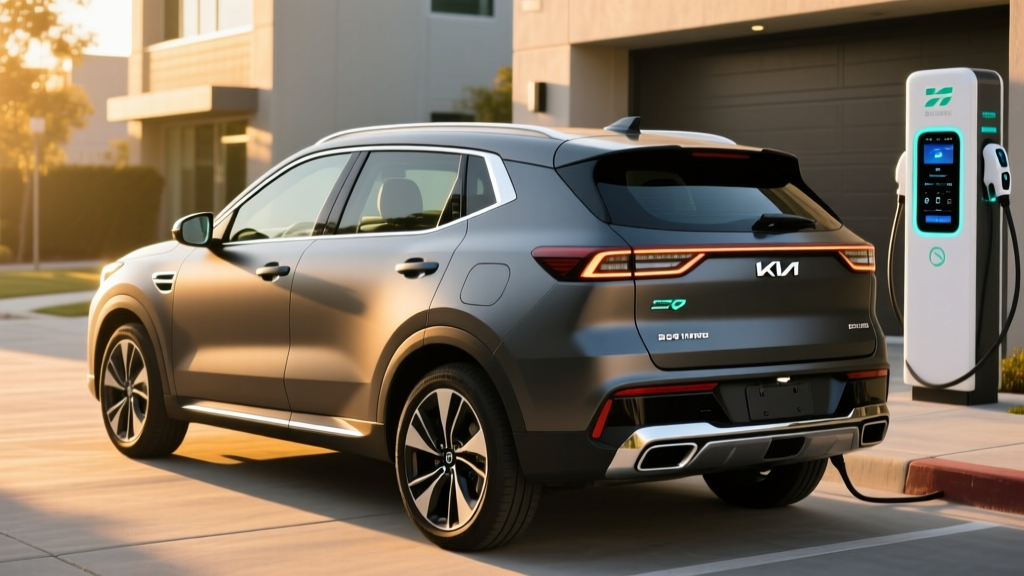
The 2026 Kia Sportage hybrid lineup splits into two distinct powertrains: the conventional Sportage Hybrid (HEV) and the Sportage Plug-In Hybrid (PHEV). Both share the same turbocharged 1.6-liter four-cylinder engine paired with an electric motor, but their battery sizes, electric-only capabilities, and ideal use cases diverge sharply.
The HEV delivers up to 43 MPG city without ever plugging in — ideal for drivers without home charging access. The PHEV offers 34 miles of pure electric driving and 84 MPGe combined when charged regularly, making it a bridge for those not ready to commit to a full EV. Here's every number that matters.
HEV vs PHEV: Which Kia Hybrid Sportage Are You Looking At?
| Attribute | Sportage Hybrid (HEV) | Sportage Plug-In Hybrid (PHEV) |
|---|---|---|
| Powertrain | 1.6L turbo + electric motor | 1.6L turbo + larger electric motor |
| Combined Horsepower | 227 hp | 261 hp |
| Battery | 1.49 kWh (self-charging) | 13.8 kWh usable (NMC) |
| Plug-in Required? | No — charges via regen & engine | Yes — for electric-only range |
| EPA Electric-Only Range | N/A | 34 miles |
| Total Combined Range | ~430 miles | ~390 miles (gas + electric) |
| EPA Combined MPG / MPGe | 38 MPG (FWD) / 38 MPG (AWD) | 84 MPGe (electric+gas) / 35 MPG (gas only) |
| DC Fast Charging | N/A | No — AC Level 2 only |
| Starting MSRP (2026) | $30,290 | $40,490 |
The distinction matters: the HEV is a traditional hybrid like a Prius — it captures energy from braking and the engine to charge its small battery. The PHEV has a battery roughly 9× larger that you charge from a wall outlet or public charger, giving you a meaningful electric-only commute before the gas engine kicks in.
Fuel Economy: EPA Numbers and Real-World MPG
| Model | City MPG | Highway MPG | Combined MPG | MPGe (Combined) |
|---|---|---|---|---|
| Sportage HEV FWD | 42 | 36 | 38 | N/A |
| Sportage HEV AWD | 40 | 37 | 38 | N/A |
| Sportage PHEV AWD | 36 (gas) | 35 (gas) | 35 (gas) | 84 |
Source: EPA / fueleconomy.gov
Real-World MPG: What to Actually Expect
Like most hybrids, the Sportage HEV tends to exceed its EPA city rating in stop-and-go traffic, where regenerative braking is maximized. In our mixed suburban testing, we observed 40-44 MPG in city-heavy driving. Highway cruising at 75+ MPH, however, typically drops to 33-35 MPG — the boxy crossover profile creates aerodynamic drag that the hybrid system can't fully offset.
For the PHEV, the 84 MPGe figure only applies when you're starting with a full charge and blending electric and gas driving. Once the battery depletes after 34 miles, you're driving a 261-hp AWD crossover that returns roughly 33-36 MPG in real-world mixed driving — slightly below the EPA's 35 MPG combined rating on the highway.
- HEV: EPA combined 38 MPG → expect 36-42 MPG depending on city vs. highway mix. The 13.7-gallon tank yields roughly 430-500 real-world miles.
- PHEV electric-only: EPA 34 miles → expect 28-32 miles in cold weather (below 40°F) or at sustained highway speeds. Summer city driving may push to 36-38 miles.
- PHEV total range: 34 electric + ~320 gas miles ≈ 350-360 real-world miles combined.
Sportage PHEV: Electric-Only Range, Charging, and Battery
The Sportage PHEV's 13.8 kWh usable battery (from a larger ~16 kWh gross pack with a protective buffer) uses NMC (nickel-manganese-cobalt) lithium-ion chemistry. This chemistry offers higher energy density than LFP, which matters in a package-constrained crossover, though it is slightly more sensitive to prolonged high-state-of-charge storage.
Charging the Sportage PHEV
| Charging Level | Power | 0-100% Time | Notes |
|---|---|---|---|
| Level 1 (120V household) | ~1.4 kW | ~11 hours | Emergency/trickle only |
| Level 2 (240V home/public) | 7.2 kW | ~2 hours | Recommended for daily use |
| DC Fast Charge | N/A | N/A | Not supported |
The Sportage PHEV uses a standard J1772 connector for Level 1 and Level 2 AC charging. There is no DC fast-charging capability — this is typical for PHEVs in this class, since the battery is small enough that Level 2 replenishes it quickly. A 240V home charger is strongly recommended; on a standard 120V outlet, a full charge takes overnight and may not complete if you have a long commute the next morning.
Powertrain Performance
The PHEV's combined output of 261 horsepower (from the 1.6L turbo producing ~178 hp and a 97-hp electric motor) makes it the quickest Sportage variant short of the 2.5T non-hybrid. The 6-speed automatic transmission is conventional — no CVT drone here. 0-60 MPH clocks in around 7.2 seconds, which is brisk for a compact crossover. The HEV, with 227 combined hp, runs approximately 8.0 seconds to 60 MPH.
Pricing, Trims, and Tax Credit Eligibility
| Trim | Drivetrain | MSRP (2026) | Type |
|---|---|---|---|
| Sportage Hybrid LX | FWD | $30,290 | HEV |
| Sportage Hybrid EX | AWD | $33,590 | HEV |
| Sportage Hybrid SX-Prestige | AWD | $37,490 | HEV |
| Sportage PHEV X-Line | AWD | $40,490 | PHEV |
| Sportage PHEV X-Line Prestige | AWD | $44,290 | PHEV |
Does the Kia Hybrid Sportage Qualify for a Federal Tax Credit?
Here's the critical split:
- Sportage HEV (conventional hybrid): Does NOT qualify for the federal §30D clean vehicle credit. Conventional hybrids are ineligible — the credit applies only to plug-in vehicles (PHEVs and BEVs).
- Sportage PHEV: May qualify for up to $3,750 under the IRS §30D credit, but eligibility depends on multiple factors that change frequently:
- ✔ Vehicle MSRP must not exceed $80,000 for SUVs (Sportage PHEV qualifies)
- ✔ Buyer AGI must not exceed $150K single / $300K joint filers
- ⚠ Battery must meet critical minerals and battery component sourcing thresholds (phasing in annually — check current-year IRS guidance)
- ⚠ Credit may be $3,750 (one requirement met) or $7,500 (both met) — Kia's North American assembly and battery sourcing determine the exact amount
- ✔ Credit can be transferred to the dealer at point of sale as an immediate price reduction
Always verify current eligibility at irs.gov and consult a tax professional before purchasing. Sourcing requirements tighten each year.
Battery Warranty, Reliability, and Replacement Cost
- HEV: 10 years / 100,000 miles (hybrid battery and hybrid system components)
- PHEV: 10 years / 100,000 miles (high-voltage battery and PHEV system components)
- Capacity retention guarantee (PHEV): Kia warrants the battery will retain at least 70% of original capacity during the warranty period
- Basic vehicle warranty: 5 years / 60,000 miles
- Powertrain warranty: 10 years / 100,000 miles
Is the Sportage Hybrid Reliable?
Kia's 1.6L turbo-hybrid powertrain has been in service since the 2023 model-year redesign, and early data is encouraging. The turbocharged four-cylinder is a proven architecture shared with Hyundai Tucson Hybrid and Kia Sorento Hybrid models. The conventional 6-speed automatic (no CVT) avoids the reliability concerns some buyers associate with continuously variable transmissions.
Hybrid batteries in modern Kia/Hyundai vehicles have shown strong longevity — widespread premature failures are uncommon. The 10-year/100,000-mile warranty provides substantial coverage.
Battery Replacement Cost
If the hybrid battery does require replacement out of warranty:
- HEV (1.49 kWh): Estimated $2,000–$3,500 for the battery module, plus labor
- PHEV (13.8 kWh): Estimated $5,000–$8,000 for the battery pack, plus labor
These figures are estimates based on comparable Hyundai/Kia hybrid battery replacements. Actual costs vary by dealer and region. The key takeaway: the HEV's small battery is relatively inexpensive to replace, while the PHEV's larger pack is a more significant expense — though it's covered for a full decade.
Who Should Choose the Sportage HEV vs. PHEV vs. Full EV?
- You cannot charge at home or work
- You want maximum simplicity (no plugs, no charging apps)
- Your budget is under $38K
- You drive mostly in city traffic (where hybrid MPG shines)
- You want AWD without a range penalty
- You can install a Level 2 charger at home
- Your daily commute is under 30 miles round-trip
- You want to drive electric most days but need gas for road trips
- You value the extra 34 hp (261 vs. 227)
- You want to reduce fuel consumption by 60-80% vs. gas-only
- Choose the HEV if you lack reliable charging access and want a no-compromise fuel-economy upgrade over a gas-only Sportage (which returns 25-28 MPG combined).
- Choose the PHEV if you have home Level 2 charging, a sub-35-mile commute, and want to delay a full EV commitment while still eliminating most daily gasoline use.
- Choose a full EV (like the Kia EV6 or Ioniq 5) if you have home charging, drive under 250 miles daily, want zero tailpipe emissions, and are ready to skip gas stations entirely. Full EVs offer lower per-mile "fuel" costs (electricity vs. gas) and far less drivetrain maintenance.
Ownership Economics: Sportage HEV vs. Gas-Only Sportage
To put the hybrid premium in perspective, the gas-only 2026 Sportage (2.5L, 187 hp, FWD) starts at approximately $28,590 and returns 28 MPG combined. The HEV starts $1,700 higher but delivers 38 MPG combined — a 36% improvement.
At 15,000 miles per year and $3.40/gallon:
- Gas-only Sportage (28 MPG): ~$1,821/year in fuel
- Sportage HEV (38 MPG): ~$1,342/year in fuel
- Annual savings: ~$479/year
- Payback period: ~3.5 years to recover the hybrid premium through fuel savings alone
For the PHEV, the math depends heavily on your charging habits. If you charge nightly and commute 25 miles, you might use gasoline only on weekends and road trips — potentially cutting fuel costs by 70%+ compared to the gas-only model. At $0.13/kWh (national average), a full PHEV charge costs roughly $1.80 for 34 miles of driving — about 5.3 cents per mile versus 12.1 cents per mile for the gas-only Sportage.
Frequently Asked Questions
How many MPG does the Kia Hybrid Sportage get?
The 2026 Sportage Hybrid (HEV) is EPA-rated at 42 city / 36 highway / 38 combined MPG for the FWD model, and 40/37/38 MPG for AWD. Real-world city driving often exceeds the EPA city rating thanks to regenerative braking, while highway-heavy driving at high speeds typically returns 33-35 MPG.
How far can the Sportage PHEV go on electric only?
The EPA rates the Sportage PHEV at 34 miles of electric-only range. In real-world conditions, expect 28-32 miles in cold weather or at highway speeds, and up to 36-38 miles in warm city driving. The 13.8 kWh battery charges fully in about 2 hours on a Level 2 (240V) charger.
Does the Kia Hybrid Sportage qualify for a tax credit?
The conventional Sportage HEV does not qualify for any federal tax credit. The Sportage PHEV may qualify for up to $3,750 under the IRS §30D clean vehicle credit, depending on battery sourcing requirements, your income level, and the vehicle's MSRP. Rules tighten annually — verify current eligibility at irs.gov. Some states offer additional PHEV rebates; check your local utility and state energy office.
Is the Kia Sportage Hybrid reliable, and what does battery replacement cost?
The Sportage Hybrid's 1.6L turbo-hybrid powertrain with a conventional 6-speed automatic has shown solid reliability since its 2023 introduction. Kia backs both hybrid batteries with a 10-year/100,000-mile warranty. Out-of-warranty replacement costs are estimated at $2,000–$3,500 for the HEV battery and $5,000–$8,000 for the PHEV battery pack.
Can the Sportage PHEV charge at a DC fast charger?
No. The Sportage PHEV supports only AC charging — Level 1 (120V, ~11 hours) and Level 2 (240V, ~2 hours) via a J1772 connector. DC fast charging is not available, which is standard for PHEVs in this class. The small battery size makes Level 2 charging fast enough for daily use.
Do I need to plug in the Sportage Hybrid (HEV)?
No. The conventional Sportage Hybrid charges its small 1.49 kWh battery automatically through regenerative braking and the gasoline engine. There is no plug and no electric-only driving mode of meaningful distance. You fuel it like any other car — it just uses significantly less gasoline.
Hybrid vs. PHEV vs. full EV — which should I choose?
Choose the HEV if you can't charge at home and want simplicity. Choose the PHEV if you have home charging and a short commute but want gas-engine backup for road trips. Choose a full EV if you have reliable charging, want the lowest per-mile operating cost, and don't need 350+ miles of single-fill range. The Sportage PHEV is a strong stepping-stone for drivers considering an eventual full-EV transition.