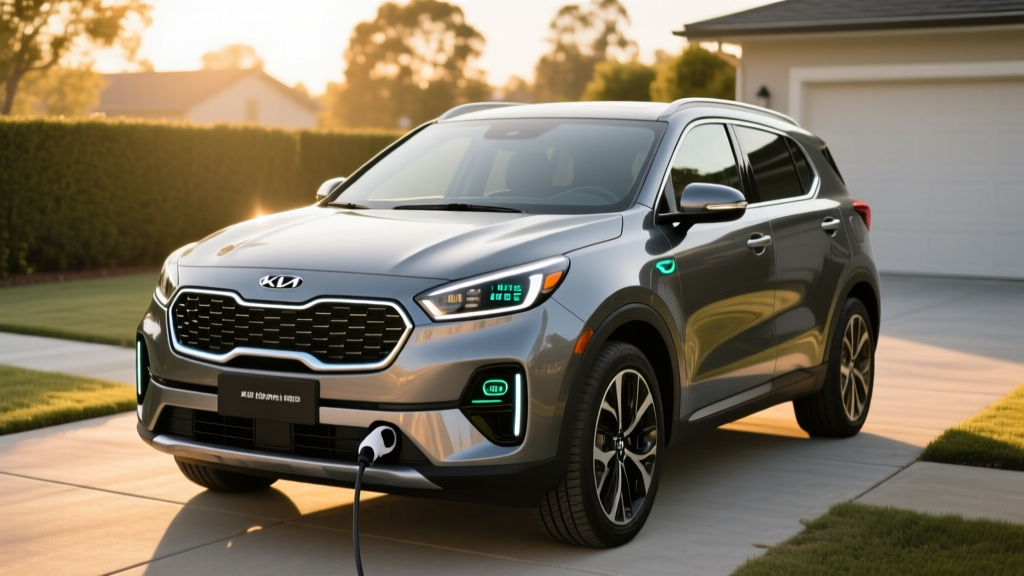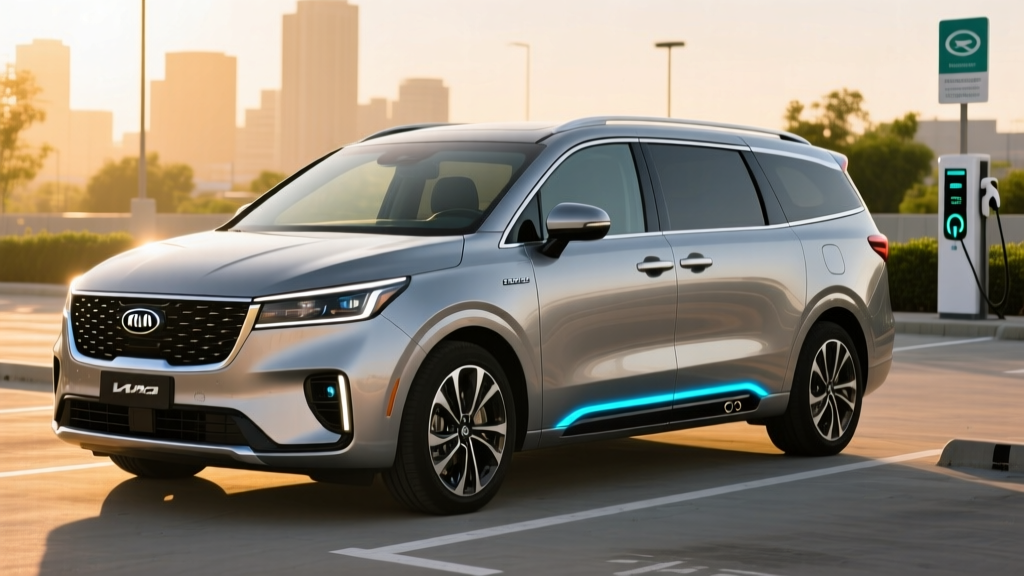
The minivan segment has gone turbo-hybrid, and the 2026 Kia Carnival MPV hybrid is Kia's answer to the Toyota Sienna and Chrysler Pacifica Hybrid. Unlike its Japanese rival, the Carnival uses a conventional hybrid (HEV) powertrain — no plug required — pairing a 1.6-liter turbocharged engine with an electric motor for a combined 242 horsepower and an EPA-estimated 33 MPG combined. For families who want minivan practicality without the range anxiety or charging logistics of a full EV or plug-in hybrid, the Carnival HEV occupies a compelling middle ground.
But how does that EPA number translate to real-world school runs and road trips? And how does the Carnival hybrid stack up against the plug-in Pacifica or the fully electric alternatives emerging in 2026? This guide breaks down every spec that matters.
2026 Kia Carnival Hybrid: Powertrain and Performance Specs
Kia's hybrid system in the Carnival is a parallel full-hybrid setup — the gasoline engine and electric motor can drive the wheels independently or together. This is fundamentally different from a plug-in hybrid (PHEV), which carries a larger battery you recharge from a wall outlet for meaningful electric-only miles. The Carnival HEV charges its small battery exclusively through regenerative braking and the engine. You never plug it in.
| Specification | Value |
|---|---|
| Powertrain | 1.6L Turbo GDI 4-cyl + electric motor (HEV) |
| Combined Horsepower | 242 hp |
| Combined Torque | 271 lb-ft |
| Transmission | 6-speed automatic |
| Drivetrain | FWD (AWD available on select trims) |
| Hybrid Battery | ~1.49 kWh (lithium-ion), not plug-in |
| 0-60 mph (est.) | ~7.8 seconds |
| Towing Capacity | 3,500 lbs |
| Cargo Volume (behind 3rd row) | 41.1 cu ft |
| Cargo Volume (max, seats folded) | 145.1 cu ft |
The 242-hp output puts the Carnival HEV ahead of the Toyota Sienna hybrid's 245 hp (net system) on paper, though the Sienna's CVT and standard AWD change the driving character. The Carnival's 6-speed automatic feels more like a conventional car than the Sienna's droning CVT under hard acceleration — a meaningful difference if you value natural powertrain feedback.
Fuel Economy: EPA Ratings vs. Real-World MPG
The headline number is what brings most buyers to this page. According to fueleconomy.gov, the 2026 Kia Carnival Hybrid posts the following EPA estimates:
| Driving Cycle | MPG |
|---|---|
| City | 34 MPG |
| Highway | 31 MPG |
| Combined | 33 MPG |
Real-World MPG: What Owners Actually See
Hybrid minivans have a well-documented trait: they frequently exceed their EPA city rating in stop-and-go driving because regenerative braking recovers energy that a gas-only vehicle wastes as heat. In mixed suburban driving with frequent stops, expect 34-37 MPG from the Carnival HEV.
Highway driving tells a different story. At sustained 75-80 mph speeds, the electric motor contributes less and the turbo engine does most of the work. Expect 28-31 MPG on flat interstate runs, dropping to 25-27 MPG on mountain passes or when fully loaded with seven passengers and cargo. Cold weather (below 35°F) typically shaves 2-4 MPG as the engine runs more frequently to heat the cabin and warm the catalytic converter.
Carnival HEV vs. Sienna Hybrid vs. Pacifica PHEV: Which Minivan Powertrain Fits?
The minivan market now offers three distinct electrification strategies. Understanding the difference is essential before you sign a purchase agreement.
| Attribute | Kia Carnival HEV | Toyota Sienna HEV | Chrysler Pacifica PHEV |
|---|---|---|---|
| Type | Conventional Hybrid (no plug) | Conventional Hybrid (no plug) | Plug-in Hybrid (requires charging) |
| Combined MPG / MPGe | 33 MPG | 36 MPG | 82 MPGe (elec+gas) / 30 MPG (gas only) |
| Electric-Only Range | N/A (EV assist only) | N/A (EV assist only) | 32 miles (EPA) |
| Battery Size | ~1.49 kWh | ~1.9 kWh | 16 kWh |
| Plug-In Required? | No | No | Yes (Level 2: ~2 hrs) |
| Combined HP | 242 hp | 245 hp | 260 hp |
| AWD Available? | Yes (select trims) | Yes (standard on many trims) | No (FWD only) |
| Starting MSRP (approx.) | $41,500 | $39,500 | $51,000 |
Pricing, Trims, and Tax Credit Eligibility
The 2026 Kia Carnival Hybrid is offered across several trims, with pricing that positions it between the Sienna and the Pacifica PHEV:
- LXS HEV: ~$41,500 MSRP — well-equipped with 8-passenger seating, dual 12.3-inch displays, and Kia's full ADAS suite
- EX HEV: ~$44,500 — adds leatherette seating, power sliding doors, and wireless charging
- SX HEV: ~$48,000 — premium features including ventilated front seats and highway driving assist
- SX Prestige HEV: ~$52,000 — Nappa leather, dual sunroofs, rear entertainment, and surround-view monitor
Federal Tax Credit: Does the Carnival Hybrid Qualify?
Here's where buyer expectations often misalign with reality. Under current IRS §30D rules, the federal clean vehicle credit of up to $7,500 applies only to plug-in electric vehicles (BEVs and PHEVs) that meet battery sourcing, critical mineral, MSRP, and buyer income requirements.
The Kia Carnival HEV does not qualify for the federal §30D tax credit because it is a conventional hybrid without plug-in capability. The Pacifica PHEV may qualify (subject to battery-component and critical-mineral sourcing rules that tighten annually), but the Carnival HEV and Sienna HEV are ineligible at the federal level.
Some states offer their own hybrid incentives — California's CVRP, for instance, has historically focused on zero-emission vehicles, but certain state and utility programs provide modest rebates for high-MPG hybrids. Check your state energy office or utility provider for current local programs. A tax professional can confirm eligibility for any credits in your jurisdiction.
Battery Longevity, Warranty, and Replacement Cost
Hybrid battery anxiety is the number-one concern we hear from first-time hybrid buyers. The good news: modern lithium-ion hybrid batteries in vehicles like the Carnival are engineered for the life of the vehicle, and failure rates are low.
• Hybrid battery: 10 years / 100,000 miles (original owner)
• Hybrid system components (motor, inverter, controller): 10 years / 100,000 miles
• Powertrain warranty: 10 years / 100,000 miles
Note: For second owners, Kia's hybrid battery warranty typically reduces to 5 years / 60,000 miles. Confirm terms at purchase.
What Does Hybrid Battery Replacement Cost?
If the Carnival's hybrid battery fails outside warranty, replacement cost at a Kia dealer typically ranges from $2,500 to $4,000 including labor — far less than the $10,000-$20,000 EV traction battery replacements that make headlines. The Carnival's ~1.5 kWh battery is small, relatively simple, and shares architecture with other Hyundai/Kia hybrids, keeping parts costs manageable.
Based on data from the Hyundai-Kia hybrid fleet (which has been on the road since the 2011 Optima Hybrid), hybrid battery degradation is minimal. Most units retain 90%+ capacity after 100,000 miles. Complete failure before 150,000 miles is uncommon, and many hybrid batteries outlast 200,000 miles without service.
Reliability and Safety
Kia's turbo-hybrid powertrain has been in production since the 2023 model year in the Sorento HEV and has carried over into the Carnival for 2025-2026. Early reliability data from NHTSA and owner surveys show no systemic powertrain issues. The 6-speed automatic avoids the long-term durability questions that surround some CVT designs.
The Carnival comes standard with Kia's full ADAS suite: forward collision-avoidance assist, blind-spot monitoring, rear cross-traffic alert, lane-keeping assist, and driver attention warning. Higher trims add Highway Driving Assist (HDA), which is an SAE Level 2 system — it combines adaptive cruise control with lane-centering on marked highways but requires the driver to keep hands on the wheel and remain fully engaged at all times. This is not autonomous driving.
Who Should Buy the Carnival Hybrid — and Who Shouldn't?
✓ Choose the Carnival HEV If:
- You want minivan space and 33+ MPG without ever plugging in
- You lack access to home or workplace charging
- You want Kia's 10-year/100,000-mile warranty coverage
- You prefer a conventional automatic over a CVT
- You need 3,500-lb towing capability
- You value the Carnival's SUV-inspired styling over minivan aesthetics
✗ Look Elsewhere If:
- You want electric-only driving for school commutes (consider the Pacifica PHEV or a full EV)
- Maximum fuel economy is your priority (Sienna HEV gets 36 MPG combined)
- You want to claim the $7,500 federal tax credit (requires a PHEV or BEV)
- You need standard AWD across all trims (Sienna offers broader AWD availability)
- You frequently drive in extreme cold and want EV pre-conditioning benefits
Frequently Asked Questions
How many MPG does the Kia Carnival hybrid get?
The 2026 Kia Carnival Hybrid is EPA-rated at 34 MPG city, 31 MPG highway, and 33 MPG combined. Real-world city driving with frequent stops often yields 34-37 MPG thanks to regenerative braking. Highway driving at 75+ mph typically returns 28-31 MPG.
Does the Carnival hybrid need to be plugged in?
No. The Carnival is a conventional hybrid (HEV). Its small battery is recharged by the gasoline engine and regenerative braking. You simply fill it with gas like any other vehicle — there is no plug and no electric-only driving mode of any meaningful distance.
How far can the Carnival hybrid go on electric only?
The Carnival HEV cannot drive on electric power alone for any practical distance. The electric motor assists the gas engine during acceleration and low-speed crawling, but the engine is always the primary power source. If you need 30+ miles of electric-only range, you need a plug-in hybrid like the Chrysler Pacifica PHEV (32 miles EPA) or a full battery-electric vehicle.
Is the Kia Carnival hybrid reliable?
Kia's 1.6L turbo-hybrid system has been in production since 2023 across the Hyundai-Kia fleet with no widespread failure reports. The hybrid battery and system are covered by Kia's 10-year/100,000-mile warranty. Long-term data from earlier Kia hybrids (Optima, Niro) suggests battery longevity well past 150,000 miles in normal use.
What does it cost to replace the Carnival hybrid battery?
Out-of-warranty hybrid battery replacement typically costs $2,500-$4,000 at a Kia dealership. However, the battery is warrantied for 10 years/100,000 miles for the original owner, and failure within that period is rare. This is substantially less expensive than EV battery replacement.
Does the Kia Carnival hybrid qualify for a tax credit?
No. The Carnival HEV does not qualify for the federal §30D clean vehicle credit, which is reserved for plug-in electric vehicles (BEVs and PHEVs) meeting battery sourcing and MSRP requirements. Some state or utility incentives for high-efficiency hybrids may apply — check local programs. Consult a tax professional for guidance specific to your situation.
Carnival Hybrid vs. full EV: which makes more sense for a family?
If you have reliable home Level 2 charging, drive under 250 miles daily, and want the lowest per-mile fuel cost, a fully electric SUV or minivan (like the Kia EV9) may save more over five years. But if you take frequent road trips, lack home charging, or want zero behavior change from your gas-car routine, the Carnival HEV delivers meaningful fuel savings (33 vs. 22 MPG for a gas minivan) with no lifestyle adjustment required.