Quick Verdict: The Electrified Trail-Ready SUV
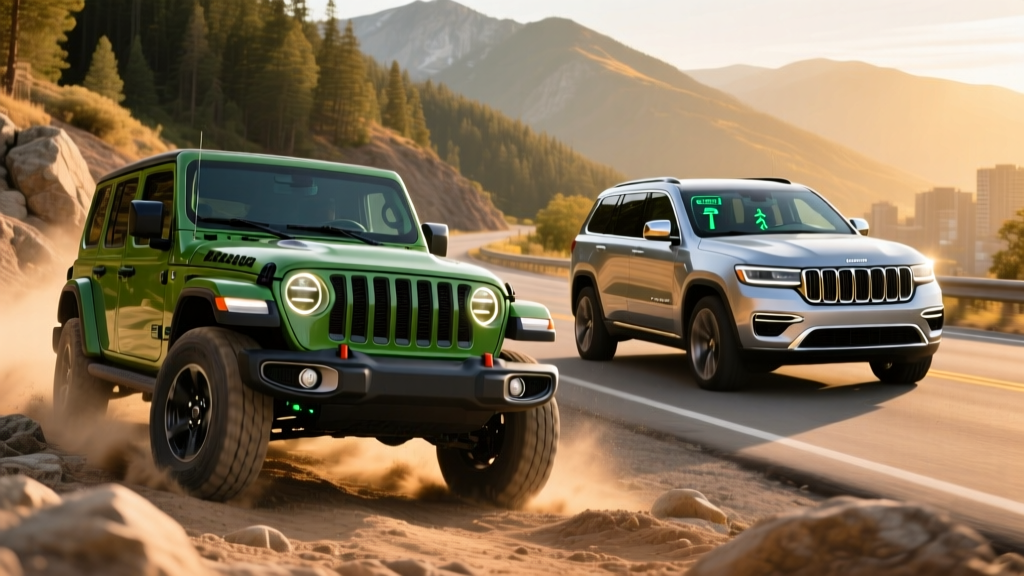
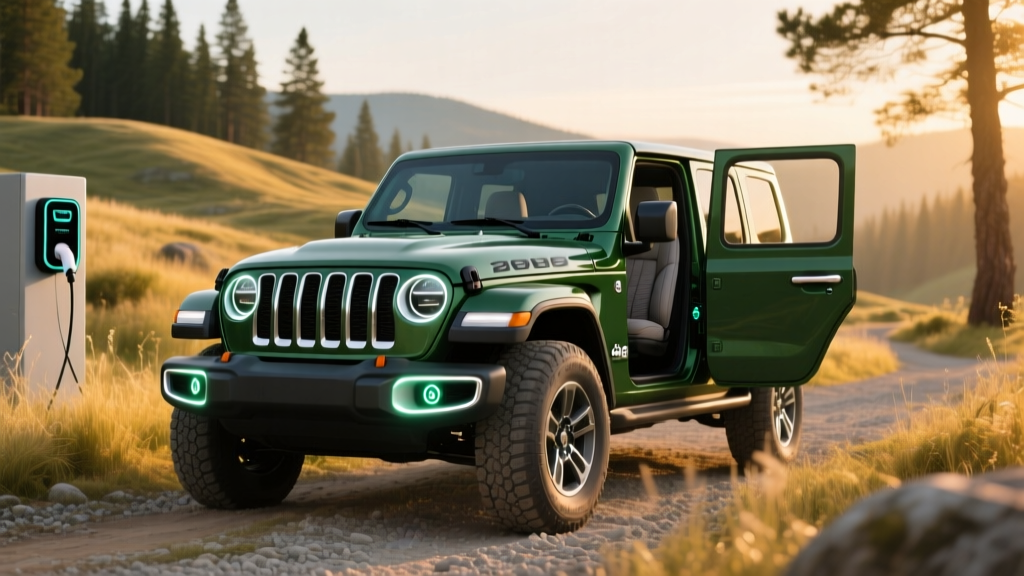
The Jeep Wrangler 4xe occupies a unique position in the electrified-vehicle landscape: it's a body-on-frame, solid-axle off-roader that also plugs in. For 2026, the Wrangler 4xe continues with its turbocharged 2.0-liter four-cylinder paired with two electric motors and a 17.3 kWh battery pack, delivering 375 combined horsepower and an EPA-estimated 22 miles of electric-only range. If your daily commute is short and your weekends are spent on trails, the 4xe lets you do both with fewer gas station stops — but it comes with real compromises in efficiency and pricing that buyers need to understand before signing.
This guide breaks down every number that matters: real-world MPG versus EPA estimates, actual electric range under different conditions, charging logistics, tax credit eligibility under current IRS §30D rules, and whether the 4xe makes more sense than a conventional gas Wrangler or a full battery-electric alternative.
HEV vs PHEV: Where the Wrangler 4xe Fits
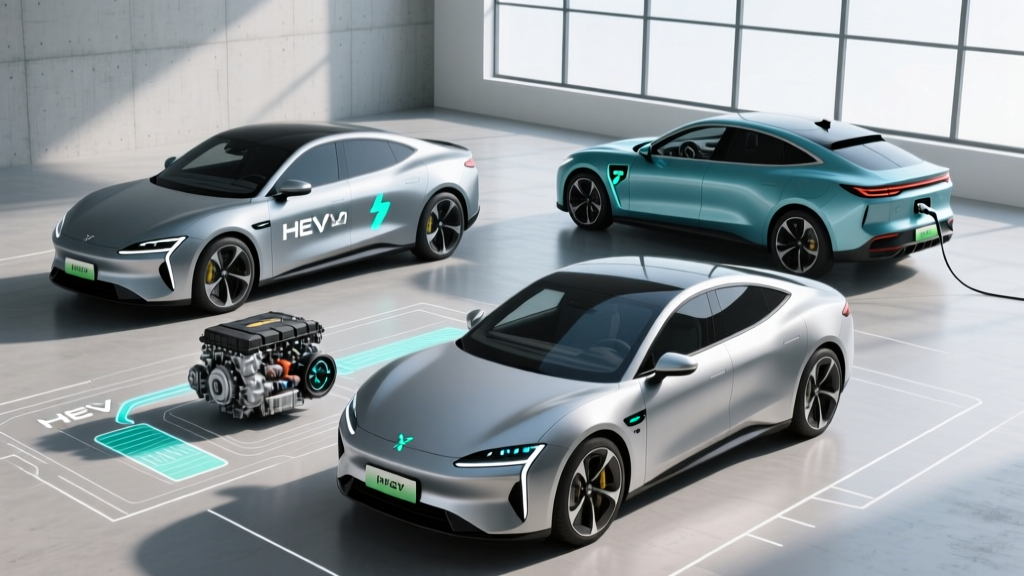
Conventional Hybrid (HEV): A standard hybrid like the Toyota RAV4 Hybrid uses a small battery (typically 1–2 kWh) that charges only through regenerative braking and the engine. You never plug it in. It improves MPG across all driving conditions but cannot drive on electric power alone for meaningful distances.
Plug-in Hybrid (PHEV): The Jeep Wrangler 4xe is a plug-in hybrid. It carries a substantially larger 17.3 kWh battery pack that you charge by plugging into a wall outlet or Level 2 charger. This enables 22 miles of pure electric driving before the gasoline engine engages. Once the battery depletes, it operates like a conventional hybrid, blending engine and motor power.
The distinction matters for your daily routine. If you can charge at home and your commute falls within 22 miles round-trip, you may go weeks without burning fuel. If you can't charge regularly, the 4xe reverts to hybrid operation — and as we'll see, its gas-only MPG is unimpressive for the added weight and cost.
EPA Fuel Economy and Electric Range
| Metric | EPA Estimate | Real-World Expectation |
|---|---|---|
| Electric-only range | 22 miles | 17–20 miles (highway/cold weather) |
| Combined MPGe (electric + gas) | 49 MPGe | Varies widely by charge frequency |
| Gas-only combined MPG | 20 MPG | 17–19 MPG (highway-heavy driving) |
| Gas-only city MPG | — | ~19–20 MPG |
| Gas-only highway MPG | — | ~17–18 MPG |
| Total combined range | ~370 miles | ~320–350 miles |
The EPA rates the Wrangler 4xe at 49 MPGe when operating in blended electric-gas mode, per fueleconomy.gov. MPGe (miles per gallon equivalent) converts electric energy consumption into a gasoline-equivalent figure — useful for comparison, but only meaningful if you're actually plugging in regularly.
Real-world electric range reality: The EPA's 22-mile electric estimate assumes moderate temperatures and mixed driving. In practice, expect 17–20 miles on a full charge during highway driving or cold weather (below 40°F). The Wrangler's brick-like aerodynamics and 5,000+ lb curb weight work against it at speed. In stop-and-go city traffic at mild temperatures, you may squeeze out the full 22 miles or slightly more thanks to regenerative braking.
Once the battery is depleted, the 4xe's gas-only fuel economy drops to roughly 20 MPG combined — barely better than the non-hybrid turbo four-cylinder Wrangler, because the 4xe carries approximately 600 lbs of additional battery and motor weight. This is the critical trade-off: plug in daily and you'll rarely visit a gas station; neglect to charge and you're hauling dead weight for worse efficiency.
Powertrain, Battery, and Charging Specifications
| Specification | 2026 Jeep Wrangler 4xe |
|---|---|
| Engine | 2.0L turbocharged inline-4 |
| Electric motors | Two (one integrated in transmission, one engine-mounted) |
| Combined output | 375 HP / 470 lb-ft torque |
| Battery capacity (gross) | 17.3 kWh |
| Battery capacity (usable) | ~14.5 kWh |
| Battery chemistry | NMC (nickel manganese cobalt) |
| Electric-only range (EPA) | 22 miles |
| Level 1 charging (120V) | ~12 hours (0–100%) |
| Level 2 charging (240V, 32A) | ~2.5–3 hours (0–100%) |
| DC fast charging | Not supported |
| Charge port | J1772 (front fender) |
| Transmission | 8-speed automatic |
| Drivetrain | 4WD (Selec-Trac or Rock-Trac depending on trim) |
| 0–60 mph | ~6.0 seconds |
| Towing capacity | 3,500 lbs |
The 4xe's powertrain pairs a 270-hp turbo four with two electric motors for a combined 375 horsepower and a stout 470 lb-ft of torque — more torque than the Wrangler's 3.6L V6 and enough to make this the quickest factory Wrangler in the lineup. Torque delivery is immediate from the electric motors, which is genuinely useful in low-speed off-road crawling situations.
Charging limitations to understand: The Wrangler 4xe does not support DC fast charging. This is a deliberate engineering choice — the battery is too small to justify the added weight, cost, and thermal management complexity of a DC fast-charge system. You're limited to Level 1 (standard 120V household outlet) or Level 2 (240V, like a home wall connector or public AC station).
On a Level 2 charger at 32 amps (7.7 kW), a full charge takes roughly 2.5 to 3 hours. On a standard 120V outlet at 12 amps, expect about 12 hours — feasible for overnight charging but slow. For most owners, a Level 2 home charger is strongly recommended. Budget $500–$800 for a quality Level 2 EVSE (like the ChargePoint Home Flex or Emporia Vue) and $500–$1,500 for professional electrical installation depending on your panel capacity and run length.
Pricing, Trims, and Tax Credit Eligibility
The 2026 Jeep Wrangler 4xe starts at approximately $51,790 (including destination) for the Willys trim and climbs through Sport S (~$54,000), Sahara (~$58,000), Rubicon (~$60,000), and High Altitude (~$64,000). These are significant premiums over equivalent gas-only Wrangler trims — typically $7,000–$10,000 more.
Federal §30D Tax Credit — Current Rules (verify at irs.gov):
- Maximum credit: Up to $7,500, split between $3,750 for critical minerals sourcing and $3,750 for battery component sourcing
- MSRP cap: SUVs must have an MSRP at or below $80,000 (all 4xe trims qualify)
- Buyer income cap: AGI must not exceed $150,000 (single), $225,000 (head of household), or $300,000 (joint)
- Battery sourcing: Critical minerals and battery components must meet escalating domestic/free-trade-partner sourcing thresholds — the 4xe's partial qualification varies by model year and supply chain updates
- Point-of-sale transfer: Eligible buyers can transfer the credit to the dealer at purchase, reducing the out-of-pocket price immediately rather than waiting for tax filing
Important: Sourcing requirements tighten annually. Consult a tax professional and check the IRS Clean Vehicle Credit portal before purchasing to confirm current-year eligibility for the specific VIN.
Many Wrangler 4xe buyers have historically qualified for a partial credit (typically $3,750) depending on the model year's battery sourcing compliance. State incentives vary widely — California's CVRP, Colorado's innovative motor vehicle credit, and other state programs may stack on top. Check your state's energy office for current programs.
Reliability, Battery Warranty, and Long-Term Costs
Jeep 4xe Hybrid Battery Warranty:
- Coverage: 8 years / 100,000 miles (whichever comes first)
- Capacity threshold: Warranty covers defects and capacity loss below ~70% of original capacity
- Federal mandate: EPA/CARB emissions-related hybrid battery warranties are required to be 8 yr/100,000 mi minimum in CARB states (10 yr/150,000 mi in some jurisdictions)
The Wrangler 4xe's hybrid system — battery pack, electric motors, power electronics — is covered under Stellantis' 8-year/100,000-mile hybrid component warranty. This is industry-standard and matches Toyota, Hyundai, and Ford's hybrid battery coverage.
Replacement cost if out of warranty: A full 4xe battery pack replacement currently runs approximately $8,000–$12,000 including labor, based on dealer parts pricing. This is a significant figure, though battery pack failures within the warranty period are statistically rare. Most PHEV batteries experience gradual capacity loss (degradation) rather than catastrophic failure — expect roughly 10–15% capacity loss over 100,000 miles of normal use, which would reduce electric-only range from 22 to roughly 18–19 miles.
On reliability, the 4xe's powertrain has proven reasonably sound since its 2021 introduction, though early model years saw software-related recalls and some reports of 12V auxiliary battery issues (common in many modern electrified vehicles). The turbo 2.0L engine is a proven Stellantis unit shared across multiple models. Check NHTSA's recall database for any open recalls on a specific VIN before purchasing.
Who Should Buy the Wrangler 4xe (and Who Shouldn't)
Choose the Wrangler 4xe if:
- Your daily commute is under 20 miles round-trip and you can charge at home
- You want genuine off-road capability (solid axles, locking diffs, skid plates) with the option of silent electric trail crawling
- You want to reduce fuel consumption without committing to a full EV's range limitations on remote trips
- You value the instant torque of electric motors for low-speed rock crawling
- You qualify for federal/state tax credits that narrow the price gap with gas trims
Choose the gas Wrangler instead if:
- You cannot charge at home or work (no access to Level 1 or Level 2)
- You primarily drive long highway trips where the battery adds dead weight
- You want the lowest purchase price and simplest mechanical package
- You plan to keep the vehicle 15+ years and want minimal powertrain complexity
Choose a full EV (like the Ford Bronco Sport EV or Rivian R1S) if:
- You want zero tailpipe emissions and the lowest per-mile operating cost
- You have reliable home charging and your trips rarely exceed 250 miles
- You don't need the Wrangler's specific removable roof/doors and solid-axle articulation
Pros:
- 375 HP and 470 lb-ft make it the most powerful standard Wrangler
- 22 miles electric covers most daily commutes when charged
- Silent electric mode ideal for noise-sensitive trail areas
- Retains full Wrangler off-road hardware (Rubicon available)
- Federal tax credit (partial or full) reduces effective price
- Regenerative braking reduces brake wear in daily driving
Cons:
- $7,000–$10,000 premium over equivalent gas Wrangler trims
- Gas-only MPG (20 combined) is poor when battery is depleted
- No DC fast charging — long road trips mean gas-only operation
- 600+ lbs of added weight affects on-road handling and braking
- Cargo space reduced slightly by battery packaging
- 22-mile electric range is short compared to newer PHEVs (RAV4 Prime: 42 mi)
- Removable roof panels cannot be stored in the vehicle (no frunk space)
Frequently Asked Questions
How many MPG does the Jeep Wrangler 4xe get?
The EPA rates the 4xe at 49 MPGe in blended electric-gas operation. Once the battery is depleted, it averages about 20 MPG on gasoline alone — comparable to a gas Wrangler but with extra weight. Real-world highway driving at 70+ mph typically yields 17–18 MPG in gas-only mode due to the Wrangler's poor aerodynamics.
How far can the Wrangler 4xe go on electric only?
The EPA estimates 22 miles of electric-only range. In real-world conditions — especially highway speeds above 55 mph or temperatures below 40°F — expect 17–20 miles. City driving with frequent regenerative braking can achieve the full 22 miles or occasionally slightly more.
Can I charge the Wrangler 4xe at a DC fast charger?
No. The Wrangler 4xe does not support DC fast charging. It charges via Level 1 (120V, ~12 hours) or Level 2 (240V, ~2.5–3 hours). For most owners, installing a Level 2 home charger is the practical solution for daily use.
Does the Wrangler 4xe qualify for the $7,500 federal tax credit?
Eligibility depends on current-year IRS §30D rules, including buyer income limits ($150K single / $300K joint), MSRP caps ($80K for SUVs — all 4xe trims qualify), and battery sourcing requirements that change annually. Many 4xe buyers have qualified for a partial credit ($3,750). Verify eligibility for your specific purchase year and VIN at irs.gov or with a tax professional.
Is the Wrangler 4xe reliable?
The 4xe powertrain has been in production since 2021 with generally acceptable reliability. Early model years had software-related recalls, but the core hybrid system has proven durable. The battery is warrantied for 8 years/100,000 miles. As with any complex powertrain, long-term reliability (10+ years) is less proven than the simpler gas-only Wrangler.
What does the Wrangler 4xe battery replacement cost?
Out-of-warranty battery pack replacement costs approximately $8,000–$12,000 including labor. However, complete battery failure within the warranty period is uncommon. Gradual degradation of 10–15% over 100,000 miles is more typical, which would reduce electric range by roughly 3–4 miles.
Hybrid vs PHEV vs full EV — which should I choose?
If you want zero-effort fuel savings without plugging in, a conventional hybrid (HEV) is simplest. If you can charge at home and want electric commuting with gas-engine backup for road trips, a PHEV like the 4xe is ideal. If you have home charging, rarely drive over 250 miles without stopping, and want the lowest operating cost, a full EV is the most efficient choice — but no full-electric body-on-frame off-roader currently matches the Wrangler's trail capability.