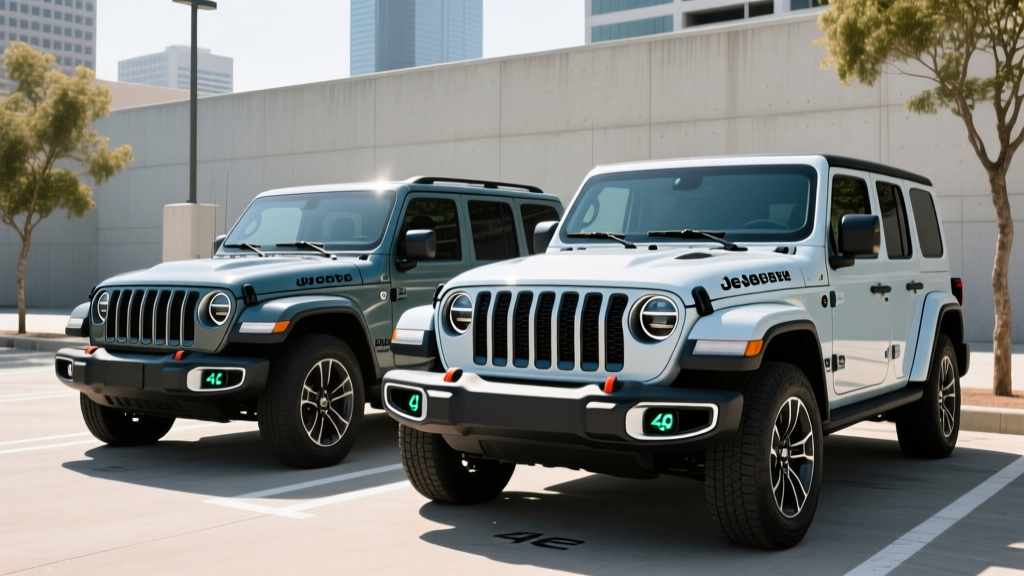
If you've been searching whether Jeep offers an electrified option, the answer is a definitive yes — but with an important distinction. Jeep does not currently sell a conventional hybrid (HEV) that you simply fill with gas and drive. Instead, Jeep's electrified lineup consists entirely of plug-in hybrids (PHEVs) branded under the 4xe (four-by-e) badge. For the 2026 model year, that means the Jeep Wrangler 4xe and the Jeep Grand Cherokee 4xe.
Both pair a turbocharged gasoline engine with an electric motor and a rechargeable battery pack you can plug in at home. The result: short-distance electric-only driving for daily commutes, plus a gas engine for long road trips with zero range anxiety. Below, we break down exactly what each model delivers in range, efficiency, power, pricing, and real-world ownership — so you can decide if a Jeep PHEV fits your garage.
HEV vs. PHEV: Why Jeep Chose Plug-In
Conventional Hybrid (HEV)
- Battery: ~1–2 kWh (not plug-in)
- Electric-only driving: None or minimal (low-speed assist)
- Refueling: Gas station only — battery recharges via regenerative braking
- Example: Toyota RAV4 Hybrid
Plug-In Hybrid (PHEV) — Jeep 4xe
- Battery: ~17 kWh usable (plug-in capable)
- Electric-only range: 22–26 miles EPA
- Refueling: Plug in at home for EV miles + gas station for longer trips
- Example: Jeep Wrangler 4xe, Grand Cherokee 4xe
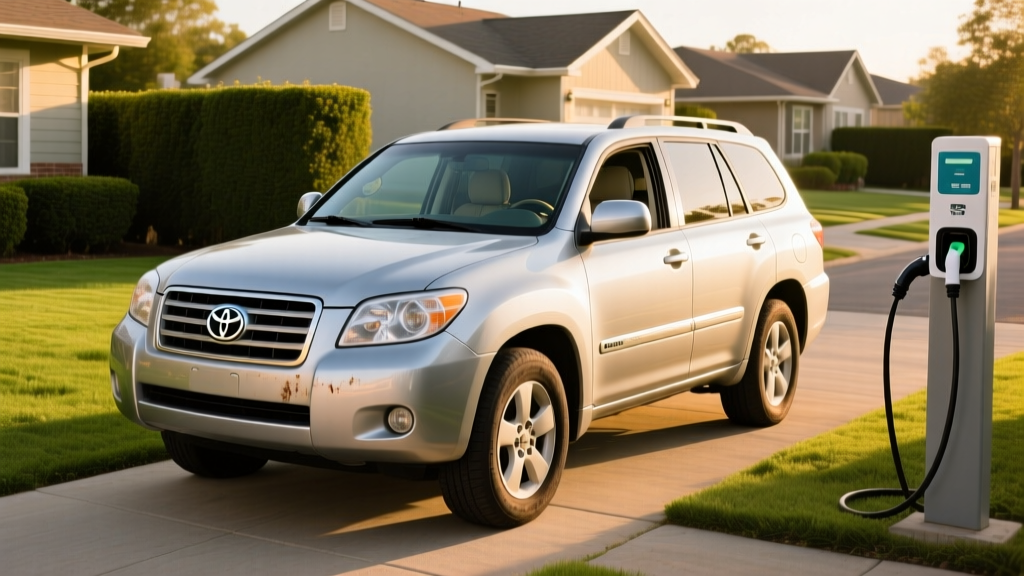
A conventional hybrid like the Toyota RAV4 Hybrid uses a small battery charged solely by regenerative braking and the engine. You never plug it in, and the electric motor simply assists the gas engine for better MPG. A PHEV like the Jeep 4xe models carries a much larger battery — roughly 17 kWh usable — that you charge by plugging into a standard 120V outlet or a 240V Level 2 home charger. That bigger battery enables genuine electric-only driving before the gas engine kicks in.
Jeep chose the PHEV route because it preserves the brand's core identity: serious off-road capability and long-distance freedom. A full EV would limit trail range to whatever charge you started with. A PHEV lets you crawl silently on electric power through sensitive terrain, then fire up the turbo four-cylinder for the drive home.
2026 Jeep Wrangler 4xe: Specs, Range, and MPG
| Spec | 2026 Wrangler 4xe |
|---|---|
| Powertrain | 2.0L turbo I-4 + electric motor (integrated in 8-speed auto) |
| Combined Horsepower | 375 hp / 470 lb-ft torque |
| Battery (usable) | ~17.3 kWh, NMC lithium-ion |
| EPA Electric-Only Range | 22 miles |
| Total Range (EV + Gas) | ~370 miles |
| EPA Fuel Economy (gas-only, hybrid mode) | 20 city / 20 hwy / 20 combined MPG |
| MPGe (electric + gas combined) | 49 MPGe |
| Level 1 Charging (120V) | ~12 hours (0–100%) |
| Level 2 Charging (240V) | ~2 hours (0–100%) at 7.2 kW |
| DC Fast Charging | Not supported |
| 0–60 mph | ~6.0 seconds |
| Towing Capacity | 3,500 lbs |
| Battery Warranty | 8 years / 100,000 miles |
| Starting MSRP (Willys 4xe) | ~$51,790 (incl. destination) |
The Wrangler 4xe's strongest card is its torque. With 470 lb-ft available at low RPM — thanks to the electric motor integrated directly into the transmission — it's the most responsive Wrangler Jeep has ever built, both on pavement and on technical trails. The electric motor also enables silent, zero-emission crawling in EV mode, which matters on sensitive trails where noise and exhaust are restricted.
2026 Jeep Grand Cherokee 4xe: The Family-Friendly PHEV
| Spec | 2026 Grand Cherokee 4xe |
|---|---|
| Powertrain | 2.0L turbo I-4 + dual electric motors (integrated in 8-speed auto) |
| Combined Horsepower | 375 hp / 470 lb-ft torque |
| Battery (usable) | ~17.3 kWh, NMC lithium-ion |
| EPA Electric-Only Range | 26 miles |
| Total Range (EV + Gas) | ~440 miles |
| EPA Fuel Economy (gas-only, hybrid mode) | 23 city / 24 hwy / 23 combined MPG |
| MPGe (electric + gas combined) | 56 MPGe |
| Level 1 Charging (120V) | ~12 hours (0–100%) |
| Level 2 Charging (240V) | ~2 hours (0–100%) at 7.2 kW |
| DC Fast Charging | Not supported |
| 0–60 mph | ~6.0 seconds |
| Towing Capacity | 6,000 lbs (properly equipped) |
| Battery Warranty | 8 years / 100,000 miles |
| Starting MSRP (Base 4xe) | ~$61,590 (incl. destination) |
The Grand Cherokee 4xe shares the Wrangler's powertrain architecture but wraps it in a more refined, aerodynamic package. The result is 4 additional miles of electric range (26 vs. 22) and slightly better hybrid-mode fuel economy. For families who commute 20–25 miles round-trip and can charge at home overnight, the Grand Cherokee 4xe effectively operates as an EV on weekdays and a capable gas SUV for weekend road trips.
With 6,000 lbs of towing capacity when properly equipped, the Grand Cherokee 4xe out-tows the Wrangler 4xe by a significant margin, making it the more practical choice for boat or camper owners who still want plug-in efficiency for daily driving.
Fuel Economy in the Real World: What Owners Actually See
| Model | EPA City | EPA Hwy | EPA Combined | Real-World Avg (Hybrid Mode) |
|---|---|---|---|---|
| Wrangler 4xe | 20 MPG | 20 MPG | 20 MPG | 18–20 MPG |
| Grand Cherokee 4xe | 23 MPG | 24 MPG | 23 MPG | 21–24 MPG |
A key PHEV insight: your actual fuel consumption depends entirely on how often you charge. If you plug in nightly and your commute is under 22 miles (Wrangler) or 26 miles (Grand Cherokee), you may burn zero gasoline on weekdays. Owners who charge diligently report using a tank of gas every 6–8 weeks. Owners who never plug in are essentially driving a heavy, slightly less efficient gas vehicle — the battery becomes dead weight.
According to fueleconomy.gov, the Grand Cherokee 4xe achieves 56 MPGe when combining electric and gas operation. That figure is meaningful only if you're actually using the electric portion. Once the battery depletes, you're on the gas-engine MPG column alone.
Charging the Jeep 4xe: What You Need at Home
Neither Jeep 4xe supports DC fast charging. That's a deliberate engineering choice — the 17.3 kWh battery is small enough that Level 2 charging fills it quickly, and adding DC fast-charge hardware would increase weight, cost, and packaging complexity for marginal benefit.
| Charging Level | Power | 0–100% Time | Cost to Install |
|---|---|---|---|
| Level 1 (120V household outlet) | ~1.4 kW | ~12 hours | $0 (use included cord) |
| Level 2 (240V, 32A) | ~7.2 kW | ~2 hours | $500–$1,500 (electrician + outlet) |
Most 4xe owners find that Level 1 charging from a standard garage outlet is sufficient — plug in when you get home, and the battery is full by morning. A Level 2 charger is a convenience upgrade if you want faster turnaround between drives or if you make multiple short trips throughout the day and want the battery replenished quickly.
The Jeep 4xe uses a standard J1772 connector for AC charging, the same connector used by virtually every non-Tesla PHEV and EV on the market. No adapter is needed for home or public Level 2 stations.
Pricing, Trims, and Federal Tax Credit Eligibility
The 2026 Wrangler 4xe starts at approximately $51,790 for the Willys 4xe trim and climbs to around $62,000+ for the Rubicon and High Altitude variants. The Grand Cherokee 4xe starts near $61,590 and reaches past $75,000 in Summit Reserve trim.
Federal Tax Credit (§30D) — Key Requirements
- Credit Amount: Up to $7,500 for qualifying new PHEVs (must have ≥4 kWh battery — both 4xe models qualify at 17.3 kWh)
- MSRP Cap: SUVs/vans/pickups must be ≤$80,000 MSRP — most 4xe trims fall under this cap, but loaded Grand Cherokee Summit Reserve may exceed it
- Buyer Income Cap: Modified AGI ≤$150,000 (single) / ≤$300,000 (joint) / ≤$225,000 (head of household)
- Battery Sourcing: Critical minerals and battery components must meet phased-in domestic/free-trade-partner sourcing thresholds per IRS §30D rules — check the specific VIN on the IRS qualified vehicles list before purchasing
- Point-of-Sale Transfer: Eligible buyers can transfer the credit to the dealer for an upfront price reduction at purchase
Critical caveat: Battery sourcing requirements tighten annually. A specific 4xe VIN may qualify for the full $7,500, a partial $3,750 (if it meets one of two sourcing thresholds), or nothing at all depending on where its battery cells and critical minerals originated. Always verify the exact VIN on the DOE's qualified vehicle list before finalizing a purchase. State-level incentives may also apply — check your state energy office or DSIRE database for local rebates.
Battery Longevity, Warranty, and Replacement Costs
Hybrid and PHEV battery packs have proven remarkably durable in real-world use. The NMC chemistry in the 4xe is liquid-cooled, which significantly reduces thermal degradation compared to passively cooled packs. Based on data from similar Stellantis PHEV platforms and industry-wide PHEV battery studies, most 4xe batteries should retain 85–90% of original capacity at the 100,000-mile mark under normal use.
If the battery does need replacement outside warranty, current estimates for a 4xe traction battery pack run $8,000–$12,000 including labor. However, individual module replacement (rather than the full pack) may be possible at lower cost depending on the failure. It's worth noting that the 12V auxiliary battery — which powers accessories and starts the system — is a separate, inexpensive component (~$200–$350 replacement) and is the more common "dead battery" complaint among PHEV owners.
For reliability data, consult IIHS crash-test ratings and owner-survey platforms like Consumer Reports. The Wrangler 4xe has had some early-model-year software and electrical gremlins reported, though Jeep has issued updates through the 2025–2026 model years to address most of them.
Who Should Choose a Jeep 4xe — And Who Shouldn't
Choose a Jeep 4xe PHEV If:
- You want genuine off-road capability (Wrangler Rubicon 4xe) with the bonus of silent electric trail crawling
- Your daily commute is under 25 miles and you can charge at home
- You take regular long road trips and don't want to plan around charging stations
- You need a tow-capable SUV (Grand Cherokee 4xe: 6,000 lbs)
- You want to reduce fuel consumption without going full EV
Choose a Full EV Instead If:
- You never go off-road and prioritize maximum efficiency and lowest operating cost
- Your daily driving exceeds 50 miles (a full EV with 300+ miles of range eliminates daily gas entirely)
- You want zero maintenance on the powertrain (no oil changes, no gas engine)
Choose a Conventional Hybrid (HEV) Instead If:
- You can't charge at home (apartment, no garage outlet) — a PHEV you never plug in is a waste of the battery premium
- You want simpler ownership with no plug-in routine
- Budget is a priority — a RAV4 Hybrid starts ~$15,000 less than a Wrangler 4xe
Jeep 4xe Pros
- 375 hp / 470 lb-ft — most torque-rich Wrangler and Grand Cherokee ever
- 22–26 miles of EV range covers most commutes
- Silent electric off-road mode for sensitive trails
- No range anxiety on road trips — gas engine provides 370–440 total miles
- Eligible for up to $7,500 federal tax credit (VIN-dependent)
- 8-year/100,000-mile battery warranty
Jeep 4xe Cons
- No DC fast charging — irrelevant for most PHEV use, but limits flexibility
- Hybrid-mode MPG is mediocre (20–23 combined) when battery is depleted
- High starting price — $51K+ Wrangler, $61K+ Grand Cherokee
- Heavy curb weight reduces efficiency vs. lighter competitors
- Tax credit eligibility is VIN-specific and not guaranteed
- Must plug in regularly to realize fuel savings — never charging wastes the PHEV premium
Frequently Asked Questions
Does Jeep make a regular hybrid that doesn't need to be plugged in?
No. As of the 2026 model year, Jeep does not offer a conventional hybrid (HEV). All electrified Jeeps are plug-in hybrids (PHEVs) under the 4xe badge. If you want a Jeep that requires no plug-in routine, your only option is a standard gasoline Wrangler or Grand Cherokee.
How many MPG does the Jeep 4xe get?
Once the battery is depleted and the vehicle operates in hybrid mode, the Wrangler 4xe achieves an EPA-rated 20 MPG combined (20 city / 20 highway), while the Grand Cherokee 4xe achieves 23 MPG combined (23 city / 24 highway). When you factor in electric-only miles driven on a full charge, the MPGe figures jump to 49 MPGe (Wrangler) and 56 MPGe (Grand Cherokee).
How far can the Jeep 4xe go on electric power alone?
The 2026 Wrangler 4xe delivers an EPA-rated 22 miles of electric-only range. The Grand Cherokee 4xe provides 26 miles. Real-world figures vary: expect 15–20 miles in cold weather or at highway speeds, and up to 24–27 miles in mild conditions at city speeds.
Is the Jeep 4xe reliable, and what does battery replacement cost?
The 4xe powertrain has matured since its 2021 introduction, with software and electrical reliability improving through the 2025–2026 model years. The battery is warranted for 8 years or 100,000 miles against capacity loss below 70%. Out-of-warranty battery replacement currently estimates at $8,000–$12,000, though module-level repairs may cost less.
Does the Jeep 4xe qualify for the $7,500 federal tax credit?
Both 4xe models are eligible for up to $7,500 under IRS §30D, provided the specific VIN meets battery-sourcing requirements and the buyer's income falls within the caps ($150K single / $300K joint). The MSRP must also be under $80,000 for SUVs. Always verify your specific VIN on the DOE qualified vehicle list before purchasing, as eligibility can change with supply-chain adjustments.
Can I charge the Jeep 4xe at a public DC fast charger?
No. Neither the Wrangler 4xe nor the Grand Cherokee 4xe has a DC fast-charge port. They charge exclusively via AC — Level 1 (120V) or Level 2 (240V). Given the relatively small 17.3 kWh battery, a Level 2 charger fills it in roughly 2 hours, which is adequate for PHEV use patterns.