Why the Jeep Gladiator 4xe Hybrid Was Cancelled
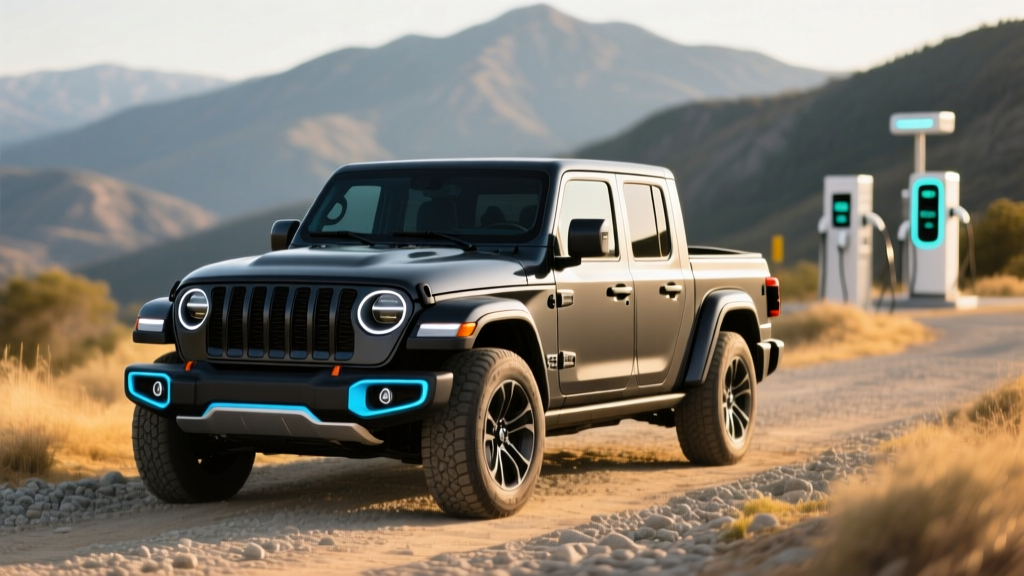
For years, off-road enthusiasts and fleet buyers hoped Stellantis would bring its proven 4xe plug-in hybrid powertrain to the mid-size Gladiator pickup. That hope is now officially dead. The Jeep Gladiator 4xe hybrid has been cancelled, confirmed through Stellantis product roadmap updates and industry reporting, leaving a noticeable gap in the electrified truck market for 2026.
The reasons are multifold. First, the Gladiator platform — derived from the JL Wrangler architecture — requires substantial re-engineering to accommodate the 4xe's 17.3 kWh battery pack and rear-mounted electric motor without compromising the truck's 1,700-pound payload rating and 7,700-pound towing capacity. Second, Stellantis has pivoted its electrification investment toward the all-new Recon, Wagoneer S, and the next-generation Ram 1500 REV and Ramcharger platforms. Third, the mid-size truck segment's volume simply doesn't justify the engineering spend when the Wrangler 4xe already captures the core PHEV off-road buyer.
For shoppers who were waiting on a Gladiator 4xe, it's time to evaluate real alternatives. Let's break down what's available now and how the closest substitute — the Wrangler 4xe — actually stacks up.
HEV vs PHEV: Understanding Your Electrified Truck Options
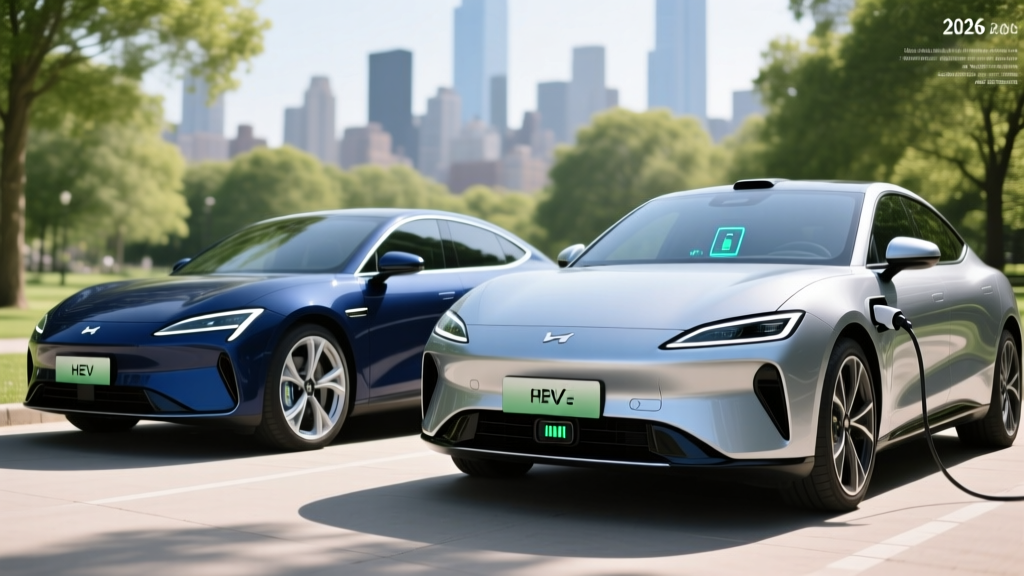
Before comparing alternatives, it's critical to distinguish the two hybrid types available in today's truck market:
Conventional Hybrid (HEV)
A standard hybrid like the Ford Maverick Hybrid uses a small electric motor and battery to assist the gas engine. It never plugs in — the battery recharges through regenerative braking and engine power. You get improved MPG with zero behavioral change.
- Battery: typically 1.0–1.5 kWh
- No plug-in charging required
- No electric-only driving range
- No federal tax credit eligibility
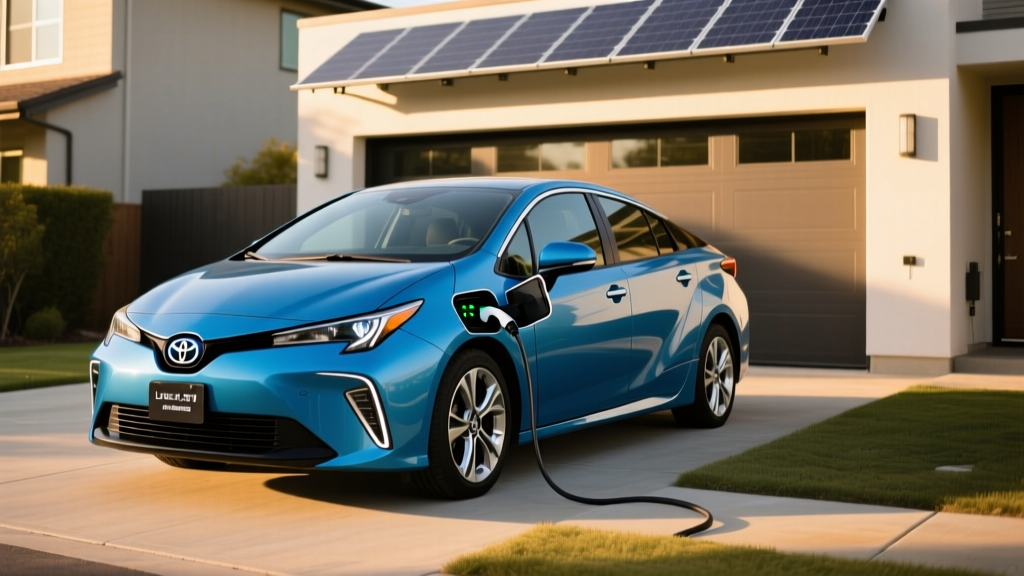
Plug-In Hybrid (PHEV)
A plug-in hybrid like the Wrangler 4xe has a much larger battery and a more powerful electric motor. It plugs into a wall or charger and can drive on electricity alone for a limited range before the gas engine kicks in.
- Battery: typically 14–20+ kWh
- Plugs into Level 1 (120V) or Level 2 (240V)
- Electric-only range: 20–40+ miles depending on model
- May qualify for federal §30D tax credit (up to $7,500)
The Closest Alternative: 2026 Jeep Wrangler 4xe
With the Gladiator 4xe off the table, the Wrangler 4xe remains Jeep's sole PHEV offering and the most direct substitute for buyers who wanted a 4xe truck. Here's what the 2026 model delivers:
| Specification | 2026 Jeep Wrangler 4xe |
|---|---|
| Powertrain | 2.0L turbo I-4 + electric motor + 8-speed auto |
| Combined Horsepower | 375 hp / 470 lb-ft torque |
| Battery (usable) | 17.3 kWh NMC lithium-ion |
| EPA Electric-Only Range | 22 miles |
| EPA Combined MPGe | 49 MPGe (electric + gas) |
| EPA MPG (gas-only) | 20 city / 20 hwy / 20 combined |
| Total Combined Range | ~370 miles |
| Level 2 Charge Time (0–100%) | ~2.5 hours at 7.2 kW |
| DC Fast Charging | Not supported |
| 0–60 mph | 6.0 seconds |
| Starting MSRP (Willys 4xe) | $51,790 |
| Battery Warranty | 8 years / 100,000 miles |
Fuel Economy: EPA Numbers vs Real-World MPG
| Driving Scenario | EPA Estimate | Real-World Expectation |
|---|---|---|
| Electric-only (first 22 mi) | 49 MPGe | 38–45 MPGe (highway reduces this) |
| Gas-only city | 20 MPG | 18–21 MPG |
| Gas-only highway | 20 MPG | 17–19 MPG (aero drag, roof rack, 35" tires) |
| Gas-only combined | 20 MPG | 18–20 MPG |
The Wrangler 4xe's 20 MPG gas-only figure is unimpressive for a hybrid — but that's the tradeoff for a boxy, solid-axle off-roader weighing over 5,000 pounds. The real value is in the 22 electric-only miles. Owners who commute under 20 miles round-trip and charge nightly report using almost no gasoline for weeks. According to fueleconomy.gov, the 4xe's annual fuel cost is approximately $2,450 compared to $3,200 for the gas-only Wrangler — a meaningful gap if you maximize electric miles.
Cold weather reduces the electric range by roughly 20–30%. Expect 15–17 electric miles in sub-freezing temperatures, consistent with NMC battery behavior in cold climates.
What About Other Electrified Trucks?
If the Wrangler 4xe doesn't fit your needs, the 2026 truck market offers several alternatives across the HEV, PHEV, and BEV spectrum:
Choose the Wrangler 4xe If:
- You need serious off-road capability (solid axles, locking diffs, sway-bar disconnect)
- Your daily commute is under 22 miles round-trip
- You want a removable roof/doors and open-air driving
- You can charge at home (Level 1 or Level 2)
Look Elsewhere If:
- You need a truck bed (Gladiator, Maverick, or F-150 territory)
- You want a conventional hybrid with no plug-in requirement
- Fuel economy is your top priority (Maverick Hybrid gets 42 MPG)
- You want full electric with 300+ miles of range
Ford Maverick Hybrid (HEV)
The Maverick Hybrid pairs a 2.5L Atkinson-cycle engine with an electric motor for an EPA-estimated 42 city / 33 highway / 37 combined MPG. No plug, no range anxiety, no tax credit. Starting around $28,000, it's the efficiency champion for light-duty truck buyers — but it's a unibody crossover-truck with no serious off-road chops and a 1,500-pound payload limit.
Ford F-150 PowerBoost (HEV)
The full-size F-150 PowerBoost hybrid delivers 22 city / 24 highway / 23 combined MPG with 430 hp and a massive 12,700-pound max towing capacity. No plug required. It's the workhorse hybrid — ideal for towing and hauling, but not eligible for any federal PHEV/EV credit.
RAM 1500 Ramcharger (EREV)
Stellantis's Ramcharger is technically an extended-range electric vehicle (EREV), not a traditional PHEV. It uses a 92 kWh battery for approximately 145 miles of electric range, with a 3.6L V6 acting solely as a generator — never driving the wheels directly. MSRP starts near $65,000. This is the closest thing to a "Gladiator 4xe" in spirit, but in a full-size truck footprint.
Tax Credit Eligibility for PHEV Trucks
The Wrangler 4xe's eligibility for the IRS §30D federal tax credit depends on several factors that change annually:
- MSRP Cap: Vans, SUVs, and pickups must be under $80,000 MSRP. The Wrangler 4xe qualifies (most trims land between $52K–$70K).
- Buyer Income Cap: Modified AGI must not exceed $150,000 (single), $225,000 (head of household), or $300,000 (joint). Exceed these thresholds and the credit phases out entirely.
- Battery Sourcing: Critical minerals and battery components must meet phased-in percentage thresholds from U.S. or FTA-partner countries. As of 2026, sourcing requirements are stringent — check the DOE's qualifying vehicle list for the specific trim and build date.
- Point-of-Sale Transfer: Buyers can transfer the credit to the dealer at purchase, reducing the out-of-pocket price immediately rather than waiting for a tax refund.
- Credit Amount: Up to $7,500, split between a $3,750 critical-minerals requirement and a $3,750 battery-components requirement. The Wrangler 4xe may qualify for the partial ($3,750) or full ($7,500) credit depending on the build date and supply-chain compliance.
Conventional hybrids like the Maverick Hybrid and F-150 PowerBoost do not qualify for the §30D credit, which is reserved for plug-in vehicles with batteries of at least 7 kWh.
Who Should Buy a PHEV vs HEV vs Full EV?
Decision Framework
Choose a PHEV (like the Wrangler 4xe) if: You want electric commuting with gas-engine backup for road trips and towing. You have home charging access. Your daily driving is mostly under 30 miles.
Choose an HEV (like the Maverick Hybrid) if: You want better MPG with zero lifestyle change — no plug, no range tracking, no charging infrastructure dependency. Best for apartment dwellers or those without garage access.
Choose a full EV (like the Rivian R1T or Ford F-150 Lightning) if: You drive under 300 miles daily, have reliable home Level 2 charging, want minimal maintenance, and are ready to commit fully to electric. Total cost of ownership is often lowest here, but upfront cost and charging-desert risk on road trips remain factors.
FAQ: Jeep Gladiator 4xe Cancellation and Alternatives
Is Jeep making a Gladiator 4xe hybrid for 2026 or 2027?
No. Stellantis has confirmed the Gladiator 4xe plug-in hybrid is cancelled. There are no announced plans to reintroduce it for 2026 or 2027 model years. The Gladiator continues as a gas-only model with the 3.6L V6 and 2.0L turbo I-4 options.
How many MPG does the closest alternative get?
The 2026 Wrangler 4xe gets 49 MPGe combined when using its electric range, and 20 MPG combined on gasoline alone. For a conventional hybrid truck, the Ford Maverick Hybrid achieves 37 MPG combined (42 city / 33 highway).
How far can the Wrangler 4xe go on electric only?
The EPA rates the Wrangler 4xe at 22 miles of electric-only range. In real-world driving, expect 18–22 miles in moderate weather and 15–17 miles in cold conditions below freezing.
Is the Wrangler 4xe reliable, and what does battery replacement cost?
The 4xe powertrain has been in production since the 2021 model year, giving it a multi-year track record. The high-voltage battery is warrantied for 8 years/100,000 miles against degradation below 70% capacity. Out-of-warranty battery replacement costs approximately $12,000–$16,000. According to NHTSA complaint databases, major battery failures within the warranty period have been relatively uncommon, though some owners report issues with the 12V auxiliary battery and the power electronics cooling system.
Does the Wrangler 4xe qualify for any tax credit?
It may qualify for up to $7,500 under the IRS §30D clean vehicle credit, depending on your income, the vehicle's MSRP (must be under $80,000), and battery-sourcing compliance for the specific build date. Check the latest qualifying vehicle list on fueleconomy.gov before purchasing. The credit can be applied at the point of sale to reduce your purchase price immediately.
Can I charge the Wrangler 4xe at a DC fast charger?
No. The Wrangler 4xe only supports Level 1 (120V, ~1.4 kW) and Level 2 (240V, up to 7.2 kW) AC charging. A full Level 2 charge takes approximately 2.5 hours. There is no DC fast-charging capability — a limitation shared with most PHEVs due to their smaller battery packs.