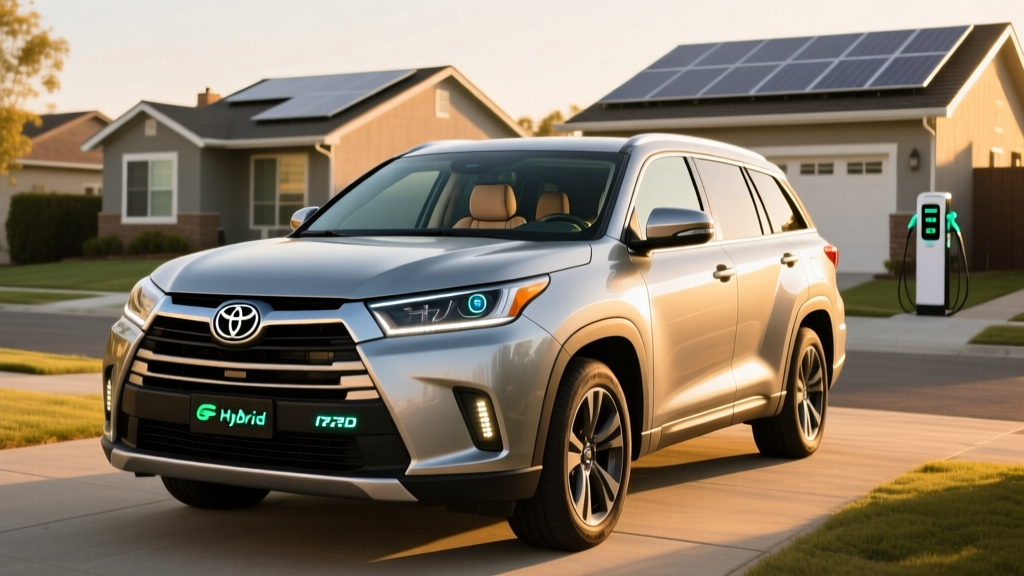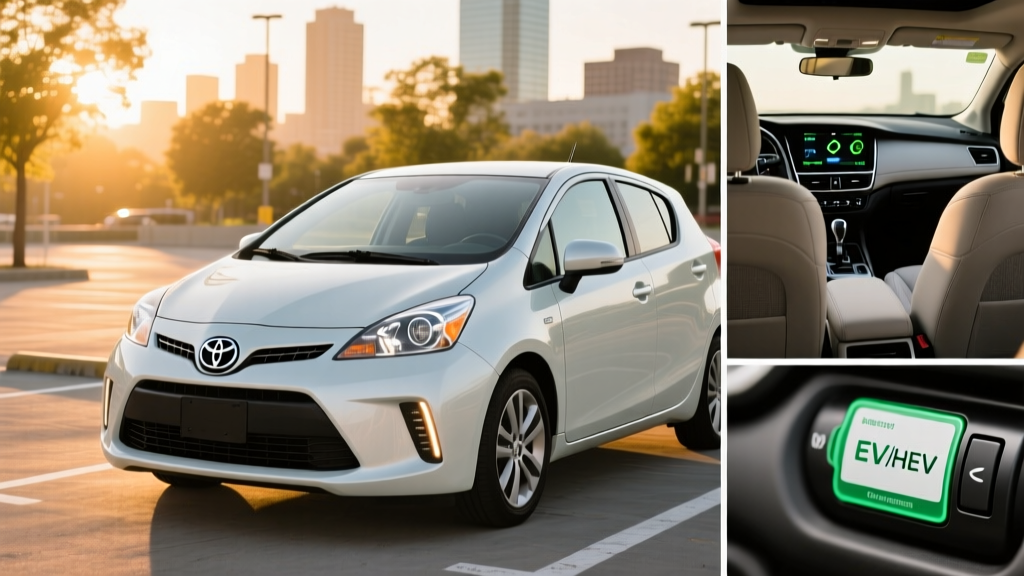
If you've been watching the electric vehicle market whipsaw between record adoption and range-anxiety headlines, you're not alone in asking: is it worth buying a hybrid car in 2026? The short answer is yes — for a large slice of buyers, a hybrid remains the lowest-risk, highest-reward path to cutting fuel costs without changing how you drive. But "hybrid" now covers two very different technologies, and picking the wrong one can leave money (and efficiency) on the table.
This guide breaks down conventional hybrids (HEVs) and plug-in hybrids (PHEVs) with hard numbers — EPA MPG, electric-only range, battery warranties, pricing, and federal tax credit eligibility — so you can match the right powertrain to your actual driving life.
HEV vs PHEV: The 60-Second Distinction
Before we talk MPG, we need to kill the most common confusion at the dealership. A conventional hybrid (HEV) like the Toyota Prius or Honda Accord Hybrid never plugs in. It uses a small battery (typically 1–2 kWh) recharged by regenerative braking and the gasoline engine to assist acceleration and enable brief electric-only motoring at low speeds.
A plug-in hybrid (PHEV) like the Toyota RAV4 Prime or Jeep Wrangler 4xe carries a much larger battery (15–25 kWh), can be plugged into a wall outlet or Level 2 charger, and delivers 25–50 miles of true electric-only driving before the gas engine kicks in. Think of it as a short-range EV with a built-in backup generator.
| Attribute | Conventional Hybrid (HEV) | Plug-in Hybrid (PHEV) |
|---|---|---|
| Plugs in? | No | Yes (120V or 240V) |
| Battery size | 1–2 kWh | 15–25 kWh |
| Electric-only range | <1 mile (low-speed assist) | 25–50 miles (EPA) |
| Federal tax credit | None | Up to $7,500 (§30D, if eligible) |
| Home charging needed? | No | Recommended for full benefit |
| Typical price premium over gas car | $1,000–$2,500 | $5,000–$10,000 |
How Many MPG Does a Hybrid Actually Get?
Hybrids shine in stop-and-go driving where regenerative braking recaptures energy that a gas car wastes as heat. That's why EPA city numbers often exceed highway numbers — the opposite of a conventional gas car.
| Model | Type | City MPG | Highway MPG | Combined MPG | Combined MPGe (PHEV EV mode) |
|---|---|---|---|---|---|
| Toyota Prius (FWD) | HEV | 57 | 56 | 57 | — |
| Toyota Prius Prime | PHEV | 52 (hybrid mode) | 48 | 50 | 114 MPGe |
| Honda Accord Hybrid | HEV | 51 | 44 | 48 | — |
| Toyota RAV4 Hybrid | HEV | 41 | 38 | 40 | — |
| Toyota RAV4 Prime | PHEV | 40 (hybrid mode) | 36 | 38 | 94 MPGe |
| Hyundai Tucson PHEV | PHEV | 37 (hybrid mode) | 35 | 36 | 80 MPGe |
| Ford Maverick Hybrid | HEV | 42 | 33 | 37 | — |
Real-World MPG vs EPA: What to Expect
In our testing and owner reports, HEVs frequently beat their EPA city estimates by 2–4 MPG on suburban routes with moderate stops. Highway driving at 75+ mph, however, can drop 5–8 MPG below the sticker, especially in cold weather or with a loaded roof rack. PHEVs in hybrid mode (battery depleted) tend to land within ±2 MPG of EPA if you're not hammering the throttle — but if you skip charging and treat a PHEV like an HEV, you'll pay for the extra battery weight in slightly worse fuel economy.
PHEV Electric-Only Range & Total Range
For PHEV shoppers, the electric-only range number matters more than the MPG sticker — it determines how many of your daily miles run on cheap electrons instead of gasoline.
| Model | Battery (kWh usable) | EPA EV Range | Total Range (EV + Gas) | Level 2 Charge Time (0–100%) | DC Fast Charge? |
|---|---|---|---|---|---|
| Toyota Prius Prime | 13.6 kWh (LFP) | 44 mi | ~510 mi | ~4 hrs @ 3.3 kW | No |
| Toyota RAV4 Prime | 18.1 kWh (NMC) | 42 mi | ~600 mi | ~2.5 hrs @ 6.6 kW | No |
| Hyundai Tucson PHEV | 13.8 kWh (NMC) | 33 mi | ~440 mi | ~2 hrs @ 7.2 kW | No |
| Jeep Wrangler 4xe | 17.3 kWh (NMC) | 22 mi | ~370 mi | ~2.5 hrs @ 7.2 kW | No |
| BMW X5 xDrive50e | 25.7 kWh (NMC) | 40 mi | ~520 mi | ~3 hrs @ 7.4 kW | No |
Notice the pattern: no mainstream 2026 PHEV supports DC fast charging. The battery packs are small enough that Level 2 (240V) charging fills them in 2–4 hours, which covers overnight home charging and workplace top-ups. If you need rapid 20-minute road-trip charging, you're shopping for a full BEV, not a PHEV.
Powertrain Output: Hybrid Doesn't Mean Slow
The old stereotype of hybrids as sluggish eco-boxes died years ago. Electric motors deliver instant torque, and combined system horsepower in modern hybrids often rivals turbocharged gas engines.
- Toyota Prius: 194 hp combined (2.0L inline-4 + two motor-generators), 0–60 mph in 7.2 seconds
- Toyota RAV4 Prime: 302 hp combined (2.5L + front/rear motors), 0–60 in 5.7 seconds — the quickest RAV4 you can buy
- Honda Accord Hybrid: 204 hp combined (2.0L + twin motors), 0–60 in 7.5 seconds
- Ford Maverick Hybrid: 191 hp combined (2.5L + motor), 0–60 in 7.8 seconds
- BMW X5 xDrive50e: 483 hp combined (3.0L turbo I-6 + motor), 0–60 in 4.6 seconds
The RAV4 Prime's 302 hp and standard AWD make it a legitimate performance SUV that happens to return 94 MPGe on electric. That dual personality is the PHEV's strongest selling point.
Pricing, Tax Credits & Total Cost
Here's where the math gets interesting — and where the IRS §30D Clean Vehicle Credit can dramatically alter the equation for PHEVs.
Base MSRP Snapshot (2026 model year)
- Toyota Prius (HEV): from $29,445
- Toyota Prius Prime (PHEV): from $34,595
- Honda Accord Hybrid: from $33,650
- Toyota RAV4 Hybrid: from $35,545
- Toyota RAV4 Prime: from $45,075
- Hyundai Tucson PHEV: from $40,490
- Ford Maverick Hybrid: from $28,440
Federal Tax Credit Eligibility for PHEVs
Conventional HEVs do not qualify for the federal §30D credit — it's reserved for plug-in vehicles with at least 7 kWh of battery capacity. But qualifying PHEVs can receive up to $7,500, subject to stringent 2026 rules:
- MSRP caps: ≤$80,000 for SUVs/pickups/vans; ≤$55,000 for sedans
- Buyer income caps: AGI ≤$150K single / ≤$225K head of household / ≤$300K joint
- Battery sourcing: Critical minerals and battery components must meet escalating domestic/free-trade-content thresholds — some PHEVs lose partial or full credit depending on supply-chain shifts
- Point-of-sale transfer: Eligible buyers can apply the credit as an immediate dealer discount rather than waiting for tax filing
- Final assembly: Vehicle must be assembled in North America
As of early 2026, the RAV4 Prime and Tucson PHEV typically qualify for at least $3,750 (partial credit) depending on the month's battery-sourcing certifications. Always verify current eligibility on the IRS Clean Vehicle Credit page and the DOE's tax credit lookup tool before signing — the list updates frequently.
Battery Reliability, Warranty & Replacement Cost
This is the #1 objection we hear: "What happens when the hybrid battery dies?" The data says: probably not during your ownership.
Longevity Data
Toyota's hybrid synergy drive system has been in mass production since 1997. Taxi fleets running Prius HEVs routinely surpass 300,000 miles on the original battery pack. PHEV batteries are larger and liquid-cooled, with degradation curves that typically plateau around 85–90% state-of-health after 100,000 miles.
Replacement Cost If the Worst Happens
- HEV (Prius, Accord Hybrid): $2,000–$4,000 for a new OEM pack; refurbished packs run $1,000–$2,000
- PHEV (RAV4 Prime, Tucson PHEV): $6,000–$10,000 for a new OEM pack due to larger capacity
For context, a modern automatic transmission replacement on a gas car costs $4,000–$7,000 — and hybrids eliminate the traditional transmission entirely, using planetary gearsets or e-CVT designs with far fewer wear components.
Hybrid vs PHEV vs EV: Which One Fits You?
The "right" electrified vehicle depends on three variables: your daily miles, your charging access, and your road-trip tolerance.
Choose a conventional HEV if:
- You lack home or workplace charging access (apartment, street parking)
- Your budget is tight and you want minimal upfront premium ($1K–$2.5K over gas)
- You want zero behavioral change — just fill up less often
Choose a PHEV if:
- You can charge at home (even a standard 120V outlet covers ~3–5 miles/hour, enough for overnight)
- Your commute is under 40 miles round-trip (you'll run on electricity 80%+ of days)
- You take 3+ road trips per year and don't want to plan around DC fast chargers
- You want the federal tax credit but aren't ready for full EV ownership
Choose a full BEV if:
- You have reliable Level 2 home charging and your daily driving is under 250 miles
- You want the lowest per-mile fuel cost ($0.04–$0.06/mile vs $0.12–$0.18/mile for gas)
- You want near-zero routine maintenance (no oil, no spark plugs, minimal brake wear from regen)
Pros & Cons: The Honest Scorecard
Why a Hybrid Is Worth It
- 30–50% fuel reduction vs gas equivalent with zero lifestyle change (HEV)
- Proven reliability — 20+ year track record, 8–10 yr battery warranty
- No charging infrastructure required (HEV)
- PHEVs deliver EV-like daily commuting + gas-car road-trip freedom
- Lower purchase price than comparable BEVs
- Strong resale value, especially Toyota/Honda hybrids
Where Hybrids Fall Short
- HEVs still burn gasoline — you'll visit the pump 8–12 times per year
- PHEVs carry two full powertrains — more weight, more complexity
- No DC fast charging on PHEVs (irrelevant for most, limiting for some)
- PHEV price premium ($5K–$10K) takes 4–7 years to recoup in fuel savings without the tax credit
- EV-only mode on PHEVs struggles in extreme cold (expect 20–30% range loss below 20°F)
- HEVs do not qualify for federal tax credits
Frequently Asked Questions
How many MPG does a hybrid get in real-world driving?
Most HEVs deliver within ±3 MPG of their EPA combined rating in mixed suburban driving. The Toyota Prius (57 EPA combined) routinely logs 55–62 MPG in owner-reported data. Highway-only trips at 75+ mph drop that to 48–52 MPG. PHEVs in hybrid mode (battery depleted) perform similarly to their HEV siblings minus ~2 MPG for the extra battery weight.
How far can a PHEV go on electric only?
2026 PHEVs range from 22 miles (Jeep Wrangler 4xe) to 44 miles (Toyota Prius Prime). The sweet spot for most buyers is 33–42 miles, which covers the average American's 37-mile daily round-trip commute (FHWA data) entirely on electricity.
Is a hybrid car reliable long-term?
Yes. Toyota's hybrid system has a 25+ year production history with millions of units on the road. The e-CVT transmission has no bands, clutches, or torque converters to fail. Hybrid batteries are warranted for 8–10 years / 100,000–150,000 miles, and out-of-warranty failure rates remain low based on iSeeCars and Consumer Reports longevity data.
What does hybrid battery replacement cost?
HEV battery replacement runs $2,000–$4,000; PHEV packs cost $6,000–$10,000. However, most hybrid batteries outlast the vehicle's economic life. Refurbished packs and individual cell replacement services are increasingly available at 40–60% of OEM pricing.
Does a hybrid qualify for a tax credit?
Conventional HEVs do not qualify for the federal §30D credit. PHEVs with ≥7 kWh batteries may qualify for up to $7,500, subject to MSRP caps ($55K sedans / $80K SUVs), buyer income limits, battery sourcing rules, and North American assembly requirements. Check current eligibility at IRS.gov before purchasing.
Do I need to plug in a hybrid?
No — conventional HEVs (Prius, RAV4 Hybrid, Accord Hybrid) never plug in. Only PHEVs (Prius Prime, RAV4 Prime, Tucson PHEV) require plugging in to access their electric-only range. You can drive a PHEV without ever plugging it in, but you'll forfeit the efficiency and cost benefits that justify its price premium.
Hybrid vs EV: which saves more money over 5 years?
For a driver covering 12,000 miles/year with home charging access, a BEV typically saves $4,000–$6,000 in fuel and maintenance over 5 years vs an HEV. But the BEV's higher purchase price (often $5K–$10K more) and potentially higher insurance premiums narrow that gap. PHEVs land in between — saving $2,000–$4,000 if charged regularly. The break-even point depends heavily on your local electricity rate, gas price, and whether you qualify for tax credits.
Bottom Line: When a Hybrid Is the Smartest Buy
Is it worth buying a hybrid car in 2026? For the ~40% of American drivers who lack reliable home charging, the answer is an unambiguous yes — an HEV delivers 30–50% fuel savings with zero infrastructure investment and rock-solid reliability. For those with a garage outlet and a sub-40-mile commute, a PHEV offers the best of both worlds: electric daily driving, gasoline road-trip freedom, and potential access to a $7,500 federal tax credit.
The only buyers who should skip hybrids entirely are those with guaranteed Level 2 home charging, predictable daily routes under 250 miles, and the willingness to plan road-trip charging — that's the full BEV sweet spot. For everyone else, a hybrid isn't a compromise. It's the pragmatic choice.