Is Hybrid Better Than Gas? The Short Answer
For most drivers in 2026, a conventional hybrid (HEV) or plug-in hybrid (PHEV) delivers measurably lower fuel costs, fewer emissions, and near-identical reliability compared to a gasoline-only car — often with a modest price premium that pays for itself within two to four years. The question isn't whether hybrids are better in the abstract; it's whether a hybrid, a PHEV, or a full battery-electric vehicle (BEV) fits your driving pattern, budget, and charging access.
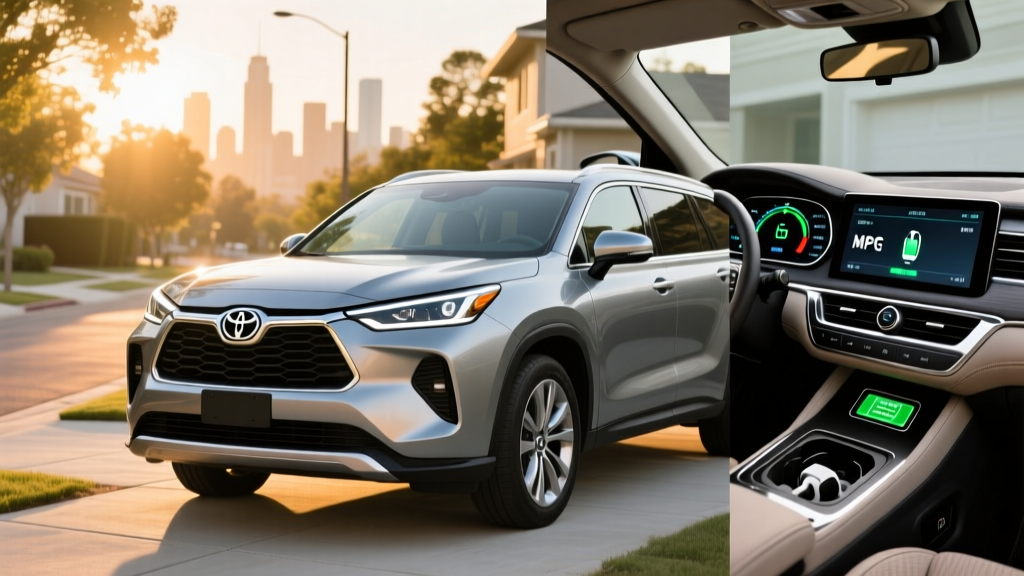
This guide breaks down the numbers — EPA MPG, real-world fuel economy, battery longevity, tax-credit eligibility, and total ownership cost — so you can make a spec-driven decision. We'll use the 2026 Toyota RAV4 Hybrid and 2026 Toyota RAV4 Prime (PHEV) as benchmark examples, since they represent the best-selling hybrid nameplate in the U.S. and illustrate both HEV and PHEV architectures clearly.
HEV vs PHEV vs Gas vs BEV: What's the Difference?
Before comparing fuel economy, let's clarify the four powertrain types you'll encounter at the dealership:
| Type | How It Works | Plug In? | Typical Use Case |
|---|---|---|---|
| Gas (ICE) | Internal combustion engine only | No | Baseline comparison |
| HEV (Hybrid) | Gas engine + small electric motor; battery recharges via regenerative braking and the engine | No | City/suburban drivers who want MPG gains with zero behavior change |
| PHEV (Plug-In Hybrid) | Gas engine + larger electric motor and battery; can drive on electricity alone for 25–45 miles | Yes (Level 1/2) | Commuters with home charging who want EV-like daily driving plus gas-engine range for road trips |
| BEV (Battery Electric) | Electric motor(s) only; no gas engine | Yes (Level 1/2/DC) | Drivers with reliable home/work charging who want zero tailpipe emissions and lowest operating cost |
A conventional hybrid never needs to be plugged in. It recovers energy from braking and coasting, stores it in a small battery (typically 1–2 kWh), and uses the electric motor to assist the gas engine during acceleration and low-speed driving. A PHEV has a much larger battery (15–25 kWh) that you charge from a wall outlet or charger, giving you an electric-only driving range before the gas engine kicks in.
2026 MPG Comparison: Gas vs Hybrid vs PHEV
Fuel economy is the headline reason buyers cross-shop hybrids. Here's how the 2026 RAV4 lineup stacks up, with EPA figures sourced from fueleconomy.gov:
| Model | City MPG | Highway MPG | Combined MPG / MPGe | Electric-Only Range |
|---|---|---|---|---|
| 2026 RAV4 LE (Gas) | 27 | 35 | 30 | — |
| 2026 RAV4 Hybrid (HEV) | 41 | 38 | 40 | — |
| 2026 RAV4 Prime (PHEV) | 40 (gas mode) | 36 (gas mode) | 94 MPGe (combined w/ elec) | 42 miles |
Real-World MPG Note: Hybrids typically exceed their EPA city rating in stop-and-go traffic because regenerative braking recovers more energy at low speeds. On the highway, where regen opportunities are fewer and aerodynamic drag dominates, real-world MPG often drops 2–5 MPG below the EPA sticker. Expect roughly 42–44 MPG city and 34–36 MPG highway from the RAV4 Hybrid in mixed driving. PHEV gas-mode MPG depends heavily on whether you start with a full or depleted battery.
For context, the hybrid delivers a 33% improvement in combined fuel economy over the gas model. If you drive 15,000 miles per year at $3.40/gallon, that's the difference between spending $1,700/year (gas) and $1,275/year (hybrid) on fuel — a savings of roughly $425 annually.
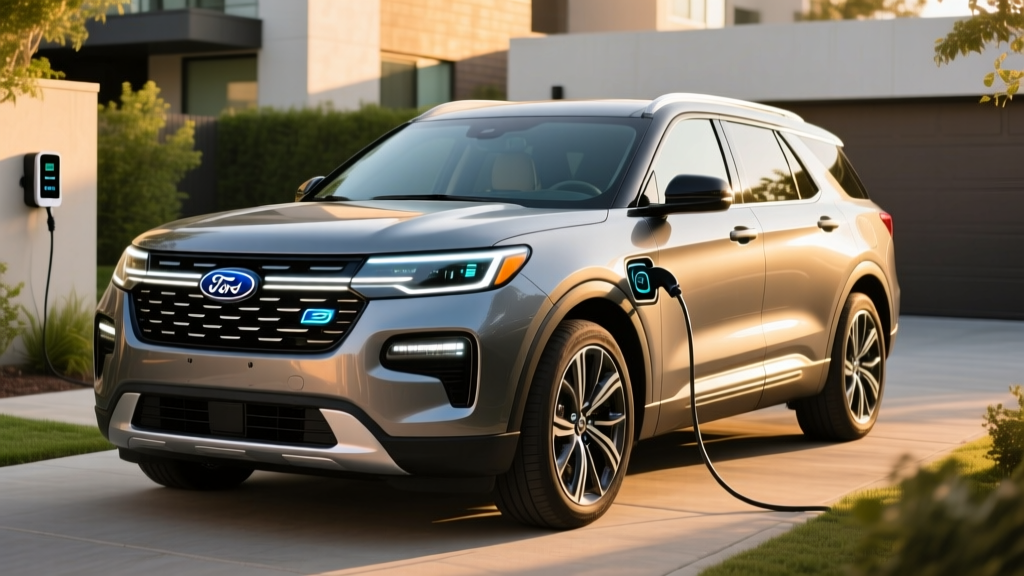
PHEV Deep Dive: Electric-Only Range and Charging
The RAV4 Prime's party trick is its 42-mile EPA electric-only range. For commuters with a round trip under 40 miles and home charging, this means months of gas-free weekday driving, with the gas engine available for weekend road trips.
| Spec | 2026 RAV4 Prime (PHEV) |
|---|---|
| Battery Capacity | 18.1 kWh (lithium-ion, NMC chemistry) |
| Electric-Only Range (EPA) | 42 miles |
| Total Combined Range | ~600 miles (42 mi electric + ~560 mi gas) |
| Combined Horsepower | 302 hp (2.5L 4-cyl + front/rear electric motors) |
| 0–60 mph | 5.7 seconds |
| Level 1 Charging (120V) | ~12 hours (0–100%) |
| Level 2 Charging (240V, 3.3 kW) | ~4.5 hours (0–100%) |
| Level 2 Charging (240V, 6.6 kW optional) | ~2.5 hours (0–100%) |
| DC Fast Charging | Not available |
A critical distinction: most PHEVs, including the RAV4 Prime, do not support DC fast charging. You're limited to Level 1 (standard 120V outlet) or Level 2 (240V home or public charger). This is fine for overnight home charging but means you can't top up quickly on a road trip. If you don't charge a PHEV, you're simply driving a heavier, slightly less efficient hybrid — so a PHEV only makes financial sense if you'll actually plug it in regularly.
Pricing and Tax Credit Eligibility
Hybrids carry an upfront premium over their gas counterparts. Here's the 2026 pricing landscape:
| Model | Base MSRP | Federal Tax Credit (§30D) | Effective Price |
|---|---|---|---|
| 2026 RAV4 LE (Gas) | $30,250 | $0 | $30,250 |
| 2026 RAV4 Hybrid XLE | $33,850 | $0 (HEVs ineligible) | $33,850 |
| 2026 RAV4 Prime SE (PHEV) | $44,590 | Up to $7,500* | ~$37,090 |
*Federal tax credit eligibility for PHEVs is governed by IRS §30D rules and depends on multiple factors:
- MSRP cap: SUVs must be under $80,000; sedans under $55,000
- Buyer income cap: Modified AGI ≤ $150,000 (single) / $300,000 (joint)
- Battery sourcing: Critical minerals and battery components must meet escalating domestic-content thresholds that tighten annually through 2029
- Point-of-sale transfer: As of 2024+, you can transfer the credit to the dealer for an immediate price reduction rather than claiming it on your tax return
- Vehicle eligibility: Battery must be ≥ 7 kWh and the vehicle must be assembled in North America
Conventional hybrids (HEVs) do not qualify for the §30D federal tax credit because their batteries are far too small. Some states offer separate hybrid rebates — check your state energy office for current programs. A PHEV like the RAV4 Prime may qualify for the full $7,500, but battery-sourcing rules disqualify certain trims and model years; always verify on the fueleconomy.gov tax credit page before purchasing.
Battery Reliability, Warranty, and Replacement Cost
Battery longevity is the single most common concern among first-time hybrid buyers. The data, however, is reassuring.
2026 Hybrid Battery Warranty: Toyota covers the hybrid battery in the RAV4 Hybrid and RAV4 Prime for 10 years or 150,000 miles (whichever comes first) in all 50 states. This is an upgrade from the earlier 8-year/100,000-mile standard and matches the warranty offered by most major automakers for hybrid and PHEV batteries.
In real-world ownership, hybrid batteries routinely last well beyond their warranty period. Taxi fleets using Toyota hybrids have logged 300,000+ miles on original batteries. The reason: hybrid batteries are relatively small and are never deeply cycled (the system keeps the state of charge between roughly 40% and 80%), which dramatically reduces degradation compared to a full BEV that regularly cycles from 10% to 90%.
If a hybrid battery does need replacement out of warranty, expect:
- HEV battery replacement: $2,000–$4,000 (refurbished or aftermarket options available for less)
- PHEV battery replacement: $5,000–$8,000 (larger battery, more complex)
For comparison, a gas car's transmission replacement can run $3,000–$7,000, and a timing belt/water pump service is $800–$1,500 every 60,000–100,000 miles — maintenance items that hybrids either eliminate or reduce.
Total Cost of Ownership: 5-Year Breakdown
Let's put the numbers together for a realistic 5-year, 75,000-mile ownership scenario:
| Cost Category | Gas RAV4 LE | RAV4 Hybrid XLE | RAV4 Prime SE (with $7,500 credit) |
|---|---|---|---|
| Purchase Price (after credit) | $30,250 | $33,850 | $37,090 |
| Fuel Cost (5 yr) | $8,500 | $6,375 | $3,200 (est. 60% electric) |
| Maintenance (5 yr) | $3,200 | $2,800 | $2,600 |
| Insurance (5 yr est.) | $7,500 | $7,800 | $8,200 |
| 5-Year Total | $49,450 | $50,825 | $51,090 |
The hybrid's fuel savings nearly close the purchase-price gap within five years. The PHEV, when the federal credit applies and you charge regularly, becomes cost-competitive with the gas model while delivering dramatically lower emissions and a more refined electric-driving experience. Extend the horizon to 8–10 years, and both hybrids typically pull ahead on total cost.
Hybrid vs PHEV vs BEV: Which Fits Your Life?
Choose a conventional hybrid (HEV) if:
- You don't have access to home or workplace charging
- You want better MPG with zero change to your driving or fueling habits
- Your budget is tight and you want the smallest upfront premium over a gas car
- You drive primarily in city/suburban traffic where hybrid efficiency shines
Choose a plug-in hybrid (PHEV) if:
- You have Level 1 or Level 2 charging at home or work
- Your daily commute is under 40 miles round-trip (within electric-only range)
- You want EV-like daily driving but need gas-engine range for road trips or towing
- You qualify for the §30D federal tax credit, which offsets the PHEV price premium
Choose a full BEV if:
- You have reliable home charging (Level 2 strongly recommended)
- You want the lowest operating cost and zero tailpipe emissions
- Your driving is predictable and within the vehicle's range, or you're comfortable planning DC fast-charge stops on road trips
- You want to eliminate oil changes, transmission service, and exhaust maintenance entirely
Hybrid (HEV) Pros & Cons
Pros:
- 30–50% better city MPG than gas equivalent
- No plug-in required — zero behavior change
- Proven reliability with 10-yr/150k-mi battery warranty
- Lower purchase price than PHEV or BEV
Cons:
- No federal tax credit
- No electric-only driving mode
- Highway MPG advantage over gas is smaller than city advantage
PHEV Pros & Cons
Pros:
- 25–45 miles of electric-only commuting
- Eligible for up to $7,500 federal tax credit
- No range anxiety — gas engine for long trips
- Combined 302 hp in the RAV4 Prime (quickest trim)
Cons:
- $4,000–$10,000 premium over HEV equivalent
- Requires regular plug-in charging to realize benefits
- No DC fast charging on most PHEVs
- Heavier than HEV, so gas-mode MPG drops if battery is depleted
Frequently Asked Questions
How many MPG does a hybrid get compared to gas?
The 2026 RAV4 Hybrid achieves an EPA-rated 41 city / 38 highway / 40 combined MPG, versus 27/35/30 for the gas RAV4. That's a 33% combined improvement. In real-world city driving, hybrids often exceed their EPA city number thanks to frequent regenerative braking. Highway real-world MPG tends to run 2–5 MPG below the sticker.
How far can the RAV4 Prime go on electric only?
The 2026 RAV4 Prime has an EPA-rated 42 miles of electric-only range. Real-world range varies: expect 35–40 miles in cold weather or at highway speeds, and up to 45 miles in mild conditions on surface streets. Once the battery depletes, the gas engine takes over seamlessly and you get approximately 40 MPG combined in hybrid mode.
Is a hybrid reliable, and what does battery replacement cost?
Hybrids from Toyota, Honda, and Hyundai/Kia have strong reliability records, often exceeding their gas counterparts because the electric motor reduces strain on the engine and the regenerative braking system reduces brake wear. Toyota covers the hybrid battery for 10 years/150,000 miles. Out-of-warranty replacement costs $2,000–$4,000 for an HEV and $5,000–$8,000 for a PHEV. In practice, most hybrid batteries last 150,000–200,000+ miles.
Does a hybrid or PHEV qualify for a tax credit?
Conventional hybrids (HEVs) do not qualify for the federal §30D clean vehicle tax credit — their batteries are too small. PHEVs with a battery capacity of at least 7 kWh may qualify for up to $7,500, subject to MSRP caps ($80,000 for SUVs), buyer income limits, and battery-sourcing requirements that tighten each year. Check IRS.gov and fueleconomy.gov for the latest eligibility list before purchasing.
Do hybrids cost more to insure?
Slightly. Hybrid and PHEV insurance premiums run 3–8% higher than equivalent gas models, primarily because of higher repair costs for the electric drivetrain components and the battery. On a $33,000 vehicle, that might mean $50–$100 more per year. Shop quotes from multiple carriers — some insurers offer green-vehicle discounts that offset the increase.
Is hybrid better than gas for highway driving?
The advantage narrows on the highway. Hybrids excel in city driving where regenerative braking and electric-motor assist deliver the biggest gains. At sustained highway speeds (70–80 mph), the aerodynamic drag and weight of the hybrid system reduce the MPG gap. The RAV4 Hybrid gets 38 MPG highway vs. 35 for the gas model — a modest 9% improvement. If 90% of your driving is highway, a hybrid still saves fuel, but the payback period is longer than for city-dominant drivers.