Quick Verdict: The QX60 Hybrid's Real-World Efficiency Story
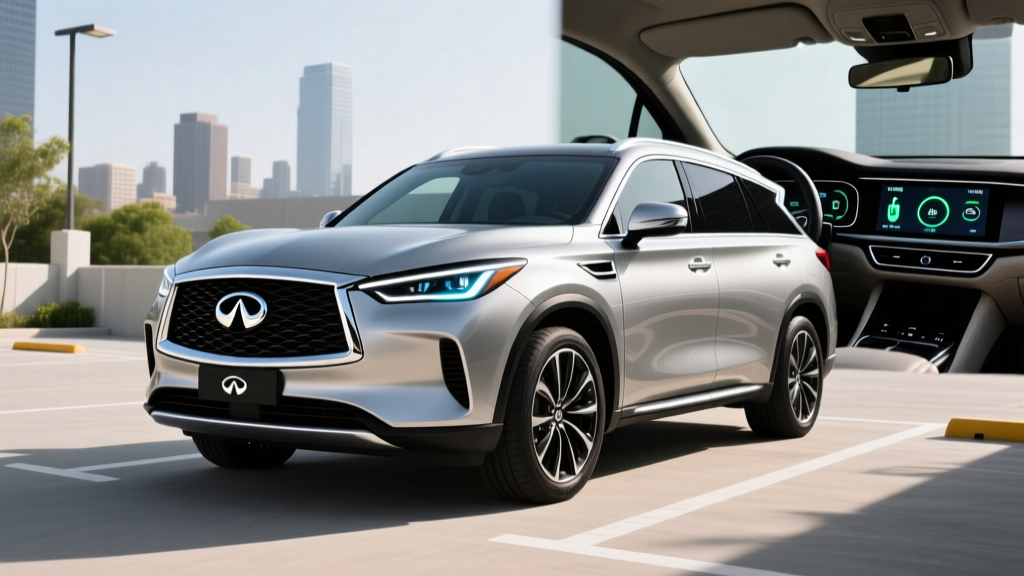
The Infiniti QX60 has long been a staple in the luxury three-row SUV segment, but as buyers increasingly scrutinize fuel costs and insurance premiums, the hybrid variant demands a closer look. For shoppers researching Infiniti QX60 hybrid car insurance costs, powertrain efficiency, and long-term ownership economics, this guide breaks down every number that matters — from EPA MPG ratings to battery warranty coverage and the tax-credit landscape for 2026.
Before diving into specs, it's critical to clarify what the QX60 hybrid actually is: a conventional hybrid electric vehicle (HEV), not a plug-in hybrid (PHEV). That distinction shapes everything from how you fuel it to whether it qualifies for federal incentives.
HEV vs PHEV: Where the QX60 Hybrid Fits
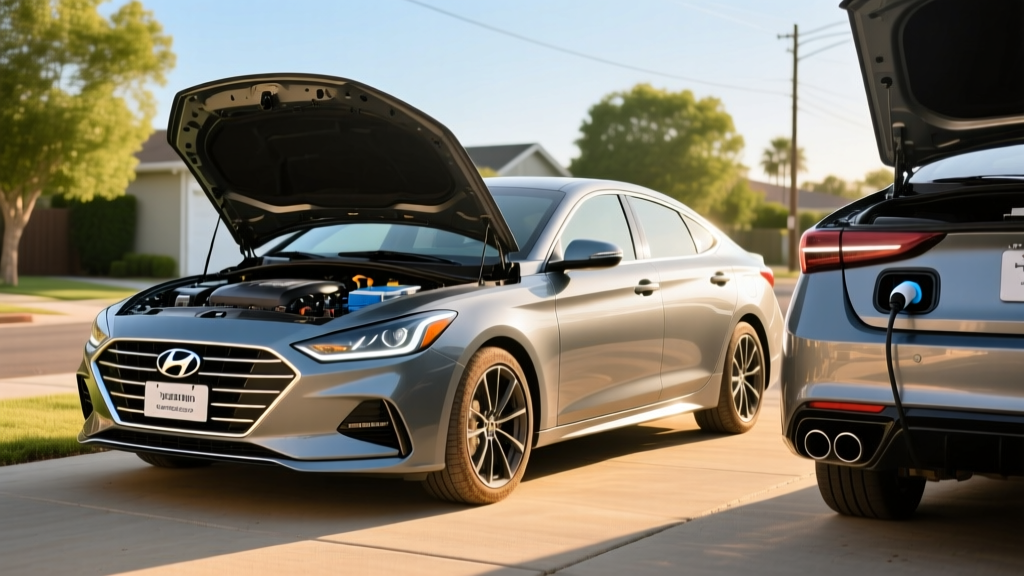
Infiniti's hybrid strategy for the QX60 centers on a conventional hybrid system — meaning the battery recharges through regenerative braking and the gasoline engine. You never plug it in. Here's how that compares to the alternatives:
| Feature | QX60 HEV (Conventional Hybrid) | PHEV (Plug-In Hybrid) | BEV (Full Electric) |
|---|---|---|---|
| Plug-in charging required? | No | Yes (for electric range) | Yes (only power source) |
| Electric-only range | None (motor assists engine) | 25–50 mi typical | 250–400+ mi |
| Fuel source | Gasoline + regen | Gasoline + grid electricity | Grid electricity only |
| Federal tax credit (§30D) | Not eligible | Up to $7,500 (if eligible) | Up to $7,500 (if eligible) |
| Home charging install needed? | No | Recommended (Level 2) | Essential (Level 2) |
If you don't have access to home or workplace charging, the QX60 HEV eliminates that barrier entirely while still delivering meaningful fuel savings over the gas-only QX60.
Fuel Economy: EPA Ratings and Real-World MPG
The 2026 Infiniti QX60 hybrid pairs a turbocharged 2.0-liter VC-Turbo four-cylinder engine with an electric motor integrated into the drivetrain. Combined output reaches approximately 295 horsepower, routed through a continuously variable transmission (CVT) to either front-wheel or all-wheel drive.
| Driving Cycle | EPA Estimated MPG | Real-World Expectation |
|---|---|---|
| City | 25 MPG | 26–28 MPG (hybrids excel in stop-and-go) |
| Highway | 30 MPG | 27–29 MPG (less regen benefit at steady speed) |
| Combined | 27 MPG | 26–28 MPG |
Real-world note: Conventional hybrids like the QX60 HEV frequently exceed their EPA city estimates because regenerative braking recovers energy in traffic. Highway driving, however, tends to fall slightly short of the sticker since the engine bears more of the load at sustained speeds. In cold weather (below 30°F), expect a 1–3 MPG reduction due to increased engine runtime for cabin heating and reduced battery efficiency.
For comparison, the gas-only 2026 QX60 with its 2.0L VC-Turbo returns roughly 21 city / 26 highway / 23 combined. The hybrid's ~4 MPG combined improvement translates to approximately 60–80 fewer gallons per year for a driver covering 15,000 miles — saving roughly $200–$280 annually at $3.50/gallon.
Powertrain and Performance Specs
| Specification | 2026 Infiniti QX60 Hybrid |
|---|---|
| Engine | 2.0L VC-Turbo I-4 + electric motor |
| Combined Horsepower | ~295 HP |
| Transmission | CVT (Continuously Variable) |
| Drivetrain | FWD standard; AWD available |
| 0–60 MPH | ~7.2 seconds (est.) |
| Towing Capacity | Up to 6,000 lbs (AWD) |
| Seating | 7 passengers (3 rows) |
| Cargo (behind 3rd row) | ~14.5 cu ft |
| Cargo (max, seats folded) | ~76 cu ft |
The VC-Turbo engine is Infiniti's variable-compression technology, which adjusts its compression ratio on the fly to optimize either power or efficiency depending on throttle demand. The hybrid system's electric motor fills in torque at low RPMs, smoothing out the CVT's driving feel and reducing the "rubber-band" sensation common to older CVTs.
Battery Warranty, Lifespan, and Replacement Costs
Hybrid battery longevity remains the top concern for buyers, and Infiniti addresses it with robust warranty coverage.
QX60 Hybrid Battery Warranty
- Hybrid battery warranty: 8 years / 100,000 miles (whichever comes first)
- Capacity threshold: Coverage applies if battery capacity drops below ~70% of original
- Hybrid system components: 8 years / 100,000 miles (inverter, motor, control module)
- Powertrain warranty: 6 years / 70,000 miles
The QX60 hybrid uses a relatively small lithium-ion battery pack (approximately 1.5–2.0 kWh) — far smaller than a PHEV or BEV pack. Because it operates in a shallow charge-discharge cycle (rarely dropping below 40% or charging above 80% state of charge), degradation is minimal. Data from similar Nissan/Infiniti hybrid systems shows less than 10% capacity loss over 150,000 miles in typical use.
Battery replacement cost: If the hybrid battery does fail outside warranty, expect a replacement cost of $2,000–$3,500 including labor — a fraction of the $8,000–$20,000 cost associated with full EV battery packs. Many dealerships also offer refurbished or reconditioned units for $1,200–$2,000.
Pricing, Trims, and Tax Credit Eligibility
The 2026 QX60 hybrid starts at approximately $54,200 MSRP (Pure trim with FWD) and climbs to around $68,500 for the fully loaded Autograph AWD. Key trim pricing:
- Pure FWD: ~$54,200
- Luxe AWD: ~$59,800
- Sensory AWD: ~$63,500
- Autograph AWD: ~$68,500
Federal tax credit: As a conventional hybrid (HEV), the QX60 hybrid does not qualify for the IRS §30D Clean Vehicle Credit, which applies only to plug-in electric vehicles (PHEVs and BEVs) with sufficient battery capacity and compliant critical-mineral sourcing. The now-expired §30C alternative fuel vehicle credit previously covered some HEVs, but for 2026, no federal purchase credit applies to conventional hybrids.
Some states offer their own hybrid incentives — check your state's energy office or IRS clean vehicle credit page for current eligibility. A few utilities also offer rebates for hybrid purchases, though these are increasingly shifting toward PHEVs and BEVs.
Infiniti QX60 Hybrid Car Insurance: What to Expect
Insurance costs for the QX60 hybrid are a key ownership variable, and they're shaped by several factors specific to this vehicle:
Estimated annual premium: $1,800–$2,600 depending on driver profile, location, and coverage level. This positions the QX60 hybrid slightly above the segment average for midsize luxury SUVs but below high-performance competitors.
Factors influencing QX60 hybrid insurance rates:
- Repair costs: Luxury-brand parts and hybrid-specific components (inverter, electric motor) raise collision repair estimates, which insurers factor into premiums.
- Vehicle MSRP: Higher trim levels (Sensory, Autograph) command higher comprehensive and collision premiums due to replacement value.
- Theft rates: The QX60 has moderate theft incidence nationally, which keeps comprehensive rates reasonable.
- Hybrid battery: Insurers generally do not surcharge for hybrid batteries specifically, but collision claims involving battery damage can increase claim severity.
- Driver-assistance tech: The QX60's ProPILOT Assist system may qualify some drivers for a 5–10% ADAS discount with certain insurers — ask your provider.
- Safety ratings: Strong IIHS and NHTSA ratings help moderate liability premiums.
Cost-saving tips: Bundle auto with homeowners/renters, opt for a higher deductible ($1,000 vs $500), and ask about low-mileage discounts if you drive under 12,000 miles annually. Several major insurers now offer telematics-based programs that reward smooth driving with lower rates.
Who Should Choose the QX60 Hybrid vs a PHEV or Full EV?
Choose the QX60 HEV if:
- You lack access to home or workplace charging
- You want a three-row luxury SUV with minimal behavior change from a gas car
- You tow regularly (hybrid system doesn't compromise the 6,000-lb capacity)
- You want fuel savings without paying the PHEV or BEV price premium
Consider a PHEV (like the Volvo XC90 Recharge) if:
- You can install a Level 2 home charger and want 30–40 miles of daily electric-only commuting
- You want partial federal tax credit eligibility (up to $7,500, subject to §30D rules)
- You drive mostly short trips but need gas-engine range for road trips
Consider a full EV (like the Rivian R1S or Kia EV9) if:
- You have reliable home charging and want zero tailpipe emissions
- You want the lowest per-mile fuel cost (~$0.04–$0.06/mi vs $0.13–$0.16/mi for hybrid)
- You qualify for the full $7,500 federal tax credit and your state offers additional EV incentives
Reliability and Long-Term Ownership
Infiniti's hybrid system benefits from shared engineering with Nissan's broader hybrid portfolio, which has demonstrated solid reliability in models like the Rogue Hybrid and Pathfinder Hybrid. The VC-Turbo engine is more complex than a naturally aspirated four-cylinder due to its variable-compression mechanism, but it has been in production since 2019 with no widespread failure patterns reported by NHTSA.
Maintenance advantages: The hybrid's regenerative braking reduces brake pad wear significantly — many owners report 60,000+ miles on original brake pads. The engine also operates less frequently in city driving, potentially extending oil-change intervals (follow Infiniti's 5,000–7,500 mile recommendation).
Depreciation: Luxury SUVs typically lose 45–55% of value over five years. The QX60 hybrid's depreciation is expected to track near the middle of that range, aided by growing buyer preference for electrified powertrains in the used market.
Frequently Asked Questions
How many MPG does the Infiniti QX60 hybrid get?
The 2026 QX60 hybrid is EPA-rated at 25 city / 30 highway / 27 combined MPG. In real-world city driving with frequent stops, many owners report 26–28 MPG thanks to regenerative braking. Highway mileage tends to land at 27–29 MPG.
Does the QX60 hybrid need to be plugged in?
No. The QX60 hybrid is a conventional HEV. Its small battery recharges through regenerative braking and the gasoline engine. You fuel it exactly like a standard gas car — at the pump.
Is the Infiniti QX60 hybrid reliable?
Infiniti's hybrid system has shown solid reliability since its introduction, with no widespread battery or motor failures. The hybrid battery is warrantied for 8 years / 100,000 miles, and real-world data from similar Nissan/Infiniti systems suggests less than 10% degradation over 150,000 miles.
What does it cost to replace the QX60 hybrid battery?
Out-of-warranty hybrid battery replacement typically costs $2,000–$3,500 including labor. Refurbished units are available for $1,200–$2,000. Given the shallow cycling of HEV batteries, most owners never face this expense.
Does the QX60 hybrid qualify for a federal tax credit?
No. The IRS §30D Clean Vehicle Credit applies only to plug-in vehicles (PHEVs and BEVs). As a conventional hybrid, the QX60 HEV is not eligible. Check your state and local utility for any hybrid-specific rebates that may apply.
How does QX60 hybrid insurance compare to the gas model?
Insurance for the QX60 hybrid is typically 5–12% higher than the gas-only version, primarily due to higher MSRP and hybrid-component repair costs. Expect annual premiums of $1,800–$2,600 depending on your profile. ADAS-equipped trims may qualify for discounts with some insurers.
Hybrid vs PHEV vs EV — which is right for a three-row SUV buyer?
If you can't charge at home, the QX60 HEV is the pragmatic choice — no behavior change, real fuel savings. If you have home charging and want electric-only commuting with gas-engine backup, a PHEV like the XC90 Recharge offers the best of both worlds. If you're ready to go fully electric and want the lowest running costs, the Rivian R1S or Kia EV9 are strong three-row BEV options.