Does Infiniti Make a Hybrid? The Short Answer for 2026
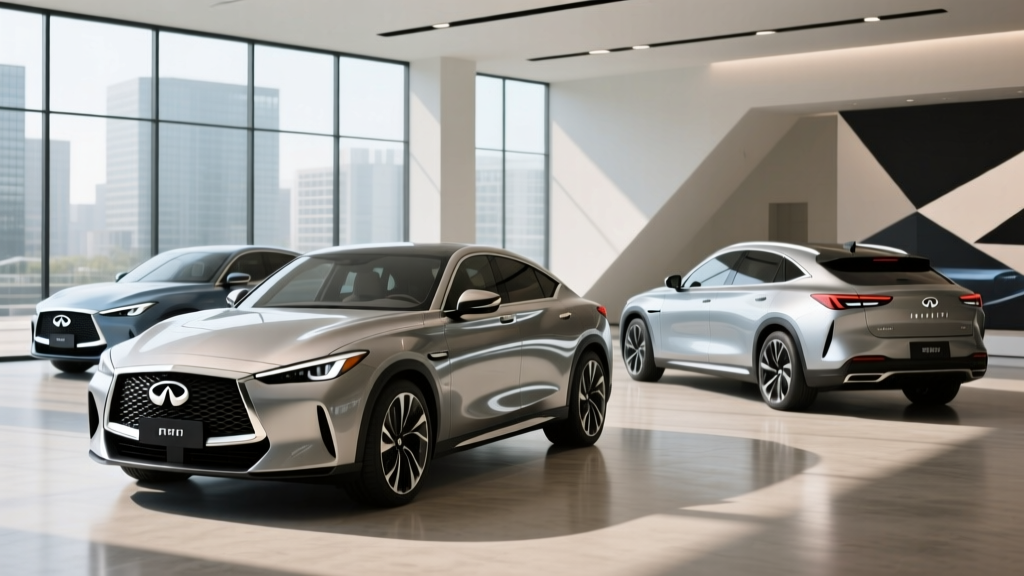
If you've been searching whether Infiniti offers a hybrid, the answer is yes — but with important caveats. For the 2026 model year, Infiniti's sole hybrid offering is the QX60 Hybrid, a three-row luxury SUV that pairs a turbocharged four-cylinder engine with an electric motor in a conventional hybrid (HEV) configuration. What Infiniti does not currently offer is a plug-in hybrid (PHEV) or any fully electric vehicle in the U.S. market.
That positions Infiniti behind competitors like Lexus (which offers multiple HEVs and the RZ EV), BMW (the X5 xDrive50e PHEV), and Genesis (the Electrified GV70). If plug-in capability or electric-only commuting is a priority, you'll need to look outside the Infiniti showroom. But if you want a no-plug-required hybrid luxury SUV with strong fuel economy, the QX60 Hybrid deserves a closer look.
HEV vs. PHEV: What's the Difference?
Conventional Hybrid (HEV): Uses a small battery charged by regenerative braking and the engine. No plug needed. Improves fuel economy 20–40% over a gas-only equivalent. The Infiniti QX60 Hybrid is an HEV.
Plug-In Hybrid (PHEV): Carries a larger battery (typically 12–25 kWh) that can be charged from a wall outlet or public charger. Delivers 20–45 miles of electric-only driving before the gas engine kicks in. Examples: BMW X5 xDrive50e, Toyota RAV4 Prime. Infiniti does not currently sell a PHEV.
2026 Infiniti QX60 Hybrid: Powertrain and Performance Specs
The 2026 QX60 Hybrid uses Infiniti's VC-Turbo variable-compression engine technology combined with an electric motor integrated into the transmission housing. This is a mild-to-full parallel hybrid system — not a plug-in — designed to reduce fuel consumption without requiring any change to your fueling routine.
| Specification | Value |
|---|---|
| Engine | 2.0L VC-Turbo inline-4 + electric motor |
| Combined Horsepower | 292 hp |
| Combined Torque | 286 lb-ft |
| Transmission | CVT (continuously variable) |
| Drivetrain | FWD standard; AWD available |
| Hybrid Battery | ~1.5 kWh (lithium-ion, self-charging) |
| EPA MPG (FWD, combined) | 29 mpg combined |
| EPA City / Highway (FWD) | 27 city / 32 highway |
| EPA MPG (AWD, combined) | 27 mpg combined |
| 0–60 mph | ~7.1 seconds (est.) |
| Towing Capacity | Up to 6,000 lbs |
| Base MSRP | $55,400 (Pure trim, FWD) |
The 292-hp combined output puts the QX60 Hybrid in a competitive position against the Lexus TX 500h (367 hp, but at a significantly higher price point) and well ahead of the non-hybrid QX60's 268 hp. The variable-compression turbo engine can adjust its compression ratio on the fly — optimizing for efficiency during light-load cruising or power during hard acceleration.
How Many MPG Does the Infiniti QX60 Hybrid Get?
The EPA rates the 2026 QX60 Hybrid at 27 city / 32 highway / 29 combined mpg for front-wheel-drive models, and 25 city / 30 highway / 27 combined for all-wheel-drive trims. For a three-row luxury SUV that weighs over 4,700 pounds, those numbers represent a meaningful improvement over the non-hybrid QX60, which returns 21 city / 26 highway / 23 combined.
| Vehicle | City | Highway | Combined |
|---|---|---|---|
| Infiniti QX60 Hybrid (FWD) | 27 | 32 | 29 |
| Infiniti QX60 (gas, FWD) | 21 | 26 | 23 |
| Lexus TX 350h (HEV, AWD) | 34 | 30 | 32 |
| BMW X5 xDrive50e (PHEV, AWD) | — | — | 50 MPGe* |
| Mazda CX-90 PHEV (AWD) | — | — | 56 MPGe* |
*MPGe includes electric-only operation. Gas-only mode returns ~25 mpg combined for the X5 and ~25 mpg for the CX-90 PHEV.
Real-World MPG: What to Actually Expect
Hybrids tend to outperform their EPA city estimates in stop-and-go traffic because regenerative braking recovers energy that a gas car wastes as heat. In real-world suburban driving with frequent stops, owners of similar Nissan/Infiniti hybrid systems report 30–33 mpg. However, sustained highway driving at 75+ mph reduces the hybrid advantage — expect 28–30 mpg on the highway in the AWD model. Cold weather (below 35°F) typically drops hybrid fuel economy by 3–5 mpg due to increased engine idling for cabin heat and reduced battery efficiency.
Infiniti Hybrid Battery Warranty and Longevity
Battery longevity is the number-one concern for hybrid buyers, and it's a fair one. The QX60 Hybrid's lithium-ion battery pack is covered under Infiniti's hybrid system warranty, which aligns with the industry standard set by federal emissions regulations.
Infiniti Hybrid Battery Warranty Coverage
- Hybrid Battery: 8 years / 100,000 miles (10 years / 150,000 miles in CARB states including CA, NY, MA, WA, OR, and others)
- Hybrid System Components: 8 years / 100,000 miles (inverter, motor, control module)
- Capacity Retention Threshold: Warranty covers failure or significant capacity loss that impairs hybrid function
Battery Replacement Cost: If the hybrid battery fails out of warranty, expect a replacement cost of $3,000–$5,000 including parts and labor. This is considerably less than a full EV battery replacement because the QX60's hybrid battery is only ~1.5 kWh — roughly 1/50th the size of a typical EV pack.
In practice, conventional hybrid batteries from Nissan/Infiniti have proven durable. Data from fleet operators and long-term owners of the previous-generation Infiniti Q50 Hybrid and Nissan Altima Hybrid show most batteries lasting 150,000–200,000 miles before significant degradation. The smaller battery size means lower thermal stress compared to EV packs, which contributes to longevity.
Does the Infiniti QX60 Hybrid Qualify for a Tax Credit?
This is where conventional hybrids face a clear disadvantage versus PHEVs and EVs. The federal §30D clean vehicle tax credit of up to $7,500 is available only for plug-in electric vehicles and fuel-cell vehicles — conventional hybrids like the QX60 Hybrid do not qualify.
Federal §30D Tax Credit Eligibility Checklist (2026)
- ❌ Conventional HEVs (like the QX60 Hybrid) — Not eligible
- ✅ Plug-in hybrids (PHEVs) with ≥7 kWh battery — Eligible for up to $7,500
- ✅ Battery electric vehicles (BEVs) — Eligible for up to $7,500
- ⚠️ Buyer income cap: $150K single / $300K joint AGI
- ⚠️ MSRP cap: $80,000 for SUVs/pickups/vans; $55,000 for sedans
- ⚠️ Battery critical-mineral and component sourcing requirements apply
- ✅ Point-of-sale transfer available — apply credit as a down payment at the dealer
The QX60 Hybrid may qualify for certain state-level incentives depending on your location. Some states offer rebates or HOV lane access for hybrids, but these programs vary widely and change frequently. Check your state's energy or DMV website for current programs.
Infiniti QX60 Hybrid vs. Competitors: What to Compare
If you're cross-shopping the QX60 Hybrid, you're likely considering these alternatives. Here's how they stack up on the dimensions that matter most to hybrid SUV buyers.
| Attribute | Infiniti QX60 Hybrid | Lexus TX 350h | BMW X5 xDrive50e | Mazda CX-90 PHEV |
|---|---|---|---|---|
| Type | HEV | HEV | PHEV | PHEV |
| Combined MPG / MPGe | 29 mpg | 32 mpg | 50 MPGe | 56 MPGe |
| Electric-Only Range | N/A | N/A | ~38 mi | ~26 mi |
| Combined HP | 292 | 367 | 483 | 323 |
| Third Row | Yes | Yes | Optional | Yes |
| Federal Tax Credit | None | None | Up to $7,500* | Up to $7,500* |
| Starting MSRP | $55,400 | $60,400 | $72,500 | $50,945 |
| Plug Required? | No | No | Yes (for EV range) | Yes (for EV range) |
*Tax credit eligibility depends on battery sourcing, buyer income, and MSRP caps. Verify current status at fueleconomy.gov.
The QX60 Hybrid's advantage is its price-to-size ratio: it's the most affordable three-row hybrid SUV in the luxury segment. The Lexus TX 350h delivers better fuel economy but costs $5,000 more at the base. The BMW and Mazda PHEVs offer electric-only commuting but require home charging infrastructure to realize their benefit.
Hybrid vs. PHEV vs. EV: Which Is Right for You?
Choosing between a conventional hybrid, a plug-in hybrid, and a full electric vehicle comes down to your driving patterns, charging access, and budget. Here's a practical decision framework.
Choose the Infiniti QX60 Hybrid (HEV) if:
- You don't have access to home or workplace charging
- You want better fuel economy without changing any habits
- You frequently take long road trips and want zero range anxiety
- You need three rows at a sub-$60K price point
- You prefer a luxury badge without the Lexus or BMW premium
Choose a PHEV (BMW X5 50e, Mazda CX-90 PHEV) if:
- You can install a Level 2 home charger (240V)
- Your daily commute is under 30–40 miles round trip
- You want to drive mostly on electricity during the week and gas on weekends
- You want the federal tax credit (up to $7,500)
Choose a Full EV if:
- You have reliable home charging (Level 2 preferred)
- Your daily driving is under 250 miles
- You want the lowest per-mile fuel cost and minimal maintenance
- You want the full $7,500 federal tax credit and potential state incentives
Pros and Cons of the 2026 Infiniti QX60 Hybrid
Pros
- No plug required — fuel it like a normal SUV
- 29 mpg combined is strong for a three-row luxury SUV
- 292 hp provides confident acceleration and passing power
- 6,000-lb towing capacity beats most hybrid competitors
- Under $56K starting price is competitive in the luxury segment
- 8-year / 100,000-mile hybrid battery warranty
- Small hybrid battery means low replacement cost ($3K–$5K)
Cons
- No plug-in hybrid option — can't drive on electric only
- No federal tax credit eligibility
- Fuel economy trails the Lexus TX 350h by 3 mpg combined
- CVT transmission lacks the engagement of a geared automatic
- Infiniti's ProPILOT Assist is basic compared to competitors' ADAS suites
- No Apple CarPlay wireless on lower trims (wired only)
- AWD drops combined MPG to 27
Frequently Asked Questions
Does Infiniti make a plug-in hybrid?
No. As of the 2026 model year, Infiniti does not sell any plug-in hybrid (PHEV) vehicles in the United States. The QX60 Hybrid is a conventional hybrid (HEV) that charges its battery through regenerative braking and the gasoline engine — no plug-in charging is required or possible. Infiniti's parent company Nissan has announced electrification plans, but no Infiniti PHEV is currently in production.
How many MPG does the Infiniti QX60 Hybrid get?
The EPA rates the 2026 QX60 Hybrid at 27 city / 32 highway / 29 combined mpg for front-wheel-drive models. All-wheel-drive models are rated at 25 city / 30 highway / 27 combined. In real-world suburban driving with frequent stops, many owners report 30–33 mpg thanks to regenerative braking. Highway-heavy driving at speeds above 75 mph typically yields 28–30 mpg.
Is the Infiniti hybrid reliable?
Infiniti's hybrid system is derived from Nissan's well-established hybrid technology, which has been used in models like the Altima Hybrid and Rogue Hybrid for over a decade. The hybrid battery is warrantied for 8 years / 100,000 miles (10 years / 150,000 miles in CARB states). Long-term data on similar Nissan/Infiniti hybrid systems shows most batteries lasting 150,000+ miles. The small ~1.5 kWh battery also means replacement costs are relatively low at $3,000–$5,000 if needed out of warranty.
Does the Infiniti QX60 Hybrid qualify for a tax credit?
No. The federal §30D clean vehicle tax credit (up to $7,500) is only available for plug-in electric vehicles and fuel-cell vehicles. Conventional hybrids like the QX60 Hybrid are not eligible. Some states may offer separate incentives for hybrid vehicles — check your state's energy office or DMV for current programs.
Should I buy the QX60 Hybrid or wait for an Infiniti PHEV or EV?
If you need a three-row luxury SUV now and don't have home charging, the QX60 Hybrid is a solid choice that requires no lifestyle changes. If you have home charging and can wait, Infiniti has signaled future electrified models, but no PHEV or EV has been officially announced with a U.S. launch date as of early 2026. In the meantime, competitors like the BMW X5 xDrive50e and Mazda CX-90 PHEV offer plug-in capability today.
What is the difference between the QX60 Hybrid and the gas-only QX60?
The hybrid uses a 2.0L VC-Turbo four-cylinder engine paired with an electric motor for 292 combined hp and 29 mpg combined (FWD). The gas-only QX60 uses a 2.0L VC-Turbo without the electric assist, producing 268 hp and returning 23 mpg combined. The hybrid costs approximately $3,000–$4,000 more depending on trim, but the fuel savings typically recoup that premium within 3–5 years at average mileage (12,000 miles/year, $3.50/gallon).