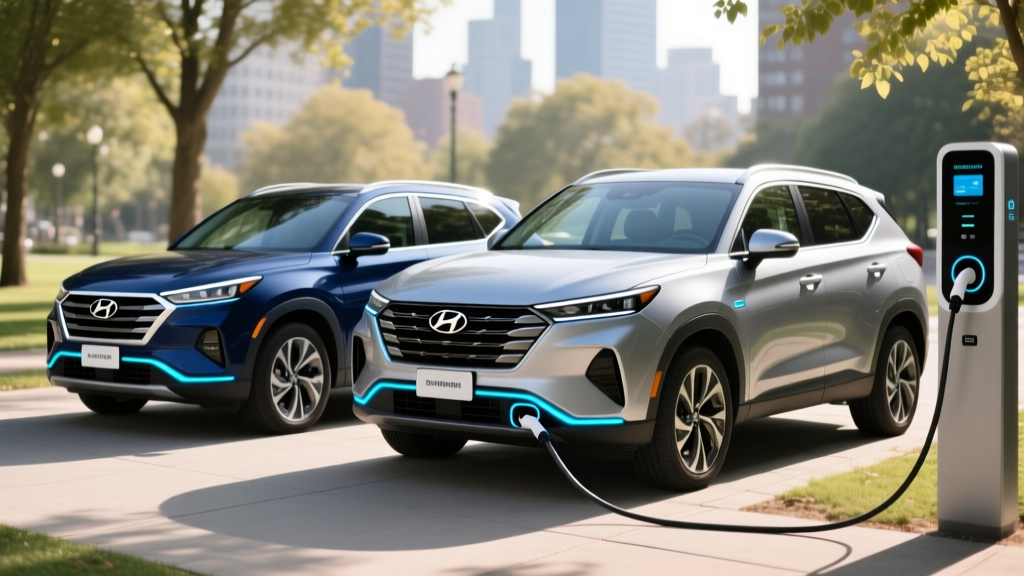
If you're shopping for a hybrid Hyundai SUV, you have two strong contenders in the 2026 lineup: the compact Tucson and the midsize Santa Fe. Both are available as conventional hybrids (HEV) and plug-in hybrids (PHEV), which means the real decision isn't just which vehicle — it's which powertrain. This guide breaks down the exact EPA numbers, battery specs, real-world efficiency, and tax-credit eligibility you need before signing on the dotted line.
HEV vs PHEV: What's the Actual Difference?
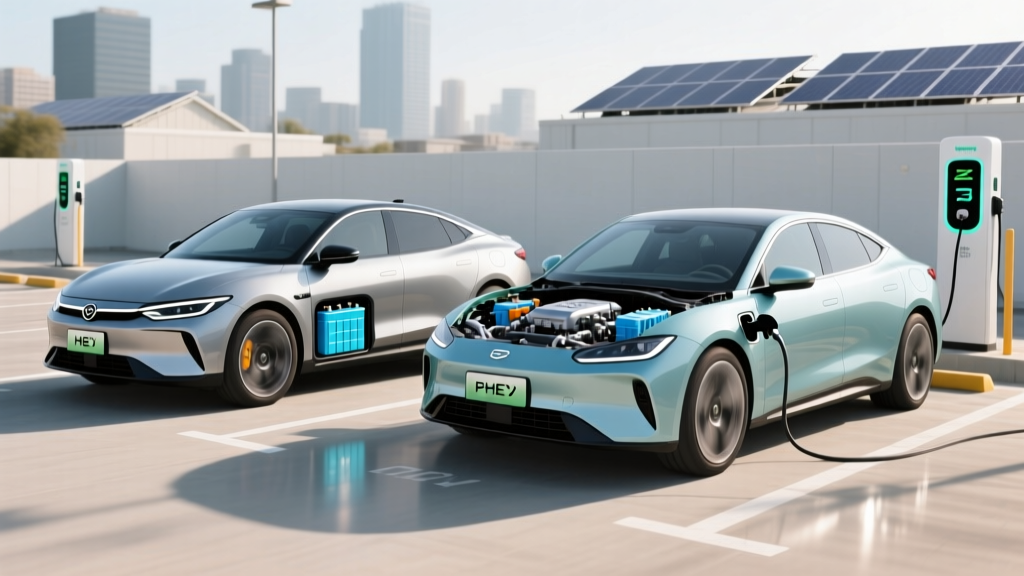
Before comparing models, let's eliminate the most common confusion. A conventional hybrid (HEV) charges its small battery through regenerative braking and the gas engine. You never plug it in. A plug-in hybrid (PHEV) has a much larger battery you charge from a wall outlet or public charger, giving it a meaningful electric-only driving range before the gas engine kicks in.
| Factor | HEV (Conventional Hybrid) | PHEV (Plug-In Hybrid) |
|---|---|---|
| Plug in to charge? | No | Yes (Level 1 or Level 2) |
| Battery size | ~1.5 kWh (small buffer) | ~13.8 kWh usable |
| Electric-only range | Less than 1 mile at low speed | 30–33 miles (EPA) |
| Federal tax credit | Not eligible | Up to $3,750 (§30D, subject to sourcing/income rules) |
| Best for | Drivers without home charging access | Drivers with home charging and short commutes |
| Price premium over gas model | ~$1,500–$2,000 | ~$5,000–$7,000 |
The HEV is a no-compromise efficiency upgrade — drive it exactly like a gas car and watch the MPG climb. The PHEV is a part-time EV: plug in nightly, commute on electricity, and still have a gas engine for road trips. Neither requires lifestyle change, but the PHEV demands a 120V outlet near your parking spot to realize its value.
2026 Hyundai Tucson Hybrid: MPG, Powertrain & Pricing
The Tucson Hybrid pairs a 1.6-liter turbocharged four-cylinder with a 47.7 kW electric motor integrated into the six-speed automatic transmission. Combined output is 231 horsepower and 271 lb-ft of torque, routed through HTRAC all-wheel drive as standard.
| Spec | Tucson HEV (Blue trim) | Tucson HEV (Limited) | Tucson PHEV |
|---|---|---|---|
| EPA City MPG | 38 | 37 | N/A (electric-first) |
| EPA Highway MPG | 38 | 36 | 35 (gas-only mode) |
| EPA Combined MPG | 38 | 37 | 35 (gas-only) / 80 MPGe (combined) |
| Electric-Only Range | — | — | 33 miles |
| Total Combined Range | ~430 miles | ~410 miles | ~420 miles |
| Battery (usable) | ~1.5 kWh | ~1.5 kWh | 13.8 kWh |
| Combined HP | 231 | 231 | 268 |
| 0–60 mph | ~7.1 sec | ~7.1 sec | ~6.7 sec |
| Level 2 Charge Time (0–100%) | N/A | N/A | ~2 hours (7.2 kW onboard) |
| DC Fast Charge | N/A | N/A | No |
| Base MSRP | $34,485 | $39,735 | $41,285 |
Source: fueleconomy.gov and Hyundai USA specifications. MPG figures are EPA estimates; real-world results vary with driving style, temperature, and terrain.
2026 Hyundai Santa Fe Hybrid & PHEV: Bigger SUV, Bigger Battery
The three-row Santa Fe uses the same 1.6T hybrid architecture but tuned for its larger platform. The HEV produces 231 horsepower, while the PHEV bumps that to 268 horsepower with a more powerful electric motor and the same 13.8 kWh battery pack as the Tucson PHEV. The Santa Fe's boxy, adventure-oriented redesign gives it substantially more cargo volume — 40.5 cu ft behind the second row vs. the Tucson's 38.7 cu ft.
| Spec | Santa Fe HEV | Santa Fe PHEV |
|---|---|---|
| EPA City / Highway / Combined MPG | 35 / 34 / 34 | 32 gas / 79 MPGe combined |
| Electric-Only Range | — | 30 miles |
| Total Combined Range | ~470 miles | ~440 miles |
| Battery (usable) | ~1.5 kWh | 13.8 kWh |
| Combined HP | 231 | 268 |
| Level 2 Charge Time (0–100%) | N/A | ~2 hours (7.2 kW onboard) |
| DC Fast Charge | No | No |
| Base MSRP | $40,485 | $47,485 |
The Santa Fe PHEV's electric range drops slightly to 30 miles (vs. 33 for the Tucson) due to higher curb weight. On a Level 2 home charger at 7.2 kW, the pack refills in roughly two hours — practical for midday top-ups if you work from home and have a garage charger.
Real-World MPG: What Owners Actually See
Hyundai's hybrid system uses a traditional six-speed automatic rather than a CVT or planetary gearset (like Toyota's e-CVT). This gives it a more natural driving feel but slightly narrower efficiency gains on the highway. Here's what to expect beyond the EPA sticker:
- City driving: Hybrids shine in stop-and-go traffic, where regenerative braking recaptures energy. Tucson HEV owners commonly report 39–42 MPG in urban conditions — exceeding the 38 MPG EPA city estimate.
- Highway driving: At sustained 70–80 mph, the electric motor contributes less and aerodynamic drag dominates. Expect 33–36 MPG on the Tucson HEV — slightly below the 38 MPG EPA highway figure.
- Cold weather (below 30°F): Battery efficiency drops, the engine runs more often for cabin heat, and winter fuel blends carry less energy. Budget a 10–15% reduction in both HEV MPG and PHEV electric range during winter months.
- PHEV electric-only mode: The Tucson PHEV's 33-mile EPA electric range typically yields 27–30 miles at highway speeds or in cold weather. Gentle city driving in mild temperatures can stretch it to 35+ miles.
Battery Warranty, Lifespan & Replacement Cost
Hybrid battery anxiety is the top concern we hear from buyers. Here's the reality: modern lithium-ion hybrid packs are engineered for the life of the vehicle, and Hyundai backs them with one of the industry's strongest warranties.
- 10 years / 100,000 miles (whichever comes first) for the original owner
- 10 years / 100,000 miles for the hybrid battery system and related components
- If capacity drops below approximately 70% of original within the warranty period, Hyundai will repair or replace the battery
- Transferable to second owner for the remainder of the 10-year period (reduced from some competitors' non-transferable terms)
Verify current terms at Hyundai's warranty page. Coverage details can change by model year.
Replacement cost outside warranty: A full hybrid battery pack replacement for the Tucson or Santa Fe runs approximately $2,500–$4,000 including labor at a dealership. Individual module replacement (if only a few cells degrade) can cost $500–$1,500. Independent hybrid-specialty shops often offer refurbished packs for $1,500–$2,500.
Lifespan data: Hyundai's 1.6T hybrid system has been in production since 2020 (Tucson, Santa Fe, Sonata). Real-world degradation data from high-mileage owners shows the 13.8 kWh PHEV pack typically retains 90%+ capacity after 60,000 miles and 85%+ after 100,000 miles. The smaller HEV pack sees minimal cycling stress and rarely requires service. Unlike full EVs, the hybrid battery is a buffer — it never fully charges or fully depletes, which significantly extends cycle life.
Tax Credits & Incentives: What You Can Actually Claim
Under the federal IRS §30D Clean Vehicle Credit, only the PHEV models qualify — conventional HEVs do not. Here's the current eligibility framework for 2026:
- Maximum credit: Up to $3,750 for the Tucson PHEV and Santa Fe PHEV (battery capacity meets the minimum 7 kWh threshold, but critical-mineral and battery-component sourcing requirements determine the exact amount — currently $3,750 if one of two sourcing thresholds is met)
- MSRP cap: SUVs must have a base MSRP under $80,000 — both Hyundai PHEVs qualify
- Buyer income cap: Modified adjusted gross income must not exceed $150,000 (single), $225,000 (head of household), or $300,000 (joint filers)
- Point-of-sale transfer: You can transfer the credit to the dealer at purchase, reducing your out-of-pocket cost immediately — you do not need to wait until tax filing
- Assembly requirement: Final assembly must occur in North America — both the Tucson and Santa Fe are assembled at Hyundai's Montgomery, Alabama plant, satisfying this rule
Key caveat: Battery-component and critical-mineral sourcing rules tighten annually. The credit amount can change mid-year based on Hyundai's supply-chain compliance. Always verify current eligibility on the fueleconomy.gov tax credit lookup tool before purchasing.
State incentives: Several states offer additional rebates for PHEVs (e.g., Colorado, California, New York). These vary by jurisdiction and often have separate income or price caps. Check your state energy office or DMV for current programs.
Hybrid vs PHEV vs Full EV: Which Fits Your Life?
- You don't have access to home or workplace charging
- You want maximum simplicity — no plugs, no charging apps, no behavior change
- You drive 12,000–15,000 miles/year in mixed city/highway conditions
- You want a ~30% fuel-cost reduction over the gas-only model with zero range anxiety
- You have a garage or driveway with a 120V or 240V outlet
- Your daily round-trip commute is under 30 miles
- You want EV-like daily driving but need a gas engine for road trips, towing, or rural travel
- You qualify for the $3,750 federal credit and your state offers additional PHEV incentives
- You have reliable Level 2 home charging
- Your daily driving is under 250 miles and you're comfortable planning DC fast-charge stops on road trips
- You want the lowest per-mile energy cost and minimal maintenance (no oil changes, no transmission fluid)
- You qualify for the full $7,500 federal EV credit
Pros, Cons & Ownership Verdict
- Tucson HEV achieves 38 MPG combined — class-leading for a turbocharged AWD compact SUV
- PHEV models deliver 30–33 miles of genuine electric commuting range
- 10-year/100,000-mile hybrid battery warranty is among the best in the industry
- Standard HTRAC AWD across all hybrid trims — no FWD-only base model
- Alabama assembly satisfies §30D domestic production requirement
- Traditional 6-speed automatic feels natural vs. CVT drone competitors
- PHEV models do not support DC fast charging — Level 2 only (~2-hour fill)
- Highway MPG falls 2–4 MPG below EPA estimates at sustained 75+ mph speeds
- PHEV cargo space slightly reduced due to larger battery pack placement
- Santa Fe PHEV at $47,485 base is a significant premium over the HEV
- Federal PHEV credit is $3,750 (not the full $7,500 available to some BEVs)
- Third-row Santa Fe seat is tight for adults regardless of powertrain
Frequently Asked Questions
How many MPG does the Hyundai Tucson Hybrid get?
The 2026 Tucson Hybrid Blue trim achieves an EPA-estimated 38 MPG city, 38 highway, and 38 combined. The heavier Limited trim drops to 37/36/37. In real-world mixed driving, owners typically see 36–39 MPG, with city driving often exceeding the EPA estimate thanks to regenerative braking.
How far can the Tucson PHEV go on electric only?
The EPA rates the Tucson PHEV at 33 miles of electric-only range. In real-world conditions — highway speeds, cold weather, or aggressive acceleration — expect 27–30 miles. Gentle city driving in mild temperatures can stretch it to 35 miles. The Santa Fe PHEV is rated at 30 miles electric-only due to its higher weight.
Do Hyundai hybrids need to be plugged in?
No. The conventional HEV models (Tucson Hybrid, Santa Fe Hybrid) never need to be plugged in. They charge their small battery through regenerative braking and the gasoline engine. Only the PHEV (Plug-In Hybrid) models benefit from being plugged in to access their electric-only range.
Is the Hyundai hybrid system reliable?
Hyundai's 1.6T hybrid powertrain has been in production since 2020 and is shared across the Tucson, Santa Fe, and Sonata lineups. The system uses a proven six-speed automatic transmission rather than a complex power-split device. Hyundai's 10-year/100,000-mile hybrid battery warranty provides strong long-term coverage. Battery replacement cost outside warranty is approximately $2,500–$4,000.
Does the Hyundai Tucson or Santa Fe Hybrid qualify for a tax credit?
Only the PHEV (Plug-In Hybrid) versions qualify for the federal §30D Clean Vehicle Credit — currently up to $3,750, subject to buyer income limits ($150K single / $300K joint), MSRP caps (under $80K for SUVs), and battery-sourcing requirements. The conventional HEV models do not qualify for any federal tax credit. The credit can be transferred to the dealer at point of sale to reduce your purchase price immediately.
Can I DC fast charge the Hyundai PHEV?
No. Neither the Tucson PHEV nor the Santa Fe PHEV supports DC fast charging. Both are limited to Level 2 AC charging at a maximum rate of 7.2 kW, which fills the 13.8 kWh battery from empty to full in approximately two hours. This is typical for PHEVs — the smaller battery makes DC fast charging less practical and cost-effective for manufacturers to include.
Hybrid vs gas: how much do I actually save on fuel?
At 15,000 miles/year and $3.40/gallon gasoline, the Tucson HEV (38 MPG combined) costs approximately $1,342/year in fuel. A comparable gas-only Tucson AWD (26 MPG combined) costs $1,962/year. That's roughly $620 in annual fuel savings — meaning the ~$1,500 hybrid premium pays for itself in about 2.5 years. PHEV owners who charge at home and commute within electric range can save $800–$1,200/year depending on local electricity rates.