Quick Verdict: The Tucson PHEV Limited AWD in 2026
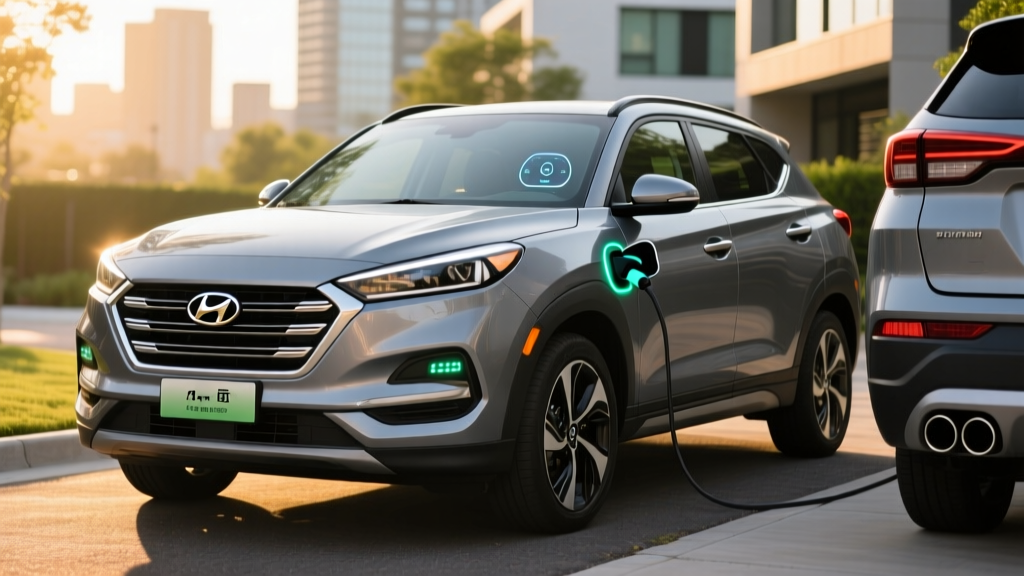
If you want the versatility of an SUV, the efficiency of electrification, and the flexibility to drive beyond the charging network, the 2024 Hyundai Tucson Plug-In Hybrid Limited AWD remains one of the most practical choices on the used and certified-pre-owned market in 2026. With 33 miles of electric-only range, standard all-wheel drive, and a premium Limited trim loaded with features, it bridges the gap between a conventional hybrid and a full battery-electric vehicle.
But is it the right electrified vehicle for your commute, budget, and charging situation? This guide breaks down every spec, real-world efficiency number, tax-credit nuance, and long-term ownership factor you need to make a data-driven decision.
HEV vs. PHEV: Understanding What You're Buying
Hyundai sells the Tucson in three powertrain flavors. Before we dig into the plug-in hybrid Limited AWD, it's essential to understand the difference — because the ownership experience diverges significantly.
Conventional Hybrid (HEV) vs. Plug-In Hybrid (PHEV)
| Feature | Tucson Hybrid (HEV) | Tucson Plug-In Hybrid (PHEV) |
|---|---|---|
| Needs to plug in? | No — charges via regen & engine | Yes — for electric-only range |
| Battery size | 1.49 kWh | 13.8 kWh (usable ~11.3 kWh) |
| Electric-only driving | Minimal (low-speed assist only) | Up to 33 miles (EPA) |
| EPA fuel economy | 38 MPG combined | 80 MPGe (electric) / 35 MPG (gas) |
| Combined horsepower | 226 HP | 261 HP |
| Federal tax credit | Not eligible | Eligible (subject to §30D rules) |
The key takeaway: the PHEV requires access to a plug (home outlet, Level 2 charger, or workplace charging) to unlock its efficiency advantage. If you can't charge regularly, you're carrying extra battery weight for no benefit — and the conventional HEV might serve you better.
Powertrain, Performance, and Drivetrain Specs
The 2024 Tucson PHEV pairs a turbocharged 1.6-liter four-cylinder engine with a 66.9 kW (approximately 90 HP) electric motor integrated into a six-speed automatic transmission. This is a traditional automatic — not the CVT or single-speed reduction gear found in many competitors — which gives it a more familiar driving feel on the highway.
| Specification | 2024 Tucson PHEV Limited AWD |
|---|---|
| Engine | 1.6L turbocharged GDI 4-cylinder |
| Electric motor | 66.9 kW permanent-magnet synchronous |
| Combined output | 261 HP / 258 lb-ft torque |
| Transmission | 6-speed automatic |
| Drivetrain | HTRAC All-Wheel Drive (standard) |
| 0–60 mph | ~7.1 seconds (manufacturer estimate) |
| Battery capacity | 13.8 kWh gross (~11.3 kWh usable) |
| Battery chemistry | Lithium-ion polymer (NMC) |
| Towing capacity | 2,000 lbs |
| Cargo volume (rear seats up) | 38.5 cu ft |
| Cargo volume (rear seats folded) | 72.1 cu ft |
The 261 combined horsepower makes the Tucson PHEV noticeably quicker than the HEV variant, and the instant electric torque fills in the low-RPM gap that turbo lag sometimes creates. HTRAC AWD is standard across all PHEV trims — a meaningful advantage for buyers in snow-belt states.
Electric-Only Range, Charging, and Efficiency
This is where the PHEV earns its keep — or disappoints, depending on your daily mileage.
Electric-Only Range
The EPA rates the 2024 Tucson PHEV at 33 miles of electric-only range. In real-world driving, expect:
- City/suburban driving (below 45 mph): 30–35 miles — the electric motor is most efficient at lower speeds with frequent regen braking opportunities.
- Highway driving (70+ mph): 22–27 miles — aerodynamic drag and higher power demand drain the battery faster.
- Cold weather (below 32°F): 20–25 miles — battery chemistry loses efficiency in the cold, and cabin heating draws significant power.
For commuters with a round-trip distance under 30 miles and home charging, the Tucson PHEV can operate as a daily EV with zero gasoline consumption on most weekdays.
Charging Speeds and Times
| Charging Level | Power | 0–100% Time | Connector |
|---|---|---|---|
| Level 1 (120V household) | ~1.4 kW | ~10–11 hours | |
| Level 2 (240V home/public) | 7.2 kW | ~1 hour 45 minutes | |
| DC Fast Charging | Not supported | N/A |
Critical note: The Tucson PHEV does not support DC fast charging. This is standard for most PHEVs in this class — the battery is too small to benefit meaningfully from high-power charging, and the added hardware cost isn't justified. You'll charge exclusively via Level 1 or Level 2 AC.
A Level 2 home charger is strongly recommended. A standard 120V outlet will recharge the battery overnight but leaves little margin if you return home with a depleted battery and need a full charge before morning. A 240V Level 2 unit (like a ChargePoint Home Flex or Emporia Vue) replenishes the battery in under two hours, making midday top-ups practical if you work from home.
Fuel Economy Breakdown
| Mode | City | Highway | Combined |
|---|---|---|---|
| Electric (MPGe) | 84 MPGe | 76 MPGe | 80 MPGe |
| Hybrid (gasoline, MPG) | 36 MPG | 35 MPG | 35 MPG |
According to EPA data at fueleconomy.gov, the 35 MPG combined rating in hybrid mode is competitive with the segment. In real-world testing, owners frequently report exceeding the EPA city figure during stop-and-go driving, where regenerative braking recaptures energy that a gas-only vehicle would waste as heat. Highway mileage tends to run 1–3 MPG below the sticker at sustained 75–80 mph speeds.
Total combined range (electric + gasoline) exceeds 430 miles, eliminating range anxiety entirely — a primary reason buyers choose PHEVs over full EVs.
Limited Trim: What You Get for the Price
The Limited is the top-of-the-line PHEV trim, and it carries a corresponding MSRP. For the 2024 model year:
- Base MSRP: ~$47,695 (including destination charge)
- Available colors/packages: Premium paint adds ~$400; no major option packages — the Limited is fully loaded from the factory.
Standard equipment on the Limited includes:
- Leather-trimmed seats with heated and ventilated front seats
- Heated steering wheel
- 10.25-inch digital instrument cluster + 10.25-inch touchscreen with navigation
- Harman Kardon premium audio (8 speakers)
- Wireless Apple CarPlay and Android Auto
- Surround-view monitor with blind-spot view
- Highway Driving Assist (HDA) — Hyundai's Level 2 ADAS with adaptive cruise and lane-centering
- Remote Smart Parking Assist
- Panoramic sunroof
- Hands-free power liftgate
- 19-inch alloy wheels
For 2026 buyers shopping the certified pre-owned or used market, expect pricing between $33,000 and $41,000 depending on mileage, condition, and region.
Federal Tax Credit and Incentive Eligibility
When purchased new, the Tucson PHEV was eligible for the §30D Clean Vehicle Credit. However, eligibility depends on several factors that changed significantly under the Inflation Reduction Act. Here's the framework:
- MSRP cap: SUVs must be under $80,000 — the Tucson PHEV Limited clears this easily.
- Buyer income cap: AGI must not exceed $150,000 (single), $225,000 (head of household), or $300,000 (joint).
- Battery sourcing: A percentage of critical minerals and battery components must be sourced from the U.S. or free-trade-agreement countries. These thresholds increase annually — check current IRS §30D guidance for the applicable year.
- Point-of-sale transfer: As of 2024, buyers can transfer the credit to the dealer for an immediate price reduction at purchase, rather than waiting to claim it on their tax return.
Important for 2026 used buyers: If you're purchasing a pre-owned Tucson PHEV, you may qualify for the Used Clean Vehicle Credit (IRC §25E) — up to $4,000 or 30% of the sale price (whichever is less). Requirements include a sale price under $25,000, buyer income caps ($75,000 single / $150,000 joint), and the vehicle must be at least two model years old. A 2024 model qualifies starting in 2026.
Always consult a tax professional for your specific situation — credit availability and sourcing rules shift with regulatory updates.
Battery Warranty, Reliability, and Long-Term Costs
Hyundai's Hybrid/PHEV Battery Warranty
- Hybrid battery coverage: 10 years / 100,000 miles (original owner, from date of first use)
- Powertrain warranty: 10 years / 100,000 miles
- Capacity retention threshold: Hyundai typically warrants against defects and abnormal degradation below ~70% state of health
- Transferability: The 10-year powertrain warranty reduces to 5 years / 60,000 miles for subsequent owners; the hybrid battery warranty may or may not transfer depending on state — verify with Hyundai
Hyundai's 10-year hybrid battery warranty is among the best in the industry and a significant confidence-builder for used buyers. Real-world degradation data for the Tucson PHEV is still maturing (the current generation launched for 2022), but Hyundai's lithium-ion polymer packs in the Ioniq and Kona EV lineups have shown less than 10% degradation over 100,000 miles in owner-reported data.
Battery Replacement Cost
If the battery does need replacement outside warranty coverage, expect a cost between $4,000 and $7,000 for the pack, plus labor. This is considerably less than a full EV battery replacement ($10,000–$20,000+) because the PHEV pack is only 13.8 kWh. However, out-of-warranty PHEV battery failures are rare in vehicles under 150,000 miles based on current industry data.
Reliability
The Tucson PHEV's powertrain combines proven components — Hyundai's Smartstream 1.6T engine has been in production since 2019, and the electric motor and six-speed automatic are shared with the Kia Sorento PHEV. The IIHS awarded the 2024 Tucson Top Safety Pick status when equipped with specific headlights, reflecting strong crash-test performance.
Common owner-reported concerns are minor: occasional infotainment glitches (addressed via OTA updates), and the PHEV's regenerative braking feel takes adjustment if you're coming from a conventional vehicle. No systemic powertrain failures have emerged in NHTSA complaint databases as of early 2026.
Pros
- 33 miles electric range covers most daily commutes
- 261 HP and standard AWD — confident in all weather
- 10-year/100,000-mile hybrid battery warranty
- Fully loaded Limited trim at a sub-$48K MSRP
- No range anxiety — 430+ total miles
- Eligible for used-EV tax credit (2026 buyers)
Cons
- No DC fast charging
- 33-mile electric range trails newer competitors (RAV4 PHEV: 42 mi)
- Limited trim pricing pushes near $48K new
- Highway MPG drops to ~32–33 in real-world 80 mph driving
- Level 1 charging alone is impractical for daily electric use
Who Should Choose the Tucson PHEV vs. a Full EV or Gas Car?
Decision Framework
Choose the Tucson PHEV if:
- Your daily round-trip commute is under 35 miles and you can charge at home
- You need AWD and take road trips beyond the charging network
- You want electric daily driving but aren't ready to commit to a full EV
- You live in an apartment or area where public charging is sparse
Choose a full EV (like the Ioniq 5 or EV6) if:
- You have reliable Level 2 home charging and your daily driving is under 250 miles
- You want zero maintenance (no oil changes, no engine, no transmission fluid)
- You drive primarily in urban/suburban areas with strong charging infrastructure
Choose the conventional Tucson HEV if:
- You cannot install a home charger and have no workplace charging
- Your daily driving far exceeds 33 miles, making the PHEV battery dead weight most of the time
- You want lower upfront cost (~$5,000 less than the PHEV)
Frequently Asked Questions
How many MPG does the 2024 Hyundai Tucson Plug-In Hybrid get?
The EPA rates it at 80 MPGe combined when operating on electricity, and 35 MPG combined (36 city / 35 highway) when running on gasoline in hybrid mode. Real-world city driving often exceeds 37 MPG thanks to regenerative braking, while sustained highway driving at 75–80 mph typically yields 32–33 MPG.
How far can the Tucson PHEV go on electric only?
The EPA-rated electric-only range is 33 miles. In real-world conditions, expect 30–35 miles in mild-weather city driving, 22–27 miles at highway speeds, and 20–25 miles in freezing temperatures. Total combined range (electric + gas) exceeds 430 miles.
Does the Tucson PHEV qualify for a tax credit?
When new, it was eligible for the §30D federal credit (up to $7,500, subject to income caps, MSRP limits, and battery-sourcing rules). For 2026 used buyers, the Used Clean Vehicle Credit (§25E) may provide up to $4,000 if the sale price is under $25,000 and you meet income requirements. Always verify current rules at irs.gov.
Is the Tucson PHEV reliable, and what does battery replacement cost?
Hyundai backs the PHEV battery with a 10-year/100,000-mile warranty. Out-of-warranty replacement costs approximately $4,000–$7,000 for the 13.8 kWh pack. The 1.6T engine and six-speed automatic are proven components with no widespread failure patterns reported as of early 2026.
Can the Tucson PHEV DC fast charge?
No. The Tucson PHEV supports Level 1 (120V) and Level 2 (240V, up to 7.2 kW) AC charging only. A full Level 2 charge takes approximately 1 hour 45 minutes. DC fast charging is not available — this is typical for PHEVs in this class.
What's the difference between the Tucson Hybrid and the Tucson Plug-In Hybrid?
The conventional Hybrid (HEV) does not plug in, has a small 1.49 kWh battery, produces 226 HP, and gets 38 MPG combined. The Plug-In Hybrid (PHEV) plugs in, has a 13.8 kWh battery for 33 miles of electric-only range, produces 261 HP, and achieves 80 MPGe on electricity or 35 MPG on gas. The PHEV is heavier and more expensive but offers meaningful daily electric driving.