Quick Verdict: The Tucson Hybrid SEL Hits the Sweet Spot
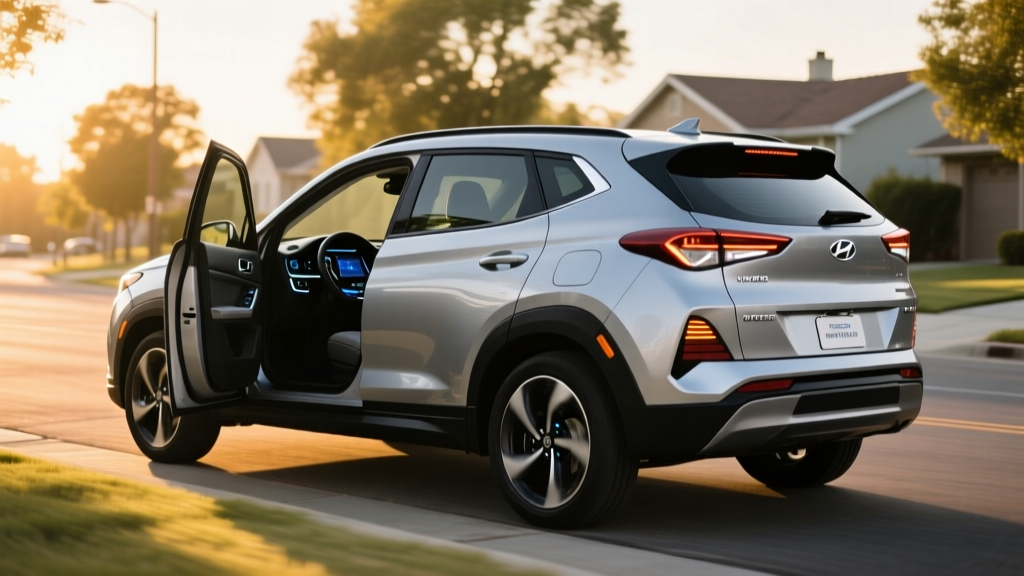
The 2026 Hyundai Tucson Hybrid SEL occupies a rare middle ground in the compact SUV segment: it pairs genuine fuel efficiency with respectable power and a well-equipped cabin, all without requiring you to plug in. At an MSRP starting around $34,460 (including destination), the SEL trim is the volume seller in the Tucson Hybrid lineup — and for good reason. It comes loaded with features that competing hybrids from Toyota and Honda often push into higher trims: a 10.25-inch touchscreen, wireless Apple CarPlay and Android Auto, heated front seats, and Hyundai's full SmartSense safety suite.
But specs on paper only tell part of the story. This guide breaks down exactly what you'll see at the pump, how the hybrid powertrain behaves in real driving, what the battery warranty actually covers, and whether the Tucson Hybrid SEL makes more sense for your household than a PHEV or full EV.
HEV vs PHEV: Which Tucson Are We Talking About?
Important distinction: Hyundai sells two electrified Tucson variants, and confusing them is one of the most common buyer mistakes we see.
| Attribute | Tucson Hybrid (HEV) | Tucson Plug-In Hybrid (PHEV) |
|---|---|---|
| Plug-in required? | No — self-charging via regen & engine | Yes — 13.8 kWh battery, plug to charge |
| EPA combined MPG | 38 MPG | 80 MPGe (hybrid mode: ~35 MPG) |
| Electric-only range | N/A (EV assist only at low speeds) | 33 miles EPA |
| Total range | ~460 miles (13.7-gal tank) | ~420 miles combined (EV + gas) |
| Combined horsepower | 232 hp / 271 lb-ft | 268 hp / 271 lb-ft |
| Federal tax credit (§30D) | Not eligible | Up to $7,500 (eligibility varies) |
| Starting MSRP (2026) | ~$34,460 (SEL) | ~$41,310 (SEL Convenience) |
This article focuses on the conventional Hybrid SEL (HEV). If you have access to home or workplace charging and want to run errands on electricity alone, the PHEV variant is worth a separate look — but it costs roughly $6,850 more before any tax credit and requires a different ownership calculus.
Fuel Economy: EPA Ratings vs Real-World MPG
| Driving Condition | EPA Estimate | Real-World Expectation |
|---|---|---|
| City | 37 MPG | 38–42 MPG (hybrids excel in stop-and-go) |
| Highway | 38 MPG | 33–36 MPG (sustained 70+ mph reduces regen benefit) |
| Combined | 38 MPG | 35–39 MPG depending on driving mix |
The Tucson Hybrid's 38 MPG combined rating from the EPA (fueleconomy.gov) is competitive within the compact hybrid SUV class. The Toyota RAV4 Hybrid edges it out at 39 MPG combined, while the Honda CR-V Hybrid lands at 37 MPG. In practice, the differences are marginal — a few tenths of a gallon per 100 miles.
Where the Tucson Hybrid punches above its EPA sticker: city driving. Like most hybrids, the electric motor handles low-speed launches and stoplight-to-stoplight crawling, where the gasoline engine would be least efficient. Owners with commute-heavy, urban driving routines regularly report 40+ MPG on city loops. Highway-heavy drivers will see numbers dip toward the mid-30s, as the 1.6-liter turbocharged engine shoulders more of the load at sustained speeds and regenerative braking opportunities diminish.
Cold-weather reality check: Expect a 5–10% fuel economy drop in sub-freezing temperatures. The engine runs more frequently to generate cabin heat and keep the catalytic converter at operating temperature. This is normal hybrid behavior, not a Tucson-specific flaw.
Powertrain and Performance Specs
| Specification | 2026 Tucson Hybrid SEL |
|---|---|
| Engine | 1.6L turbocharged 4-cylinder |
| Engine output | 180 hp / 195 lb-ft |
| Electric motor | 47.7 kW (64 hp) permanent-magnet synchronous |
| Combined system output | 232 hp / 271 lb-ft |
| Transmission | 6-speed automatic (torque-converter, not CVT) |
| Drivetrain | HTRAC AWD (standard on all Hybrid trims) |
| 0–60 mph | ~7.1 seconds (manufacturer est.) |
| Towing capacity | 2,000 lbs (with trailer brake) |
| Fuel tank | 13.7 gallons |
| Total range | ~460 miles (combined EPA) |
Hyundai's decision to pair the hybrid system with a conventional 6-speed automatic rather than a CVT is one of the Tucson Hybrid's underappreciated strengths. CVTs in competing hybrids (Toyota, Honda) can drone under hard acceleration. The Tucson's 6-speed shifts like a traditional transmission, delivering a more natural driving feel — particularly when merging onto highways or climbing grades.
The 232 combined horsepower is notably more than the RAV4 Hybrid's 219 hp and the CR-V Hybrid's 204 hp. You feel it in passing maneuvers and highway on-ramps. The Tucson Hybrid doesn't feel like a fuel-economy compromise; it feels like a genuinely capable compact SUV that happens to sip fuel.
Pricing, Trims, and Tax Credit Eligibility
The 2026 Hyundai Tucson Hybrid SEL starts at approximately $34,460 (including $1,415 destination charge). Key standard equipment at this price point includes:
- 10.25-inch digital instrument cluster + 10.25-inch touchscreen
- Wireless Apple CarPlay and Android Auto
- Heated front seats and heated steering wheel
- SmartSense suite: forward collision-avoidance assist, blind-spot monitoring, rear cross-traffic alert, lane-keeping assist, adaptive cruise control with stop-and-go
- Proximity key with push-button start
- LED headlights and daytime running lights
- HTRAC all-wheel drive
Options on the SEL are limited to color and a few dealer-installed accessories, which keeps the buying process straightforward. Stepping up to the Limited trim (~$39,710) adds ventilated front seats, a panoramic sunroof, leather upholstery, and a Bose premium audio system.
Federal Tax Credit: Does the Tucson Hybrid SEL Qualify?
No. The conventional Tucson Hybrid (HEV) does not qualify for the federal §30D Clean Vehicle Credit. Under current IRS rules, only plug-in electric vehicles (BEVs and PHEVs with sufficient battery capacity) are eligible. The Tucson PHEV may qualify for up to $7,500, but eligibility depends on battery component sourcing, critical mineral requirements, buyer income caps ($150K single / $300K joint), and MSRP limits ($80K for SUVs). Always verify current-year rules with a tax professional before purchasing.
Some states offer separate incentives for hybrid vehicles — check your state's energy office or DMV for local programs.
Reliability and Battery Warranty: What You're Actually Covered For
Hybrid battery longevity remains the single biggest concern for first-time hybrid buyers. Here's the data that should ease it:
Hyundai provides one of the strongest hybrid battery warranties in the industry:
| Component | Warranty Coverage |
|---|---|
| Hybrid battery pack | 10 years / 100,000 miles (original owner) |
| Hybrid system components (motor, inverter, controller) | 10 years / 100,000 miles |
| Powertrain (engine, transmission) | 10 years / 100,000 miles |
| New vehicle limited | 5 years / 60,000 miles |
| Capacity retention guarantee | Battery must maintain ≥70% of original capacity during warranty period |
Real-world degradation data: Modern hybrid battery packs — including the Tucson's lithium-ion polymer unit — are engineered for 150,000+ miles of service. Unlike full EVs, hybrid batteries operate in a narrow state-of-charge window (typically 40–80%), which dramatically reduces stress on the cells. Toyota Prius packs routinely exceed 200,000 miles before needing replacement, and Hyundai's hybrid system uses similar management strategies.
Battery replacement cost if out of warranty: A replacement hybrid battery pack for the Tucson Hybrid currently runs approximately $3,000–$4,500 (parts and labor) at a dealership. Third-party hybrid battery refurbishers offer reconditioned units for $1,500–$2,500. This is a fraction of full EV battery replacement costs ($8,000–$20,000+) because the hybrid pack is far smaller (roughly 1.5 kWh vs. 60–100 kWh in a BEV).
For reliability track records, the Tucson Hybrid has performed well since its redesign. IIHS testing and long-term owner surveys place it in the average-to-above-average range for the compact SUV segment.
Hybrid vs PHEV vs EV: Which Tucson Fits Your Life?
Choose the Tucson Hybrid (HEV) if:
- You rent or live somewhere without access to home charging (apartment, street parking)
- You want maximum simplicity — no charging cables, no plug-in routines
- Your budget tops out around $35K–$37K out the door
- You drive a mix of city and highway and want consistent 35–40 MPG without behavior changes
- You want AWD standard for snow or rain without the weight penalty of a large battery
Choose the Tucson PHEV if:
- You have a garage or driveway where you can install a Level 2 charger (or use a standard 120V outlet overnight)
- Your daily round-trip commute is under 33 miles — you could run mostly on electricity
- You qualify for the §30D federal tax credit, which can bring the effective price close to the HEV
- You want the option of zero-emission local driving with a gas engine for road trips
Choose a full EV (e.g., Ioniq 5) if:
- You have reliable home Level 2 charging and your daily driving is under 250 miles
- You want to eliminate gas station visits entirely and minimize maintenance (no oil changes, no spark plugs)
- You're eligible for the full $7,500 federal credit and any state EV incentives
- You're comfortable planning around DC fast charging on longer road trips
Total Cost of Ownership: Tucson Hybrid SEL vs Gas Tucson vs RAV4 Hybrid
Let's put real numbers behind a 5-year, 60,000-mile ownership scenario. We're comparing the Tucson Hybrid SEL AWD against the gas-only Tucson SEL AWD and the Toyota RAV4 Hybrid XLE AWD.
| Cost Factor (5 yr / 60K mi) | Tucson Hybrid SEL AWD | Tucson SEL AWD (Gas) | RAV4 Hybrid XLE AWD |
|---|---|---|---|
| MSRP (approx.) | $34,460 | $31,110 | $34,300 |
| Fuel cost (12K mi/yr @ $3.40/gal) | $5,368 | $7,556 | $5,231 |
| Federal tax credit | $0 | $0 | $0 |
| Estimated maintenance | $2,800 | $3,200 | $2,700 |
| 5-yr total (purchase + fuel + maint.) | ~$42,628 | ~$41,866 | ~$42,231 |
The Tucson Hybrid SEL costs about $3,350 more upfront than the gas Tucson but saves roughly $2,188 in fuel over five years, narrowing the gap to ~$1,162. When you factor in stronger resale value for hybrid models (typically 3–5% higher retention at 5 years according to industry data), the Hybrid SEL often breaks even or comes out slightly ahead in total cost — while delivering a more refined, torque-rich driving experience.
Against the RAV4 Hybrid, costs are nearly identical. Your decision will come down to driving feel (the Tucson's turbo + 6-speed vs Toyota's naturally aspirated + CVT), interior design preference, and brand loyalty.
Frequently Asked Questions
How many MPG does the Hyundai Tucson Hybrid SEL actually get?
The EPA rates it at 37 city / 38 highway / 38 combined. In real-world driving, expect 38–42 MPG in city-heavy commutes and 33–36 MPG on sustained highway trips. Cold weather and heavy cargo loads will reduce these figures by 5–10%.
Does the Tucson Hybrid need to be plugged in?
No. The conventional Tucson Hybrid (HEV) charges its small battery pack through regenerative braking and the gasoline engine. You never plug it in. Only the Tucson Plug-In Hybrid (PHEV) variant requires a charging cable.
How long will the hybrid battery last, and what does replacement cost?
Hyundai warranties the hybrid battery for 10 years / 100,000 miles with a 70% capacity retention guarantee. Real-world data from modern hybrid systems suggests 150,000–200,000+ miles of usable life. Out-of-warranty replacement runs $3,000–$4,500 at a dealer or $1,500–$2,500 through a third-party refurbisher.
Does the 2026 Tucson Hybrid SEL qualify for any federal tax credit?
No. The §30D Clean Vehicle Credit applies only to plug-in vehicles (BEVs and PHEVs). The conventional hybrid is not eligible. The Tucson PHEV may qualify for up to $7,500 depending on battery sourcing, buyer income, and MSRP caps. Some states offer separate hybrid incentives — check your local programs.
Is the Tucson Hybrid SEL better than the RAV4 Hybrid?
They're closely matched. The Tucson Hybrid offers more horsepower (232 vs 219), a more conventional transmission feel (6-speed vs CVT), and a slightly more premium interior at similar pricing. The RAV4 Hybrid edges ahead by 1 MPG combined and has a longer track record of hybrid reliability. Both are excellent choices — test-drive both and decide based on driving feel and cabin preference.
Can the Tucson Hybrid tow?
Yes. The Tucson Hybrid is rated to tow up to 2,000 pounds when equipped with trailer brakes. That covers a small utility trailer, a pair of jet skis, or a lightweight pop-up camper. It is not rated for heavy towing — if you need 3,500+ lbs, look at the non-hybrid Tucson with the 2.5T engine or a midsize SUV.