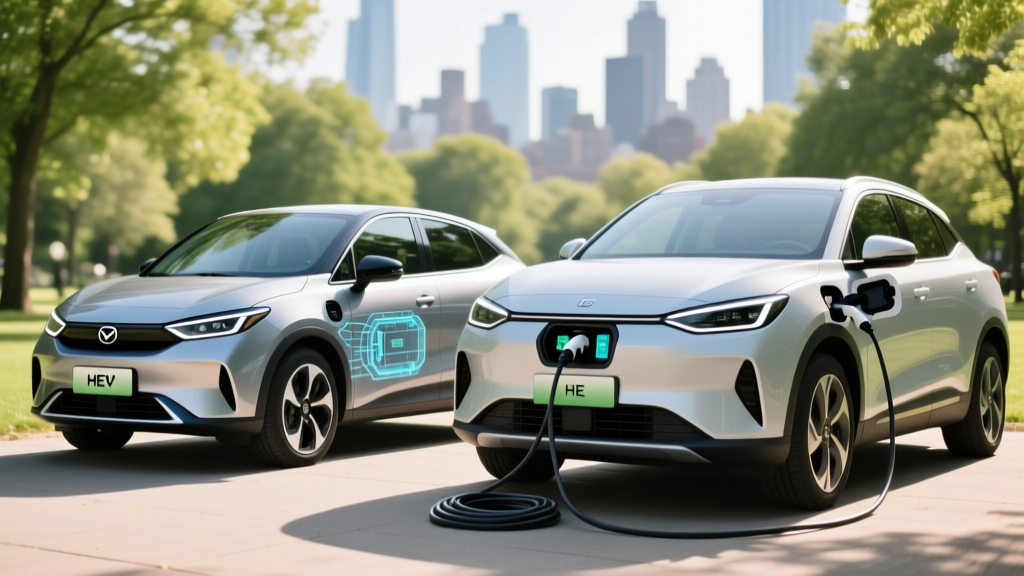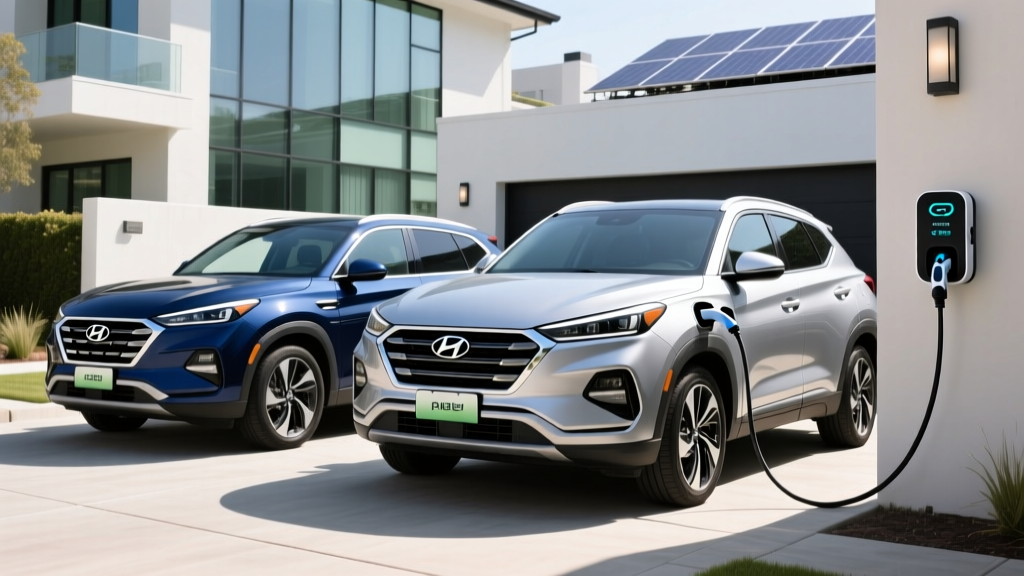
Hyundai's Tucson lineup offers two distinct electrified paths: a conventional hybrid (HEV) that never needs a plug, and a plug-in hybrid (PHEV) that delivers roughly 33 miles of electric-only driving before the gasoline engine kicks in. For buyers searching for a hyundai hybrid plugin solution, the Tucson PHEV is the model in question — but whether it's the right choice over the standard hybrid or a full battery-electric vehicle depends entirely on your daily mileage, charging access, and budget.
This guide breaks down the 2026 Hyundai Tucson Hybrid and Tucson Plug-In Hybrid with exact EPA figures, real-world expectations, battery specs, warranty coverage, and current federal tax credit rules under IRS §30D.
HEV vs PHEV: What's the Actual Difference?
Conventional Hybrid (Tucson HEV)
Uses a small battery (~1.5 kWh) recharged solely by regenerative braking and the engine. No plug required. The electric motor assists the 1.6L turbo engine to boost fuel economy. You refuel exclusively at the gas station.
Plug-In Hybrid (Tucson PHEV)
Carries a much larger battery (13.8 kWh) that you plug in to recharge — via a standard 120V outlet (Level 1) or a 240V Level 2 charger. This enables an EPA-rated 33 miles of pure electric driving. Once the battery depletes, the vehicle operates as a conventional hybrid.
The key takeaway: if you see "hyundai hybrid plugin" in your research, you're looking at the PHEV variant. The standard Tucson Hybrid cannot be plugged in and has no electric-only range to speak of.
EPA Fuel Economy and Electric Range
| Spec | Tucson Hybrid (HEV) | Tucson Plug-In Hybrid (PHEV) |
|---|---|---|
| EPA Combined MPG | 38 MPG | 35 MPG (hybrid mode after battery depletion) |
| City MPG | 38 MPG | 33 MPG |
| Highway MPG | 38 MPG | 37 MPG |
| MPGe (PHEV electric mode) | N/A | 80 MPGe |
| Electric-Only Range | 0 miles (no EV mode) | 33 miles (EPA) |
| Total Combined Range | ~440 miles | ~400+ miles (EV + hybrid) |
Real-world MPG note: Hyundai's 1.6L turbo hybrid system tends to perform close to or slightly above EPA estimates in city driving, where regenerative braking recaptures energy most effectively. On sustained highway trips at 75+ mph, expect both models to drop 3-5 MPG below the sticker. The PHEV's combined MPG drops to 35 once the battery is depleted because it carries approximately 300 lbs of additional battery mass.
Electric-only range reality: The EPA 33-mile figure assumes moderate temperatures and mixed driving. In cold weather (below 35°F), expect 20-25% range reduction due to cabin heating demands and reduced battery efficiency — roughly 25-27 electric miles. If your commute is under 25 miles round-trip, you'll rarely visit a gas station.
Battery, Charging, and Powertrain Specs
| Specification | Tucson Hybrid | Tucson Plug-In Hybrid |
|---|---|---|
| Battery Capacity | ~1.5 kWh (lithium-ion) | 13.8 kWh (lithium-ion polymer) |
| Engine | 1.6L Turbo GDI 4-cyl | 1.6L Turbo GDI 4-cyl |
| Electric Motor | 44 kW (59 HP) | 66.9 kW (90 HP) |
| Combined System Output | 226 HP / 258 lb-ft | 261 HP / 258 lb-ft |
| Transmission | 6-speed automatic | 6-speed automatic |
| Drivetrain | AWD (standard) | AWD (standard) |
| 0-60 MPH | ~7.5 sec | ~7.0 sec |
| Level 1 Charging (120V) | N/A | ~11 hours (0-100%) |
| Level 2 Charging (240V) | N/A | ~2 hours (0-100%) |
| DC Fast Charging | N/A | Not available |
| Charge Port / Connector | N/A | J1772 (Level 1 & 2) |
Charging reality check: The Tucson PHEV does not support DC fast charging — a common limitation among plug-in hybrids. The onboard charger maxes out at 7.2 kW on Level 2. That means a full charge takes roughly 2 hours on a 240V home charger or overnight on a standard 120V wall outlet. For most PHEV owners, plugging in at home overnight is the entire charging routine — public fast chargers aren't needed or relevant.
🔋 Battery Warranty Coverage
Hybrid/PHEV Battery: 10 years / 100,000 miles (whichever comes first) in all 50 states. This covers defects and capacity loss below a defined threshold.
Hybrid System Components: 10 years / 100,000 miles — includes the electric motor, inverter, and related electronics.
Standard Powertrain: 10 years / 100,000 miles on engine and transmission.
Source: Hyundai USA Warranty. Always verify current terms at purchase.
Battery Longevity and Replacement Cost
Hyundai's lithium-ion polymer hybrid batteries have demonstrated strong longevity in real-world use. Unlike early-generation hybrid batteries from the 2000s, modern chemistries with active thermal management experience gradual, predictable degradation rather than sudden failure.
Expected lifespan: Most Hyundai hybrid and PHEV batteries last 150,000-200,000+ miles before capacity drops meaningfully. The 13.8 kWh PHEV battery may show 10-15% capacity reduction after 10 years, translating to roughly 28-30 electric miles instead of 33 — still functional, just slightly reduced.
Replacement cost if out of warranty: A Tucson PHEV battery pack replacement runs approximately $5,000-$8,000 including labor, based on current dealer pricing. The HEV's smaller battery is significantly cheaper, typically $2,000-$3,500. However, the 10-year/100,000-mile warranty covers the vast majority of owners through the vehicle's primary ownership cycle.
Pricing, Trims, and Federal Tax Credit Eligibility
Here's where the Tucson PHEV and Hybrid diverge sharply on cost — and where the federal tax credit becomes a major factor.
| 2026 Trim | MSRP (approx.) | §30D Tax Credit Eligible? |
|---|---|---|
| Tucson Hybrid SEL | ~$34,500 | No — HEVs do not qualify for §30D |
| Tucson Hybrid Limited | ~$39,500 | No |
| Tucson PHEV SEL | ~$40,500 | See eligibility checklist below |
| Tucson PHEV Limited | ~$46,000 | See eligibility checklist below |
Important pricing context: The PHEV carries a roughly $6,000-$7,000 premium over the equivalent hybrid trim. That premium pays for the larger battery, more powerful electric motor, onboard charger, and charge port. The tax credit — if you qualify — can offset much or all of that gap.
- §30D Federal Tax Credit for the Tucson PHEV (2026 rules):
- ✅ MSRP cap: SUVs/vans/pickups must be ≤ $80,000 MSRP — Tucson PHEV qualifies.
- ✅ Buyer income cap: AGI ≤ $150,000 (single), $225,000 (head of household), $300,000 (joint).
- ⚠️ Battery sourcing: A percentage of critical minerals and battery components must be sourced from the U.S. or FTA partners. These thresholds tighten annually. Check the latest IRS qualifying vehicle list before purchasing.
- ⚠️ Point-of-sale transfer: You can transfer the credit to the dealer for an immediate price reduction rather than waiting to claim it on your tax return.
- ⚠️ Credit amount: Up to $7,500, split between critical minerals ($3,750) and battery components ($3,750). The Tucson PHEV's actual credit may be $3,750 or $7,500 depending on current sourcing compliance.
- ❌ Tucson Hybrid (HEV): Does NOT qualify for §30D. Conventional hybrids are excluded.
Always confirm eligibility on IRS.gov or consult a tax professional. Sourcing requirements change, and a model that qualifies today may not qualify at your purchase date.
Real-World Ownership: Who Should Choose Which?
Choose the Tucson Hybrid (HEV) If:
- You don't have access to home or workplace charging
- Your daily driving exceeds 40+ miles and you don't want to think about plugging in
- You want the lowest upfront price and simplest ownership
- You primarily drive highway miles (where HEV and PHEV MPG converge)
- You live in an apartment without charging infrastructure
Choose the Tucson PHEV If:
- You have a garage or driveway where you can install a Level 2 charger
- Your daily commute is under 30 miles round-trip
- You want to drive mostly electric daily with gas for road trips
- You qualify for the §30D tax credit (closing the price gap with HEV)
- You want stronger acceleration (261 HP vs 226 HP)
Hybrid vs PHEV vs Full EV — The Decision Framework
HEV (Tucson Hybrid): Best for drivers without charging access who want better MPG without behavioral change. Think of it as a "better gas car."
PHEV (Tucson Plug-In Hybrid): Best for home-chargers with short commutes who also take regular road trips. You get EV-like daily driving with zero range anxiety on long trips.
Full EV (e.g., Ioniq 5): Best for drivers with reliable home charging who want the lowest per-mile fuel cost, zero tailpipe emissions, and minimal maintenance — and whose road trips are within DC fast-charging network coverage.
5-Year Cost of Ownership Snapshot
| Cost Factor (5 yr / 75,000 mi) | Tucson Hybrid | Tucson PHEV |
|---|---|---|
| Purchase Price (after credit) | ~$34,500 | ~$33,000–$40,500 (varies with credit) |
| Fuel / Electricity | ~$6,900 (gas only) | ~$3,500–$5,000 (electric + gas mix) |
| Maintenance | ~$2,500 | ~$2,300 (less brake wear from regen) |
| Insurance (avg) | ~$7,500 | ~$8,000 |
| Estimated Depreciation | ~$14,000 | ~$16,000 |
The PHEV's fuel savings are most dramatic when you charge daily and rarely exceed 33 miles. If you regularly drive 60+ miles daily without charging between trips, the PHEV essentially becomes a heavier (and slightly less efficient) hybrid, eroding its fuel-cost advantage.
Frequently Asked Questions
How many MPG does the Hyundai Tucson Hybrid get?
The 2026 Tucson Hybrid achieves an EPA-rated 38 MPG combined (38 city / 38 highway). In real-world city driving with frequent stops, many owners report 39-42 MPG thanks to regenerative braking. Highway cruising at 75+ MPH typically yields 34-36 MPG.
How far can the Tucson PHEV go on electric only?
The EPA rates the Tucson PHEV at 33 miles of electric-only range. In moderate weather with gentle driving, you may see 34-36 miles. In cold weather or at highway speeds, expect 25-28 miles. Once the battery is depleted, the vehicle continues as a conventional hybrid at 35 MPG combined — you're never stranded.
Does the Tucson PHEV qualify for a federal tax credit?
It may qualify for up to $7,500 under IRS §30D, but eligibility depends on your income, the vehicle's battery sourcing compliance, and MSRP caps. The Tucson PHEV clears the $80,000 SUV MSRP cap. Check the IRS qualifying vehicle list for the latest sourcing status. The standard Tucson Hybrid does not qualify for any federal EV tax credit.
Can I charge the Tucson PHEV at a DC fast charger?
No. The Tucson PHEV only accepts Level 1 (120V) and Level 2 (240V) AC charging via a J1772 connector. DC fast charging is not supported — this is standard for nearly all plug-in hybrids. A full Level 2 charge takes about 2 hours, making overnight home charging the practical routine.
Is the Hyundai Tucson Hybrid reliable, and what does battery replacement cost?
Hyundai's hybrid system has proven reliable across multiple model years, with the Tucson hybrid powertrain earning strong marks from IIHS and owner surveys. The hybrid/PHEV battery is covered by a 10-year/100,000-mile warranty. Out-of-warranty replacement costs approximately $5,000-$8,000 for the PHEV battery and $2,000-$3,500 for the HEV battery. Most batteries outlast 150,000+ miles.
Should I get the hybrid, PHEV, or a full EV like the Ioniq 5?
If you have home charging and a short commute, the PHEV offers the best of both worlds — electric daily driving with gas flexibility for road trips. If you never want to visit a gas station and have reliable charging, the Ioniq 5 (EPA range up to 303 miles) delivers lower running costs. If you lack charging access entirely, the conventional hybrid is the practical choice with no infrastructure requirements.
Sources: EPA Fuel Economy (fueleconomy.gov), Hyundai USA Tucson, IRS §30D Qualifying Vehicles. All figures reflect 2026 model-year data available at time of publication. Verify current pricing and credit eligibility before purchasing.