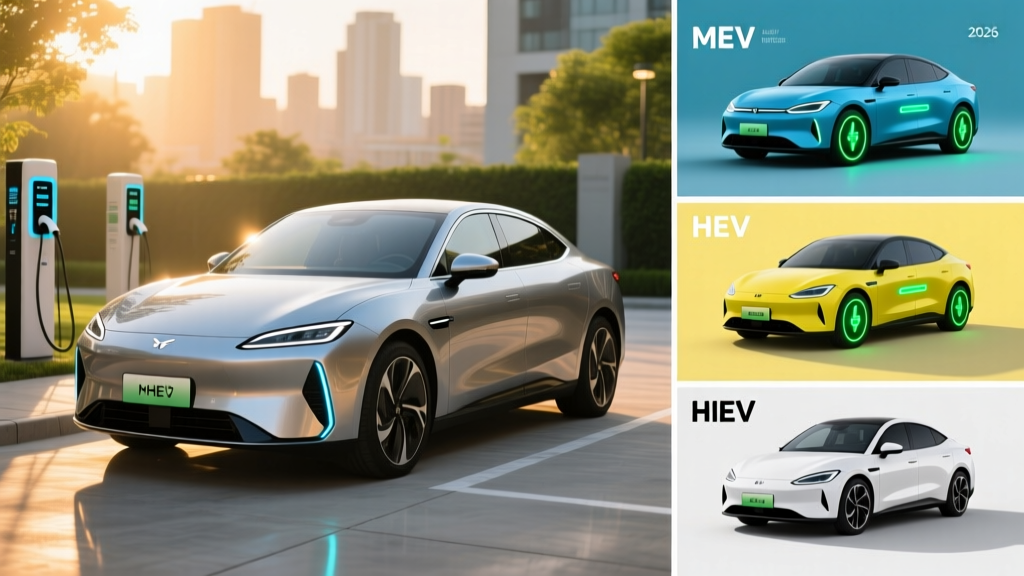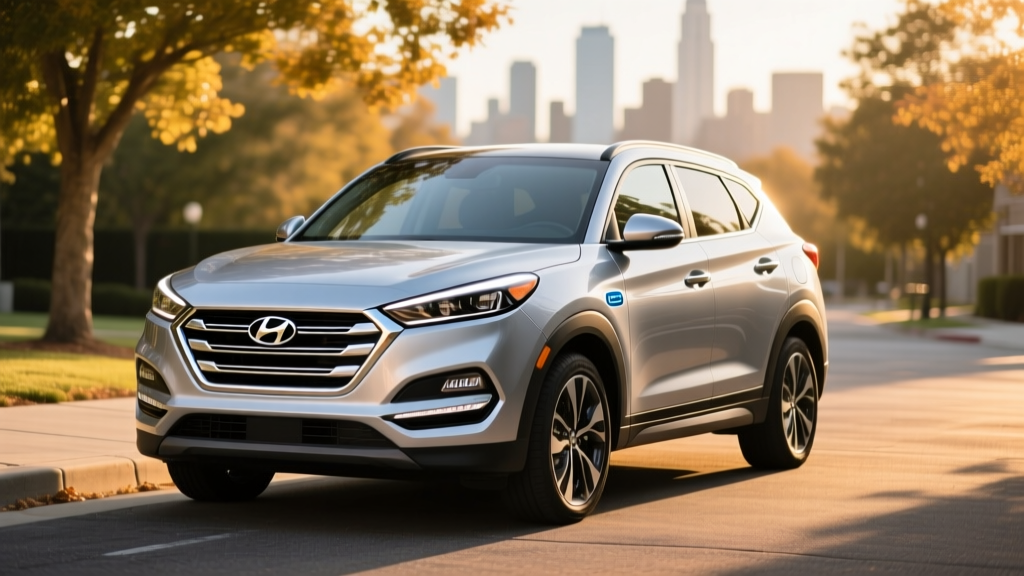
The Hyundai Tucson Hybrid occupies a sweet spot for buyers who want electrified efficiency without plugging in — or, in its PHEV variant, the option to plug in for short electric-only commutes. This Hyundai Tucson hybrid full review breaks down the 2026 model's real-world fuel economy, powertrain specs, battery longevity, and pricing so you can decide whether it beats a conventional gas crossover or a full battery-electric vehicle for your daily driving.
2026 Hyundai Tucson Hybrid: Key Specifications
| Spec | HEV (Conventional Hybrid) | PHEV (Plug-In Hybrid) |
|---|---|---|
| Powertrain | 1.6L turbo I4 + electric motor | 1.6L turbo I4 + larger electric motor |
| Combined Horsepower | 232 hp | 268 hp |
| EPA Combined MPG / MPGe | 38 MPG combined | 80 MPGe (electric) / 35 MPG (gas-only) |
| EPA City / Highway MPG | 38 city / 38 highway | 35 city / 35 highway (gas mode) |
| Electric-Only Range (PHEV) | N/A — no plug | 33 miles (EPA est.) |
| Total Combined Range | ~430 miles | ~420 miles (gas + electric) |
| Battery Capacity | 1.49 kWh (NiMH-type) | 13.8 kWh (lithium-ion) |
| DC Fast Charge Capable | No | No (Level 2 AC only) |
| Level 2 Charge Time (PHEV) | N/A | ~2 hours (0–100%) |
| Drivetrain | AWD standard | AWD standard |
| 0–60 mph | ~7.1 sec | ~6.3 sec |
| Starting MSRP | $34,460 (Blue trim) | $40,850 (SEL trim) |
| Battery Warranty | 10 yr / 100,000 mi | 10 yr / 100,000 mi |
How Many MPG Does the Tucson Hybrid Actually Get?
The EPA rates the 2026 Tucson Hybrid HEV at 38 MPG combined (38 city / 38 highway) for the Blue trim, which is the efficiency-oriented base model. Higher trims like the Limited drop slightly to 37 MPG combined due to added weight from premium features.
According to fueleconomy.gov, the Tucson Hybrid's combined rating places it among the most efficient compact crossovers available — beating the Toyota RAV4 Hybrid (39 MPG combined for the LE, but less on higher trims) and well ahead of the Honda CR-V Hybrid (40 combined for the Sport, though trims vary).
Real-world MPG reality check: Hyundai's hybrid system, like most parallel hybrids, tends to exceed its EPA city estimate in stop-and-go traffic because regenerative braking recaptures energy that a gas car wastes as heat. Owners on Fuelly and Edmunds forums consistently report 39–42 MPG in urban driving. Highway driving at 75+ mph, however, often yields 34–36 MPG — the aerodynamic drag of a crossover body hurts efficiency at speed. In cold weather (below 30°F), expect a 5–8% MPG reduction as the engine runs longer to generate cabin heat.
Tucson Hybrid MPG: EPA vs. Real-World Estimates
| Driving Scenario | EPA Estimate | Real-World Expectation |
|---|---|---|
| City (stop-and-go) | 38 MPG | 39–42 MPG (regen advantage) |
| Highway (65–70 mph) | 38 MPG | 35–37 MPG |
| Highway (75+ mph) | 38 MPG | 33–35 MPG |
| Cold weather (combined) | 38 MPG | 34–36 MPG |
HEV vs. PHEV: Which Tucson Hybrid Is Right for You?
This is the most important decision in this Tucson hybrid full review. Hyundai sells two electrified Tucsons, and confusing them is easy — but the differences are substantial.
| Factor | Tucson HEV (Conventional Hybrid) | Tucson PHEV (Plug-In Hybrid) |
|---|---|---|
| Needs to plug in? | No — charges via engine & regen | Yes — plug in to use electric range |
| Electric-only driving | Very short, low-speed only | 33 miles at full highway speed |
| Home charging required? | Never | Recommended (120V works, 240V ideal) |
| Best for | Apartment dwellers, no garage outlet | Homeowners with short commutes |
| Federal tax credit | None | Up to $7,500 (if eligible) |
| Price premium over gas Tucson | ~$2,500 | ~$8,000+ |
The conventional HEV never needs a plug. Its 1.49 kWh battery is tiny — it simply buffers energy recaptured from braking and optimizes engine load. You fuel it like any other car and get 38 MPG without changing a single habit.
The PHEV carries a 13.8 kWh lithium-ion battery that delivers an EPA-estimated 33 miles of electric-only range. If your round-trip commute is under 30 miles and you charge nightly at home, you may burn almost zero gasoline on weekdays. On road trips, the gas engine engages seamlessly — you get 35 MPG combined once the battery is depleted, plus a total range exceeding 420 miles.
Powertrain, Performance, and Driving Impressions
Both Tucson hybrids pair a 1.6-liter turbocharged four-cylinder engine with an electric motor integrated into a 6-speed automatic transmission — not a CVT. This matters: the conventional automatic avoids the rubber-band drone common in Toyota and Honda hybrid CVTs, and it delivers more natural acceleration feel.
The HEV produces 232 combined horsepower (178 hp from the engine, plus electric motor assist), propelling it to 60 mph in approximately 7.1 seconds. The PHEV bumps that to 268 hp and a 6.3-second 0–60 time, making it the quickest Tucson variant short of the N Line.
All-wheel drive is standard on both — the rear axle is driven by a separate electric motor in the PHEV, providing genuine torque-vectoring capability rather than the passive clutch-based AWD found on some competitors. In rain and light snow, the Tucson Hybrid's AWD system engages within milliseconds.
Pricing, Trims, and Tax Credit Eligibility
The 2026 Tucson Hybrid HEV starts at $34,460 for the Blue trim (the most efficient). The SEL Convenience trim runs approximately $37,500, and the Limited tops out near $41,000 — all including destination.
The Tucson PHEV starts at $40,850 for the SEL and climbs to roughly $46,000 for the Limited.
Federal Tax Credit: What Applies
The conventional HEV does not qualify for any federal EV tax credit. It has no plug and no meaningful electric-only range — the IRS §30D credit applies only to plug-in vehicles.
The Tucson PHEV may qualify for up to $7,500 under IRS §30D, but eligibility depends on several conditions that change frequently. As of 2026, check these requirements against IRS.gov clean vehicle credits:
- MSRP cap: SUVs/vans must be under $80,000 (Tucson PHEV qualifies)
- Buyer income cap: Modified AGI must not exceed $150,000 (single) / $300,000 (joint)
- Battery sourcing: Critical minerals and battery components must meet phased-in domestic/FTEA sourcing thresholds — Hyundai's supply chain has been shifting to comply, but verify current-year eligibility on the IRS qualified vehicles list
- Point-of-sale transfer: As of 2024+, you can transfer the credit to the dealer for an immediate price reduction rather than waiting for a tax refund
Always consult a tax professional before relying on credit eligibility — rules are subject to legislative change and per-manufacturer phase-out conditions.
Battery Reliability, Warranty, and Replacement Costs
Hybrid battery longevity is the single most common concern from buyers switching from a conventional gas car. Here's what the data shows for Hyundai's hybrid systems:
Tucson Hybrid Battery Warranty
Both the HEV and PHEV batteries are covered under Hyundai's powertrain warranty: 10 years or 100,000 miles (whichever comes first) for the original owner. For subsequent owners, coverage drops to 5 years / 60,000 miles in most states. California-emissions states may offer extended hybrid-component coverage — check your state's specific rules.
The warranty guarantees the battery will retain sufficient capacity to function properly. If the battery degrades below a threshold (typically ~60-70% capacity) within the warranty period, Hyundai replaces it at no cost.
Real-world reliability data: Hyundai's hybrid systems have proven robust. The Tucson Hybrid has been on sale since the 2022 model year, and widespread battery failures have not emerged as a pattern. Hyundai's hybrid architecture is simpler than early-generation systems — the electric motor is integrated into the transmission housing rather than being a separate unit, reducing failure points.
Battery replacement cost (out of warranty): If you plan to keep the Tucson Hybrid past 150,000 miles and the battery eventually fails outside warranty coverage, expect:
- HEV battery replacement: $2,000–$3,500 (small 1.49 kWh pack)
- PHEV battery replacement: $5,000–$8,000 (larger 13.8 kWh pack)
For context, Toyota Prius batteries routinely last 150,000–200,000+ miles before significant degradation, and Hyundai's lithium-ion chemistry is expected to follow a similar trajectory. The HEV's tiny NiMH-type battery undergoes shallow charge cycles (never fully draining or fully charging), which dramatically extends cycle life.
Hybrid vs. PHEV vs. Full EV: Decision Framework
Choose the Tucson HEV If:
- You rent or live in an apartment with no charging access
- Your daily driving exceeds 50 miles (too much for PHEV electric range)
- You want lower upfront cost and simpler ownership
- You take frequent long road trips and don't want to plan charging stops
Choose the Tucson PHEV If:
- You have a garage or driveway with a 120V or 240V outlet
- Your daily commute is under 30 miles round-trip
- You qualify for the $7,500 federal tax credit (effectively lowering the price to near HEV levels)
- You want electric driving for daily errands but gas flexibility for road trips
Choose a Full EV (e.g., Hyundai Ioniq 5) If:
- You have reliable home Level 2 charging
- Your daily driving is under 250 miles
- You want zero tailpipe emissions and minimal maintenance (no oil changes, no engine)
- You want the lowest per-mile "fuel" cost (~$0.04–$0.06/mile on home electricity vs. ~$0.12–$0.15/mile on gas)
Real-World Ownership Costs: Tucson Hybrid vs. Gas vs. EV
Fuel savings are the primary reason buyers consider the Tucson Hybrid. Here's a realistic 5-year cost comparison assuming 15,000 miles/year, $3.50/gallon gas, and $0.14/kWh electricity:
| Vehicle | 5-Year Fuel Cost | Maintenance (5 yr) | Estimated Total |
|---|---|---|---|
| Gas Tucson AWD (28 MPG) | $9,375 | $3,500 | $12,875 |
| Tucson HEV (38 MPG) | $6,908 | $3,200 | $10,108 |
| Tucson PHEV (50% electric) | $4,950 | $3,000 | $7,950 |
| Hyundai Ioniq 5 (full EV) | $3,150 | $1,800 | $4,950 |
The HEV saves approximately $2,767 over five years compared to the gas Tucson — enough to offset its ~$2,500 price premium within the first few years. The PHEV, especially with the federal tax credit, can save $4,900+ over five years.
Pros and Cons at a Glance
Pros
- 38 MPG combined real-world achievable (often exceeded in city driving)
- Standard AWD with no fuel-economy penalty vs. FWD competitors
- Conventional 6-speed automatic — no CVT drone
- 10-year/100,000-mile hybrid battery warranty
- No plugging in required (HEV); true grab-and-go convenience
- PHEV variant offers 33 miles electric + $7,500 credit potential
- Competitive cargo space: 38.7 cu ft behind rear seats
Cons
- HEV does not qualify for federal tax credits
- PHEV cannot DC fast charge — Level 2 only (~2 hours)
- Highway MPG drops noticeably at 75+ mph
- HEV battery is small — minimal electric-only assist at low speeds
- Insurance premiums slightly higher than gas Tucson (~5-8%)
- PHEV price premium is steep without the tax credit
Frequently Asked Questions
How many MPG does the Hyundai Tucson Hybrid get in real driving?
The EPA rates it at 38 MPG combined (Blue trim). In real-world city driving with stop-and-go traffic, many owners report 39–42 MPG thanks to regenerative braking. Highway driving at 75+ mph typically yields 33–35 MPG. Cold weather reduces efficiency by roughly 5–8%.
How far can the Tucson PHEV go on electric only?
The EPA estimates 33 miles of electric-only range for the 2026 Tucson PHEV. This is sufficient for most daily commutes. Once the battery is depleted, the PHEV operates as a conventional hybrid achieving approximately 35 MPG combined on gasoline. Total combined range (electric + gas) exceeds 420 miles.
Do I need to plug in the Tucson Hybrid HEV?
No. The conventional Tucson Hybrid (HEV) never requires plugging in. Its small battery charges automatically through regenerative braking and the gasoline engine. You simply fill up at a gas station like any other car. Only the PHEV variant benefits from plugging in.
Is the Tucson Hybrid reliable, and what does battery replacement cost?
Hyundai's hybrid system has shown strong reliability since its 2022 introduction, with no widespread battery failure patterns reported. The hybrid battery is warranted for 10 years / 100,000 miles. Out-of-warranty replacement costs approximately $2,000–$3,500 for the HEV and $5,000–$8,000 for the PHEV. Most hybrid batteries last 150,000+ miles based on industry data from similar systems.
Does the Tucson Hybrid qualify for a tax credit?
The conventional HEV does not qualify for any federal tax credit. The Tucson PHEV may qualify for up to $7,500 under IRS §30D, subject to buyer income limits ($150K single / $300K joint), MSRP caps (under $80K for SUVs), and battery-sourcing requirements. Check the IRS qualified vehicles list for current eligibility, and consult a tax professional.
Hybrid vs. PHEV vs. EV — which should I choose?
Choose the HEV if you have no home charging access and want zero-hassle efficiency. Choose the PHEV if you can charge at home and have a short commute (under 30 miles) — the tax credit can make it price-competitive with the HEV. Choose a full EV like the Ioniq 5 if you have reliable home charging, drive under 250 miles daily, and want the lowest operating cost and zero tailpipe emissions.
For official EPA ratings, visit fueleconomy.gov. For Hyundai's current specifications and warranty details, check Hyundai's official Tucson Hybrid page.