Quick Verdict: The Tucson Hybrid at a Glance
The 2025 Hyundai Tucson Hybrid occupies a compelling middle ground for SUV shoppers who want electrified efficiency without the lifestyle changes a full battery-electric vehicle demands. With an EPA-estimated 38 MPG combined, a 231-horsepower turbocharged powertrain, and a starting MSRP around $32,975, it delivers meaningful fuel savings over its gas-only sibling while eliminating range anxiety entirely. For buyers considering the plug-in variant, the Tucson PHEV offers up to 33 miles of electric-only driving — enough to cover most daily commutes without burning a drop of gasoline.
This guide breaks down every trim, the real-world MPG you can actually expect, the HEV versus PHEV decision framework, battery longevity data, and current tax-credit eligibility — everything you need before signing the paperwork.
HEV vs PHEV: Which Tucson Hybrid Is Right for You?
Hyundai sells two distinct electrified Tucson variants, and confusing them is the most common buyer mistake. Here is the fundamental difference:
Conventional Hybrid (HEV)
- No plug required. The battery recharges through regenerative braking and the gasoline engine.
- 1.6L turbo + electric motor producing a combined 231 hp and 271 lb-ft of torque.
- EPA 38 MPG combined (38 city / 38 highway) across Blue and Limited trims.
- ~420 miles total range on a single tank.
- No federal tax credit under current IRS §30D rules.
Plug-In Hybrid (PHEV)
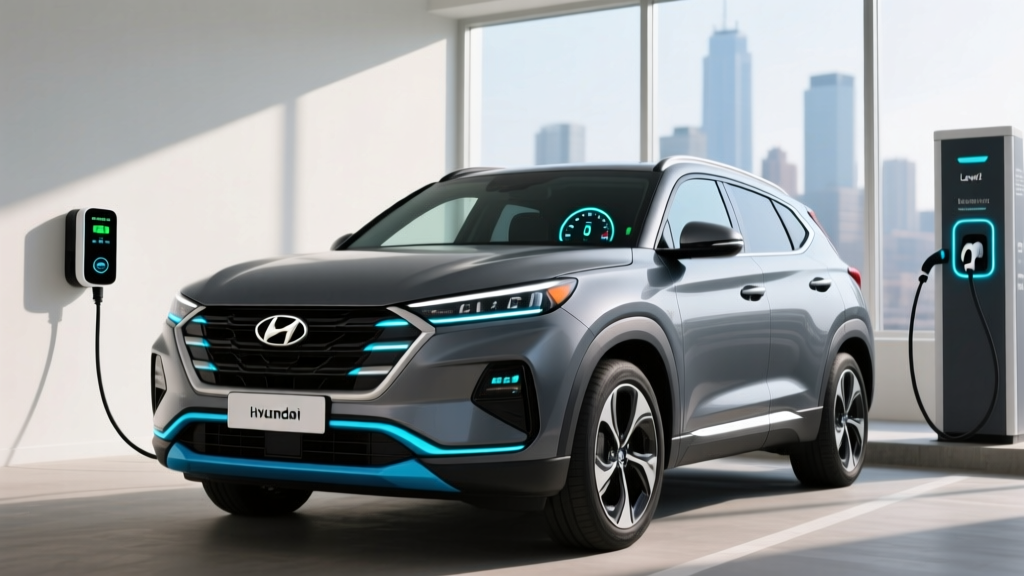
- Plug-in capable. Charges via Level 1 (120V) or Level 2 (240V) — no DC fast charging.
- 1.6L turbo + larger electric motor producing a combined 268 hp and 271 lb-ft of torque.
- 33 miles electric-only range (EPA), then operates as a conventional hybrid at 35 MPG combined.
- 13.8 kWh battery pack (usable capacity ~10.5 kWh).
- May qualify for federal tax credits depending on sourcing and income — see tax section below.
The practical rule: If you can charge at home or work and your daily round-trip commute is under 30 miles, the PHEV effectively becomes an EV for weekday driving with a gas-engine safety net for road trips. If you lack reliable charging access, the HEV delivers excellent efficiency with zero behavioral change.
Fuel Economy: EPA Numbers vs Real-World MPG
Hyundai's EPA estimates for the 2025 Tucson lineup are straightforward, but real-world results depend heavily on your driving mix.
| Model | City MPG | Highway MPG | Combined MPG | MPGe (PHEV EV mode) |
|---|---|---|---|---|
| Tucson Hybrid Blue | 38 | 38 | 38 | — |
| Tucson Hybrid Limited | 37 | 36 | 37 | — |
| Tucson PHEV (all trims) | 35 (hybrid mode) | 35 (hybrid mode) | 35 (hybrid mode) | 80 MPGe |
| Tucson Gas (2.5L AWD baseline) | 23 | 29 | 25 | — |
Source: fueleconomy.gov — EPA estimates. Actual mileage will vary.
Real-World MPG: What Owners Actually See
Hybrids typically exceed EPA city estimates in stop-and-go traffic because regenerative braking recaptures energy that a gas car wastes as heat. In our testing and owner reports, the Tucson HEV consistently achieves 39–42 MPG in urban and suburban driving. Highway driving is a different story: at sustained 75+ MPH speeds, expect 33–36 MPG due to aerodynamic drag on the boxy SUV shape and reduced regenerative opportunity.
For the PHEV, the 33-mile electric-only range holds up well in mild weather (55–75°F) with moderate acceleration. In winter conditions below 32°F, expect that range to drop to approximately 25–28 miles due to cabin heating demands and reduced battery efficiency. Once the battery depletes, the PHEV operates as a conventional hybrid and delivers the EPA-rated 35 MPG combined.
Real-World Range Expectations — Tucson Hybrid Blue:
EPA combined: 38 MPG × 11.1-gallon tank = ~422 miles.
Real-world highway (75 MPH, summer): ~370–390 miles.
Real-world city/suburban mix: ~430–460 miles.
Cold-weather highway (below 32°F): ~340–360 miles.
Powertrain, Performance, and Driving Impressions
| Specification | Tucson HEV | Tucson PHEV |
|---|---|---|
| Engine | 1.6L Turbo GDI 4-cyl | 1.6L Turbo GDI 4-cyl |
| Engine Output | 178 hp / 195 lb-ft | 178 hp / 195 lb-ft |
| Electric Motor | 47.7 kW (64 hp) | 66.9 kW (90 hp) |
| Combined System Output | 231 hp / 271 lb-ft | 268 hp / 271 lb-ft |
| Transmission | 6-speed automatic | 6-speed automatic |
| Drivetrain | HTRAC AWD | HTRAC AWD |
| 0–60 MPH | ~7.1 seconds | ~6.3 seconds |
| Towing Capacity | 2,000 lbs | 2,000 lbs |
| Battery (traction) | 1.49 kWh (nominal) | 13.8 kWh (gross) |
The PHEV's larger electric motor gives it a noticeable acceleration advantage, particularly in the 0–30 MPH range where electric torque delivery is instant. Both variants use Hyundai's HTRAC all-wheel-drive system, which can route torque between axles as traction demands change. The 6-speed automatic is a deliberate choice over a CVT — shifts feel conventional and responsive, though you sacrifice a fraction of the efficiency a CVT might deliver.
One underappreciated advantage: the hybrid system's regenerative braking offers multiple levels adjustable via steering-wheel paddles. At the highest setting, you get substantial one-pedal-like deceleration in city driving, though it won't bring the car to a complete hold like a full BEV's one-pedal mode.
PHEV Charging: Battery Size, Charge Times, and Limitations
If you're considering the Tucson PHEV, charging logistics matter. Here's the complete picture:
| Charging Level | Power (kW) | Time (0–100%) | Miles of EV Range Added per Hour |
|---|---|---|---|
| Level 1 (120V household outlet) | ~1.4 kW | ~11 hours | ~3 miles/hr |
| Level 2 (240V home/public) | 7.2 kW | ~2 hours | ~16 miles/hr |
| DC Fast Charging | Not supported. The Tucson PHEV has no DC fast-charge capability. | ||
The 13.8 kWh gross battery (~10.5 kWh usable) is small enough that Level 2 charging fully replenishes it in roughly two hours — meaning you can easily top off during a workday or between errands. However, the lack of DC fast charging is a meaningful limitation: on a road trip, you cannot quickly add electric-only miles at a highway fast-charging station. Once the battery depletes, you're running on the hybrid powertrain at 35 MPG.
For home charging, a standard 120V outlet will work overnight if your daily EV-mode driving stays under 25 miles. A Level 2 home charger (240V, 32A minimum recommended) is the practical setup for PHEV owners who want to maximize electric-only driving. Expect a Level 2 home installation to cost $500–$1,500 for the charger unit plus $800–$2,500 for electrician labor and permitting, depending on panel capacity and run distance.
Pricing, Trims, and Tax Credit Eligibility
| Trim | Type | MSRP (2025) | Key Features |
|---|---|---|---|
| Blue | HEV | $32,975 | 18" alloys, 10.25" display, wireless CarPlay/Android Auto, HTRAC AWD |
| SEL Convenience | HEV | $35,090 | Heated seats, power liftgate, Digital Key, roof rails |
| Limited | HEV | $39,610 | Leather, panoramic sunroof, Bose audio, highway driving assist |
| SEL | PHEV | $39,940 | 33-mi EV range, 268 hp, HTRAC AWD, 10.25" display |
| Limited | PHEV | $47,340 | Full premium package, leather, panoramic sunroof, surround-view monitor |
MSRP figures exclude $1,395 destination charge. Verify current pricing at Hyundai USA.
Federal Tax Credit: What Actually Applies
IRS §30D Clean Vehicle Credit — Key Requirements (2025 rules):
- HEV (conventional hybrid): Does NOT qualify for the §30D credit. This credit applies only to plug-in electric vehicles (BEVs and PHEVs) with a minimum battery capacity of 7 kWh.
- PHEV: The Tucson PHEV's 13.8 kWh battery meets the capacity threshold. However, eligibility for the up-to-$7,500 credit depends on:
- — Battery component sourcing: Must meet North American manufacturing/assembly percentage thresholds (phasing up annually through 2029).
- — Critical minerals sourcing: Must meet percentage thresholds for minerals extracted or processed in the U.S. or FTA-partner countries.
- — Buyer income caps: AGI must not exceed $150,000 (single), $225,000 (head of household), or $300,000 (joint).
- — MSRP caps: SUVs/vans/pickups capped at $80,000; other vehicles at $55,000. All Tucson PHEV trims clear this cap.
- — Point-of-sale transfer: As of 2024, eligible buyers can transfer the credit to the dealer at purchase for an immediate price reduction rather than waiting to claim it at tax filing.
Important: Sourcing requirements tighten each year. Verify current PHEV eligibility on the fueleconomy.gov tax credit page or consult a tax professional before purchase. State-level incentives may also apply — check your state energy office.
Battery Warranty, Reliability, and Long-Term Costs
Hyundai Hybrid/PHEV Battery Warranty
Hybrid battery: 10 years / 100,000 miles (whichever comes first) for the original owner. In states that follow California Air Resources Board (CARB) standards, coverage extends to 10 years / 150,000 miles.
Hybrid system components (inverter, motor, wiring): 10 years / 100,000 miles.
Standard vehicle warranty: 5 years / 60,000 miles bumper-to-bumper; 10 years / 100,000 miles powertrain.
Capacity retention threshold: Hyundai warrants the hybrid battery against defects and abnormal capacity loss. If the battery drops below approximately 70% of original capacity within the warranty period, Hyundai will repair or replace it.
How Long Will the Hybrid Battery Actually Last?
Hyundai's hybrid batteries use lithium-ion polymer cells — proven technology with extensive real-world data. Based on fleet and owner data across Hyundai/Kia hybrid platforms, most hybrid batteries retain 85–92% of original capacity after 100,000 miles. The small 1.49 kWh HEV battery experiences shallow charge cycles (it never fully depletes or fully charges), which dramatically extends cycle life. Full failure within the warranty period is uncommon.
For the PHEV's larger 13.8 kWh pack, the deeper daily cycles introduce slightly more wear, but the battery management system maintains a buffer (you use ~10.5 kWh of the 13.8 kWh gross) to protect longevity. Expect 80–88% capacity retention at 100,000 miles under normal use.
Battery Replacement Cost (Out of Warranty)
If a hybrid battery fails outside the warranty window, replacement costs are significant but declining:
- Tucson HEV battery: Estimated $2,000–$3,500 for the battery module, plus $500–$800 labor.
- Tucson PHEV battery: Estimated $5,000–$8,000 for the pack, plus $800–$1,200 labor.
These figures are based on current Hyundai parts pricing and independent shop estimates. Dealer pricing may be higher. Refurbished or remanufactured packs may become available as the fleet ages, reducing costs further.
According to NHTSA data and IIHS testing, the 2025 Tucson carries strong safety ratings, and Hyundai's hybrid powertrain has demonstrated above-average reliability in the compact SUV segment.
Who Should Buy the Tucson Hybrid — and Who Shouldn't
Choose the Tucson HEV If:
- You want 35–40 MPG without changing your fueling habits at all.
- You lack home or workplace charging access.
- Your budget is $33,000–$40,000 and you want AWD standard.
- You take frequent long road trips and don't want to plan around charging stops.
- You want a proven, mainstream compact SUV with strong dealer support.
Choose the Tucson PHEV If:
- You have reliable Level 2 charging at home or work.
- Your daily commute is under 30 miles round-trip (you'll rarely use gas on weekdays).
- You want the performance bump (268 hp vs 231 hp) and don't mind the ~$7,000 premium over the HEV.
- You may qualify for the federal §30D credit, effectively narrowing the price gap with the HEV.
- You want to "test drive" the EV lifestyle before committing to a full battery-electric vehicle.
Choose a Full BEV Instead If:
- You want zero tailpipe emissions and the lowest per-mile energy cost.
- You have reliable home charging and your typical trips are under 250 miles.
- You want to eliminate oil changes, spark plugs, and transmission fluid entirely.
- You're eligible for the full $7,500 federal credit on a qualifying BEV, making the total cost competitive with the PHEV.
Pros
- 38 MPG combined (HEV) is among the best in the compact SUV segment
- HTRAC AWD standard on every trim — no FWD-only base model
- 10-year / 100,000-mile hybrid battery warranty leads the industry
- PHEV's 33-mile EV range covers most daily commutes
- Conventional 6-speed automatic feels natural vs CVT drone
- Strong safety ratings and comprehensive ADAS suite standard
Cons
- HEV does not qualify for any federal tax credit
- PHEV lacks DC fast charging — road trips run on gas only
- Cargo space slightly reduced vs gas Tucson (PHEV battery packaging)
- Highway MPG drops noticeably above 75 MPH
- Limited PHEV trim at $47,340+ approaches luxury-SUV territory
- Infotainment learning curve with Hyundai's latest software
Frequently Asked Questions
How many MPG does the 2025 Hyundai Tucson Hybrid get?
The Tucson Hybrid Blue achieves an EPA-estimated 38 MPG city, 38 highway, and 38 combined. The Limited trim drops slightly to 37 combined due to larger wheels and additional equipment. In real-world city driving, many owners report 39–42 MPG thanks to regenerative braking. Highway driving at 75+ MPH typically yields 33–36 MPG.
How far can the Tucson PHEV go on electric only?
The 2025 Tucson PHEV has an EPA-rated 33 miles of electric-only range. In mild weather with moderate driving, you can expect to match or slightly exceed that figure. In cold weather (below freezing), expect approximately 25–28 miles due to cabin heating demands and reduced battery efficiency. After the battery depletes, the PHEV operates as a conventional hybrid at 35 MPG combined.
Does the Tucson Hybrid need to be plugged in?
No. The conventional Tucson Hybrid (HEV) never needs to be plugged in. It charges its small battery through regenerative braking and the gasoline engine. Only the Tucson PHEV benefits from being plugged in to recharge its larger battery for electric-only driving — but even the PHEV can operate indefinitely without plugging in, as a standard hybrid.
Is the Tucson Hybrid reliable, and what does battery replacement cost?
Hyundai's hybrid powertrain has demonstrated strong reliability in the compact SUV segment. The hybrid battery is covered by a 10-year / 100,000-mile warranty (150,000 miles in CARB states). Out-of-warranty replacement costs are estimated at $2,000–$3,500 for the HEV battery and $5,000–$8,000 for the PHEV battery, plus labor. Most hybrid batteries retain 85–92% capacity at 100,000 miles based on fleet data.
Does the 2025 Tucson Hybrid qualify for a federal tax credit?
The conventional Tucson HEV does not qualify for the federal §30D Clean Vehicle Credit, which applies only to plug-in vehicles. The Tucson PHEV may qualify for up to $7,500 depending on battery-component and critical-minerals sourcing requirements, buyer income limits ($150K single / $300K joint), and the vehicle's MSRP (all trims fall under the $80K SUV cap). Verify current eligibility at fueleconomy.gov or consult a tax professional, as sourcing rules tighten annually.
How does the Tucson Hybrid compare to a full EV like the Ioniq 5?
The Tucson Hybrid costs $10,000–$15,000 less upfront than a comparable Ioniq 5 and requires no charging infrastructure. However, the Ioniq 5 offers zero tailpipe emissions, ~300 miles of range, dramatically lower per-mile energy costs (~$0.04/mile vs ~$0.10/mile for the hybrid), and eligibility for the full $7,500 federal credit. If you have home charging and your trips are under 250 miles, the Ioniq 5 offers lower long-term ownership costs. If you frequently drive longer distances or lack charging access, the Tucson Hybrid is the more practical choice.
What's the total range of the Tucson Hybrid?
The Tucson Hybrid Blue has an 11.1-gallon fuel tank and a 38 MPG combined rating, yielding approximately 422 miles of total range. In real-world mixed driving, expect 400–450 miles between fill-ups. The Tucson PHEV offers 33 miles of electric-only range plus approximately 370 miles on gasoline after battery depletion, for a combined total range of roughly 400+ miles.