Quick Verdict: The Tucson Hybrid Sits in a Sweet Spot
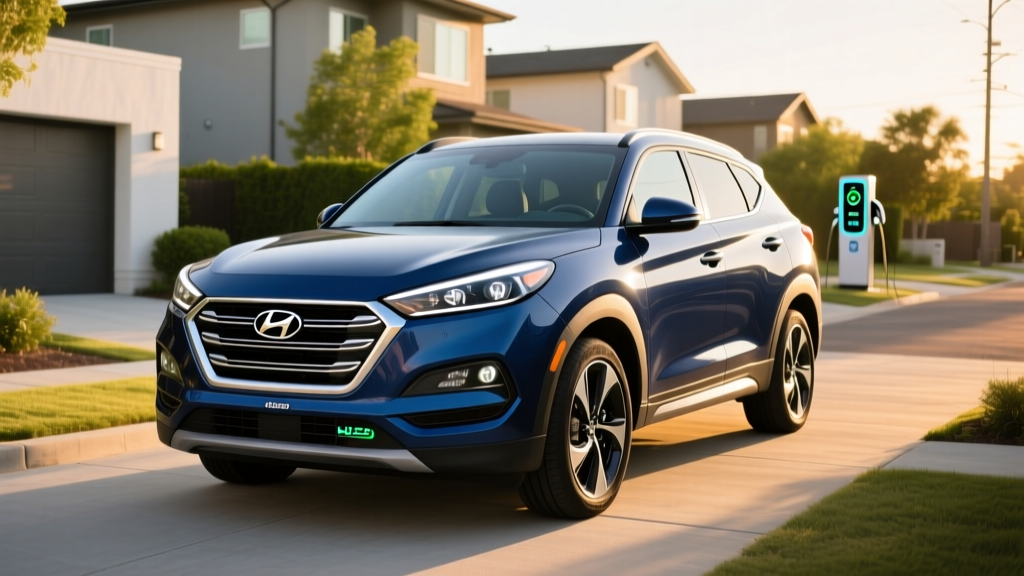
The 2024 Hyundai Tucson Hybrid occupies a pragmatic middle ground for buyers who want electrified efficiency without plugging in. With an EPA-estimated 38 MPG combined, a 226-horsepower turbocharged powertrain, and a starting MSRP around $32,575, it undercuts most plug-in hybrids and full EVs on upfront cost while still cutting fuel consumption roughly 40% compared to the gas-only Tucson. If you lack reliable home charging access or regularly drive long highway stretches where plug-in advantages diminish, the conventional hybrid (HEV) version makes compelling financial sense.
Hyundai also offers the Tucson Plug-in Hybrid (PHEV) for buyers who can charge at home and want short electric-only commutes. We cover both variants here so you can match the right powertrain to your driving pattern.
HEV vs PHEV: Which Tucson Electrified Model Are We Talking About?
Hyundai sells two electrified Tucson variants, and confusing them is the most common buyer mistake. Here is the fundamental split:
| Feature | Tucson Hybrid (HEV) | Tucson Plug-in Hybrid (PHEV) |
|---|---|---|
| Plugs in to charge? | No — self-charging via regenerative braking and engine | Yes — has a charge port for Level 1/Level 2 AC charging |
| Battery capacity | 1.49 kWh (small buffer) | 13.8 kWh usable |
| Electric-only driving | Brief low-speed EV mode only (under ~1 mile) | EPA-est. 33 miles electric-only |
| Combined horsepower | 226 hp / 258 lb-ft torque | 261 hp / 258 lb-ft torque |
| EPA combined MPG | 38 MPG (combined) | 35 MPG (gas mode) + 80 MPGe (electric) |
| Federal tax credit (§30D) | Not eligible | Not eligible for new vehicles (sourcing rules) |
| Starting MSRP (2024) | $32,575 (Blue trim) | $39,025 (SEL trim) |
The HEV is the volume seller and the focus of this review. The PHEV variant suits a narrower use case — specifically, drivers with short commutes (under 33 miles round-trip) and access to Level 2 home charging who want EV-like daily driving with a gas backup for road trips.
Fuel Economy: EPA Estimates vs Real-World MPG
According to fueleconomy.gov, the 2024 Hyundai Tucson Hybrid Blue trim earns an EPA-estimated 38 MPG combined, broken down as:
| Driving Cycle | EPA Estimate | Real-World Expectation |
|---|---|---|
| City | 38 MPG | 39–42 MPG (hybrids often beat EPA in stop-and-go) |
| Highway | 38 MPG | 34–37 MPG (turbo engine works harder at sustained speed) |
| Combined | 38 MPG | 36–40 MPG depending on driving mix |
Hyundai's hybrid system uses a 1.6-liter turbocharged inline-4 paired with a 47.7 kW electric motor and a 6-speed automatic transmission — not a CVT. This matters: the conventional automatic delivers more natural acceleration feel than the rubber-band sensation common in Toyota's hybrid CVT setups, though it sacrifices a fraction of city efficiency.
Real-world note: Owner reports and independent testing consistently show the Tucson Hybrid exceeding its EPA city estimate in urban stop-and-go driving, where regenerative braking recovers the most energy. Highway-heavy drivers should expect 34–37 MPG, especially with roof cargo boxes or towing. Cold-weather operation (below freezing) typically reduces efficiency by 5–10% as the engine runs more frequently for cabin heat.
Tucson PHEV: Electric-Only Range and MPGe
If you opt for the Tucson Plug-in Hybrid, the 13.8 kWh battery delivers an EPA-estimated 33 miles of electric-only range. Once the battery depletes, the vehicle operates as a conventional hybrid at 35 MPG combined. Total system range exceeds 400 miles with a full tank and full charge.
Charging the PHEV takes approximately 2 hours on a Level 2 (240V) home charger at 7.2 kW, or about 7 hours on a standard 120V Level 1 outlet. The Tucson PHEV does not support DC fast charging — a notable omission compared to the Toyota RAV4 Prime, which also lacks DC fast-charge capability. For a 33-mile electric range, overnight Level 2 charging is sufficient for most daily commutes.
Powertrain and Performance Specs
| Specification | Tucson HEV | Tucson PHEV |
|---|---|---|
| Engine | 1.6L turbo I-4 | 1.6L turbo I-4 |
| Electric motor | 47.7 kW (64 hp) | 66.9 kW (90 hp) |
| Combined system output | 226 hp / 258 lb-ft | 261 hp / 258 lb-ft |
| Transmission | 6-speed automatic | 6-speed automatic |
| Drivetrain | AWD (standard) | AWD (standard) |
| 0–60 mph (est.) | ~7.1 seconds | ~6.3 seconds |
| Towing capacity | 2,000 lbs | 2,000 lbs |
| Cargo volume (behind 2nd row) | 38.7 cu ft | 38.5 cu ft |
Both variants come standard with HTRAC all-wheel drive, which uses the rear electric motor to provide torque to the rear axle. This eliminates the mechanical driveshaft, improving packaging and efficiency. The PHEV's larger motor gives it noticeably stronger acceleration, making it the more engaging driver's choice if budget allows.
Pricing, Trims, and Tax Credit Eligibility
The 2024 Tucson Hybrid is offered in three trims:
- Blue: $32,575 MSRP — base hybrid with 18-inch wheels, 10.25-inch infotainment, heated front seats
- SEL Convenience: $34,525 MSRP — adds panoramic sunroof, power liftgate, leatherette seats
- Limited: $38,725 MSRP — adds leather, ventilated front seats, Bose audio, surround-view camera, Highway Driving Assist
The Tucson PHEV starts at $39,025 (SEL) and tops out at $45,435 (Limited).
Federal Tax Credit Status
Neither the Tucson Hybrid nor the Tucson Plug-in Hybrid qualifies for the federal §30D new clean vehicle tax credit. The HEV is ineligible because it is not a plug-in vehicle. The PHEV, despite having a plug, fails the IRS battery sourcing and critical minerals requirements for 2024, as Hyundai sources battery components from suppliers that do not meet the phased-in thresholds.
Some state-level incentives may apply — for instance, certain states offer rebates for PHEVs regardless of federal eligibility. Check your state energy office or department of environmental quality for current programs. A tax professional can confirm whether any local credits apply to your specific situation.
Battery Warranty, Reliability, and Replacement Cost
Hyundai Hybrid/PHEV Battery Warranty: 10 years / 100,000 miles (whichever comes first) for the high-voltage lithium-ion battery pack. This covers defects and capacity loss below a manufacturer-specified threshold. Hyundai's hybrid battery warranty is among the longest in the segment — Toyota offers 10 years/150,000 miles on models from 2020 onward.
The Tucson Hybrid's 1.49 kWh battery is small and operates within a narrow state-of-charge window (roughly 40–60% SoC in normal driving), which dramatically reduces degradation stress. Lithium-ion batteries degrade fastest at extreme SoC levels (near 0% or 100%) and high temperatures — neither condition applies to a conventional hybrid's buffer strategy.
Reliability data: Hyundai's turbocharged 1.6L hybrid powertrain has been in production since the 2022 model year Tucson redesign. Early reliability data from owner surveys and IIHS safety testing (the 2024 Tucson earned Top Safety Pick status) show no systemic battery or hybrid-system failures. The most common complaints relate to infotainment software, not the powertrain.
What Does Battery Replacement Cost?
If the hybrid battery fails outside warranty coverage (after 10 years or 100,000 miles), replacement costs typically range from $2,000 to $3,500 for the HEV pack, including parts and labor. The PHEV's larger 13.8 kWh battery would cost significantly more — estimated $5,000–$8,000. However, hybrid battery failures before 150,000 miles remain uncommon based on industry-wide data from the Toyota Prius fleet, which has accumulated over two decades of real-world longevity evidence.
Individual cells can sometimes be replaced rather than the entire pack, reducing out-of-warranty costs. Independent hybrid specialist shops (not just dealerships) increasingly offer this service.
Who Should Choose the Tucson Hybrid vs a PHEV or Full EV?
Choose the Tucson Hybrid (HEV) if:
- You cannot install a Level 2 home charger (apartment, condo, street parking)
- Your budget caps around $35,000–$39,000
- You drive a mix of city and highway and want consistent 36–40 MPG without behavioral changes
- You want AWD standard without the price premium of a PHEV or EV
- You take frequent road trips exceeding 300 miles and don't want to plan around charging stops
Choose the Tucson PHEV if:
- You have Level 2 home charging and a daily commute under 33 miles round-trip
- You want EV-quiet, zero-tailpipe-emission daily driving with gas-engine backup for longer trips
- You can absorb the ~$6,500 price premium over the HEV and recoup it through electricity savings over 5+ years
- Your state offers a PHEV rebate that narrows the price gap
Choose a full EV (like the Hyundai Ioniq 5 or Tesla Model Y) if:
- You have reliable home Level 2 charging
- Your daily driving rarely exceeds 250 miles, or you're willing to plan DC fast-charge stops on road trips
- You want to eliminate all tailpipe emissions and reduce maintenance (no oil changes, fewer moving parts)
- You qualify for the §30D federal tax credit on an eligible EV model, narrowing the effective price gap
Tucson Hybrid Pros
- 38 MPG combined — strong for a compact AWD SUV
- 226 hp provides confident merging and passing power
- Standard AWD with no fuel-economy penalty vs FWD
- 10-year/100,000-mile hybrid battery warranty
- No charging infrastructure required
- Competitive starting price at $32,575
Tucson Hybrid Cons
- No federal tax credit eligibility
- Highway MPG drops to ~34–37 in real-world driving
- 2,000-lb towing capacity trails some competitors
- Rear cargo slightly reduced vs gas-only Tucson
- Turbo engine requires premium fuel for maximum output (regular acceptable with reduced power)
Frequently Asked Questions
How many MPG does the 2024 Hyundai Tucson Hybrid actually get?
The EPA rates the Tucson Hybrid Blue at 38 MPG city, 38 MPG highway, and 38 MPG combined. In real-world testing, city drivers frequently see 39–42 MPG thanks to regenerative braking. Highway-heavy drivers should expect 34–37 MPG. Higher trims (SEL Convenience, Limited) with larger 19-inch wheels drop to 37 MPG combined.
How far can the Tucson PHEV go on electric only?
The 2024 Tucson Plug-in Hybrid delivers an EPA-estimated 33 miles of electric-only range from its 13.8 kWh battery. This covers most daily commutes. Once depleted, the vehicle operates as a conventional hybrid at 35 MPG combined, giving total system range of over 400 miles.
Does the 2024 Tucson Hybrid qualify for any tax credit?
The conventional Tucson Hybrid (HEV) does not qualify for the federal §30D tax credit because it is not a plug-in vehicle. The Tucson PHEV also fails to qualify due to battery sourcing requirements under current IRS rules. Check the IRS qualified vehicles list for the most current eligibility, and consult a tax professional for your specific situation. Some state incentives may apply to PHEVs.
Is the Tucson Hybrid reliable, and what does battery replacement cost?
The Tucson Hybrid's powertrain has shown no systemic reliability issues since its 2022 introduction. Hyundai covers the hybrid battery for 10 years/100,000 miles. Out-of-warranty HEV battery replacement typically costs $2,000–$3,500; PHEV replacement runs $5,000–$8,000. Industry data suggests hybrid batteries commonly last 150,000+ miles before significant degradation.
Does the Tucson Hybrid need to be plugged in?
No. The conventional Tucson Hybrid (HEV) charges its small 1.49 kWh battery through regenerative braking and the gasoline engine. You never plug it in — just fuel it with gasoline like a conventional car. Only the Tucson Plug-in Hybrid (PHEV) variant has a charge port and benefits from being plugged into a Level 1 or Level 2 charger.
How does the Tucson Hybrid compare to the Toyota RAV4 Hybrid?
The RAV4 Hybrid achieves 41 MPG combined (3 MPG more than the Tucson) and starts at a similar price point. However, the Tucson offers more horsepower (226 vs 219), a conventional 6-speed automatic instead of a CVT, and Hyundai's longer 10-year/100,000-mile powertrain warranty vs Toyota's 5-year/60,000-mile basic coverage. The choice often comes down to brand preference, interior design taste, and whether you prioritize maximum MPG (RAV4) or driving refinement (Tucson).