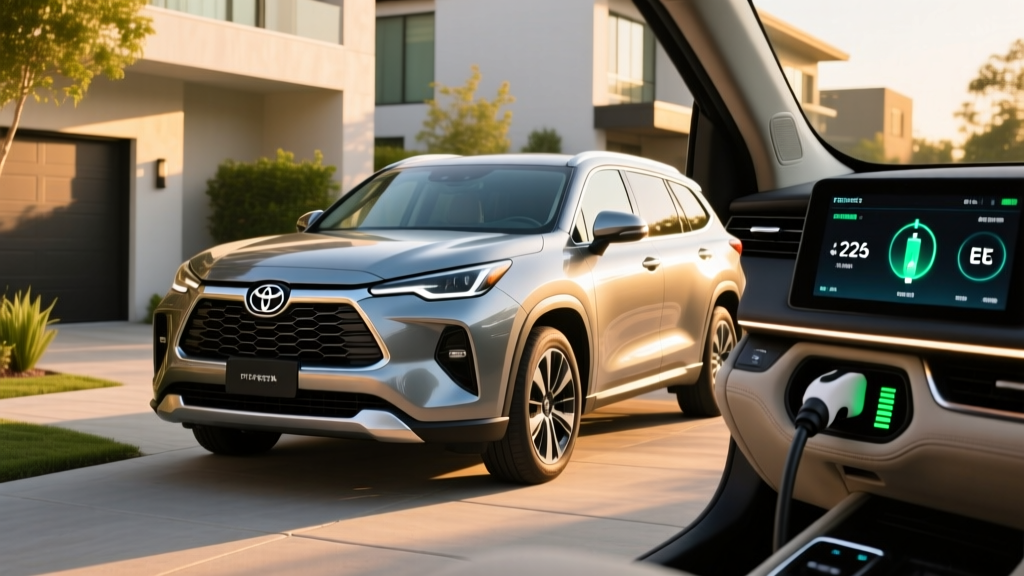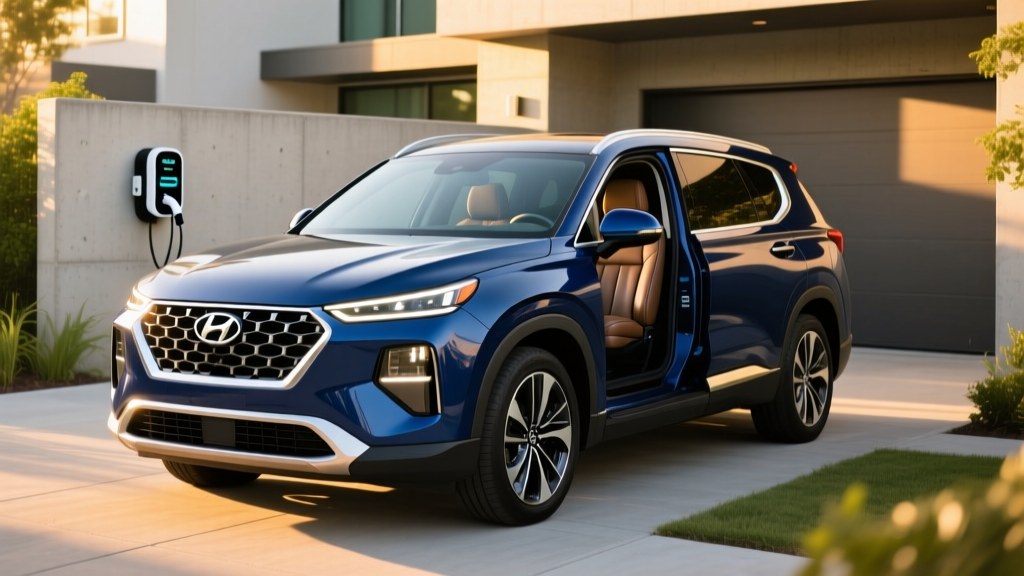
The 2026 Hyundai Santa Fe Plug-In Hybrid occupies a compelling middle ground: 33 miles of electric-only commuting backed by a turbocharged gasoline engine for longer trips, all wrapped in a boxy, three-row SUV chassis. For families who want electric daily driving without range anxiety on road trips, the Santa Fe PHEV makes a strong case — but how do the real-world numbers stack up against the EPA sticker?
This guide breaks down the powertrain, fuel economy, charging logistics, pricing, and tax-credit eligibility so you can decide whether this PHEV fits your garage — or whether a conventional hybrid or full battery-electric vehicle makes more sense.
Hyundai Santa Fe PHEV vs. HEV: What's the Difference?
Hyundai sells the Santa Fe in two electrified flavors for 2026. Understanding the distinction is critical before you step into a dealership.
| Feature | Santa Fe Hybrid (HEV) | Santa Fe Plug-In Hybrid (PHEV) |
|---|---|---|
| Plug-in charging required? | No — self-charging via regen & engine | Yes — plug in to unlock EV range |
| Battery capacity | 1.49 kWh | 13.8 kWh (usable ~11.5 kWh) |
| Electric-only range | None (EV assist only) | 33 miles (EPA est.) |
| Combined horsepower | 232 HP | 261 HP |
| EPA combined fuel economy | 35 MPG combined | 79 MPGe (EV+gas) / 33 MPG (gas only) |
| Starting MSRP | ~$39,500 | ~$45,250 |
The conventional HEV is ideal if you lack access to a home charger. The PHEV rewards owners who can plug in nightly with dramatically lower fuel costs on short commutes — but its premium only pays off if you actually use the electric range.
Powertrain and Performance Specs
The 2026 Santa Fe PHEV pairs a 1.6-liter turbocharged four-cylinder engine with a more powerful electric motor integrated into the six-speed automatic transmission. Combined output is 261 horsepower and 271 lb-ft of torque, routed through Hyundai's HTRAC all-wheel-drive system.
| Specification | 2026 Santa Fe PHEV |
|---|---|
| Engine | 1.6L Turbocharged I4 |
| Electric motor | 72 kW (97 HP) permanent-magnet synchronous |
| Combined system output | 261 HP / 271 lb-ft |
| Transmission | 6-speed automatic |
| Drivetrain | HTRAC AWD (standard) |
| Battery chemistry | NMC (Nickel Manganese Cobalt) lithium-ion |
| Battery capacity | 13.8 kWh total / ~11.5 kWh usable |
| EPA electric-only range | 33 miles |
| Total combined range (EV + gas) | ~430 miles |
| 0-60 mph | ~7.8 seconds |
| Towing capacity | 2,000 lbs |
| Cargo volume (behind 2nd row) | 36.4 cu ft |
The 0-60 time won't embarrass you at a merge, and the electric motor's instant torque makes city driving feel punchier than the numbers suggest. HTRAC AWD is standard across all PHEV trims — a welcome inclusion for snow-belt buyers.
Fuel Economy: EPA Numbers vs. Real-World MPG
The EPA rates the 2026 Santa Fe PHEV at 79 MPGe when operating in combined EV and gasoline mode, and 33 MPG combined (30 city / 35 highway) once the battery is depleted and the vehicle runs as a conventional hybrid. According to fueleconomy.gov, the total driving range is approximately 430 miles.
| Mode | City | Highway | Combined |
|---|---|---|---|
| Charge-depleting (EV+gas) | 79 MPGe | ||
| Charge-sustaining (gas only) | 30 MPG | 35 MPG | 33 MPG |
Owners with commutes under 30 miles round-trip who charge nightly report using gasoline only on weekend road trips. If that's you, your effective "MPG" is essentially infinite for daily driving — your gas bill might be $15-$25 per month.
Charging: How to Replenish the 13.8 kWh Battery
The Santa Fe PHEV uses a standard J1772 connector for AC charging. Here's what you need to know about getting electrons back into the pack:
| Charging Level | Power Source | Charge Rate | 0-100% Time |
|---|---|---|---|
| Level 1 (120V) | Standard household outlet | ~1.4 kW | ~9-10 hours |
| Level 2 (240V) | Home wallbox or public AC station | ~7.2 kW | ~2 hours |
| DC Fast Charge | — | Not supported | N/A |
No DC fast charging. This is a deliberate engineering choice common to most PHEVs. The 13.8 kWh battery is small enough that Level 2 fully replenishes it in about two hours, and overnight Level 1 charging handles most daily needs. If you need road-trip fast charging, a full BEV or the hybrid mode's gas engine is your answer.
For home charging, a standard 120V outlet delivers roughly 4-5 miles of EV range per hour of charging — enough to refill 33 miles overnight in 8-9 hours. A Level 2 home charger installation typically costs $500-$1,500 (equipment plus electrician labor), depending on your panel capacity and conduit run. Consult a licensed electrician for a site-specific quote.
Pricing, Trims, and Tax Credit Eligibility
The 2026 Santa Fe Plug-In Hybrid is offered in SEL Premium and Limited trims. Pricing (before destination):
- SEL Premium: ~$45,250 MSRP
- Limited: ~$49,500 MSRP
Federal Tax Credit: §30D Eligibility
Under current IRS rules for the §30D Clean Vehicle Credit, qualifying PHEVs may be eligible for up to $7,500 — but eligibility is far from guaranteed. Several criteria must be met:
- Battery capacity: Must be ≥ 7 kWh — the Santa Fe PHEV's 13.8 kWh pack qualifies.
- MSRP cap: SUVs must be ≤ $80,000 — both trims qualify.
- Buyer income cap: AGI ≤ $150,000 (single) / $300,000 (joint) — varies by filer.
- Critical minerals & battery component sourcing: Must meet annual thresholds set by the IRS; these requirements tighten yearly and can affect credit amount ($3,750 for minerals, $3,750 for components, or both for $7,500).
- Point-of-sale transfer: Eligible buyers can transfer the credit to the dealer for an immediate price reduction at purchase.
Critical caveat: Battery sourcing requirements have disqualified several Hyundai/Kia PHEVs from the full credit in prior years. Before purchasing, verify current eligibility on the IRS clean vehicle credit page or consult a tax professional. Do not assume $7,500 — you may qualify for $3,750 or $0 depending on the current sourcing determination for this specific model.
Battery Warranty, Reliability, and Replacement Cost
Hyundai's hybrid system has proven durable across the Tucson PHEV, Ioniq, and Sonata Hybrid lineages. The 13.8 kWh NMC pack is conservatively managed — Hyundai buffers roughly 2.3 kWh at the top and bottom of the pack to reduce stress on the cells and slow degradation.
Battery replacement cost: If the pack fails outside warranty, expect $6,000-$9,000 for a replacement including labor, based on current Hyundai PHEV parts pricing. However, with the 10-year/100,000-mile warranty and typical PHEV usage patterns (shallow daily cycles rather than deep BEV-style discharges), most owners will never face this expense. Data from long-term Hyundai hybrid owners suggests less than 5% battery replacement rates within the warranty window.
For reliability ratings, IIHS and J.D. Power consistently rank Hyundai's hybrid powertrains above average, and the Santa Fe carries strong crash-test ratings.
Who Should Choose the Santa Fe PHEV?
- Your daily round-trip commute is under 35 miles and you can charge at home nightly.
- You need three rows for family but want to minimize gas consumption on school runs and errands.
- You take road trips where EV charging infrastructure is sparse or unreliable.
- You live in a cold climate where BEV range loss is a concern.
- You rent, live in an apartment, or otherwise cannot install a home charger.
- Your commute is mostly highway driving over 50+ miles — the PHEV's electric advantage diminishes.
- You want to save $5,000+ on purchase price and don't need EV mode.
- You have reliable home Level 2 charging and your trips rarely exceed 250 miles.
- You want zero tailpipe emissions and minimal maintenance (no oil changes, no engine).
- You want DC fast charging for road trips at 200+ kW speeds.
Pros and Cons at a Glance
- 33 miles EV range covers most daily commutes gas-free
- Standard AWD across all PHEV trims
- 261 HP — more power than the HEV variant
- 10-year/100,000-mile battery warranty
- Three-row seating with 36.4 cu ft cargo space
- 430+ mile total range eliminates road-trip anxiety
- No DC fast charging capability
- ~$5,750 premium over the conventional HEV
- Electric range drops significantly in cold weather
- Third row is tight for adults on long trips
- Federal tax credit eligibility uncertain due to sourcing rules
- Level 1 charging takes 9-10 hours for a full charge
Frequently Asked Questions
How many MPG does the Hyundai Santa Fe Plug-In Hybrid get?
Once the battery is depleted, the Santa Fe PHEV operates as a conventional hybrid delivering an EPA-estimated 33 MPG combined (30 city / 35 highway). While using its electric range first, it achieves 79 MPGe combined. Real-world city driving often yields 32-36 MPG thanks to aggressive regenerative braking in stop-and-go traffic.
How far can the Santa Fe PHEV go on electric only?
The EPA rates it at 33 miles of electric-only range. In mild weather (50-80°F) with moderate speeds, owners report 30-35 miles. In freezing temperatures or sustained highway driving above 70 mph, expect 23-28 miles before the gasoline engine engages.
Does the Hyundai Santa Fe PHEV qualify for a federal tax credit?
It may qualify for up to $7,500 under IRS §30D, but eligibility depends on battery component and critical-mineral sourcing rules that change annually. The MSRP and battery capacity thresholds are met. Buyer income caps apply ($150K single / $300K joint). Always verify current eligibility at irs.gov or with a tax professional before purchasing.
Is the Santa Fe PHEV reliable, and what does a battery replacement cost?
Hyundai's hybrid powertrain has a strong reliability record, and the PHEV battery is backed by a 10-year/100,000-mile warranty. Out-of-warranty battery replacement runs $6,000-$9,000, but failure rates within the warranty period are low based on historical Hyundai hybrid data.
Do I need to plug in the Santa Fe PHEV every night?
You don't have to — the vehicle operates perfectly as a conventional hybrid without plugging in, delivering 33 MPG. But if you don't plug in, you're paying a $5,750 price premium over the HEV for nothing. The PHEV only makes financial sense with regular plug-in charging to exploit the 33-mile EV range.
Can the Santa Fe PHEV tow?
Yes, the 2026 Santa Fe PHEV is rated for 2,000 lbs of towing capacity with the factory hitch — sufficient for a small utility trailer, a pair of jet skis, or a lightweight pop-up camper. Towing will significantly reduce both EV range and gas-mode MPG.