Is a Hyundai Santa Fe Hybrid Lease the Smartest Family-SUV Move in 2026?
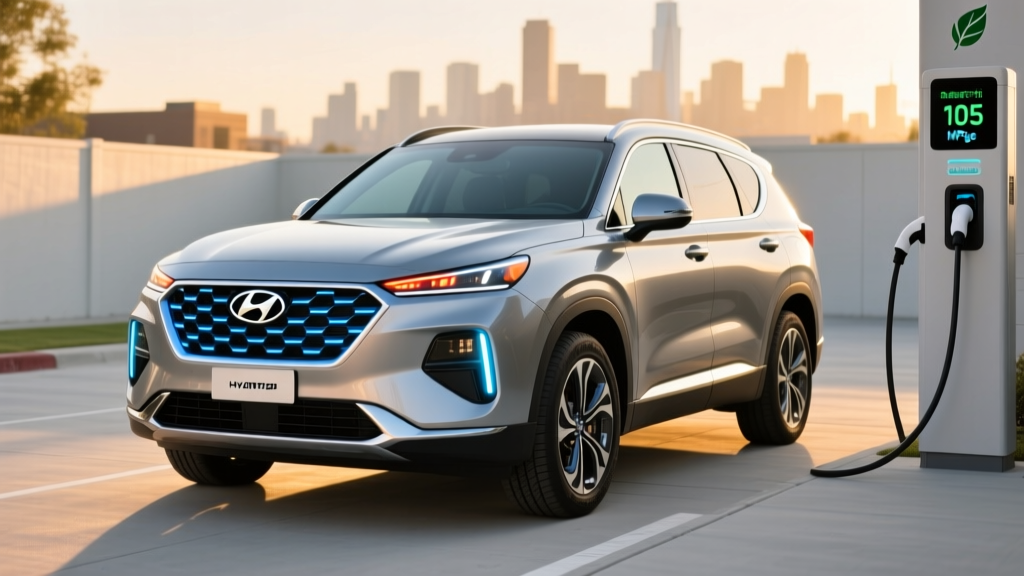
Three-row SUVs that sip fuel without sacrificing cargo space or highway comfort are rare. The 2026 Hyundai Santa Fe Hybrid occupies a specific sweet spot: a midsize, family-oriented crossover that delivers genuine hybrid efficiency without the premium of a full plug-in hybrid (PHEV) or the range anxiety some buyers still associate with battery-electric vehicles. If you've been searching for a Hyundai Santa Fe Hybrid lease, this guide covers every number that matters — from real-world MPG and powertrain specs to warranty coverage and whether this hybrid makes more financial sense than its PHEV sibling or a conventional gas SUV.
Before we get to the numbers, one critical distinction every buyer must understand: the Santa Fe is available as both a conventional hybrid (HEV) and a plug-in hybrid (PHEV). They share a nameplate but operate very differently.
HEV vs PHEV: Which Santa Fe Powertrain Fits Your Life?
| Attribute | Santa Fe Hybrid (HEV) | Santa Fe Plug-In Hybrid (PHEV) |
|---|---|---|
| Plugs in to charge? | No — self-charging via regen & engine | Yes — 1.38 kWh usable on Level 2 |
| Electric-only range | Not applicable (EV assist only at low speeds) | ~31 miles EPA electric-only |
| EPA combined MPG | 36 MPG combined | 79 MPGe combined (electric + gas) |
| Combined horsepower | 232 hp | 261 hp |
| Battery capacity | 1.49 kWh (small buffer) | 13.8 kWh gross (~11.1 kWh usable) |
| Federal tax credit (§30D) | Not eligible | Eligible up to $7,500 (rules apply) |
| DC fast charging | N/A | No — Level 2 AC only |
The short version: The HEV is a no-plug, grab-and-go hybrid ideal for apartment dwellers or anyone without home charging. The PHEV rewards buyers who can plug in nightly and whose daily commute falls under ~30 miles — effectively turning weekday driving into electric-only operation while keeping a gas engine for road trips.
How Many MPG Does the Santa Fe Hybrid Actually Get?
Hyundai rates the 2026 Santa Fe Hybrid with the following EPA fuel-economy figures:
| Driving Cycle | EPA Estimate | Real-World Expectation |
|---|---|---|
| City | 35 MPG | 36–39 MPG (hybrids excel in stop-and-go) |
| Highway | 35 MPG | 31–34 MPG (aerodynamic drag reduces regen benefit) |
| Combined | 36 MPG | 33–37 MPG depending on terrain and climate |
A key advantage of conventional hybrids over gas-only vehicles is city driving. Every time you brake, the regenerative braking system recovers kinetic energy and feeds it back into the small battery pack, which then assists the engine on the next acceleration. This is why the Santa Fe Hybrid's city MPG matches its highway figure — unusual for a 4,300-pound SUV. In real-world suburban driving with frequent stops, many owners report exceeding the EPA city estimate by 2–4 MPG.
Highway driving is a different story. At sustained 70–80 mph speeds, regenerative braking contributes almost nothing, and the turbocharged 1.6-liter four-cylinder engine does most of the work. Expect highway fuel economy to dip to the low 30s on long interstate runs, particularly in cold weather where the engine runs longer to heat the cabin.
For context, the non-hybrid gas-only Santa Fe (2.5T, 277 hp) achieves an EPA 22 MPG combined — meaning the hybrid saves roughly 14 MPG, or about 160 gallons of fuel per year at 12,000 miles driven annually.
Powertrain Specs: What Moves the Santa Fe Hybrid?
| Specification | Santa Fe Hybrid (HEV) |
|---|---|
| Engine | 1.6L turbocharged GDI 4-cylinder |
| Engine output | 178 hp / 195 lb-ft torque |
| Electric motor | 47.7 kW (64 hp) integrated into transmission |
| Combined system output | 232 hp / 271 lb-ft torque |
| Transmission | 6-speed automatic (no CVT) |
| Drivetrain | HTRAC AWD standard |
| 0–60 mph | ~7.6 seconds (est.) |
| Towing capacity | 2,000 lbs (braked) |
| Cargo volume (behind 3rd row) | 14.6 cu ft |
| Cargo volume (3rd row folded) | 40.5 cu ft |
Hyundai uses a traditional 6-speed automatic rather than a CVT, which gives the Santa Fe Hybrid a more natural driving feel under acceleration — no rubber-band droning. The HTRAC all-wheel-drive system is standard on all hybrid trims, using the electric motor to drive the rear axle when slip is detected. This is worth noting for buyers in snow-belt states who might otherwise pay extra for AWD on competing SUVs.
Santa Fe PHEV: Electric-Only Range, Battery, and Charging
If your driving pattern involves short daily commutes with home charging access, the Santa Fe Plug-In Hybrid deserves a closer look. Here are the critical PHEV-specific numbers:
- Electric-only range: 31 miles (EPA) — enough to cover most daily commutes without burning a drop of gas
- Total combined range: ~430 miles (electric + full gas tank)
- Battery capacity: 13.8 kWh gross (~11.1 kWh usable)
- Level 2 charging time (240V, 32A): ~3 hours 15 minutes from 0–100%
- DC fast charging: Not available — the PHEV charges only via Level 1 (120V, ~11 hours) or Level 2 (240V)
- Combined system output: 261 hp / 271 lb-ft torque
- MPGe (electric + gas combined): 79 MPGe
The lack of DC fast charging is a deliberate engineering trade-off. PHEV batteries are small enough that Level 2 charging fully replenishes them in just over 3 hours, making DC infrastructure unnecessary for typical overnight or workplace charging. However, this means you cannot top up at highway fast-charging stations during road trips — the gas engine handles those miles.
Pricing, Lease Expectations, and Tax Credit Eligibility
Here's where the lease equation gets interesting for 2026:
| Trim | MSRP (HEV) | MSRP (PHEV) |
|---|---|---|
| SE / SEL (base) | $39,200 | $45,800 |
| Limited | $43,800 | $49,200 |
| Calligraphy (top) | $47,500 | $52,500 |
Lease pricing for the Santa Fe Hybrid typically ranges from $399–$549/month (36 months, $3,000 due at signing) depending on trim and regional incentives. The PHEV commands roughly $60–$90/month more on a lease, but that gap narrows significantly if you qualify for the federal tax credit.
Federal Tax Credit: HEV vs PHEV
§30D Clean Vehicle Credit — Key Rules for 2026:
- HEV (conventional hybrid): Not eligible for the §30D credit. The credit applies only to plug-in vehicles with ≥7 kWh battery capacity.
- PHEV: Potentially eligible for up to $7,500, but eligibility depends on three IRS requirements: (1) buyer income below $150K single / $300K joint, (2) MSRP under $80,000 for SUVs, and (3) battery critical-mineral and component sourcing thresholds that change annually.
- Lease loophole (§45W): When you lease (rather than buy), the leasing company — not you — claims the commercial clean vehicle credit. Many automakers pass this savings through as a "lease cash" incentive, effectively making the credit available regardless of your income or the vehicle's sourcing requirements. Confirm with your dealer whether Hyundai is passing through lease credit savings in your market.
Always verify current-year eligibility at IRS.gov before signing.
Reliability, Battery Warranty, and Long-Term Ownership Costs
Hybrid battery longevity remains one of the top concerns for first-time hybrid buyers. Here's what the data shows:
Hyundai Hybrid/PHEV Battery Warranty:
- HEV battery: 10 years / 100,000 miles (whichever comes first)
- PHEV battery: 10 years / 100,000 miles
- Hybrid system components (motor, inverter, control unit): 10 years / 100,000 miles
- Powertrain warranty: 10 years / 100,000 miles
- Capacity retention threshold: Hyundai typically replaces the battery if capacity drops below ~70% within the warranty period
Hyundai's 10-year/100,000-mile powertrain and hybrid-battery warranty is among the strongest in the segment, outlasting Toyota's 10-year/150,000-mile hybrid battery coverage on some trims but matching it on core components. In practice, modern hybrid batteries rarely require replacement before 150,000–200,000 miles. Toyota's Prius fleet has demonstrated that nickel-metal-hydride and lithium-ion hybrid packs routinely exceed 200,000 miles with less than 15% degradation.
Replacement cost if out of warranty: A Santa Fe hybrid battery pack replacement runs approximately $2,500–$4,000 (HEV) or $6,000–$9,000 (PHEV) including labor, based on current dealer pricing. The HEV pack is smaller and less expensive; the PHEV's 13.8 kWh pack carries a higher parts cost.
For reliability ratings, the Santa Fe has performed well in IIHS crash testing, earning top marks in moderate overlap front and side impact evaluations. Hyundai's overall brand reliability has improved significantly since the 2020 model year, though some owners report minor infotainment glitches that are typically resolved via over-the-air updates.
Real-World Ownership: Who Should Lease the Santa Fe Hybrid?
Pros
- 36 MPG combined — genuine savings vs. gas-only SUVs (~$600–$800/year at 12K miles)
- Standard AWD on all hybrid trims (no extra-cost package)
- No plug-in required — works for apartment/condo dwellers
- 10-year/100K hybrid battery warranty
- Three-row seating with 40.5 cu ft cargo (row 3 folded)
- Traditional 6-speed auto — no CVT drone
Cons
- HEV not eligible for §30D federal tax credit (only PHEV qualifies)
- Highway MPG drops to low 30s at sustained 75+ mph
- 2,000-lb towing limit — below V6 competitors
- Third row tight for adults on long trips
- PHEV lacks DC fast charging
Decision Framework: Hybrid vs PHEV vs Full EV
Choose the Santa Fe HEV if: You don't have reliable home or workplace charging, your daily driving exceeds 40 miles, you want maximum simplicity, or you live in an area with limited public charging infrastructure.
Choose the Santa Fe PHEV if: You can install a Level 2 charger at home, your daily commute is under 30 miles round-trip, you want to drive electric most weekdays while keeping gas flexibility for road trips, and you want to potentially capture the federal tax credit via a lease.
Choose a full EV (e.g., Hyundai Ioniq 5, Kia EV9) if: You have home charging, your daily driving is under 250 miles, you want zero tailpipe emissions, minimal maintenance (no oil changes, no gas engine), and you're ready to commit to electric-only operation.
For the specific question of whether to lease or buy: a lease makes strong sense for the Santa Fe Hybrid if you want to lock in current incentive structures, avoid long-term battery degradation risk (the warranty covers you either way, but a 36-month lease keeps you under full coverage), and maintain flexibility to switch to a full EV as charging infrastructure improves. The §45W commercial credit lease pass-through can also make the PHEV variant significantly more affordable on a monthly basis than a direct purchase for buyers who exceed the §30D income caps.
Frequently Asked Questions
How many MPG does the 2026 Hyundai Santa Fe Hybrid get in real driving?
The EPA rates the Santa Fe Hybrid at 35 city / 35 highway / 36 combined MPG. In real-world suburban driving with moderate stop-and-go traffic, expect 36–39 MPG in the city (hybrids exceed EPA in stop-and-go thanks to regenerative braking). On sustained highway trips at 70–80 mph, expect 31–34 MPG. Cold weather (below 30°F) can reduce combined economy by 3–5 MPG due to increased engine runtime for cabin heating.
How far can the Santa Fe PHEV go on electric only?
The EPA rates the Santa Fe Plug-In Hybrid at 31 miles of electric-only range. Real-world results vary: gentle suburban driving at 35–45 mph can yield 33–35 miles, while highway speeds or cold weather may reduce that to 24–27 miles. Once the battery depletes, the PHEV operates as a conventional hybrid with an EPA rating of approximately 33 MPG combined on gas alone.
Does the Hyundai Santa Fe Hybrid qualify for any tax credits?
The conventional hybrid (HEV) does not qualify for the federal §30D Clean Vehicle Credit — that credit requires a plug-in vehicle with at least 7 kWh of battery capacity. The Santa Fe PHEV may qualify for up to $7,500 under §30D, subject to buyer income limits ($150K single / $300K joint), MSRP caps ($80K for SUVs), and battery sourcing requirements. If you lease rather than buy, the §45W commercial credit may apply, and many dealers pass the savings through as reduced monthly payments regardless of your income. Always confirm with your tax professional and dealer.
Is the Santa Fe Hybrid reliable, and what does battery replacement cost?
Hyundai covers the hybrid battery and all hybrid-system components for 10 years or 100,000 miles. Modern hybrid batteries from major manufacturers routinely last 150,000–200,000+ miles with minimal degradation. If replacement is needed out of warranty, expect $2,500–$4,000 for the HEV pack and $6,000–$9,000 for the PHEV pack (including labor). The conventional 1.6L turbo engine and 6-speed automatic are well-proven components with strong reliability records in Hyundai's Tucson and Sonata hybrid applications.
Should I lease the HEV or PHEV version?
If you lack home charging or drive more than 40 miles daily, the HEV is the simpler, more cost-effective choice — no plug, no behavior change, just better MPG. If you can charge at home and your weekday driving stays under 30 miles, the PHEV lets you drive electric most days while keeping gas flexibility, and the lease structure may allow you to capture the federal tax credit via the §45W commercial vehicle provision. On a pure monthly-cost basis, the PHEV lease (with credit pass-through) can sometimes undercut the HEV lease despite the higher MSRP.
What's the difference between leasing and buying for the tax credit?
When you buy a PHEV, you personally claim the §30D credit on your tax return — subject to income caps, MSRP limits, and battery sourcing rules. When you lease, the leasing company (Hyundai Motor Finance) claims the §45W commercial clean vehicle credit. Many automakers pass this savings to the lessee as a capitalized-cost reduction ("lease cash"), effectively making the credit available without income or sourcing restrictions. Ask your dealer explicitly whether the current lease offer includes credit pass-through before signing.