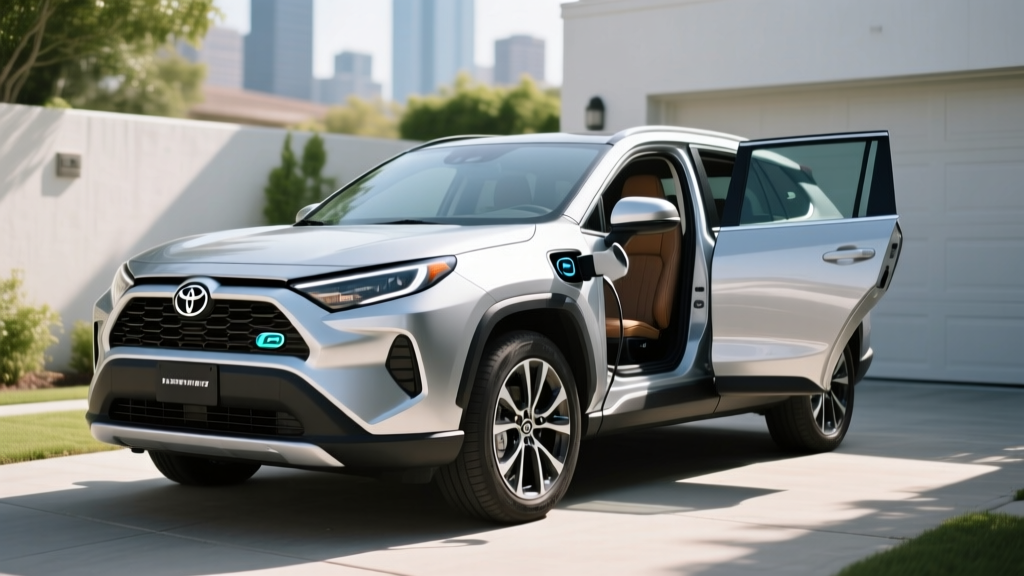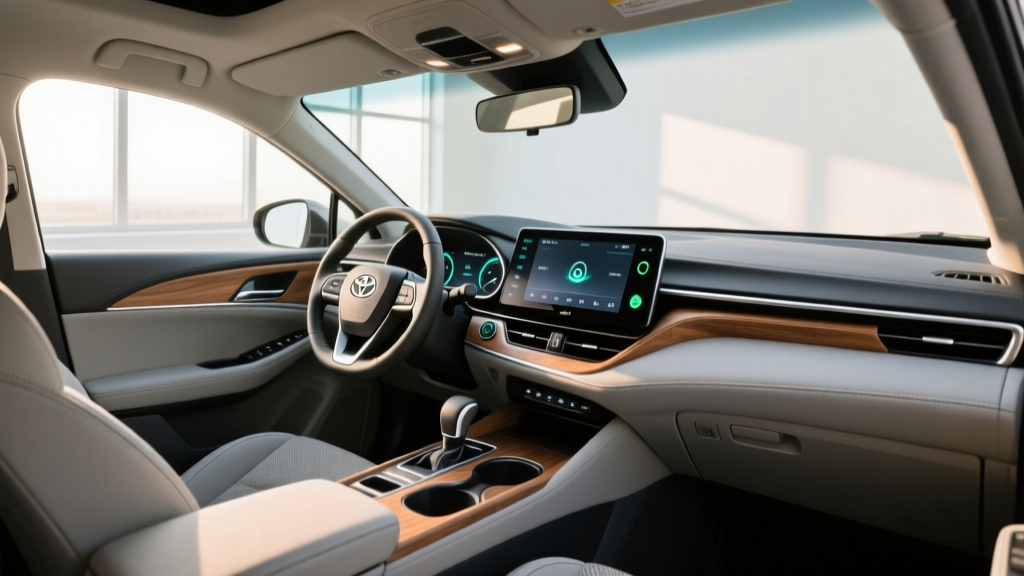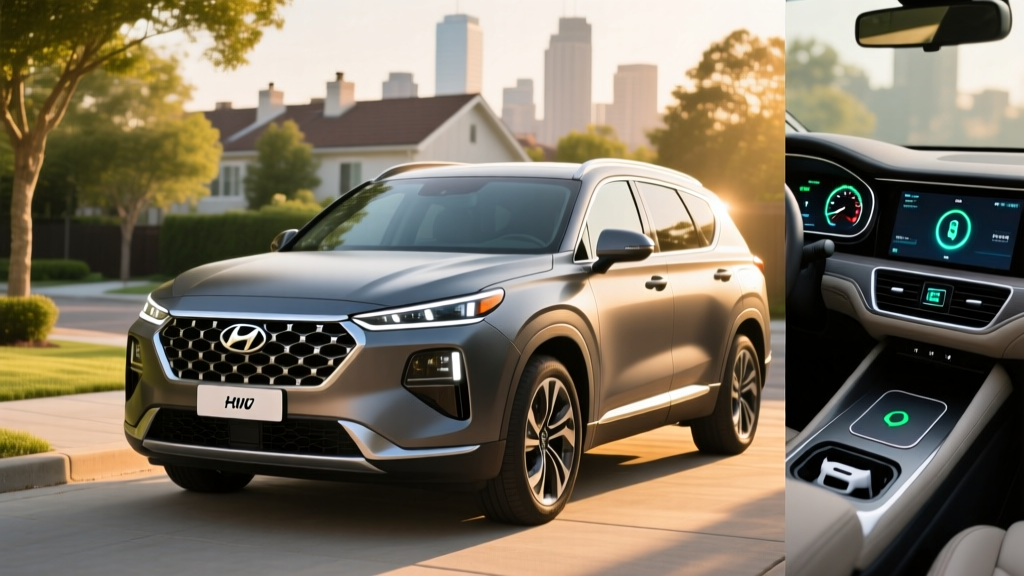
The 2026 Hyundai Santa Fe arrives in two electrified flavors: a conventional hybrid (HEV) that never needs a plug, and a plug-in hybrid (PHEV) that delivers roughly 30 miles of electric-only driving before the gasoline engine wakes up. Both share a 1.6-liter turbocharged four-cylinder paired with electric motors, but the tuning, battery size, and ownership economics diverge sharply. Below is everything you need to decide which version fits your garage, your commute, and your budget.
HEV vs PHEV: Which Santa Fe Is Which?
Before diving into specs, let's eliminate the most common confusion. The Santa Fe Hybrid (HEV) charges its own small battery through regenerative braking and the engine — you never plug it in. The Santa Fe Plug-in Hybrid (PHEV) carries a much larger battery you can recharge from a wall outlet or public charger, giving you a window of zero-emission, electric-only driving before it reverts to hybrid operation.
| Attribute | Santa Fe Hybrid (HEV) | Santa Fe Plug-in Hybrid (PHEV) |
|---|---|---|
| Plug-in required? | No — self-charging | Yes — for electric-only miles |
| Usable battery | ~1.6 kWh (buffer-limited) | ~13.8 kWh |
| Electric-only range | Not applicable | EPA est. 30 mi |
| Total driving range | ~560 mi | ~430 mi (electric + gas) |
| DC fast charging | No | No — AC Level 2 only |
| Federal tax credit (§30D) | Not eligible | Up to $6,574 (sourcing-dependent) |
Fuel Economy: Real-World MPG vs. EPA Stickers
Hyundai's EPA submissions for the 2026 Santa Fe Hybrid put it at 35 MPG city, 31 highway, and 33 combined when equipped with front-wheel drive; AWD drops the figures to 33 / 30 / 32. Those numbers sit a few ticks below the Kia Sorento Hybrid (which shares the platform but weighs slightly less) and well short of the Toyota Highlander Hybrid's 35 combined.
| Drivetrain | City | Highway | Combined |
|---|---|---|---|
| Santa Fe Hybrid FWD | 35 | 31 | 33 |
| Santa Fe Hybrid AWD | 33 | 30 | 32 |
| Santa Fe PHEV AWD (hybrid mode) | 33 | 30 | 32 |
| Santa Fe PHEV AWD (charge-depleting) | 79 MPGe combined | ||
In real-world city driving, Hyundai's hybrid system — like most — tends to match or slightly exceed its EPA city figure, because stop-and-go traffic maximizes regenerative braking. On a 200-mile highway loop at 75 mph, expect the HEV to return closer to 28–29 MPG. Cold weather (below 35°F) typically costs 10–15% because the engine runs more often to heat the cabin and the battery's chemical resistance increases.
For the PHEV, the 79 MPGe rating applies only while you're depleting the battery. Once the 13.8 kWh pack is exhausted, you're driving a 32-MPG hybrid. The practical implication: if your commute is under 30 miles round-trip and you charge nightly, you may burn gasoline only a few times a month.
Powertrain Output and Drivability
Both models use Hyundai's Smartstream 1.6-liter turbocharged inline-four mated to a six-speed automatic with an integrated electric motor between the engine and transmission — no CVT drone here.
| Spec | HEV | PHEV |
|---|---|---|
| Engine | 1.6L turbo I4 | 1.6L turbo I4 |
| Electric motor | 47.7 kW | 72 kW |
| Combined horsepower | 232 hp | 258 hp |
| Combined torque | 271 lb-ft | 271 lb-ft |
| Transmission | 6-speed automatic | 6-speed automatic |
| Drivetrain | FWD or AWD | AWD (HTRAC) |
| 0–60 mph (est.) | ~7.8 sec | ~7.2 sec |
| Towing capacity | 2,000 lb | 2,000 lb |
The PHEV's larger motor gives it noticeably stronger off-the-line response in EV mode — around town it feels like a battery-electric crossover. Once the engine engages, both variants deliver confident highway merging, and the six-speed automatic avoids the rubber-band sensation that plagues some competitors' CVTs. HTRAC AWD on the PHEV can vector torque rearward in hybrid mode; in EV mode it's front-drive only.
Charging the PHEV: What to Expect
The Santa Fe PHEV's 13.8 kWh battery charges via a J1772 (North America) or NACS port (2026 models adopt Tesla's connector for DC, but the PHEV's onboard charger is AC-only, so NACS-to-J1772 adapters apply for some networks).
| Charging Level | Power (kW) | 0–100% Time | Where You'll Use It |
|---|---|---|---|
| Level 1 (120V household) | ~1.4 kW | ~10 hours | Overnight trickle |
| Level 2 (240V home/public) | 7.2 kW | ~1 hr 50 min | Home wallbox, workplace |
| DC Fast Charge | Not supported | — | — |
The lack of DC fast charging is typical for PHEVs in this class and reflects the small battery — a 13.8 kWh pack gains little from a 150 kW station. A Level 2 home charger is the practical sweet spot: plug in after work, wake up to a full battery every morning. If you lack home charging access, the PHEV's value proposition collapses; buy the HEV instead.
Pricing, Trims, and Tax-Credit Eligibility
Hyundai prices the 2026 Santa Fe Hybrid across three trims, with the PHEV restricted to the upper two:
| Trim | Powertrain | MSRP (incl. destination) |
|---|---|---|
| SE | HEV FWD | $39,845 |
| SEL Premium | HEV AWD | $43,600 |
| SEL Premium | PHEV AWD | $47,450 |
| Calligraphy | PHEV AWD | $51,800 |
Federal §30D tax-credit rules (2026, per IRS.gov):
- The HEV is not eligible — §30D requires plug-in capability and a minimum battery capacity.
- The PHEV qualifies for up to $6,574, split between a $3,750 critical-minerals component and a $2,824 battery-components component (2026 sourcing percentages apply).
- MSRP cap: SUVs must sticker under $80,000 — all Santa Fe PHEV trims clear this.
- Buyer income caps (modified AGI): $300,000 joint / $225,000 head of household / $150,000 single.
- Point-of-sale transfer is permitted — the dealer applies the credit as a down-payment reduction, and you reconcile on your tax return.
- Battery-sourcing rules tighten annually; verify current eligibility on fueleconomy.gov before signing.
State incentives vary widely. California's CVRP has been restructured, but states like Colorado, Maine, and Massachusetts still offer rebates of $2,000–$4,000 for PHEVs meeting battery-capacity thresholds. Always confirm with your state energy office before relying on a local rebate.
Battery Longevity, Warranty, and Replacement Cost
Hybrid / PHEV battery warranty: Hyundai covers the high-voltage battery for 10 years / 100,000 miles (original owner) or 10 years / 100,000 miles for subsequent owners in CARB states, against defects and capacity loss below ~70%. The conventional 12V battery carries a separate 3-year/36,000-mile warranty.
Hybrid battery replacement cost for the Santa Fe HEV is approximately $2,500–$3,500 including labor; the PHEV's larger pack runs $5,500–$7,500. In practice, Hyundai's lithium-ion packs rarely require replacement inside the warranty window. Data from Consumer Reports' annual reliability surveys consistently ranks Hyundai's hybrid systems in the mid-to-upper tier, with the turbo engine and six-speed automatic showing fewer issues than early CVT-based competitors.
To maximize battery lifespan, PHEV owners should avoid routinely charging to 100% and letting the car sit in extreme heat. The HEV's tiny buffer-managed pack requires no behavioral changes — the BMS handles it.
Pros
- Real-world city MPG often beats EPA by 1–2 MPG
- Six-speed automatic avoids CVT mushiness
- PHEV offers 30 mi EV range — enough for most commutes
- Class-leading 10yr/100k-mi hybrid battery warranty
- Boxy interior yields strong cargo volume (37 cu ft behind 2nd row)
Cons
- Highway MPG trails Toyota Highlander Hybrid
- PHEV has no DC fast charging
- HEV is not eligible for any federal tax credit
- PHEV pricing starts near $47k before incentives
- Towing limited to 2,000 lb (rivals hit 3,500)
Who Should Buy the Hybrid, PHEV, or Skip to a Full EV?
Choose the Santa Fe HEV if: you lack home charging, drive more than 40 miles daily, want a three-row SUV under $45k, and don't want to think about plugging in.
Choose the Santa Fe PHEV if: you can install a Level 2 charger at home, your daily round-trip is under 30 miles, you want EV-like commuting with gas-engine road-trip flexibility, and your income falls under the §30D caps.
Consider a full BEV (Ioniq 5, EV9, etc.) if: your household has a second car for long trips, you want zero tailpipe emissions, you drive under 250 miles daily, and you want the $7,500 credit without sourcing-complication math.
Frequently Asked Questions
How many MPG does the 2026 Hyundai Santa Fe Hybrid get?
The FWD HEV is EPA-rated at 35 city / 31 highway / 33 combined. AWD drops to 33 / 30 / 32. In real-world city driving, owners frequently report 34–36 MPG; highway cruising at 75 mph typically returns 28–29 MPG.
How far can the Santa Fe PHEV drive on electric only?
EPA-estimated 30 miles on a full charge. Real-world results range from 26 miles (cold weather, hilly terrain, aggressive acceleration) to 33 miles (mild temps, flat city driving). After the battery is depleted, the car operates as a 32-MPG hybrid.
Is the Santa Fe Hybrid reliable, and what does a battery replacement cost?
Hyundai's hybrid powertrain earns above-average reliability marks in industry surveys. The high-voltage battery is warrantied for 10 years / 100,000 miles. Out-of-warranty replacement runs $2,500–$3,500 for the HEV and $5,500–$7,500 for the PHEV, though most packs outlast the vehicle.
Does the Santa Fe Hybrid qualify for a federal tax credit?
The conventional HEV does not — §30D requires plug-in capability. The PHEV qualifies for up to $6,574 depending on battery-mineral sourcing, buyer income, and MSRP caps. Confirm your exact eligibility on IRS.gov and at the point of sale.
Do I need to plug in the Santa Fe Hybrid (HEV)?
No. The HEV recharges its small battery through regenerative braking and the gasoline engine. Only the PHEV requires (or benefits from) plugging in.
Can the Santa Fe PHEV DC fast charge?
No. It accepts up to 7.2 kW on Level 2 AC, fully recharging the 13.8 kWh battery in under two hours. This is normal for PHEVs — the small battery would gain little from DC fast charging infrastructure.
Sources: EPA ratings via fueleconomy.gov; federal tax-credit rules via IRS §30D guidance; safety data via IIHS. Specs reflect 2026 model-year manufacturer data and are subject to change — always confirm with your dealer before purchase.