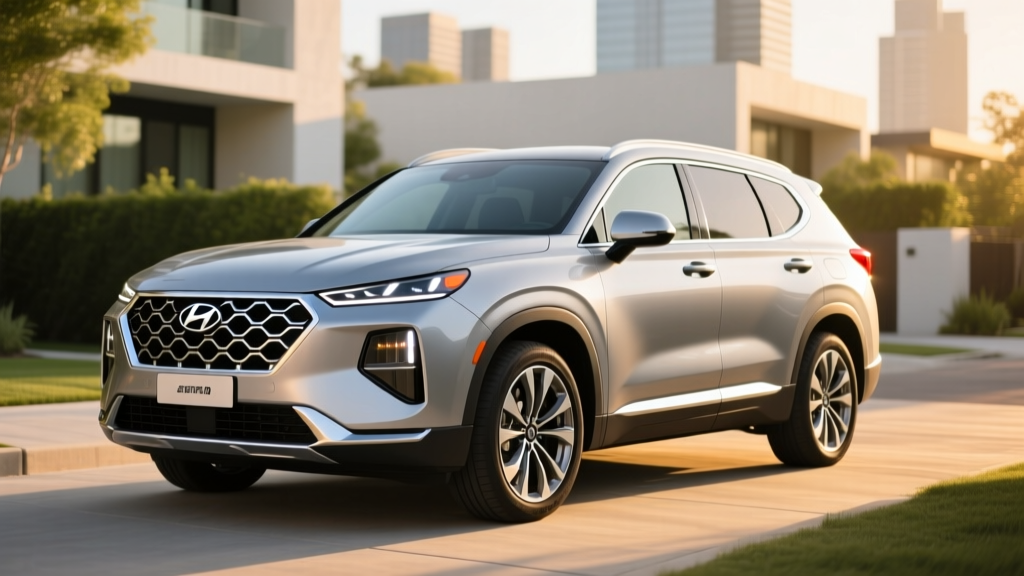
The 2024 Hyundai Santa Fe arrived with a radical boxy redesign and a powertrain lineup that includes a conventional hybrid (HEV) and a plug-in hybrid (PHEV). For families who want electric-style efficiency without committing to a full battery-electric vehicle, the 2024 Hyundai Santa Fe Hybrid is one of the most compelling three-row SUVs on the market. It pairs a 1.6-liter turbocharged engine with an electric motor for a combined 230 horsepower, standard HTRAC all-wheel drive, and an EPA-estimated 36 MPG combined.
But spec sheets only tell part of the story. In this guide, we break down real-world fuel economy expectations, compare the HEV and PHEV variants, detail battery warranty coverage, and help you decide whether the Santa Fe Hybrid, the Santa Fe PHEV, or a full EV is the right fit for your driving pattern.
2024 Hyundai Santa Fe Hybrid: Key Specifications at a Glance
| Specification | Santa Fe HEV | Santa Fe PHEV |
|---|---|---|
| Powertrain | 1.6L Turbo + Electric Motor | 1.6L Turbo + Electric Motor |
| Combined Horsepower | 230 hp | 258 hp |
| Drivetrain | AWD (HTRAC) standard | AWD (HTRAC) standard |
| EPA Combined MPG | 36 MPG | 33 MPG (hybrid mode) |
| EPA City / Highway | 35 city / 38 highway | 33 city / 34 highway |
| Electric-Only Range (PHEV) | N/A | ~30 miles (est.) |
| Battery Capacity | 1.49 kWh (self-charging) | 13.8 kWh (usable) |
| Charging (PHEV, Level 2) | N/A | ~3.5 hours (7.2 kW onboard) |
| DC Fast Charging | No | No |
| Seating | 6 or 7 passengers | 6 passengers |
| Starting MSRP | ~$38,000 | ~$42,000 |
Source: fueleconomy.gov and Hyundai Motor America. Pricing varies by trim and dealer. Verify current MSRP with your local dealer.
HEV vs. PHEV: Which Santa Fe Powertrain Is Right for You?
Conventional Hybrid (HEV): The Santa Fe HEV never needs to be plugged in. It captures energy through regenerative braking and the gasoline engine to recharge its small 1.49 kWh battery. You drive it exactly like a conventional car — fill up at the gas station and go. The payoff is dramatically improved fuel economy, especially in city driving where the electric motor handles low-speed propulsion.
Plug-In Hybrid (PHEV): The Santa Fe PHEV carries a much larger 13.8 kWh battery that you can charge from an outlet or Level 2 charger. When fully charged, it delivers approximately 30 miles of electric-only driving — enough for many daily commutes and school runs without burning a drop of gasoline. Once the electric range is depleted, it seamlessly transitions to hybrid mode, operating like the conventional HEV with an EPA-estimated 33 MPG combined.
| Factor | Santa Fe HEV | Santa Fe PHEV | Full EV (e.g., Ioniq 5) |
|---|---|---|---|
| Plug-in required? | No | Yes (for max benefit) | Yes |
| Daily electric driving | Minimal (low-speed assist) | ~30 miles EV range | 250-320+ miles |
| Home charging needed? | No | Recommended (120V or 240V) | Required |
| Road-trip convenience | Excellent (gas stations) | Excellent (gas + electric) | Requires DC fast charging |
| Upfront cost premium | Low | Moderate | Higher |
| Federal tax credit | Not eligible (§30D) | Check current IRS rules | Up to $7,500 (varies) |
Fuel Economy: EPA Numbers vs. Real-World MPG
The EPA rates the 2024 Hyundai Santa Fe Hybrid at 35 MPG city, 38 MPG highway, and 36 MPG combined — impressive figures for a three-row AWD SUV weighing over 4,400 pounds. For context, the non-hybrid turbocharged Santa Fe achieves just 22 MPG combined, meaning the hybrid powertrain cuts fuel consumption by roughly 39%.
Real-World MPG Expectations:
- City driving (stop-and-go): 36-40 MPG. Hybrids thrive in urban conditions. Expect to meet or exceed the EPA city estimate because regenerative braking recaptures energy at every stop.
- Highway cruising (70-80 mph): 32-36 MPG. The gasoline engine does most of the work at sustained speed. Aerodynamic drag from the Santa Fe's boxy design costs a few MPG versus the EPA highway estimate.
- Cold weather (below 30°F): 30-34 MPG. The engine runs longer to heat the cabin and the battery is less efficient. Expect a 5-10% reduction in winter.
- Mixed suburban commuting: 34-38 MPG. This is the sweet spot — a mix of low-speed electric assist and moderate-speed cruising.
For PHEV owners who charge regularly, the effective fuel economy is far higher. If your daily driving stays within the ~30-mile electric range and you charge nightly, you could go weeks between fill-ups. The EPA rates the PHEV at approximately 79 MPGe when operating on electricity.
Powertrain Deep Dive: How the Hybrid System Works
The 2024 Santa Fe Hybrid pairs a 1.6-liter turbocharged four-cylinder engine (178 hp, 195 lb-ft of torque) with a 47.7 kW electric motor integrated into the transmission housing. Combined output is 230 horsepower and 271 lb-ft of torque, routed through a 6-speed automatic transmission to all four wheels via Hyundai's HTRAC AWD system.
The PHEV variant uses a more powerful electric motor (72 kW / 96.5 hp) alongside the same turbocharged engine, bumping combined output to 258 horsepower and 271 lb-ft. The larger 13.8 kWh battery pack is mounted under the rear seat, preserving cargo space while lowering the center of gravity.
Neither variant offers DC fast charging — this is typical for PHEVs in this class. The Santa Fe PHEV charges via a 7.2 kW onboard charger, replenishing the battery in approximately 3.5 hours on a Level 2 (240V) home charger. On a standard 120V household outlet (Level 1), expect roughly 10-12 hours for a full charge — adequate for overnight top-ups.
Pricing, Trims, and Tax Credit Eligibility
The 2024 Santa Fe Hybrid is offered in multiple trims, starting with the SEL Premium around $38,000 MSRP and climbing to the Limited and Calligraphy trims above $45,000. The PHEV variant commands a premium, starting near $42,000 and reaching approximately $48,000 at the top Calligraphy trim.
Federal Tax Credit — What You Need to Know:
- HEV (conventional hybrid): Does not qualify for the IRS §30D federal clean vehicle credit. This credit applies only to plug-in electric vehicles and fuel cell vehicles.
- PHEV: May qualify for up to $7,500 under §30D, but eligibility depends on several factors that change frequently: buyer income caps ($150K single / $300K joint), vehicle MSRP caps ($80K for SUVs), battery component sourcing requirements, and critical mineral thresholds. As of the current tax year, many PHEVs face partial or full credit reduction due to battery-sourcing rules.
- Point-of-sale transfer: If eligible, the §30D credit can now be transferred to the dealer at purchase, reducing your out-of-pocket cost immediately rather than waiting for a tax refund.
Always verify current eligibility on irs.gov and consult a tax professional before relying on credit amounts for purchase decisions.
Battery Warranty, Reliability, and Replacement Costs
Hyundai's Hybrid/PHEV Battery Warranty:
- Coverage: 10 years / 100,000 miles (whichever comes first)
- What's covered: Battery capacity loss below a defined threshold, defects in materials or workmanship, and hybrid system components (inverter, electric motor, control electronics)
- Transferability: Warranty transfers to subsequent owners, which supports resale value
Hyundai has been building hybrid powertrains since the Sonata Hybrid debuted in 2011, and the company's hybrid systems have proven durable in long-term ownership. The 1.49 kWh battery in the HEV is small and operates within a narrow state-of-charge window (typically 40-80%), which significantly reduces degradation stress. Most hybrid batteries outlast the vehicle itself.
Replacement cost if out of warranty: Hybrid battery replacement for the Santa Fe HEV is estimated at $2,000-$3,500 for the battery pack, plus labor. The PHEV's larger 13.8 kWh pack would cost significantly more — estimated $5,000-$8,000 — but the 10-year/100,000-mile warranty and the battery's protected state-of-charge window make early failure unlikely.
For reliability data, the 2024 Santa Fe's turbocharged hybrid powertrain is shared with the Kia Sorento Hybrid, which has accumulated strong long-term reliability scores. Hyundai's overall brand reliability has improved substantially in recent IIHS and J.D. Power assessments.
Who Should Buy the Santa Fe Hybrid — and Who Shouldn't?
Choose the Santa Fe HEV if:
- You want maximum fuel efficiency without changing your fueling habits (no plugging in)
- You drive a mix of city and highway miles and want 35+ MPG in a three-row SUV
- You don't have reliable access to home or workplace charging
- You take frequent road trips where gas-station convenience matters
- Your budget is under $45,000 and you don't want the PHEV premium
Choose the Santa Fe PHEV if:
- Your daily commute is under 30 miles round-trip and you can charge at home overnight
- You want to drive on electricity most days but need gasoline flexibility for weekend trips
- You want the 258 hp powertrain upgrade (the PHEV is noticeably quicker)
- You may qualify for a partial or full federal tax credit, narrowing the price gap with the HEV
Consider a full EV (like the Hyundai Ioniq 5 or Kia EV9) if:
- You have reliable Level 2 home charging and your daily driving is under 250 miles
- You want zero tailpipe emissions and the lowest per-mile fuel cost
- You want to eliminate oil changes, spark plugs, and transmission fluid entirely
- You qualify for the full $7,500 federal tax credit on an eligible EV
Skip the hybrid entirely if:
- You primarily drive long highway miles at high speed (a diesel or efficient gas SUV may match hybrid MPG on the interstate)
- You need maximum towing capacity — the hybrid's towing rating is lower than the turbo gas model
| Ownership Factor | Santa Fe HEV | Santa Fe Gas (non-hybrid) |
|---|---|---|
| Annual fuel cost (15K mi/yr, $3.50/gal) | ~$1,458 | ~$2,386 |
| 5-year fuel cost | ~$7,290 | ~$11,930 |
| Fuel savings vs. gas model (5 yr) | ~$4,640 | Baseline |
| Oil changes (5 yr / 75K mi) | ~$750 (15 changes) | ~$750 (15 changes) |
| Upfront price premium | ~$2,500-$3,500 | Baseline |
| Payback period (fuel savings) | ~3-4 years | N/A |
Fuel cost estimates based on EPA combined MPG and national average gas prices. Your actual costs will vary with driving patterns and local fuel prices.
Frequently Asked Questions
How many MPG does the 2024 Hyundai Santa Fe Hybrid get?
The EPA rates the Santa Fe Hybrid at 35 MPG city, 38 MPG highway, and 36 MPG combined. In real-world city driving, owners commonly report 36-40 MPG thanks to regenerative braking. Highway fuel economy tends to settle around 32-36 MPG at speeds above 70 mph.
How far can the Santa Fe PHEV go on electric power alone?
The 2024 Santa Fe PHEV delivers approximately 30 miles of electric-only range on a full charge. This covers most daily commutes and errands. Once the battery is depleted, the vehicle seamlessly switches to hybrid mode and continues as a conventional hybrid at an EPA-estimated 33 MPG combined.
Does the Santa Fe Hybrid need to be plugged in?
No. The conventional Santa Fe HEV is self-charging — it recaptures energy through regenerative braking and the gasoline engine. You never plug it in. Only the PHEV variant benefits from plug-in charging, and even the PHEV can operate indefinitely without being plugged in (though you'd lose the electric-only range advantage).
Is the hybrid battery reliable, and what does replacement cost?
Hyundai covers the hybrid battery with a 10-year / 100,000-mile warranty, one of the longest in the industry. The small 1.49 kWh battery in the HEV operates within a protected charge window that minimizes degradation, and most hybrid batteries outlast the vehicle. Out-of-warranty replacement is estimated at $2,000-$3,500 for the HEV and $5,000-$8,000 for the PHEV.
Does the 2024 Santa Fe Hybrid qualify for a federal tax credit?
The conventional HEV does not qualify for the IRS §30D clean vehicle credit — that credit applies only to plug-in vehicles. The PHEV variant may qualify for up to $7,500, but eligibility depends on your income, the vehicle's MSRP, and battery component sourcing requirements, all of which change periodically. Check current rules at irs.gov and consult a tax professional.
How does the Santa Fe Hybrid compare to a full EV like the Ioniq 5?
The Santa Fe Hybrid gives you three-row seating, standard AWD, and no charging infrastructure requirement — ideal if you lack home charging or take long road trips. The Ioniq 5 offers lower per-mile energy costs, zero tailpipe emissions, instant torque, and eligibility for the full EV tax credit, but requires access to reliable charging and has only two rows of seating. Your choice depends on your charging access, passenger needs, and daily driving distance.
Can the Santa Fe PHEV DC fast charge?
No. Like most PHEVs, the Santa Fe PHEV supports only Level 1 (120V) and Level 2 (240V) AC charging. A full charge takes approximately 10-12 hours on Level 1 and about 3.5 hours on a 7.2 kW Level 2 charger. DC fast charging is not available because the 13.8 kWh battery is relatively small and AC charging is sufficient for overnight replenishment.
The 2024 Hyundai Santa Fe Hybrid occupies a practical middle ground: three-row family SUV capability with hybrid fuel economy, no lifestyle changes required. If you can plug in at home, the PHEV variant adds meaningful electric-only range for daily driving. Either way, Hyundai's 10-year battery warranty and proven hybrid powertrain make the Santa Fe one of the lowest-risk paths to better fuel economy in the midsize SUV segment.