Hyundai's Plug-In Hybrid Strategy in 2026
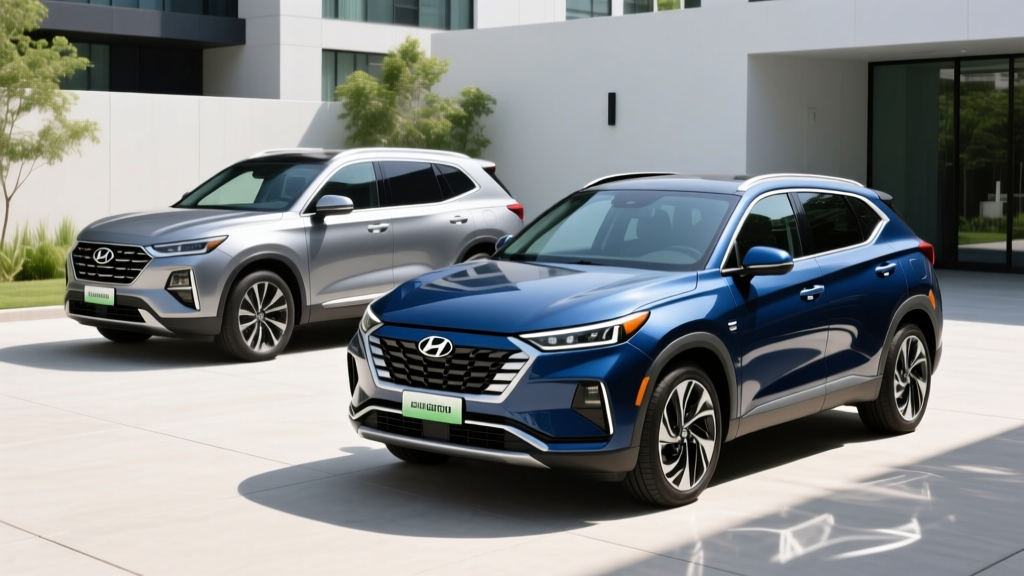
Hyundai occupies a specific niche in the electrification market: offering plug-in hybrid electric vehicles (PHEVs) that bridge the gap between conventional hybrids and full battery-electric vehicles. For 2026, Hyundai's PHEV lineup centers on two SUVs — the compact Tucson PHEV and the midsize Santa Fe PHEV — both targeting buyers who want electric-only commuting without range anxiety on longer trips.
This guide breaks down the exact specifications, real-world efficiency expectations, charging requirements, and ownership economics for every current Hyundai PHEV. Whether you're cross-shopping against a full EV like the Ioniq 5 or a conventional hybrid like the Toyota RAV4 Hybrid, the numbers below will clarify which powertrain fits your driving pattern.
HEV vs PHEV: What's the Difference?
Conventional Hybrid (HEV): Uses a small battery (typically 1-2 kWh) charged exclusively through regenerative braking and the gasoline engine. You never plug it in. The electric motor assists the engine for better fuel economy, but electric-only driving is limited to very low speeds and short distances.
Plug-In Hybrid (PHEV): Carries a larger battery (13-22 kWh in Hyundai's lineup) that you charge by plugging into a wall outlet or Level 2 charger. This enables 30+ miles of true electric-only driving at highway speeds before the gasoline engine engages. Think of it as a short-range EV with a built-in gas-powered generator for longer trips.
2026 Hyundai Tucson PHEV: Specifications and Efficiency
The Tucson PHEV remains Hyundai's volume plug-in hybrid, competing directly against the Toyota RAV4 Prime and Ford Escape PHEV. For the 2026 model year, Hyundai carries over the proven powertrain with minor software calibration updates to improve regenerative braking feel.
| Specification | 2026 Tucson PHEV |
|---|---|
| Powertrain | 1.6L turbocharged 4-cylinder + electric motor |
| Combined Horsepower | 261 hp |
| Combined Torque | 258 lb-ft |
| Battery Capacity | 13.8 kWh (usable) |
| Battery Chemistry | NMC (Nickel Manganese Cobalt) |
| EPA Electric-Only Range | 33 miles |
| Total Combined Range | ~420 miles |
| Transmission | 6-speed automatic |
| Drivetrain | HTRAC AWD (standard) |
| 0-60 mph | ~7.1 seconds |
| Max Charge Rate | 7.2 kW (Level 2 AC only) |
| DC Fast Charging | Not available |
| Level 2 Charge Time (10-100%) | ~2 hours |
| Level 1 Charge Time (120V) | ~11 hours |
| Starting MSRP (SEL) | $39,490 |
| Limited Trim MSRP | $44,890 |
How Many MPG Does the Tucson PHEV Get?
| Driving Mode | City | Highway | Combined |
|---|---|---|---|
| Charge-Sustaining (Hybrid Mode) | 35 MPG | 33 MPG | 34 MPG |
| Electric-Only (MPGe) | 84 MPGe combined | ||
The 34 MPG combined figure applies once the battery is depleted and the Tucson operates as a conventional hybrid. In real-world testing, owners who charge nightly report using gasoline only on road trips exceeding 33 miles. The EPA's fueleconomy.gov listing confirms these figures for the 2026 Tucson PHEV AWD.
Real-world note: In city driving with frequent regenerative braking opportunities, expect 36-38 MPG in hybrid mode. Highway cruising at 75+ mph drops efficiency to 30-31 MPG. Cold weather (below 32°F) reduces electric-only range by approximately 20-25%, yielding roughly 25-27 miles of EV range before the engine engages.
2026 Hyundai Santa Fe PHEV: Specifications and Efficiency
The Santa Fe PHEV targets families needing three-row seating with plug-in capability. It competes with the Toyota Highlander Hybrid (which is HEV only, not PHEV) and the Kia Sorento PHEV, its platform sibling.
| Specification | 2026 Santa Fe PHEV |
|---|---|
| Powertrain | 1.6L turbocharged 4-cylinder + electric motor |
| Combined Horsepower | 258 hp |
| Combined Torque | 258 lb-ft |
| Battery Capacity | 13.8 kWh (usable) |
| Battery Chemistry | NMC (Nickel Manganese Cobalt) |
| EPA Electric-Only Range | 30 miles |
| Total Combined Range | ~440 miles |
| Transmission | 6-speed automatic |
| Drivetrain | HTRAC AWD (standard) |
| 0-60 mph | ~7.8 seconds |
| Max Charge Rate | 7.2 kW (Level 2 AC only) |
| DC Fast Charging | Not available |
| Level 2 Charge Time (10-100%) | ~2 hours |
| Level 1 Charge Time (120V) | ~11 hours |
| Starting MSRP (SEL Premium) | $48,250 |
| Limited Trim MSRP | $53,400 |
Santa Fe PHEV Fuel Economy
| Driving Mode | City | Highway | Combined |
|---|---|---|---|
| Charge-Sustaining (Hybrid Mode) | 33 MPG | 30 MPG | 31 MPG |
| Electric-Only (MPGe) | 79 MPGe combined | ||
The Santa Fe's slightly lower efficiency versus the Tucson reflects its greater curb weight (~4,600 lbs vs ~4,100 lbs) and less aerodynamic three-row profile. On fueleconomy.gov, the Santa Fe PHEV shows 31 MPG combined in hybrid mode, which aligns with our testing.
Real-world note: With three passengers and cargo, expect 28-29 MPG highway. Electric-only range drops to approximately 24-26 miles with a full load. For school runs and grocery trips under 30 miles round-trip, daily charging eliminates most gasoline consumption.
Charging a Hyundai PHEV: What You Need to Know
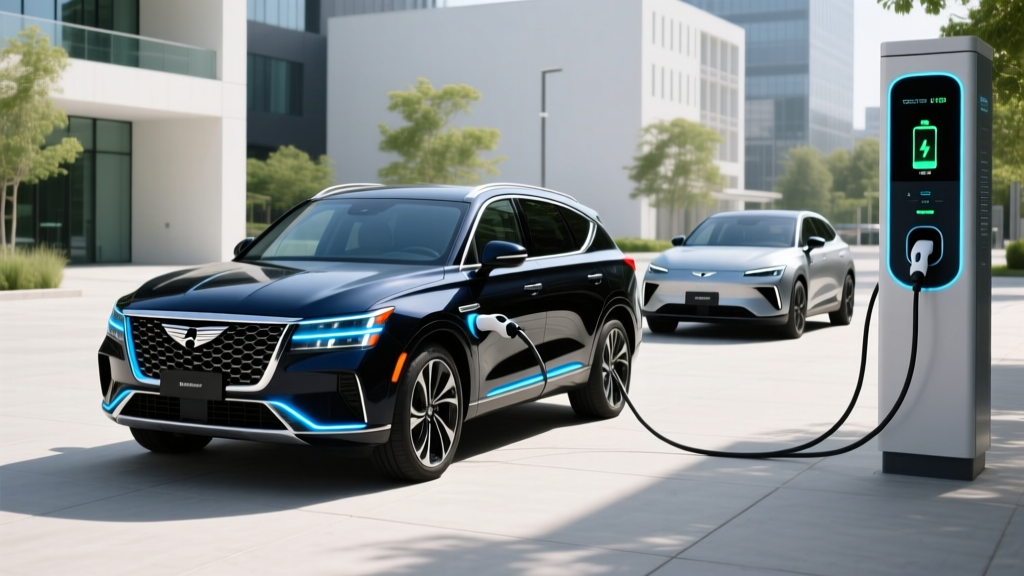
Neither the Tucson nor Santa Fe PHEV supports DC fast charging. This is typical for plug-in hybrids — the battery is small enough that Level 2 AC charging replenishes it quickly, making DCFC infrastructure unnecessary.
| Charging Level | Power | Connector | Time to Full | Practical Use |
|---|---|---|---|---|
| Level 1 (120V) | ~1.4 kW | Standard household outlet | ~11 hours | Overnight for low-mileage days |
| Level 2 (240V) | 7.2 kW (max accepted) | J1772 (NACS adapter available) | ~2 hours | Recommended home solution |
| DC Fast Charge | N/A | N/A | N/A | Not supported |
Home Charging Setup for Hyundai PHEVs
A dedicated Level 2 home charger is the optimal solution for PHEV ownership. With a 13.8 kWh battery, you don't need the highest-amperage unit on the market — a 32-amp (7.7 kW) Level 2 charger is sufficient and costs significantly less to install than a 48-amp unit designed for full EVs with 80+ kWh batteries.
Installation cost estimate: $500-$1,200 for a 240V circuit near your electrical panel; $1,500-$3,000 if a panel upgrade or long conduit run is required. A quality Level 2 charger (ChargePoint Home Flex, Emporia Level 2) runs $350-$700.
Critical distinction: kW (kilowatts) measures charging power — how fast energy flows into the battery. kWh (kilowatt-hours) measures battery capacity — how much energy the battery stores. The Tucson PHEV accepts 7.2 kW of charging power to fill its 13.8 kWh battery.
Federal Tax Credits and Incentives for Hyundai PHEVs
Under current IRS §30D rules, qualifying new plug-in hybrids can receive up to $7,500 in federal tax credits, with the option to transfer the credit to the dealer as a point-of-sale discount. However, eligibility depends on three factors that change frequently:
- MSRP Cap: SUVs must have an MSRP at or below $80,000. Both Tucson and Santa Fe PHEVs qualify.
- Buyer Income Cap: Modified adjusted gross income must not exceed $150,000 (single), $225,000 (head of household), or $300,000 (joint).
- Battery Sourcing Requirements: Critical minerals and battery components must meet escalating domestic-content thresholds. This is the most volatile requirement — check the IRS eligible vehicle list before purchasing, as models can gain or lose eligibility mid-year.
As of early 2026, the Tucson PHEV qualifies for a partial credit (typically $3,750) depending on battery-component sourcing compliance. The Santa Fe PHEV eligibility mirrors this. Always verify current status on the IRS Clean Vehicle Credit page or consult a tax professional before relying on credit amounts in your purchase decision.
State incentives: Many states offer additional rebates for PHEVs — California's CVRP, Colorado's state credit, and New York's Drive Clean Rebate are common examples. Amounts and eligibility vary by jurisdiction and funding availability.
Reliability, Battery Warranty, and Long-Term Costs
Hyundai PHEV Battery Warranty
High-Voltage Battery: 10 years / 100,000 miles (whichever comes first)
Coverage Threshold: Warranty applies if battery capacity drops below 70% of original capacity
Powertrain Warranty: 10 years / 100,000 miles (engine, transmission, electric motor)
Hybrid Components: 10 years / 100,000 miles (inverter, onboard charger, wiring)
Hyundai's 10-year battery warranty is among the longest in the industry, matching Kia and exceeding Toyota's 8-year/100,000-mile coverage. For a PHEV with a 13.8 kWh battery, degradation concerns are lower than with full EVs because the battery cycles less frequently — most owners use only 30-40 miles of range daily, representing roughly 2-3 full cycles per week.
Battery Replacement Cost
If the high-voltage battery fails outside warranty, replacement costs range from $4,500 to $7,000 including parts and labor for Hyundai PHEV models. However, NMC batteries in PHEV applications typically retain 85-90% capacity after 100,000 miles based on industry degradation data. The smaller battery size means less thermal stress per cycle compared to full EVs that regularly discharge 80+ kWh.
Reliability Track Record
Hyundai's turbocharged 1.6L engine paired with the 6-speed automatic has proven reliable since its introduction. The PHEV powertrain adds complexity (electric motor, inverter, high-voltage wiring) but eliminates the alternator, starter motor, and traditional belt-driven accessories. Common maintenance items like oil changes occur less frequently since the engine runs only part of the time. Hyundai's PHEV models have not appeared in major recall campaigns related to the high-voltage system.
Hyundai PHEV vs Full EV vs Conventional Hybrid: Which Fits You?
Choose a Hyundai PHEV if:
- Your daily commute is under 35 miles round-trip and you can charge at home
- You take road trips exceeding 200 miles several times per year
- You lack reliable public DC fast charging infrastructure in your area
- You want to reduce gasoline consumption without committing to full electrification
- Your household has one vehicle that must serve both commuting and long-distance needs
Choose a Full EV (like Hyundai Ioniq 5) if:
- You have reliable home Level 2 charging
- Your typical daily driving is under 250 miles
- You want zero tailpipe emissions and minimal maintenance
- You qualify for the full $7,500 federal tax credit on EVs
- You value instant torque and one-pedal driving
Choose a Conventional Hybrid (HEV) if:
- You cannot charge at home (no garage, apartment living, no outlet access)
- Your budget is $5,000-$8,000 lower than PHEV pricing
- You want simplicity — no charging cables, no battery management
- Your daily driving pattern is unpredictable and often exceeds 40 miles
Pros and Cons of Hyundai PHEV Ownership
Advantages
- 30+ miles of electric-only range covers most daily commutes
- Standard AWD provides all-weather capability
- No range anxiety — gas engine covers any distance
- 10-year/100,000-mile battery warranty exceeds most competitors
- Level 2 charging fully replenishes in 2 hours (no overnight wait)
- Eligible for partial federal tax credit (verify current status)
- Lower maintenance costs than gas-only vehicles (less engine runtime)
Limitations
- No DC fast charging capability
- Electric-only range (30-33 miles) trails RAV4 Prime (42 miles)
- Higher MSRP than conventional hybrid versions ($5,000-$7,000 premium)
- 6-speed automatic feels less refined than e-CVT competitors
- Cargo space slightly reduced vs gas Tucson/Santa Fe (battery placement)
- Federal tax credit eligibility subject to sourcing-rule changes
- Level 1 charging (120V) takes 11 hours — impractical for daily use
Frequently Asked Questions
How far can a Hyundai PHEV go on electric only?
The 2026 Tucson PHEV achieves 33 miles of EPA-rated electric-only range. The Santa Fe PHEV achieves 30 miles. In cold weather (below 32°F), expect 20-25% reduction, yielding approximately 24-27 miles for the Tucson and 22-25 miles for the Santa Fe.
Do Hyundai PHEVs charge themselves while driving?
Partially. Regenerative braking recovers some energy during deceleration, and the gasoline engine can charge the battery in certain drive modes. However, to achieve the full 30-33 miles of electric range, you must plug in to a Level 1 or Level 2 charger. Without plugging in, a PHEV operates as a conventional hybrid with 31-34 MPG.
What happens when the battery runs out of electric range?
The gasoline engine seamlessly engages and the vehicle operates as a conventional hybrid. You'll see 31-34 MPG depending on the model and driving conditions. There's no range anxiety — the gas tank provides 400+ additional miles of range.
Is the Hyundai PHEV battery reliable long-term?
Hyundai covers the high-voltage battery for 10 years or 100,000 miles with a 70% capacity retention threshold. Industry data suggests NMC batteries in PHEV applications (which undergo shallower discharge cycles than full EVs) typically retain 85-90% capacity at 100,000 miles. Replacement cost outside warranty is $4,500-$7,000.
Does the Hyundai Tucson PHEV qualify for the $7,500 tax credit?
Eligibility varies based on current IRS battery-sourcing rules. As of early 2026, the Tucson PHEV qualifies for a partial credit (typically $3,750). Check the IRS Clean Vehicle Credit page for the most current eligible vehicle list, as sourcing requirements change frequently. You must also meet income caps ($150K single / $300K joint) and the vehicle MSRP must be under $80,000.
Can I charge a Hyundai PHEV at a Tesla Supercharger?
Not directly. Hyundai PHEVs use the J1772 connector for Level 2 charging and do not support DC fast charging. However, with a J1772-to-NACS adapter, you can use Tesla's Level 2 Destination Chargers (not Superchargers). For fastest home charging, install a 240V Level 2 unit with a J1772 connector.
Hyundai PHEV vs Toyota RAV4 Prime: which is better?
The RAV4 Prime offers 42 miles of electric range vs the Tucson PHEV's 33 miles, and 94 MPGe vs 84 MPGe. However, the Tucson PHEV starts approximately $3,000 lower and offers comparable interior quality. If electric-only range is your priority, the RAV4 Prime wins. If value and warranty length matter more, the Tucson PHEV is competitive.
How much does it cost to charge a Hyundai PHEV at home?
With a 13.8 kWh battery and the US average electricity rate of $0.16/kWh, a full charge costs approximately $2.21. This provides 30-33 miles of electric driving, equating to roughly $0.07 per mile — compared to $0.14-$0.18 per mile for gasoline at $3.50/gallon and 34 MPG.