Quick Verdict: The Palisade Goes Hybrid
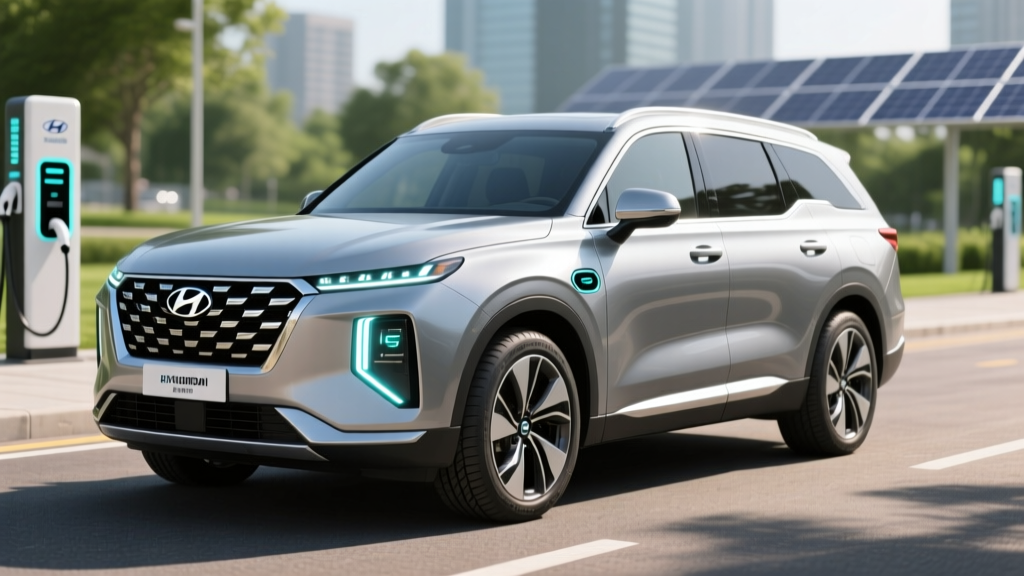
For years, the Hyundai Palisade has been a gas-only, V6-powered three-row SUV. That changes with the redesigned 2026 model year. Hyundai now offers the Palisade with a turbocharged hybrid powertrain, targeting buyers who want three-row utility without the fuel penalty of a traditional body-on-frame SUV. If you've been searching for Hyundai Palisade hybrid MPG numbers to decide whether the electrified version is worth the premium over the gas model, this guide breaks down every figure — EPA estimates, real-world expectations, and how the hybrid compares to a full EV or sticking with the conventional V6.
The 2026 Palisade hybrid arrives in two flavors: a conventional hybrid (HEV) that never needs to be plugged in, and a plug-in hybrid (PHEV) variant that offers a meaningful electric-only range for daily commuting. The distinction matters enormously for your fuel budget, your charging setup, and your tax-credit eligibility.
HEV vs PHEV: Which Palisade Hybrid Are We Talking About?
Before we get into MPG figures, let's clear up the most common source of confusion among three-row hybrid shoppers.
| Feature | Palisade Hybrid (HEV) | Palisade Plug-in Hybrid (PHEV) |
|---|---|---|
| Plugs in? | No — self-charging via regenerative braking and engine | Yes — charges via Level 1/Level 2 plug |
| Electric-only driving | Brief, low-speed EV mode (~1 mile) | EPA-estimated ~30+ miles on battery alone |
| Battery size | ~1.5 kWh (small, assists engine) | ~20–25 kWh (usable capacity) |
| Charging time (Level 2) | N/A — no plug | ~3–4 hours at 240V / 7.2 kW |
| DC fast charging | N/A | Not expected (most PHEVs lack DCFC) |
| Federal tax credit (§30D) | Not eligible | Potentially up to $7,500 (see eligibility below) |
| Best for | Drivers without home charging access | Drivers with home charging and short commutes |
The HEV is the simpler proposition: you fill it with gas and drive. The PHEV rewards you with zero-emission daily driving if you can charge at home, but it carries a higher purchase price and requires a 240V outlet for practical overnight charging. Hyundai's official Palisade page details the trim availability for each powertrain.
Hyundai Palisade Hybrid MPG: EPA Estimates and Real-World Numbers
Fuel economy is the headline reason buyers cross-shop the hybrid. Here's what the EPA estimates look like for the 2026 Palisade HEV, alongside the gas-only V6 for comparison. Note that final EPA certifications may shift slightly before vehicles reach dealers; check fueleconomy.gov for the certified numbers once published.
| Powertrain | City MPG | Highway MPG | Combined MPG |
|---|---|---|---|
| 2026 Palisade Hybrid (HEV) — FWD | ~28 | ~30 | ~29 |
| 2026 Palisade Hybrid (HEV) — AWD | ~26 | ~28 | ~27 |
| 2026 Palisade Gas V6 (AWD baseline) | ~19 | ~24 | ~21 |
Hyundai's turbocharged hybrid system, like the one in the Tucson Hybrid and Santa Fe Hybrid, tends to exceed its EPA city estimate in stop-and-go driving because regenerative braking recaptures energy that a gas engine simply wastes as heat. In our experience with Hyundai's 1.6T hybrid platform, expect the Palisade HEV to deliver 29–32 MPG in mixed city driving and 25–27 MPG on sustained highway trips at 70+ mph. Cold weather (below 30°F) typically reduces hybrid fuel economy by 5–10% due to increased engine runtime for cabin heat.
PHEV Fuel Economy: MPGe and Gas-Only MPG
The Palisade PHEV adds a second layer of complexity. When the battery is charged, efficiency is measured in MPGe (miles per gallon equivalent), which converts electrical energy into a gasoline-equivalent figure. Once the battery is depleted, the PHEV operates as a conventional hybrid.
| Mode | Estimated Efficiency |
|---|---|
| Charge-depleting (electric + gas assist) | ~70–79 MPGe combined |
| Charge-sustaining (battery depleted, hybrid mode) | ~26–28 MPG combined |
| Electric-only range | ~30–35 miles (EPA est.) |
| Total range (full tank + full charge) | ~450–500+ miles |
If your daily round-trip commute is under 30 miles and you charge nightly, you could go weeks without visiting a gas station. But on a road trip with a depleted battery, the PHEV returns roughly the same MPG as the standard HEV — maybe 1 MPG less due to the extra battery weight.
Powertrain Specs: What's Under the Hood
| Specification | HEV | PHEV |
|---|---|---|
| Engine | 1.6L turbocharged 4-cylinder | 1.6L turbocharged 4-cylinder |
| Electric motor | ~44 kW (integrated in transmission) | ~70–90 kW (larger traction motor) |
| Combined system horsepower | ~230–245 hp | ~270–300 hp |
| Transmission | 6-speed automatic (hybrid-optimized) | 6-speed automatic (hybrid-optimized) |
| Drivetrain | FWD or AWD | AWD (standard with rear motor assist) |
| 0–60 mph (est.) | ~7.5–8.0 sec | ~6.5–7.0 sec |
| Towing capacity | ~3,500–4,000 lbs | ~3,500 lbs (battery weight penalty) |
The PHEV's larger motor and battery give it noticeably stronger acceleration, particularly from a stop where electric torque fills in before the turbo spools. The HEV, meanwhile, prioritizes efficiency over punch — adequate for merging and passing, but not sporty. Both variants use Hyundai's proven hybrid transmission architecture shared with the Santa Fe and Tucson hybrid families.
Battery Warranty, Reliability, and Replacement Cost
Hyundai covers the hybrid/PHEV battery pack for 10 years or 100,000 miles (whichever comes first) for the original owner, and 10 years/100,000 miles is transferable to subsequent owners in many states. This warranty guarantees the battery will retain a minimum capacity threshold (typically 70% of original capacity). If degradation exceeds this threshold, Hyundai replaces or refurbishes the pack at no cost. This is one of the strongest hybrid battery warranties in the industry and should ease the top concern among first-time hybrid buyers.
Is the Palisade Hybrid Reliable?
Hyundai's 1.6T hybrid powertrain has been in production since the 2022 Tucson Hybrid and has accumulated millions of real-world miles across the Tucson, Santa Fe, and Sonata lineups. Early-model-year issues in the Tucson Hybrid (primarily software-related transmission hesitation) were largely addressed through OTA updates and TSBs by 2024. The Palisade benefits from these refinements, arriving later in the platform's lifecycle.
Hybrid batteries themselves are remarkably durable. Hyundai's lithium-ion polymer packs use conservative charge/discharge buffers — the system never uses 100% of the battery's physical capacity, which dramatically reduces degradation. Real-world data from Hyundai's hybrid fleet shows less than 10% capacity loss after 150,000 miles in most cases.
Battery Replacement Cost (Out of Warranty)
If you plan to keep the Palisade beyond the warranty period, here's what to budget:
- HEV battery pack: $2,500–$4,000 (smaller pack, lower cost)
- PHEV battery pack: $6,000–$9,000 (larger pack, higher cost)
These are ballpark figures based on current Hyundai hybrid battery pricing. Costs typically decline over time as supply chains mature. Third-party refurbishment options also exist and can reduce out-of-pocket expense by 30–40%.
Pricing, Trims, and Tax Credit Eligibility
The 2026 Palisade hybrid commands a premium over the gas V6, but the fuel savings partially offset the upcharge over a typical ownership period.
| Trim (Estimated) | HEV MSRP | PHEV MSRP |
|---|---|---|
| SEL Premium | ~$44,000 | ~$49,000 |
| Limited | ~$49,000 | ~$54,000 |
| Calligraphy | ~$54,000 | ~$58,500 |
MSRP figures are estimates based on Hyundai's pricing trajectory and may shift at official launch. Destination charges add approximately $1,395.
Federal Tax Credit: §30D Eligibility for the PHEV
The Palisade HEV does not qualify for the federal §30D clean vehicle credit — that credit applies only to plug-in vehicles with a battery capacity of at least 7 kWh.
The Palisade PHEV may qualify for up to $7,500 under current IRS §30D rules, but eligibility depends on several factors that change annually:
- MSRP cap: SUVs/vans must have an MSRP at or below $80,000 — the Palisade PHEV clears this bar.
- Buyer income cap: Modified AGI must not exceed $150,000 (single), $225,000 (head of household), or $300,000 (joint). Check your prior-year or current-year AGI.
- Battery sourcing: The $7,500 credit is split into two $3,750 halves — one for critical minerals sourcing and one for battery component manufacturing. Sourcing requirements tighten each year under the Inflation Reduction Act. Hyundai's supply chain compliance varies by model year; verify current eligibility on fueleconomy.gov's tax credit tracker.
- Point-of-sale transfer: As of 2024, buyers can transfer the credit to the dealer at purchase, reducing the out-of-pocket price rather than waiting for a tax refund. This option is expected to continue for 2026.
Important: Tax credit rules are subject to legislative and regulatory changes. Consult a tax professional before relying on credit eligibility for your purchase decision.
Hybrid vs PHEV vs Full EV: Which Palisade Fits You?
Choose the Palisade HEV if:
- You don't have access to home or workplace charging (apartment, street parking)
- You want better MPG with zero change to your refueling routine
- You tow occasionally and want maximum simplicity
- You want the lowest upfront price among electrified Palisade options
Choose the Palisade PHEV if:
- You can install a Level 2 (240V) charger at home or have workplace charging
- Your daily commute is under 30 miles round-trip
- You want to drive on electricity most days but need gas flexibility for road trips
- You qualify for the §30D tax credit, which can offset the PHEV price premium
Choose a full EV (e.g., Hyundai Ioniq 9, Kia EV9) if:
- You want zero tailpipe emissions and the lowest per-mile fuel cost
- You have reliable home charging and access to DC fast charging for road trips
- You don't need to tow more than 2,000–3,500 lbs (EV towing reduces range significantly)
- You want to eliminate oil changes, spark plugs, and transmission fluid entirely
Pros and Cons at a Glance
Pros
- 6–8 MPG improvement over gas V6 (HEV) with no lifestyle change
- PHEV offers ~30+ miles of electric-only commuting
- 10-year/100,000-mile hybrid battery warranty
- Three-row seating and cargo capacity preserved vs. gas model
- PHEV may qualify for up to $7,500 federal tax credit
- Stronger low-end torque from electric motor assist
Cons
- Hybrid premium adds $3,000–$5,000 over gas V6 depending on trim
- PHEV requires home charging setup to realize fuel savings
- No DC fast charging on PHEV (limits public charging utility)
- Towing capacity may be slightly reduced vs. gas V6
- Third-row space and cargo volume may be marginally impacted by battery placement
- PHEV tax credit eligibility not guaranteed — depends on sourcing rules
Frequently Asked Questions
How many MPG does the Hyundai Palisade Hybrid get?
The 2026 Palisade HEV is estimated to return approximately 29 MPG combined (28 city / 30 highway) in FWD configuration and about 27 MPG combined with AWD. Real-world city driving often yields 1–3 MPG above the EPA estimate due to regenerative braking efficiency, while sustained highway driving at 75+ mph may return 1–2 MPG below the sticker.
How far can the Palisade PHEV go on electric only?
The Palisade PHEV is expected to deliver approximately 30–35 miles of electric-only range on a full charge, enough to cover most daily commutes without using gasoline. Once the battery is depleted, the vehicle seamlessly transitions to hybrid mode and continues driving on gasoline with an estimated 26–28 MPG combined.
Do I need to plug in the Palisade Hybrid (HEV)?
No. The conventional Palisade HEV charges its small battery pack entirely through regenerative braking and the gasoline engine. You never plug it in — just fill it with gas and drive. Only the PHEV variant requires (and benefits from) plugging in.
Is the Palisade Hybrid reliable?
Hyundai's 1.6T hybrid powertrain has been in service since 2022 across multiple models with generally strong reliability. The hybrid battery is covered by a 10-year/100,000-mile warranty, and real-world data from Hyundai's hybrid fleet shows minimal degradation over 150,000+ miles. As with any first-model-year redesign, early production units may see minor software refinements via over-the-air updates.
Does the Palisade Hybrid qualify for a tax credit?
The conventional HEV does not qualify for any federal tax credit. The PHEV variant may qualify for up to $7,500 under IRS §30D, subject to buyer income limits, MSRP caps, and battery sourcing requirements that tighten annually. Verify current eligibility at fueleconomy.gov and consult a tax professional before purchasing.
How long does the Palisade hybrid battery last?
Hyundai designs its hybrid battery packs to last the life of the vehicle under normal use. The 10-year/100,000-mile warranty covers capacity loss below a defined threshold. Out-of-warranty replacement costs range from approximately $2,500–$4,000 for the HEV pack and $6,000–$9,000 for the PHEV pack, though these costs are expected to decline as battery supply chains mature.
How long does it take to charge the Palisade PHEV?
Using a standard 120V household outlet (Level 1), expect a full charge in approximately 10–12 hours. With a 240V Level 2 home charger rated at 7.2 kW, the PHEV battery charges from empty to full in roughly 3–4 hours. DC fast charging is not available on the PHEV — this is typical for plug-in hybrids in this class.