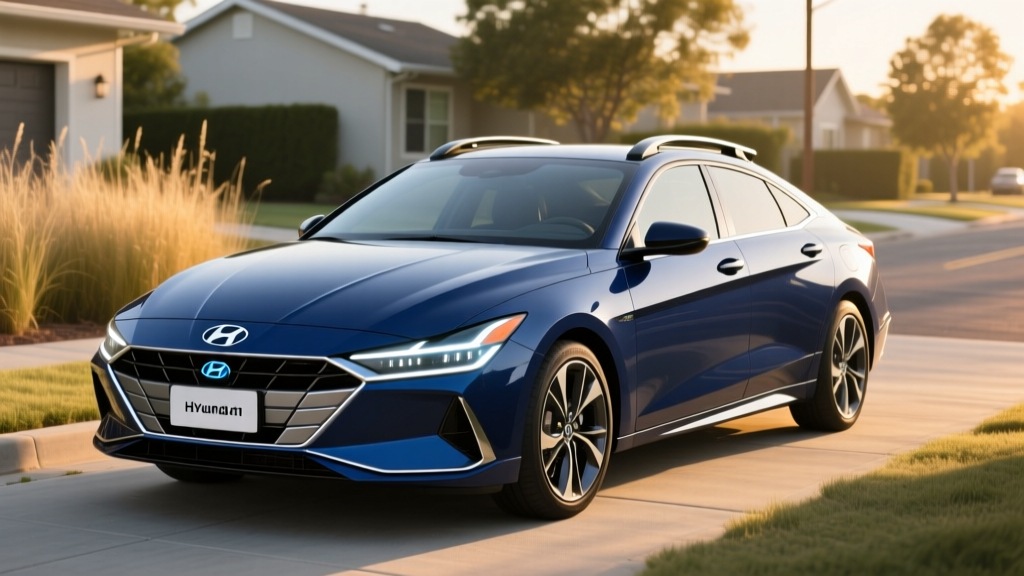
The Hyundai Elantra Hybrid occupies a specific niche in the electrified sedan market: it delivers exceptional fuel economy without requiring a plug, a charging routine, or any range anxiety. For 2026, Hyundai continues the Elantra Hybrid as a conventional hybrid (HEV) only — there is no plug-in hybrid (PHEV) variant in the U.S. lineup. That distinction matters enormously for buyers comparing it to the Toyota Prius Prime or the discontinued Hyundai Ioniq PHEV.
This guide covers the 2026 Elantra Hybrid's real-world efficiency, powertrain details, battery longevity, pricing, and whether it's the right bridge between a gas car and a full battery-electric vehicle.
HEV vs PHEV: What the Elantra Hybrid Actually Is
A common source of confusion is whether the Elantra Hybrid needs to be plugged in. It does not. The Elantra Hybrid is a conventional hybrid electric vehicle (HEV). It generates all its electricity internally through regenerative braking and its gasoline engine. You fuel it at a gas station and never think about charging.
Quick Distinction: HEV vs PHEV
| Feature | HEV (Elantra Hybrid) | PHEV (e.g., Prius Prime) |
|---|---|---|
| Plugs in? | No | Yes |
| Electric-only range | ~1 mile at low speed | 25–45 miles typical |
| Battery size | ~1.6 kWh | 10–14 kWh |
| Federal tax credit | None | Up to $7,500 (if eligible) |
| Home charging needed | No | Recommended (Level 2) |
If you were hoping for a plug-in Elantra, Hyundai previously offered the Ioniq PHEV (discontinued after 2022). As of 2026, Hyundai's U.S. PHEV offerings are the Tucson PHEV and Santa Fe PHEV — both SUVs. The Elantra sedan remains HEV-only.
Fuel Economy: EPA Ratings and Real-World MPG
The headline number is what draws buyers to this car. The 2026 Hyundai Elantra Hybrid Blue trim achieves an EPA-estimated 54 MPG combined — one of the highest ratings of any non-plug-in vehicle sold in the U.S. Higher trims (SEL, Limited) carry a slight penalty due to added weight and larger wheels.
| Trim | City | Highway | Combined |
|---|---|---|---|
| Blue | 54 MPG | 58 MPG | 54 MPG |
| SEL | 51 MPG | 54 MPG | 52 MPG |
| Limited | 49 MPG | 52 MPG | 50 MPG |
Source: fueleconomy.gov
Real-World MPG: What Owners Actually See
Hybrids tend to outperform their EPA ratings in city driving because regenerative braking recaptures energy at every stop. On the highway, where the gasoline engine does most of the work, real-world numbers often dip slightly below the EPA highway figure.
Based on aggregated owner data and independent testing, expect the following from the Blue trim in everyday driving:
- City / stop-and-go: 55–60 MPG (regenerative braking shines here)
- Highway (70–75 mph): 48–52 MPG (aerodynamic drag reduces hybrid advantage)
- Cold weather (below 30°F): 42–48 MPG combined (engine runs longer for cabin heat, battery efficiency drops)
- Mixed real-world average: 50–55 MPG for most drivers
The Elantra Hybrid's highway MPG rating exceeding its city rating (58 vs 54 on the Blue trim) is unusual for a hybrid and reflects Hyundai's efficient 6-speed dual-clutch automatic transmission, which avoids the highway droning losses common in CVT-equipped competitors.
Powertrain Specs: Engine, Motor, and Combined Output
| Engine | 1.6L GDI 4-cylinder Atkinson cycle |
| Engine horsepower | 104 hp @ 5,700 rpm |
| Electric motor | Permanent-magnet synchronous (32 kW / 43 hp) |
| Combined net output | 139 hp / 195 lb-ft torque |
| Transmission | 6-speed dual-clutch automatic (DCT) |
| Drivetrain | Front-wheel drive |
| Hybrid battery | ~1.6 kWh lithium-ion polymer |
| 0–60 mph | ~9.0 seconds (est.) |
| Fuel tank | 11.1 gallons |
| Total range | ~599 miles (Blue trim at 54 MPG combined) |
The 139 combined horsepower won't win drag races — the 0–60 time of roughly 9 seconds places it firmly in the "adequate commuter" category. But the 195 lb-ft of torque, available low in the rev range thanks to the electric motor, makes the Elantra Hybrid feel responsive in city merging and passing situations.
Hyundai's choice of a 6-speed DCT over a continuously variable transmission (CVT) is a differentiator. The DCT delivers more natural-feeling acceleration and avoids the rubber-band sensation that plagues the Toyota Prius and some Honda hybrids under hard throttle.
Pricing, Trims, and Tax Credit Eligibility
The 2026 Elantra Hybrid starts at approximately $26,250 MSRP for the Blue trim, including destination. Here's the approximate trim breakdown:
- Blue: ~$26,250 — maximum efficiency, 16-inch wheels, cloth seats, 8-inch touchscreen
- SEL: ~$28,650 — adds SmartSense safety suite upgrades, wireless CarPlay/Android Auto, 17-inch wheels
- Limited: ~$31,400 — leather seats, 10.25-inch digital cluster, Bose audio, sunroof, highway driving assist
Federal Tax Credit: Does the Elantra Hybrid Qualify?
No. The Hyundai Elantra Hybrid is a conventional HEV and does not qualify for the federal §30D Clean Vehicle Credit. Under current IRS rules, only plug-in electric vehicles (BEVs and PHEVs with at least 7 kWh of battery capacity) are eligible. Conventional hybrids like the Elantra Hybrid, Toyota Prius, and Honda Accord Hybrid are excluded.
Some states offer their own incentives for hybrids, but these are increasingly rare as state programs shift toward BEVs and PHEVs. Check your state's energy office or department of environmental quality for current programs.
Battery Longevity, Warranty, and Replacement Cost
Hybrid battery anxiety is the number-one concern we hear from prospective buyers. Here's the reality: modern lithium-ion hybrid batteries are remarkably durable because they operate in a narrow state-of-charge window (typically 40–80%), which dramatically reduces degradation compared to a full EV battery that cycles from 10–90%.
Hyundai Hybrid Battery Warranty
- Coverage: 10 years / 100,000 miles (whichever comes first)
- Applies to: Hybrid battery pack and all hybrid-system components (motor, inverter, converter)
- Transferability: Warranty is transferable to subsequent owners on Hyundai models from 2020 onward
- Capacity threshold: Hyundai covers the battery if it falls below approximately 70% of original capacity
Real-World Battery Lifespan
Hyundai's hybrid batteries have proven durable in fleet and owner data. Failures before 150,000 miles are uncommon. The ~1.6 kWh battery is small and relatively inexpensive to replace compared to a full EV pack:
- Replacement cost (out of warranty): Approximately $2,500–$4,000 including labor
- Expected lifespan: 150,000–200,000+ miles under normal use
- Degradation pattern: Gradual capacity loss of ~1–2% per year; a 10-year-old pack may hold 80–85% of original capacity, which reduces regenerative braking effectiveness slightly but rarely causes noticeable MPG loss
For context, Toyota's hybrid battery track record with the Prius — the benchmark — shows most packs lasting 200,000+ miles. Hyundai's system is newer to market but has demonstrated comparable reliability in the Elantra Hybrid since its 2021 introduction.
Reliability and Safety Ratings
The Elantra Hybrid shares its platform with the standard Elantra, which has earned strong safety credentials:
- IIHS: The Elantra has historically earned a TOP SAFETY PICK rating when equipped with specific headlights. Check IIHS for the current 2026 model-year results.
- NHTSA: The Elantra platform has received 5-star overall ratings in prior model years. Verify 2026 results at NHTSA.gov.
On the reliability front, Hyundai's hybrid powertrain has fewer moving parts than a conventional automatic (no torque converter, simpler DCT) and the electric motor is essentially maintenance-free. The most common owner-reported issues involve the infotainment system rather than the hybrid drivetrain itself.
Elantra Hybrid vs. the Competition
The Elantra Hybrid competes in a small but important segment. Here's how it stacks up against its closest rivals:
| Model | Combined MPG | HP | Starting MSRP |
|---|---|---|---|
| Hyundai Elantra Hybrid Blue | 54 | 139 | ~$26,250 |
| Toyota Prius LE | 57 | 196 | ~$28,550 |
| Toyota Corolla Hybrid LE | 50 | 138 | ~$24,050 |
| Honda Civic Hybrid | 49 | 200 | ~$29,850 |
The Prius edges out the Elantra Hybrid by 3 MPG combined and offers significantly more horsepower (196 vs 139). The Corolla Hybrid is cheaper but less efficient. The Civic Hybrid is the most powerful but costs nearly $3,600 more than the Elantra Hybrid Blue and trails in fuel economy.
The Elantra Hybrid's value proposition is clear: near-Prius efficiency at a lower price point, with a more conventional driving feel thanks to the DCT.
Who Should Choose the Elantra Hybrid?
✓ Choose the Elantra Hybrid If
- You want 50+ MPG without plugging in or changing habits
- You lack access to home or workplace charging (apartment, street parking)
- You want a 600-mile total range for road trips without charging stops
- You prefer a conventional driving feel over CVT drone
- Your budget is under $30,000 for an efficient new car
- You drive 15,000+ miles/year and want to minimize fuel cost
✗ Look Elsewhere If
- You want electric-only commuting (consider a PHEV like the Prius Prime)
- You need strong acceleration — 9-second 0–60 is leisurely
- You want AWD (Prius offers it; Elantra Hybrid does not)
- You qualify for the $7,500 federal EV credit and can charge at home (a BEV may save more)
- You want the absolute highest MPG (Prius LE hits 57 combined)
Hybrid vs PHEV vs Full EV: Which Fits You?
| Factor | HEV (Elantra Hybrid) | PHEV (Prius Prime) | BEV (e.g., Chevy Bolt) |
|---|---|---|---|
| Home charging needed | No | Recommended | Required |
| Electric-only miles | ~1 | 40–44 | 250+ |
| Annual fuel cost* | ~$900 | ~$400–700 | ~$500–650 |
| Federal tax credit | $0 | Up to $7,500 | Up to $7,500 |
| Upfront price premium | Low | Medium | Higher |
| Road-trip convenience | Excellent | Very Good | Good (with planning) |
*Based on 15,000 miles/year, $3.30/gal gas, $0.14/kWh electricity. Actual costs vary by region and driving pattern.
Frequently Asked Questions
How many MPG does the Hyundai Elantra Hybrid get?
The 2026 Elantra Hybrid Blue achieves an EPA-estimated 54 MPG city, 58 MPG highway, and 54 MPG combined. The SEL trim drops to 52 combined, and the Limited to 50 combined. In real-world city driving, many owners report 55–60 MPG thanks to aggressive regenerative braking. Highway driving at 75 mph typically yields 48–52 MPG.
Does the Hyundai Elantra Hybrid need to be plugged in?
No. The Elantra Hybrid is a conventional hybrid (HEV). It charges its small battery pack through regenerative braking and the gasoline engine. You simply fill it with gas at any station. There is no plug, no charging cable, and no electric-only driving mode of any meaningful distance.
How long will the hybrid battery last and what does replacement cost?
Hyundai covers the hybrid battery for 10 years or 100,000 miles. In practice, these batteries typically last 150,000–200,000+ miles before significant degradation. Out-of-warranty replacement costs approximately $2,500–$4,000. The small 1.6 kWh pack is far less expensive to replace than a full EV battery.
Does the Elantra Hybrid qualify for any tax credit?
No federal tax credit applies. The IRS §30D Clean Vehicle Credit requires a plug-in vehicle with at least 7 kWh of battery capacity. The Elantra Hybrid's ~1.6 kWh battery disqualifies it. Some states may offer small incentives for hybrids, but most state programs have shifted to BEVs and PHEVs. Consult a tax professional for your specific situation.
Is the Elantra Hybrid better than the Toyota Prius?
It depends on priorities. The Prius LE achieves 57 MPG combined (3 MPG better), offers 196 hp (57 hp more), and is available with AWD. The Elantra Hybrid Blue starts roughly $2,300 cheaper and uses a DCT that some drivers find more natural than the Prius's CVT. If lowest cost and solid efficiency are your priorities, the Elantra Hybrid wins on value. If maximum MPG, power, or AWD matter, the Prius is the stronger pick.
How much does it cost to fill up the Elantra Hybrid?
With an 11.1-gallon fuel tank and regular unleaded (87 octane), a full fill-up costs approximately $36–$40 at current national average prices (~$3.30/gallon). At 54 MPG combined, that tank provides roughly 599 miles of range — meaning most drivers will visit the gas station once every 3–4 weeks.
Hybrid vs PHEV vs EV — which should I buy?
Choose the HEV (Elantra Hybrid) if you can't charge at home and want maximum simplicity. Choose a PHEV if you can install a Level 2 charger and want 30–44 miles of electric commuting with gas-engine backup for road trips. Choose a full EV if you have reliable home charging, drive under 250 miles daily, and want the lowest per-mile energy cost plus federal tax credits.
The Bottom Line
The 2026 Hyundai Elantra Hybrid is a compelling efficiency play for buyers who want hybrid fuel economy without the complexity, cost, or charging requirements of a PHEV or BEV. At $26,250 starting and 54 MPG combined, it delivers one of the lowest cost-per-mile profiles of any new car on the market. The trade-offs are modest: leisurely acceleration, no AWD option, and no federal tax credit. For apartment dwellers, high-mileage commuters, and anyone not ready to go electric, the Elantra Hybrid makes a rational, numbers-driven case that's hard to dismiss.