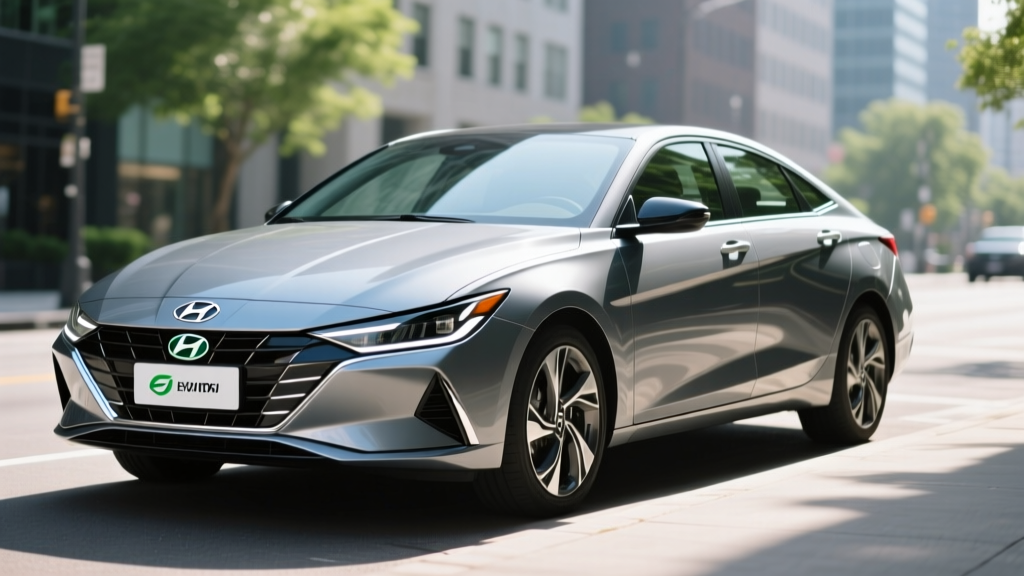
The Hyundai Elantra Hybrid has carved out a reputation as one of the most fuel-efficient sedans you can buy without plugging in. For shoppers researching Hyundai Elantra Hybrid gas mileage, the numbers are compelling on paper — but real-world driving tells a more nuanced story. This guide covers every efficiency figure, powertrain detail, and ownership cost you need before signing on the dotted line.
2025 Hyundai Elantra Hybrid: Key Specifications at a Glance
| Spec | Value |
|---|---|
| Powertrain | 1.6L 4-cyl GDI + permanent-magnet synchronous motor |
| Combined Output | 139 hp / 195 lb-ft torque |
| Transmission | 6-speed dual-clutch automatic (DCT) |
| EPA MPG (Blue trim) | 54 city / 58 highway / 56 combined |
| EPA MPG (SEL/Limited trim) | 49 city / 52 highway / 50 combined |
| Fuel Tank | 11.1 gallons |
| Total Range (Blue trim) | ~621 miles |
| 0–60 mph | ~8.6 seconds |
| Hybrid Battery | 1.32 kWh lithium-ion polymer |
| Base MSRP (Blue) | $26,250 |
| Hybrid Battery Warranty | 10 years / 100,000 miles |
Hyundai Elantra Hybrid Gas Mileage: EPA vs. Real World
The headline number is the one that matters most to buyers: up to 56 MPG combined on the Blue trim, according to fueleconomy.gov. But the Elantra Hybrid's efficiency varies meaningfully by trim, driving style, and season.
EPA Fuel Economy Breakdown by Trim
| Trim Level | City MPG | Highway MPG | Combined MPG |
|---|---|---|---|
| Blue | 54 | 58 | 56 |
| SEL Premium | 49 | 52 | 50 |
| Limited | 49 | 52 | 50 |
The trim-level gap exists because the Blue trim rides on smaller, lighter 16-inch wheels with low-rolling-resistance tires, while the SEL and Limited trims wear 17-inch alloys and carry additional equipment weight — features like leather seats, a larger infotainment screen, and extra sound deadening. That roughly 6 MPG penalty is the trade-off for a more premium cabin.
Real-World MPG: What Owners Actually See
Hybrids have a well-documented tendency to exceed their EPA city ratings in stop-and-go traffic because regenerative braking recovers energy that a gas car would waste as heat. In mixed suburban driving with moderate speeds, owners frequently report 55–60 MPG in the Blue trim during spring and fall — the sweet spot for hybrid efficiency.
However, two scenarios drag the numbers down:
- Highway cruising above 75 mph: Aerodynamic drag dominates, and the electric motor contributes less at sustained high speeds. Expect 46–50 MPG in the Blue trim on flat interstate runs at 80 mph.
- Cold weather (below 35°F): The gasoline engine runs more frequently to heat the cabin and warm the catalytic converter. Winter MPG can drop to 42–46 combined in the Blue trim — a 15–20% reduction from the EPA sticker.
For the SEL and Limited trims, real-world combined driving typically lands in the 46–52 MPG range depending on conditions. If your commute is mostly city with speeds under 45 mph, you'll skew toward the high end. Predominantly highway commuters should plan around the lower figures.
Understanding the Powertrain: How It Delivers Those MPG Numbers
The Elantra Hybrid pairs a 1.6-liter GDI 4-cylinder engine (producing 104 hp on its own) with a 32 kW electric motor integrated into the 6-speed dual-clutch transmission. Combined system output is 139 horsepower and 195 lb-ft of torque.
Unlike the Toyota Prius, which uses a continuously variable transmission (CVT) through a planetary gearset, Hyundai chose a traditional DCT. This decision gives the Elantra Hybrid a more conventional, stepped driving feel — shifts are perceptible, and there's none of the "rubber-band" drone common in CVT-equipped hybrids. The trade-off is that the DCT can occasionally hesitate during low-speed maneuvers, like creeping through a parking lot or merging from a stop.
The 1.32 kWh lithium-ion polymer battery pack sits behind the rear seats. This is a small pack by electrified-vehicle standards — it's not designed for meaningful electric-only driving. Instead, it buffers energy captured during braking and coasting, then deploys it to assist the gas engine during acceleration and enable brief engine-off coasting at low speeds. You'll notice the engine shutting off at stoplights and in slow traffic, which is where the Elantra Hybrid earns its exceptional city MPG.
HEV vs. PHEV vs. Full EV: Which Is Right for You?
The Elantra Hybrid is a conventional hybrid (HEV). It cannot be plugged in. It has no electric-only driving range to speak of. If you were hoping for a plug-in version, Hyundai discontinued the Elantra Plug-in Hybrid after the 2023 model year, so the current lineup is HEV-only.
Quick Comparison: Where the Elantra Hybrid Fits
| Factor | Elantra Hybrid (HEV) | Typical PHEV (e.g., Toyota Prius Prime) | Full EV (e.g., Hyundai Ioniq 6) |
|---|---|---|---|
| Plug-in Required? | No | Yes (for EV range benefit) | Yes |
| Electric-Only Range | ~0.5 mi at low speed | 35–44 mi | 270–360 mi |
| Fuel / Energy Cost (per mile) | ~$0.06 (at $3.30/gal) | ~$0.04 (electric) / $0.07 (gas) | ~$0.04 (electric) |
| Home Charging Needed? | No | Recommended | Essential |
| Base Price Range | $26,250–$31,000 | $33,000–$40,000 | $37,500–$52,000 |
| Federal Tax Credit | None | Up to $3,750–$7,500* | Up to $7,500* |
*Tax credit eligibility depends on MSRP caps, buyer income limits, and battery sourcing requirements under IRS §30D. Verify current rules at irs.gov.
Choose the Elantra Hybrid If:
- You don't have access to home or workplace charging
- You want maximum fuel efficiency with zero behavior change — just fill up less often
- Your budget is under $32,000 and you want a new car with a full warranty
- You drive 12,000–15,000 miles per year and want to minimize fuel costs without a price premium
Consider a PHEV or Full EV If:
- You have Level 2 home charging and a short commute (a PHEV can cover most daily miles on electricity)
- You want to reduce gasoline consumption to near zero
- You qualify for federal or state EV incentives that close the price gap
- You're willing to spend more upfront for lower per-mile energy costs over time
Does the Elantra Hybrid Qualify for Any Tax Credit?
No. The Hyundai Elantra Hybrid is a conventional HEV and does not qualify for the federal §30D Clean Vehicle Credit. That credit applies only to plug-in vehicles (PHEVs and BEVs) that meet battery capacity, MSRP, buyer income, and critical-mineral sourcing thresholds.
Some states offer their own incentives for hybrid vehicles, but these are increasingly rare. Most state-level programs now target plug-in vehicles exclusively. Check your state's energy or environmental agency website for current programs — but do not count on a hybrid-specific rebate.
One financial bright spot: the Elantra Hybrid's lower purchase price (starting at $26,250) means you're not relying on a tax credit to make the math work. Compared to a PHEV that starts at $33,000+ before incentives, the Elantra Hybrid's fuel savings pay for themselves through lower monthly payments and dramatically reduced fuel spend.
Reliability, Battery Longevity, and Replacement Cost
Hyundai Hybrid Battery Warranty
Coverage: 10 years / 100,000 miles (whichever comes first) for the original owner in most states. In California-emissions states (CA, CT, ME, MA, NJ, NY, OR, RI, VT, WA), hybrid system components carry a 10-year/150,000-mile warranty.
What's covered: The hybrid battery pack, hybrid control unit, and electric motor. If battery capacity degrades below a functional threshold during the warranty period, Hyundai will repair or replace it at no cost.
The Elantra Hybrid's 1.32 kWh battery is small and operates within a conservative state-of-charge window — it never fully charges or fully depletes. This shallow-cycling strategy is extremely easy on lithium-ion cells, which is why hybrid batteries routinely outlast their warranty periods. Based on long-term fleet data from similar Hyundai/Kia hybrid systems, meaningful degradation is uncommon before 150,000+ miles.
If you do need an out-of-warranty replacement, expect to pay between $2,000 and $3,500 for a new hybrid battery pack, including labor. Refurbished packs may be available for $1,200–$1,800 through independent hybrid specialists. For context, this is significantly less than a full EV battery replacement, which can exceed $10,000–$15,000.
Overall Reliability
Hyundai's hybrid powertrain has proven durable since its introduction in the Ioniq and Elantra lines. The 6-speed DCT is the component most likely to generate maintenance attention — some owners report clutch-pack wear at high mileages (120,000+), though this is not widespread. The naturally aspirated 1.6L engine is simple and low-stress, with no turbocharger to fail. Routine maintenance costs are low: there's no hybrid-specific service interval beyond standard oil changes and cabin filter replacements.
The Elantra Hybrid earns solid marks from IIHS, typically achieving Top Safety Pick status when equipped with the standard Hyundai SmartSense suite (forward collision avoidance, lane keeping, blind-spot monitoring).
Ownership Cost: What 5 Years Looks Like
The real appeal of the Elantra Hybrid is the total cost picture. Here's a realistic five-year ownership estimate for a Blue-trim driver covering 15,000 miles annually:
| Cost Category | 5-Year Estimate |
|---|---|
| Fuel (56 MPG avg, $3.30/gal) | ~$4,420 |
| Fuel (comparable gas sedan, 30 MPG avg) | ~$8,250 |
| Fuel Savings vs. Gas Sedan | ~$3,830 |
| Insurance (national avg for compact sedan) | ~$7,500–$9,000 |
| Maintenance (oil, filters, tires, brakes) | ~$2,200–$2,800 |
| Depreciation (estimated) | ~$9,000–$11,000 |
The fuel savings alone — nearly $3,800 over five years — largely offset the Elantra Hybrid's modest price premium over the gas-only Elantra (roughly $3,000–$4,000 at the Blue trim level). Beyond that, you're ahead. Regenerative braking also extends brake pad life; many hybrid owners reach 60,000+ miles on their original pads.
Pros
- Class-leading 56 MPG combined (Blue trim)
- No plug-in charging required — zero lifestyle adjustment
- 10-year/100,000-mile hybrid battery warranty
- Comfortable, quiet cabin with solid tech features
- Over 620 miles of total range on one tank
- Competitive base price under $27,000
Cons
- Higher trims lose 6 MPG for added features
- DCT can hesitate at low speeds
- No plug-in or EV-only option in current lineup
- No all-wheel-drive availability
- Rear-seat headroom is tight for tall passengers
- No federal tax credit eligibility
Who Should Buy the Hyundai Elantra Hybrid?
The Elantra Hybrid is purpose-built for a specific buyer: someone who wants exceptional fuel economy, doesn't want to plug in, and values a low purchase price. It's ideal for apartment dwellers without charging access, long-distance commuters who rack up highway miles, and budget-conscious buyers who want to minimize ongoing fuel costs.
If you drive more than 15,000 miles per year, the fuel savings compound rapidly. A driver covering 20,000 miles annually in the Blue trim would spend roughly $1,180 per year on fuel — compared to $2,200+ in a comparable 30 MPG gas sedan. That's over $5,000 saved in five years.
If you have home charging and a short commute, a PHEV like the Toyota Prius Prime or a full EV may serve you better — but at a higher purchase price. The Elantra Hybrid occupies the sweet spot of maximum efficiency with minimum complexity, and for many buyers, that's exactly the right balance.
Frequently Asked Questions
How many MPG does the Hyundai Elantra Hybrid get?
The Blue trim achieves an EPA-rated 54 city / 58 highway / 56 combined. The SEL and Limited trims are rated at 49 city / 52 highway / 50 combined. Real-world results vary: city driving often exceeds EPA numbers, while cold weather and high-speed highway driving reduce them by 10–20%.
Can you plug in the Hyundai Elantra Hybrid?
No. The Elantra Hybrid is a conventional HEV. It charges its small battery exclusively through regenerative braking and the gasoline engine. There is no plug, no charging port, and no electric-only driving range. Hyundai discontinued the Elantra Plug-in Hybrid after 2023.
How far can the Elantra Hybrid drive on one tank?
With an 11.1-gallon fuel tank and 56 MPG combined (Blue trim), the Elantra Hybrid can travel approximately 621 miles between fill-ups. In real-world mixed driving, expect 550–600 miles. Conservative highway driving at moderate speeds can push this higher.
Is the Hyundai Elantra Hybrid reliable?
Yes. Hyundai's hybrid system has a strong track record, and the 1.6L naturally aspirated engine is low-stress. The 10-year/100,000-mile hybrid battery warranty provides long-term peace of mind. Out-of-warranty battery replacement, if needed after 150,000+ miles, costs $2,000–$3,500.
Does the Elantra Hybrid qualify for a tax credit?
No. Federal §30D Clean Vehicle Credits apply only to plug-in vehicles (PHEVs and BEVs). The Elantra Hybrid, as a conventional HEV, does not qualify for federal or most state EV incentives. Its value proposition rests on low purchase price and high fuel savings rather than tax benefits.
How does the Elantra Hybrid compare to the Toyota Prius?
The Prius (57 city / 62 highway / 59 combined on LE trim) edges out the Elantra Hybrid by 3 MPG combined and offers available all-wheel drive. However, the Elantra Hybrid starts at a lower MSRP, has a larger rear seat, and offers a more traditional driving feel with its DCT. Both are excellent choices; the decision often comes down to styling preference, interior space needs, and which dealer is closer to you.