Quick Verdict: The Efficiency Champion of the Elantra Lineup
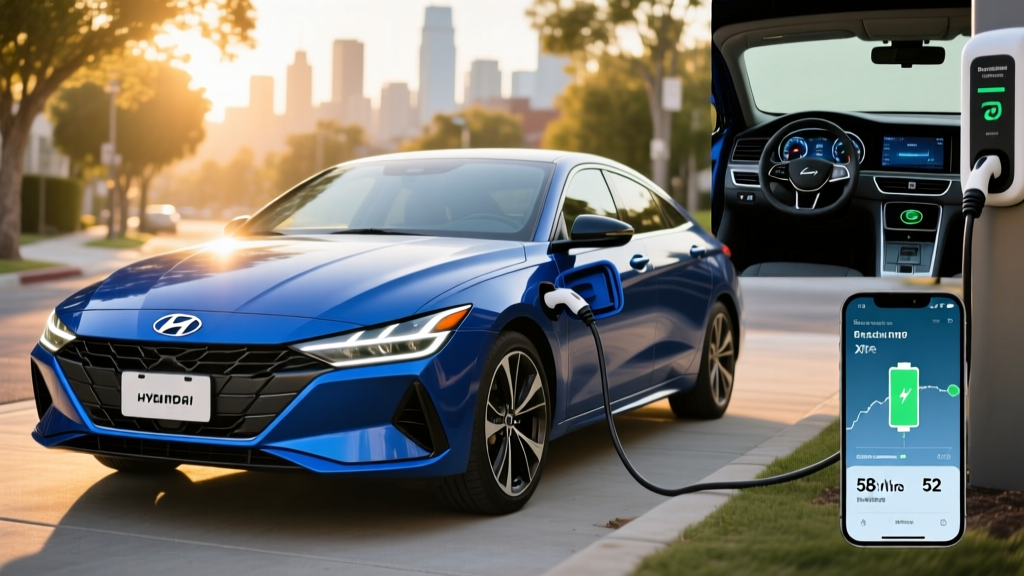
The Hyundai Elantra Hybrid Blue trim occupies a specific and compelling niche: maximum fuel economy without the complexity, cost, or charging dependency of a plug-in hybrid or full electric vehicle. For 2026, the Blue trim remains the efficiency-oriented choice in the Elantra Hybrid range, trading some premium features for the lightest curb weight and the highest EPA fuel-economy ratings in the lineup.
If you're evaluating the Hyundai Elantra Hybrid Blue trim against competitors like the Toyota Corolla Hybrid or Honda Civic Hybrid, or weighing it against stepping up to a PHEV or BEV, this guide gives you the exact numbers — EPA ratings, real-world MPG observations, powertrain output, pricing, and long-term battery reliability — to make a data-driven decision.
EPA Fuel Economy and Real-World MPG
Fuel economy is the entire reason the Blue trim exists. Hyundai engineers optimize this trim for the lowest weight and least parasitic drag, which translates directly into higher MPG figures than the more feature-laden Limited trim.
| Metric | Blue Trim | Limited Trim (for comparison) |
|---|---|---|
| City MPG | 53 | 49 |
| Highway MPG | 56 | 52 |
| Combined MPG | 54 | 50 |
| Fuel Tank Capacity | 11.1 gal | 11.1 gal |
| Total Range (est.) | ~599 mi | ~555 mi |
Source: fueleconomy.gov
Hyundai's hybrid system, like Toyota's, tends to deliver higher real-world city MPG than the EPA sticker suggests, because regenerative braking recaptures energy in stop-and-go traffic. Owners frequently report 55–60 MPG in urban driving. Highway MPG, however, can dip to 48–52 MPG at sustained 75+ mph speeds, especially in cold weather or with roof cargo. Expect a blended real-world average of 50–56 MPG depending on your commute profile and climate.
HEV vs. PHEV vs. EV: Which Powertrain Fits You?
A common point of confusion is the difference between a conventional hybrid (HEV) like the Elantra Hybrid Blue and a plug-in hybrid (PHEV) like the Tucson PHEV or a full battery-electric vehicle (BEV) like the Ioniq 6. Here's how they compare at a structural level:
| Factor | HEV (Elantra Hybrid Blue) | PHEV | BEV (Full EV) |
|---|---|---|---|
| Plug-in charging required? | No — self-charging via engine + regen | Yes — for electric-only range | Yes — sole energy source |
| Electric-only range | ~1 mi at low speed (EV mode) | 25–40 mi typical | 250–360+ mi |
| Gasoline engine | Yes (primary + generator) | Yes (backup) | No |
| Home charger needed | No | Recommended (Level 2) | Essential (Level 2) |
| Federal tax credit (§30D) | Not eligible | Eligible if sourcing rules met | Eligible if sourcing rules met |
| Best for | No home charging access; long commutes | Short electric commute + road trips | Home charging + lower running costs |
The Elantra Hybrid Blue is a conventional hybrid (HEV). It does not plug in. Its small traction battery (approximately 1.6 kWh) recharges through regenerative braking and the gasoline engine. You simply fill it with gasoline and drive — the hybrid system handles the rest, seamlessly blending electric motor assist with the engine for optimal efficiency.
Powertrain Specs: Engine, Motor, and Combined Output
| Engine | 1.6L GDI 4-cylinder (Smartstream) |
| Engine Output | 104 hp / 109 lb-ft torque |
| Electric Motor Output | 34 kW (~45 hp) / 127 lb-ft torque |
| Combined System Horsepower | 139 hp |
| Combined System Torque | 195 lb-ft |
| Transmission | 6-speed dual-clutch automatic (DCT) |
| Drivetrain | Front-wheel drive |
| Traction Battery | ~1.6 kWh lithium-ion polymer |
| 0–60 mph (est.) | ~8.5 seconds |
Unlike Toyota's planetary-gear e-CVT hybrid system, Hyundai uses a 6-speed dual-clutch transmission. This gives the Elantra Hybrid a more natural, stepped shifting feel under acceleration — no rubber-band drone. The trade-off is slightly less seamless low-speed electric-to-gas transitions compared to the Corolla Hybrid, though the difference is minor in everyday driving.
The 139 combined horsepower figure is modest. The Elantra Hybrid Blue is tuned for efficiency, not performance. Merging onto highways requires planning at altitude or when fully loaded, but around-town acceleration benefits from the electric motor's instant 127 lb-ft of torque, which fills in the low-end before the engine reaches its power band.
Pricing, Trims, and Tax Credit Eligibility
For the 2026 model year, the Elantra Hybrid Blue sits at the entry point of the hybrid lineup:
- Elantra Hybrid Blue: Starting MSRP ~$26,250 (including destination)
- Elantra Hybrid Limited: Starting MSRP ~$30,500 (including destination)
The Blue trim includes 16-inch alloy wheels (lighter and lower rolling resistance), a 10.25-inch digital cluster, wireless Apple CarPlay and Android Auto, Hyundai SmartSense safety suite (forward collision avoidance, lane keeping, blind-spot monitoring), and LED daytime running lights. The Limited adds leather seats, a larger infotainment screen, Bose audio, highway driving assist, and 17-inch wheels — at the cost of 4 combined MPG.
The Elantra Hybrid Blue is a conventional HEV and does not qualify for the IRS §30D New Clean Vehicle Credit. That credit applies only to plug-in electric vehicles (BEVs and PHEVs) that meet battery sourcing, MSRP cap, and buyer income requirements. See current rules at IRS.gov.
Some states and utilities offer rebates for conventional hybrids, but these vary widely by jurisdiction. Check your state energy office or local utility for current programs.
Battery Warranty, Reliability, and Replacement Cost
Hybrid battery longevity is consistently the top concern for buyers considering their first HEV. Here's the data:
- Hybrid Battery: 10 years / 100,000 miles (whichever comes first)
- Hybrid System Components: 10 years / 100,000 miles (inverter, motor, controller)
- Powertrain (engine + transmission): 10 years / 100,000 miles
- Bumper-to-Bumper: 5 years / 60,000 miles
In CARB states (California and states adopting California emissions standards), the hybrid battery warranty extends to 10 years / 150,000 miles.
Hyundai's hybrid batteries have proven durable in real-world service. The 1.6 kWh lithium-ion polymer pack operates in a shallow state-of-charge window — the hybrid system never fully charges or fully depletes it, which dramatically reduces degradation stress. Most Hyundai and Kia hybrid taxis and fleet vehicles report no battery replacement through 150,000+ miles.
If a replacement is needed out of warranty, a refurbished Hyundai hybrid battery typically costs between $2,000 and $3,500 installed at an independent hybrid specialist, or $3,500 to $5,000 at a dealership with a new OEM unit. This is comparable to Toyota Corolla Hybrid battery replacement costs and significantly less than a full EV battery replacement.
Hyundai's hybrid system reliability ratings have been strong. The brand's hybrids avoid the complexity of turbocharged engines, traditional automatic transmissions with torque converters, and the high-voltage architecture of full EVs — all common failure points in their respective categories.
Who Should Choose the Elantra Hybrid Blue?
Pros
- 54 MPG combined — among the highest of any non-plug-in sedan
- No plug-in charging required — works with gas-station-only lifestyle
- ~599-mile total range between fill-ups
- 10-year/100,000-mile hybrid battery warranty
- Under $27,000 starting MSRP
- Strong standard safety suite (Hyundai SmartSense)
- Natural-feeling 6-speed DCT (no CVT drone)
Cons
- No federal tax credit eligibility
- Blue trim lacks premium features (leather, premium audio)
- 16-inch wheels limit tire selection options
- Small trunk vs. non-hybrid Elantra (battery packaging)
- No all-wheel-drive option
Choose the Elantra Hybrid Blue if: You want 50+ MPG without installing a home charger, your commute involves significant city or suburban stop-and-go driving, your budget is under $28,000, and you plan to own the car 8–10 years (warranty coverage).
Consider a PHEV instead if: You have home charging access, your daily commute is under 30 miles round-trip, and you want to drive mostly on electricity while keeping a gas engine for road trips.
Consider a full BEV instead if: You have reliable Level 2 home charging, you want the lowest per-mile fuel cost (~$0.04/mi vs ~$0.07/mi for this hybrid), and you qualify for the §30D federal tax credit.
Consider the Corolla Hybrid instead if: You prioritize AWD availability (Toyota offers it) or slightly smoother low-speed hybrid transitions, though you'll sacrifice ~2 combined MPG and the DCT driving feel.
Frequently Asked Questions
How many MPG does the Hyundai Elantra Hybrid Blue trim get?
The EPA rates the 2026 Elantra Hybrid Blue at 53 city / 56 highway / 54 combined MPG. Real-world city driving often yields 55–60 MPG thanks to regenerative braking. Sustained highway driving above 75 mph can reduce efficiency to 48–52 MPG.
Does the Elantra Hybrid Blue need to be plugged in?
No. The Elantra Hybrid Blue is a conventional hybrid (HEV). It charges its own small battery through regenerative braking and the gasoline engine. You fuel it exclusively at gas stations, just like a conventional car.
Does the Elantra Hybrid qualify for a federal tax credit?
No. The IRS §30D New Clean Vehicle Credit applies only to plug-in electric vehicles (BEVs and qualifying PHEVs). Conventional hybrids like the Elantra Hybrid Blue are not eligible. Some state or utility rebates may apply — check your local programs.
How long will the hybrid battery last?
Hyundai warranties the hybrid battery for 10 years / 100,000 miles (150,000 miles in CARB states). In practice, Hyundai's hybrid batteries operate in a shallow charge window that minimizes degradation, and most report no battery issues through 150,000+ miles. Out-of-warranty replacement costs $2,000–$5,000 depending on source.
Is the Elantra Hybrid Blue reliable?
Hyundai's hybrid powertrain has demonstrated strong reliability since its introduction. The 1.6L Smartstream engine and 6-speed DCT avoid the complexity of turbochargers and traditional automatics. Hyundai backs the entire hybrid system with a 10-year/100,000-mile warranty. See crash-test and safety data at IIHS and NHTSA.
How does the Blue trim differ from the Limited?
The Blue trim uses lighter 16-inch wheels and forgoes some premium features (leather, Bose audio, highway driving assist) to achieve a lower curb weight and 4 additional combined MPG (54 vs 50). The powertrain is identical. The Limited starts ~$4,250 higher.
What is the total driving range?
With an 11.1-gallon fuel tank and 54 combined MPG, the Elantra Hybrid Blue can travel approximately 599 miles between fill-ups under EPA conditions. Real-world range of 520–580 miles is typical depending on driving style and conditions.