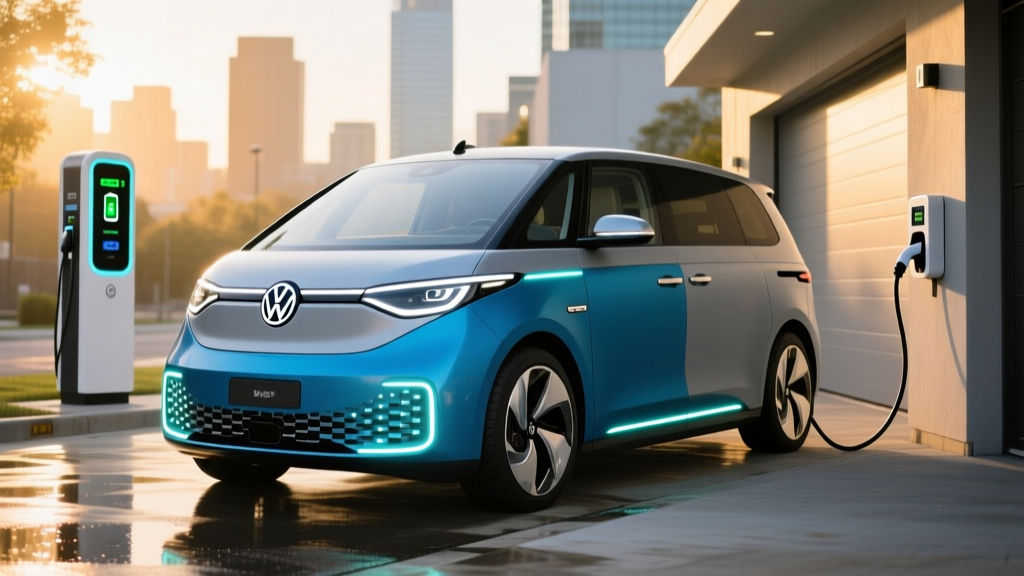
If you've been searching for a hybrid VW bus, you've likely run into a confusing mix of concept renders, forum rumors, and wishful thinking. Here's the definitive answer for 2026: Volkswagen does not sell a conventional hybrid (HEV) or plug-in hybrid (PHEV) version of its iconic bus anywhere in the world. What VW does sell is the ID. Buzz — a fully electric revival of the Microbus, built on VW's MEB battery-electric platform. And while that may disappoint buyers hoping for a gas-electric compromise, the ID. Buzz's specs, range, and practicality make a compelling case that an all-electric platform was the right call for this vehicle.
Below, we break down exactly what the 2026 VW ID. Buzz offers, why a hybrid variant doesn't exist (and likely won't), how it compares to the PHEV minivans that do exist, and whether going fully electric in a family bus actually works in the real world.
Why There Is No Hybrid VW Bus — and What VW Offers Instead
Volkswagen's decision to make the ID. Buzz a battery electric vehicle (BEV) rather than a hybrid wasn't arbitrary. The original Microbus's flat-floor, cab-over design is inherently well-suited to a skateboard-style battery pack. VW's MEB platform places the battery low and flat between the axles, giving the ID. Buzz a low center of gravity and maximizing interior volume — exactly what a bus should do.
Engineering a hybrid powertrain into this architecture would require packaging both an internal combustion engine and an electric motor, plus a fuel tank, exhaust system, and emissions hardware. That would compromise the flat floor, reduce cargo space, add weight, and increase mechanical complexity — all while delivering worse fuel economy than a purpose-built hybrid minivan like the Chrysler Pacifica Hybrid.
The result: the 2026 ID. Buzz is offered exclusively as a BEV in the United States. Buyers looking for a hybrid VW bus essentially have two paths:
- Go fully electric with the ID. Buzz and accept the charging lifestyle
- Choose a PHEV minivan from another brand if plug-in hybrid flexibility is a priority
2026 VW ID. Buzz: Full Spec Breakdown
The 2026 ID. Buzz is available in two drivetrain configurations — rear-wheel drive (Standard Range) and 4Motion all-wheel drive — across three trim levels: Pro S, Pro S Plus, and the launch-edition 1st Edition. Here are the numbers that matter.
| Spec | Pro S (RWD) | Pro S Plus / 1st Ed (AWD) |
|---|---|---|
| Battery (usable) | 86 kWh (NMC) | 86 kWh (NMC) |
| EPA Range | 234 miles | 216–231 miles |
| Combined Horsepower | 282 hp | 330 hp |
| 0–60 mph | ~7.9 sec | ~5.7 sec |
| Max DC Fast Charge | 200 kW (peak) | 200 kW (peak) |
| 10–80% DC Charge | ~26 min | ~26 min |
| Level 2 Charge Rate | 11 kW (AC) | 11 kW (AC) |
| Level 2 Full Charge | ~8.5 hours | ~8.5 hours |
| MPGe (combined) | 87 MPGe | 81–84 MPGe |
| Seating | 7 passengers | 7 passengers |
| Cargo (behind 3rd row) | 18.2 cu ft | 18.2 cu ft |
| Cargo (seats folded) | 75.5 cu ft | 75.5 cu ft |
| Base MSRP | $59,995 | $64,995–$69,995 |
Sources: EPA fueleconomy.gov, VW USA ID. Buzz page.
The EPA's 234-mile rating for the RWD model assumes mixed driving. In real-world highway testing at 70–75 mph, expect closer to 190–210 miles before needing a charge. In cold weather (below 35°F), battery chemistry and cabin heating can reduce range by 15–25%, putting realistic winter range around 175–200 miles. For city and suburban driving with regenerative braking, some owners report matching or slightly exceeding the EPA number.
Charging the ID. Buzz: Home and Public Networks
Charging is where the ID. Buzz's bus-sized battery becomes both an advantage and a consideration. The 86 kWh pack is large enough for genuine road-trip range, but it also means Level 2 home charging takes a full overnight cycle.
| Charging Level | Power | Miles Added/Hour | Time (10–80%) | Notes |
|---|---|---|---|---|
| Level 1 (120V) | ~1.4 kW | ~3–4 mi/hr | ~48+ hours | Emergency/trickle only |
| Level 2 (240V, 48A) | 11 kW | ~28–32 mi/hr | ~6 hours (10–80%) | Home charger — overnight |
| DC Fast Charge | 200 kW (peak) | ~140 mi in 10 min | ~26 min (10–80%) | CCS connector; tapers above 80% |
Important note on kW vs. kWh: kW (kilowatts) measures the rate of charging — like water flowing through a hose. kWh (kilowatt-hours) measures the battery's total capacity — like the size of the tank. The ID. Buzz's battery holds 86 kWh of energy and can accept up to 200 kW of charging power at peak.
The ID. Buzz uses the CCS1 connector for DC fast charging. VW has committed to adopting the NACS (Tesla-style) connector on future models, but for the 2026 model year, CCS remains the standard. An adapter for Tesla Supercharger access may be available — check VW's latest compatibility guidance.
The DC charge curve is worth understanding: the ID. Buzz peaks near 200 kW at low state-of-charge but tapers significantly past 80%. Charging from 80–100% on DC can take nearly as long as the 10–80% session. For road trips, plan stops around the 10–80% window for the fastest turnaround.
Is There a PHEV Alternative to the ID. Buzz?
If you specifically want a plug-in hybrid minivan or bus-style vehicle, the market is extremely limited. Here's how the closest alternatives compare:
| Vehicle | Powertrain | Electric Range | Total Range | Combined MPG/MPGe | Starting MSRP |
|---|---|---|---|---|---|
| 2026 VW ID. Buzz | BEV (electric only) | 216–234 mi (total) | 216–234 mi | 81–87 MPGe | $59,995 |
| Chrysler Pacifica Hybrid | PHEV (gas + electric) | 32 mi electric-only | ~520 mi total | 82 MPGe / 30 MPG gas | ~$51,000 |
| Toyota Sienna (HEV) | HEV (hybrid, no plug) | N/A (no EV mode) | ~630 mi | 36 MPG combined | ~$39,000 |
The Chrysler Pacifica Hybrid is the only PHEV minivan on the market. It offers 32 miles of electric-only range on a 16 kWh battery, then operates as a conventional hybrid. For families with short commutes and home charging, it can run almost entirely on electricity day-to-day while keeping a gas engine for road trips.
The Toyota Sienna is a conventional hybrid (HEV) — it does not plug in and has no meaningful electric-only range. It's the fuel-efficiency champion among gas-powered minivans at 36 MPG combined, but it cannot drive on electricity alone.
Neither of these vehicles offers the ID. Buzz's retro styling, flat-floor architecture, or all-electric driving experience. They are, however, pragmatic choices for buyers who need maximum range flexibility without relying on charging infrastructure.
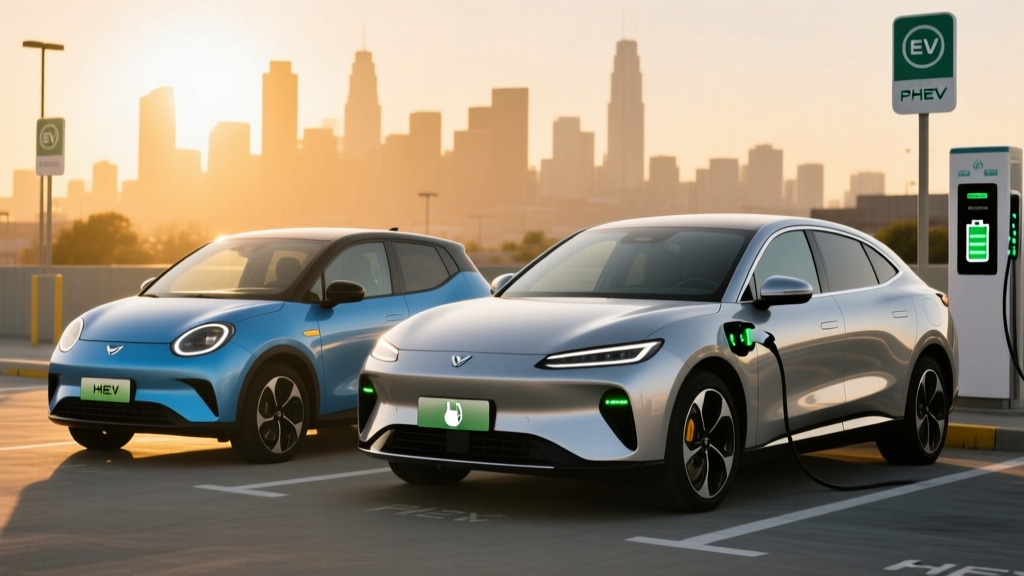
HEV vs. PHEV vs. BEV: Which Powertrain Fits You?
Understanding the distinction between hybrid types is critical before deciding whether the ID. Buzz (a BEV) or a hybrid alternative is right for your household.
Example: Toyota Sienna
• No plug — charges via regenerative braking
• 1–2 miles electric-only at low speed
• 30–40 MPG combined
• Best for: drivers without home charging who want better fuel economy
Example: Chrysler Pacifica Hybrid
• Plugs in to charge (16 kWh battery typical)
• 25–40 miles electric-only range
• 30+ MPG after battery depletes
• Best for: short-commute families who want gas backup for road trips
Example: VW ID. Buzz
• 100% electric — no gas engine
• 200–234 miles total range
• Lowest per-mile "fuel" cost
• Best for: households with home charging and predictable routes, or those wanting zero tailpipe emissions
The ID. Buzz is a BEV. If you need 500+ miles of range without stopping, a hybrid minivan is the better tool. If most of your driving is within 150 miles of home and you can charge overnight, the ID. Buzz's operating cost advantage is significant.
Pricing, Tax Credits, and Total Cost of Ownership
The 2026 VW ID. Buzz starts at $59,995 for the Pro S RWD and climbs to approximately $69,995 for the fully loaded 1st Edition AWD. That positions it as a premium minivan — more expensive than a Toyota Sienna or Honda Odyssey, and roughly on par with a well-equipped Chrysler Pacifica Hybrid.
Federal Tax Credit Eligibility (§30D)
As of 2026, the federal EV tax credit under IRS §30D provides up to $7,500 for qualifying new EVs, but eligibility depends on several factors:
- MSRP cap: Vans, SUVs, and pickup trucks must have an MSRP at or below $80,000. All ID. Buzz trims qualify.
- Buyer income cap: Adjusted gross income must not exceed $150,000 (single), $225,000 (head of household), or $300,000 (joint filers).
- Battery sourcing: A percentage of critical minerals and battery components must be sourced from the U.S. or free-trade-agreement partners. VW has been working to meet these thresholds, but eligibility can vary by model year and build date.
- Point-of-sale transfer: As of 2024, qualifying buyers can transfer the credit to the dealer for an upfront price reduction at purchase.
Always verify current eligibility on IRS.gov before purchasing. Tax rules are subject to change and individual eligibility varies. Consult a tax professional for your specific situation.
Estimated 5-Year Cost of Ownership
| Cost Factor | VW ID. Buzz (BEV) | Toyota Sienna (HEV) | Chrysler Pacifica Hybrid (PHEV) |
|---|---|---|---|
| Purchase Price (base) | $59,995 | $39,000 | $51,000 |
| Federal Tax Credit | Up to –$7,500 | $0 | $0* |
| Fuel / Electricity (5 yr) | ~$3,600 | ~$6,700 | ~$4,800 |
| Maintenance (5 yr) | ~$1,500 | ~$3,200 | ~$3,000 |
| Estimated Insurance (5 yr) | ~$9,000 | ~$7,200 | ~$7,800 |
| Net 5-Year Cost (est.) | ~$66,595 | ~$56,100 | ~$66,600 |
*The Pacifica Hybrid previously qualified for a partial credit; check current IRS rules. Electricity cost based on $0.14/kWh national average. Gas cost based on $3.50/gallon. Insurance premiums for EVs tend to run 15–25% higher than comparable gas vehicles. Actual costs vary by region, driving habits, and utility rates.
Battery Warranty, Reliability, and Replacement Costs
Hybrid and EV battery longevity is consistently a top concern for buyers spending $60,000+ on a vehicle. VW covers the ID. Buzz's high-voltage battery with a comprehensive warranty:
• Duration: 8 years / 100,000 miles (whichever comes first)
• Coverage threshold: Battery must retain at least 70% of original capacity during the warranty period
• What's covered: Defects, excessive degradation below 70% State of Health (SoH)
• What's not covered: Normal gradual degradation above 70%, cosmetic issues, damage from accidents or misuse
VW's MEB platform batteries use NMC (nickel manganese cobalt) chemistry, which offers high energy density but is somewhat more susceptible to degradation from sustained high state-of-charge and extreme temperatures compared to LFP (lithium iron phosphate) chemistry. To maximize battery life:
- Set daily charge limit to 80% and only charge to 100% for long trips
- Use preconditioning when navigating to a DC fast charger
- Avoid leaving the vehicle at 100% SoC for extended periods in hot weather
- Minimize repeated back-to-back DC fast charging sessions when Level 2 is available
Battery Replacement Cost
Out-of-warranty replacement for the ID. Buzz's 86 kWh battery pack is estimated at $15,000–$22,000 based on current MEB-platform pricing. However, real-world data from older MEB vehicles (like the ID.4, which has been on sale since 2021) shows degradation rates of roughly 1–2% per year under normal use, suggesting the battery should retain 85–90% capacity at the 100,000-mile mark — well above the warranty threshold.
For comparison, hybrid battery replacements (like those in the Toyota Sienna) typically cost $3,000–$5,000, but those batteries are much smaller (1.6–1.9 kWh) and serve a different function.
Who Should Buy the ID. Buzz — and Who Should Look Elsewhere
- You have reliable home Level 2 charging
- Your daily driving is under 150 miles round-trip
- You want the iconic VW bus styling and a unique vehicle
- You value a flat floor, spacious 7-passenger cabin, and low running costs
- You're comfortable planning DC fast-charge stops on road trips
- You want zero tailpipe emissions
- You lack home charging access (apartment, street parking)
- You regularly drive 300+ miles between stops
- You frequently tow (ID. Buzz is not rated for towing in the U.S.)
- You need maximum range flexibility in rural areas with sparse charging
- Your budget is closer to $40,000–$50,000
- You want a proven, decade-long reliability track record
Frequently Asked Questions
Does VW make a hybrid bus or van?
No. As of 2026, Volkswagen does not offer a hybrid (HEV) or plug-in hybrid (PHEV) version of the ID. Buzz or any other bus/van model. The ID. Buzz is exclusively a battery electric vehicle (BEV). VW's hybrid offerings in the U.S. are limited and do not include any van or bus body style.
How many miles of range does the ID. Buzz get?
The EPA rates the RWD ID. Buzz at 234 miles and the AWD version at 216–231 miles depending on trim and wheel size. In real-world highway driving, expect 190–210 miles; in cold weather, plan for 175–200 miles.
How long does it take to charge the ID. Buzz?
On a Level 2 home charger (11 kW), a full charge takes approximately 8.5 hours — easily done overnight. On a DC fast charger, 10–80% takes about 26 minutes at a peak rate of 200 kW.
Does the ID. Buzz qualify for the $7,500 federal tax credit?
The ID. Buzz meets the MSRP cap for vans (under $80,000), but full credit eligibility depends on the buyer's income, the vehicle's battery component and critical-mineral sourcing, and current IRS rules. Check IRS.gov and verify with your dealer before purchase.
What is the ID. Buzz battery warranty?
VW covers the high-voltage battery for 8 years or 100,000 miles, guaranteeing at least 70% capacity retention. Out-of-warranty replacement is estimated at $15,000–$22,000.
Can the ID. Buzz tow?
The U.S.-spec ID. Buzz is not currently rated for towing. European versions have a tow rating of approximately 2,200 lbs, but VW has not certified the U.S. model for towing. If towing is a priority, a hybrid minivan like the Pacifica Hybrid (rated for 3,600 lbs) is a better fit.
Is the ID. Buzz self-driving?
No. The ID. Buzz comes equipped with VW's IQ.DRIVE suite, which includes adaptive cruise control, lane-keeping assist, and travel assist. This is an SAE Level 2 driver-assistance system — the driver must remain fully engaged and keep hands on the wheel at all times. It is not autonomous or self-driving.
Will VW ever release a hybrid or PHEV version of the ID. Buzz?
VW has not announced any plans for a hybrid or PHEV ID. Buzz. The MEB platform is designed exclusively for battery electric propulsion, and VW's corporate strategy has committed to an all-electric future in most major markets. A hybrid variant would require a fundamentally different platform and is unlikely.