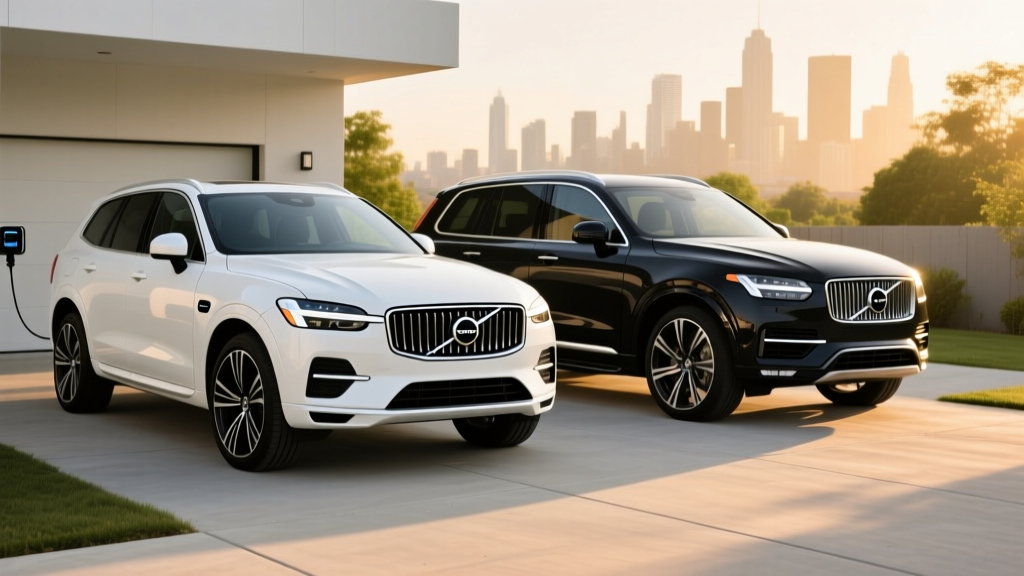
Volvo has committed fully to plug-in hybrid powertrains across its SUV lineup, branding them as "Recharge" models. For 2026, the two most popular hybrid Volvo options are the XC60 Recharge T8 and the XC90 Recharge T8. Both pair a turbocharged and supercharged 2.0-liter four-cylinder engine with a rear-axle electric motor and an 18.8 kWh (gross) lithium-ion battery. The result is a combined 455 horsepower, genuine short-commute electric driving, and the flexibility of a gas engine for longer trips.
This guide breaks down every number that matters — EPA MPG, real-world electric range, charging times, pricing, tax credit eligibility under current IRS §30D rules, and long-term battery reliability — so you can decide whether a hybrid Volvo fits your garage or whether a full BEV or conventional HEV makes more sense.
HEV vs. PHEV: Understanding Volvo's Hybrid Strategy
Conventional Hybrid (HEV): Uses a small battery (typically 1–2 kWh) charged only by regenerative braking and the engine. No plug. Examples: Toyota RAV4 Hybrid, Honda CR-V Hybrid. Cannot drive on electric power alone for meaningful distances.
Plug-In Hybrid (PHEV): Carries a larger battery (18.8 kWh in Volvo's case) that can be charged from a wall outlet or public charger. Delivers 30+ miles of electric-only driving before the gas engine engages. Volvo's current T8 Recharge models are all PHEVs — Volvo does not sell a conventional HEV in the US for 2026.
This distinction matters because Volvo dropped its mild-hybrid (non-plug) "B5" and "B6" powertrains from the US market after the 2024 model year. If you're shopping for a new hybrid Volvo today, you're shopping for a plug-in hybrid. That means access to home charging (even a standard 120V outlet works, albeit slowly) is a practical requirement to get the full value from the vehicle.
2026 Volvo XC60 Recharge T8: Specs, Range & MPG
| Specification | 2026 XC60 Recharge T8 |
|---|---|
| Powertrain | 2.0L turbo+supercharged I4 + rear electric motor |
| Combined Horsepower | 455 hp / 523 lb-ft torque |
| Battery (gross / usable) | 18.8 kWh / ~14.9 kWh usable |
| Battery Chemistry | NMC (nickel manganese cobalt) |
| EPA Electric-Only Range | 35 miles |
| EPA Combined MPGe (electric+gas) | 63 MPGe |
| EPA MPG (gas only, combined) | 28 MPG combined (26 city / 30 highway) |
| Total Combined Range | ~470 miles (gas + electric) |
| 0–60 mph | 4.5 seconds |
| DC Fast Charging | No — AC only (Level 1 & Level 2) |
| Level 2 Charge Time (0–100%) | ~5 hours at 3.7 kW (16A) |
| Level 1 Charge Time (120V) | ~12–14 hours |
| Drivetrain | eAWD (front engine, rear electric motor) |
| Cargo Volume | 25.8 cu ft (rear seats up) / 63.3 cu ft (folded) |
| Base MSRP | $58,950 (Plus trim) – $66,450 (Ultra trim) |
Real-World Electric Range: The EPA rates the XC60 Recharge at 35 electric-only miles. In practice, expect 28–32 miles in mixed suburban driving with moderate climate use. In cold weather (below 30°F), plan for 20–25 miles as the battery's usable capacity drops and cabin heating draws power. Highway-speed electric-only driving at 70+ mph will also reduce range to roughly 25 miles.
2026 Volvo XC90 Recharge T8: Specs, Range & MPG
| Specification | 2026 XC90 Recharge T8 |
|---|---|
| Powertrain | 2.0L turbo+supercharged I4 + rear electric motor |
| Combined Horsepower | 455 hp / 523 lb-ft torque |
| Battery (gross / usable) | 18.8 kWh / ~14.9 kWh usable |
| Battery Chemistry | NMC (nickel manganese cobalt) |
| EPA Electric-Only Range | 32 miles |
| EPA Combined MPGe (electric+gas) | 58 MPGe |
| EPA MPG (gas only, combined) | 27 MPG combined (26 city / 28 highway) |
| Total Combined Range | ~480 miles (gas + electric) |
| 0–60 mph | 4.9 seconds |
| DC Fast Charging | No — AC only (Level 1 & Level 2) |
| Level 2 Charge Time (0–100%) | ~5 hours at 3.7 kW (16A) |
| Level 1 Charge Time (120V) | ~12–14 hours |
| Drivetrain | eAWD (front engine, rear electric motor) |
| Cargo Volume | 15.8 cu ft (all rows up) / 85.7 cu ft (all folded) |
| Seating | 6 or 7 passengers |
| Base MSRP | $73,350 (Plus trim) – $82,550 (Ultra trim) |
The XC90's slightly lower EPA electric range (32 vs. 35 miles) reflects its heavier curb weight — roughly 5,100 lbs vs. 4,700 lbs for the XC60. Real-world expectations scale accordingly: 25–30 miles electric in temperate weather, dropping to 18–22 in deep cold.
Fuel Economy: Real-World MPG vs. EPA Stickers
| Model | EPA City | EPA Highway | EPA Combined | Real-World Observed |
|---|---|---|---|---|
| XC60 Recharge T8 (gas only) | 26 MPG | 30 MPG | 28 MPG | 27–31 MPG |
| XC90 Recharge T8 (gas only) | 26 MPG | 28 MPG | 27 MPG | 25–29 MPG |
Volvo's T8 PHEVs behave like most plug-in hybrids: when the battery is depleted and you're driving on gas alone, the engine operates as a conventional turbocharged four-cylinder. City driving benefits modestly from regenerative braking, but these aren't Toyota-style series hybrids optimized for stop-and-go efficiency. On the highway, the 8-speed automatic and relatively compact engine deliver competitive cruising fuel economy.
The real efficiency story is what happens when you charge regularly. If your daily commute is 30 miles round-trip and you plug in nightly, you may use almost no gasoline for months. Owners who charge daily and drive 12,000 miles per year commonly report using fewer than 150 gallons of gas annually — an effective cost of $500–$700 in fuel vs. $1,800+ for a comparable gas-only luxury SUV.
Charging: What You Need at Home
Neither the XC60 nor XC90 Recharge supports DC fast charging. This is a deliberate engineering choice — the 18.8 kWh battery is small enough that Level 2 AC charging fully replenishes it overnight, and adding DC hardware would increase cost and weight for minimal benefit.
Level 1 (120V household outlet): The included mobile charger delivers roughly 1.4 kW, adding about 5–6 miles of electric range per hour of charging. A full 0–100% charge takes 12–14 hours. This works if you park in a garage with a standard outlet and can plug in every night — the battery is small enough that even slow charging covers most daily needs.
Level 2 (240V, recommended): The onboard charger accepts up to 3.7 kW (16 amps). At this rate, a full charge takes roughly 5 hours. A dedicated Level 2 home station (such as a ChargePoint Home Flex or Wallbox Pulsar Plus) costs $400–$700 for the unit plus $500–$1,500 for professional installation, depending on whether your electrical panel needs an upgrade. Since the battery is only 18.8 kWh, you do not need a 48-amp charger — even a 20-amp, 240V circuit is sufficient.
Public Level 2 charging: Available at shopping centers, workplaces, and parking garages. At 3.7 kW, a 2-hour shopping trip adds roughly 12–15 miles of electric range — enough to meaningfully extend your electric driving for the day.
Pricing, Trims & Federal Tax Credit Eligibility
Volvo positions the Recharge T8 models as premium offerings, and pricing reflects that. Here's where the 2026 lineup stands:
- XC60 Recharge Plus: $58,950 MSRP (destination included)
- XC60 Recharge Ultra: $66,450 MSRP
- XC90 Recharge Plus (7-seat): $73,350 MSRP
- XC90 Recharge Ultra (6-seat): $82,550 MSRP
Does a Hybrid Volvo Qualify for the Federal Tax Credit?
Under current IRS §30D Clean Vehicle Credit rules, eligibility for PHEVs requires meeting several criteria simultaneously:
- Battery capacity: At least 7 kWh — Volvo's 18.8 kWh battery qualifies ✓
- MSRP cap: SUVs must be at or below $80,000 — the XC60 trims qualify; the XC90 Ultra at $82,550 exceeds the cap ✗
- Buyer income limits: AGI must not exceed $150,000 (single), $225,000 (head of household), or $300,000 (joint filers)
- Critical minerals & battery component sourcing: Must meet annually escalating thresholds for North American sourcing and processing — this is the most volatile requirement and changes year to year
- Final assembly: Must occur in North America — Volvo's US-built models may qualify, but the XC90 is assembled in Sweden, which disqualifies it from §30D ✗
- Point-of-sale transfer: Eligible buyers can apply the credit as an instant rebate at the dealership rather than waiting for tax filing
Bottom line: The XC90 Recharge is assembled in Sweden and does not meet the North American final assembly requirement, making it ineligible for the §30D federal credit regardless of price. The XC60 Recharge, built at Volvo's Ridgeville, South Carolina plant, may qualify depending on the current year's battery sourcing thresholds. Always verify eligibility using the IRS's official tool at fueleconomy.gov before purchasing, as sourcing rules tighten annually.
Battery Warranty, Reliability & Long-Term Costs
Volvo PHEV Battery Warranty: 8 years or 100,000 miles (whichever comes first), covering defects and capacity loss below 70% of original capacity. The hybrid system components (electric motor, power electronics, onboard charger) are covered under the same 8-year/100,000-mile powertrain warranty.
Volvo's T8 powertrain has been in production since 2015 (with the larger 18.8 kWh battery arriving for the 2022 model year), giving it a substantial real-world track record. The NMC battery chemistry offers high energy density in a compact package, though it is more sensitive to sustained high state-of-charge than LFP chemistry. Volvo's thermal management system actively conditions the battery, and the relatively small pack size means replacement costs are lower than full BEV batteries.
Battery replacement cost: If the 18.8 kWh pack requires replacement out of warranty, expect $6,000–$9,000 for the battery module plus $1,500–$2,500 in labor — totaling roughly $7,500–$11,500. This is significantly less than a full BEV battery replacement (often $15,000–$25,000) because you're replacing a much smaller pack.
Reliability data: Volvo as a brand scores mid-pack in J.D. Power and Consumer Reports reliability rankings. The T8 PHEV system itself has proven durable — the most common reported issues involve software glitches in the infotainment system (Google-based Android Automotive) and occasional 12V auxiliary battery drain, not the high-voltage traction battery. NHTSA recall data shows no widespread battery-related recalls for the T8 platform.
Hybrid Volvo vs. Full EV vs. Gas SUV: Which Fits You?
Choose the hybrid Volvo (XC60/XC90 Recharge T8) if:
- Your daily commute is under 35 miles and you can charge at home nightly
- You regularly take road trips of 300+ miles where charging infrastructure is sparse or unreliable
- You want a luxury 3-row SUV (XC90) with genuine electric commuting but no range anxiety
- You're not ready to commit to a full BEV but want to reduce gasoline consumption by 60–80%
Choose a full EV (like the Volvo EX90, BMW iX, or Tesla Model X) if:
- You have reliable home Level 2 charging and your daily driving is under 250 miles
- You want zero tailpipe emissions and lower per-mile energy costs
- You want to eliminate oil changes, spark plugs, and gas-engine maintenance entirely
- DC fast charging is available along your common road-trip routes
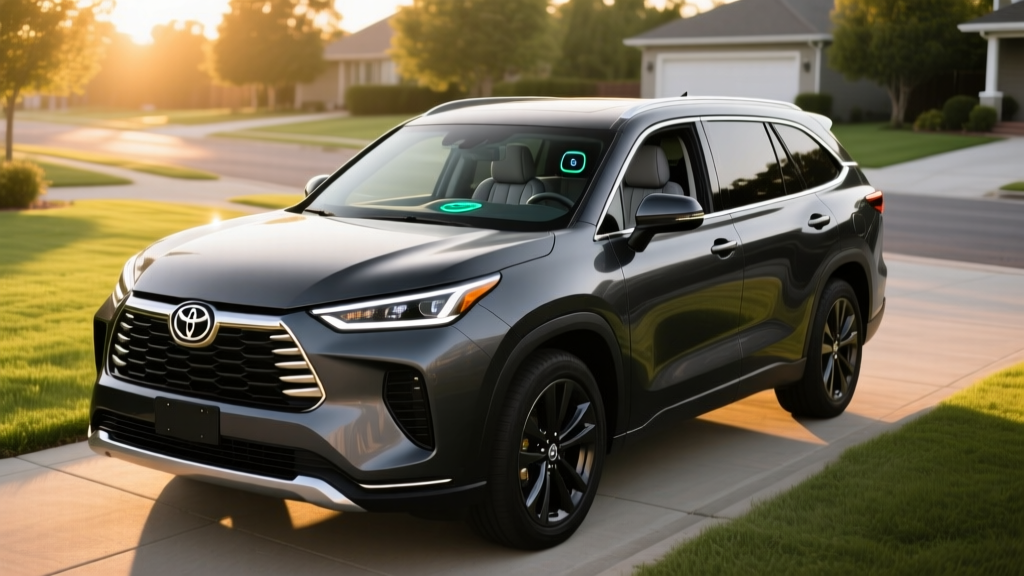
Choose a conventional HEV (like the Toyota Grand Highlander Hybrid) if:
- You cannot install a home charger (apartment, street parking, no garage outlet)
- You want maximum simplicity with no plug-in routine
- Your budget is under $50,000 and you prioritize value over luxury branding
Pros
- 455 hp delivers genuinely quick acceleration (4.5s 0–60 in XC60)
- 32–35 miles electric covers most daily commutes gasoline-free
- No range anxiety — gas engine provides 470+ total miles
- Premium Scandinavian interior, Google-based infotainment
- Standard AWD via electric rear axle (no mechanical driveshaft)
- 8-year/100,000-mile battery warranty
Cons
- No DC fast charging — long road trips run entirely on gas
- XC90 ineligible for federal §30D credit (Swedish assembly)
- Starting prices above $58,000 — premium over non-luxury PHEVs
- 3.7 kW onboard charger is slow compared to some competitors (Toyota RAV4 Prime charges at 6.6 kW)
- Cargo space reduced slightly vs. gas-only predecessors due to battery placement
- Real-world electric range drops significantly in sub-freezing temperatures
Frequently Asked Questions
How many MPG does the hybrid Volvo XC60 get?
The 2026 Volvo XC60 Recharge T8 is EPA-rated at 28 MPG combined (26 city / 30 highway) when operating on gasoline alone with a depleted battery. When factoring in electric-only driving, it achieves 63 MPGe combined. Real-world gas-only driving typically yields 27–31 MPG depending on driving style and terrain.
How far can the Volvo XC90 Recharge go on electric only?
The EPA rates the XC90 Recharge T8 at 32 miles of electric-only range. In real-world conditions, expect 25–30 miles in moderate temperatures and 18–22 miles in cold weather (below 30°F). The XC60 Recharge achieves a slightly higher 35 miles EPA due to its lighter weight.
Does Volvo make a conventional hybrid (non-plug-in)?
No. As of 2026, Volvo does not sell a conventional HEV in the United States. All Volvo "Recharge" models are plug-in hybrids (PHEVs). Volvo discontinued its mild-hybrid B5/B6 powertrains in the US market after 2024. If you cannot plug in at home, a Volvo PHEV will still function as a gas car, but you'll miss the efficiency and cost benefits of electric-only driving.
Can I DC fast charge a Volvo Recharge PHEV?
No. Neither the XC60 nor XC90 Recharge supports DC fast charging. They accept only AC charging — Level 1 (120V, ~1.4 kW) and Level 2 (240V, up to 3.7 kW). This is typical for PHEVs with smaller batteries, as the added cost and weight of DC hardware isn't justified for an 18.8 kWh pack that charges fully in 5 hours on Level 2.
Is the Volvo hybrid system reliable and what does battery replacement cost?
Volvo's T8 PHEV system has been in production since 2015 and has a solid reliability record for the high-voltage components. The battery is covered by an 8-year/100,000-mile warranty. Out-of-warranty battery replacement costs approximately $7,500–$11,500 (parts and labor), which is considerably less than full BEV battery replacements due to the smaller 18.8 kWh pack size.
Does the hybrid Volvo qualify for any tax credit?
The XC60 Recharge T8 may qualify for the federal §30D Clean Vehicle Credit (up to $7,500) because it is assembled in South Carolina, but eligibility depends on the buyer's income, current battery sourcing rules, and MSRP caps. The XC90 Recharge is assembled in Sweden and does not meet the North American final assembly requirement, making it ineligible for §30D. State-level incentives vary — check your local DMV or energy office for additional credits. Always verify current eligibility at irs.gov before purchasing.
How long does it take to charge a Volvo PHEV at home?
On a 240V Level 2 charger (3.7 kW), a full 0–100% charge takes approximately 5 hours. On a standard 120V household outlet (Level 1, ~1.4 kW), expect 12–14 hours. Because the battery is small (18.8 kWh gross), even overnight Level 1 charging is sufficient for most daily commuting needs.