Quick Verdict: What the 2026 Hybrid Subaru Crosstrek Delivers
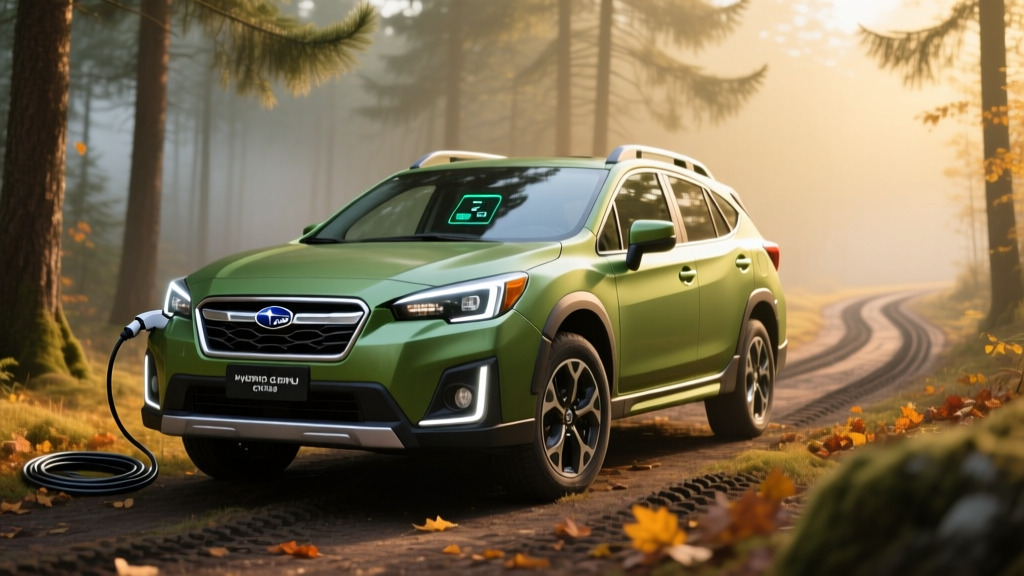
Subaru's compact crossover has long been a staple for outdoorsy drivers who need standard all-wheel drive without sacrificing daily practicality. The hybrid Subaru Crosstrek slots between the conventional gas model and full battery-electric alternatives like the Subaru Solterra, targeting buyers who want meaningful fuel savings without the lifestyle changes that come with plug-in charging. For 2026, Subaru continues to offer the Crosstrek Hybrid as a conventional hybrid electric vehicle (HEV) — meaning no plug, no range anxiety, and no dependence on charging infrastructure.
This matters because the compact crossover segment is crowded. Buyers cross-shopping the hybrid Crosstrek are also looking at the Toyota RAV4 Hybrid, Honda CR-V Hybrid, and the Kia Sportage Hybrid. Subaru's differentiator remains its symmetrical full-time all-wheel drive system, 8.7 inches of ground clearance, and the rugged credibility that comes with X-Mode traction management. The question is whether the hybrid powertrain's efficiency gains justify the price premium over the gas-only Crosstrek.
| Spec | Value |
|---|---|
| Powertrain Type | Conventional Hybrid (HEV) |
| Engine | 2.0L DOHC 4-cyl + electric motor |
| Combined Horsepower | 194 hp (net system) |
| Drivetrain | Symmetrical AWD (standard) |
| EPA Fuel Economy (Combined) | 36 MPG |
| EPA City / Highway | 38 city / 34 highway |
| Fuel Tank Capacity | 13.2 gallons |
| Estimated Total Range | ~475 miles |
| Ground Clearance | 8.7 inches |
| Cargo Volume (rear seats up) | 20.8 cu ft |
| Starting MSRP | $32,495 (Hybrid Premium) |
| Hybrid Battery Warranty | 8 years / 100,000 miles |
HEV vs PHEV: Why the Crosstrek Hybrid Is a Conventional Hybrid
Before digging into fuel economy numbers, it's worth clarifying what the hybrid Subaru Crosstrek is — and isn't. The current Crosstrek Hybrid is a conventional hybrid (HEV), not a plug-in hybrid (PHEV). Subaru previously sold a Crosstrek PHEV (based on the Toyota Prius Prime powertrain) through the 2023 model year, but that variant has been discontinued. The 2026 Crosstrek Hybrid you can buy today does not plug in.
| Factor | HEV (Crosstrek Hybrid) | PHEV (e.g., RAV4 Prime) | Full BEV (e.g., Solterra) |
|---|---|---|---|
| Plug-in Required? | No | Yes (Level 1 or 2) | Yes (Level 2 or DC fast) |
| Electric-Only Range | ~1 mile (low-speed assist) | 30–42 miles typical | 220–280+ miles (EPA) |
| Fuel Economy (combined) | 36 MPG | 38 MPG gas + 94 MPGe electric | N/A (electricity only) |
| Home Charging Needed? | No | Recommended for full benefit | Essential |
| Price Premium vs Gas | ~$2,500 | ~$6,000–$8,000 | ~$8,000–$12,000 |
| Federal Tax Credit | Not eligible | Up to $7,500 (varies) | Up to $7,500 (varies) |
| Best For | No home charging, simple ownership | Home charging + short commutes | Full electric, no gas |
If you're searching for a plug-in Crosstrek that delivers 17–25 miles of electric-only range, that product no longer exists in Subaru's lineup. The 2026 hybrid Crosstrek is strictly an HEV. For plug-in hybrid capability in a similar package, you'll need to look at competitors like the Toyota RAV4 Prime or the Hyundai Tucson PHEV — or step up to Subaru's all-electric Solterra, which offers approximately 227 miles of EPA range.
Fuel Economy: EPA Numbers and Real-World MPG
The headline figure for the 2026 hybrid Subaru Crosstrek is an EPA-estimated 36 MPG combined, breaking down to 38 MPG city and 34 MPG highway. These numbers represent a significant improvement over the gas-only Crosstrek's 2.0L engine, which returns 29 MPG combined (27 city / 34 highway) with the Lineartronic CVT.
| Model | City MPG | Highway MPG | Combined MPG | AWD Standard? |
|---|---|---|---|---|
| 2026 Subaru Crosstrek Hybrid | 38 | 34 | 36 | Yes |
| 2026 Subaru Crosstrek 2.0L (gas) | 27 | 34 | 29 | Yes |
| 2026 Toyota RAV4 Hybrid AWD | 41 | 38 | 39 | Yes |
| 2026 Honda CR-V Hybrid AWD | 40 | 34 | 37 | Yes |
| 2026 Kia Sportage Hybrid AWD | 38 | 38 | 38 | Yes |
According to fueleconomy.gov, the Crosstrek Hybrid's city-biased MPG split (38 city vs 34 highway) is typical of conventional hybrids. The electric motor provides maximum benefit at low speeds where the gasoline engine is least efficient — stop-and-go traffic, city intersections, and low-speed cruising. On the highway, the electric motor's contribution diminishes and aerodynamic drag dominates, which is why highway MPG drops slightly.
Real-World MPG: What Owners Actually Report
In real-world driving, conventional hybrids frequently exceed their EPA city estimates because regenerative braking recaptures more energy in heavy traffic than the EPA test cycle simulates. Many Crosstrek Hybrid owners report 37–40 MPG in mixed suburban and city driving. However, highway-heavy commutes at 75+ MPH typically yield 31–33 MPG, particularly with the Crosstrek's boxy shape and aggressive all-terrain tires on higher trims.
Cold weather reduces hybrid fuel economy by roughly 5–10% in winter conditions. The gasoline engine runs more frequently to maintain cabin heat and battery temperature, reducing the electric motor's contribution. Expect winter combined MPG in the low 30s in northern climates — still meaningfully better than the gas Crosstrek's winter figures in the mid-to-high 20s.
Powertrain Breakdown: Engine, Motor, and Horsepower
The 2026 Crosstrek Hybrid pairs a 2.0-liter DOHC horizontally opposed (Boxer) four-cylinder engine with an integrated electric motor and a compact lithium-ion battery pack. The combined system output is 194 horsepower — a notable upgrade from the gas-only 2.0L Crosstrek's 152 hp. This puts the hybrid in line with the optional 2.5L gas engine (182 hp) while delivering substantially better fuel economy.
The electric motor is sandwiched between the engine and the Lineartronic CVT (continuously variable transmission), providing torque fill at low RPMs where the Boxer engine is weakest. The result is noticeably quicker acceleration from stops and smoother merging onto highways. Subaru does not publish an official 0–60 MPH time for the hybrid variant, but independent testing of the previous-generation Crosstrek Hybrid measured approximately 7.8 seconds — roughly 1.5 seconds quicker than the gas 2.0L model.
Subaru's symmetrical all-wheel drive system remains standard on the hybrid, with the electric motor augmenting the rear axle under certain conditions. X-Mode with Hill Descent Control is included, maintaining the Crosstrek's off-road credibility. The hybrid battery pack is positioned under the cargo floor, preserving the full 20.8 cu ft of cargo volume and the standard 8.7 inches of ground clearance.
Pricing, Trims, and Tax Credit Eligibility
The 2026 hybrid Subaru Crosstrek is offered in a single Hybrid Premium trim, starting at an MSRP of $32,495 (including destination). This represents approximately a $2,500 premium over the comparably equipped gas Crosstrek Premium ($29,995). Standard equipment includes:
- 18-inch alloy wheels with all-season tires
- Subaru EyeSight driver-assist technology (adaptive cruise, lane-keep, pre-collision braking)
- 11.6-inch Starlink touchscreen with wireless Apple CarPlay and Android Auto
- Heated front seats and dual-zone automatic climate control
- LED headlights with automatic high beams
- Roof rails with 700-lb static load capacity
The sole factory option is a $1,850 package adding a power moonroof, blind-spot detection with rear cross-traffic alert, and a heated steering wheel — bringing a fully loaded Crosstrek Hybrid to approximately $34,345.
Federal Tax Credit: Does the Hybrid Crosstrek Qualify?
Under current IRS §30D rules, the conventional hybrid Subaru Crosstrek does not qualify for the federal clean vehicle tax credit. The $7,500 credit applies exclusively to plug-in electric vehicles — battery-electric vehicles (BEVs) and plug-in hybrids (PHEVs) that meet battery capacity, critical mineral sourcing, MSRP cap, and buyer income requirements. Because the Crosstrek Hybrid is an HEV with no plug-in capability, it falls outside §30D eligibility entirely.
For buyers specifically seeking federal incentive eligibility, the alternatives are:
- Subaru Solterra (BEV): Eligible for up to $7,500 federal credit depending on income, sourcing, and MSRP rules — check current IRS §30D guidance before purchasing.
- Competitor PHEVs: The Toyota RAV4 Prime, if available, may qualify for partial credit depending on battery sourcing compliance.
- State/local incentives: Some states offer rebates for conventional hybrids — check your state energy office or AFDC incentive database for current programs.
Reliability, Battery Warranty, and Long-Term Ownership Costs
Hybrid reliability is a top concern for buyers investing in a vehicle with a high-voltage battery. The good news: Subaru's hybrid system is proven technology, and the Crosstrek Hybrid's lithium-ion battery pack carries a robust warranty.
Subaru's hybrid battery warranty aligns with industry standards — Toyota, Honda, and Hyundai all offer similar 8-year/100,000-mile hybrid battery coverage. Real-world data from long-running hybrid models (Toyota Prius, Camry Hybrid) shows that modern lithium-ion hybrid batteries typically last 150,000–200,000+ miles before significant degradation. The Crosstrek Hybrid's battery pack is relatively small (approximately 1.1 kWh usable) compared to PHEV or BEV batteries, which means individual cell stress is lower and longevity tends to be excellent.
Battery Replacement Cost
If the hybrid battery does require replacement outside the warranty period, expect to pay approximately $2,500–$4,000 for a new OEM battery pack plus installation. This is substantially less than a full EV battery replacement (which can exceed $10,000–$20,000) because the Crosstrek Hybrid's pack is small. Third-party reconditioned hybrid batteries are also available for $1,500–$2,500, and individual cell module replacement (if only one or two cells fail) can cost as little as $500–$800 at a hybrid specialist shop.
Overall maintenance costs for the Crosstrek Hybrid are comparable to the gas model. The hybrid system actually reduces wear on the gasoline engine (it shuts off frequently in city driving) and on the brake pads (regenerative braking handles much of the deceleration). Owners commonly report original brake pads lasting 80,000–100,000 miles on hybrids versus 40,000–60,000 miles on gas-only equivalents.
Who Should Buy the Hybrid Crosstrek — And Who Should Look Elsewhere
- You drive 15,000+ miles per year and want fuel savings without changing your refueling habits
- You need standard AWD and high ground clearance for dirt roads, snow, or trailheads
- You don't have access to home or workplace charging (apartment, street parking)
- You want a simple ownership experience — no plug, no charging apps, no range planning
- You value the Crosstrek's rugged design and EyeSight safety tech but want better city MPG
- You have home Level 2 charging and a short commute (a PHEV can cover daily miles on electricity alone)
- You want to qualify for the $7,500 federal tax credit (HEVs are not eligible)
- You want to eliminate gasoline entirely (look at the Subaru Solterra or Hyundai Ioniq 5)
- Your priority is maximum fuel economy above all else (the RAV4 Hybrid achieves 39 MPG combined with AWD)
The hybrid Crosstrek occupies a specific niche: it's the right choice for drivers who want better fuel economy than a gas car but can't or won't deal with plug-in charging. The 7 MPG combined improvement over the gas Crosstrek (36 vs 29) translates to roughly $400–$550 per year in fuel savings for a driver covering 15,000 miles annually at $3.50/gallon — enough to recoup the $2,500 hybrid premium in about 5 years. Drivers covering more miles or facing higher gas prices will break even sooner.
Pros and Cons at a Glance
Pros
- 36 MPG combined with standard AWD — strong for the segment
- 194 hp system output is meaningfully quicker than gas 2.0L
- No plug-in required — zero lifestyle change from a gas car
- 8.7" ground clearance + X-Mode maintains off-road capability
- 8-year/100,000-mile hybrid battery warranty
- Full EyeSight ADAS suite standard
Cons
- Not eligible for the $7,500 federal EV tax credit
- Falls 3 MPG short of the RAV4 Hybrid's 39 MPG combined
- Only one trim available (Hybrid Premium) — limited configuration
- CVT can drone under hard acceleration (common to all CVT hybrids)
- ~$2,500 premium over gas model requires ~5 years of driving to recoup
- No PHEV option in Subaru's current lineup for electric-only commuting
Frequently Asked Questions
How many MPG does the hybrid Subaru Crosstrek get?
The 2026 Crosstrek Hybrid is EPA-rated at 38 MPG city, 34 MPG highway, and 36 MPG combined. Real-world owners typically report 37–40 MPG in mixed city and suburban driving, with highway-only trips returning 31–33 MPG at 75+ MPH. Cold weather reduces efficiency by approximately 5–10%.
Is the hybrid Crosstrek a plug-in hybrid?
No. The 2026 Subaru Crosstrek Hybrid is a conventional hybrid (HEV). It charges its small battery pack through regenerative braking and the gasoline engine — you never plug it in. Subaru discontinued the plug-in Crosstrek PHEV after the 2023 model year. If you need plug-in electric-only range, look at the Toyota RAV4 Prime or Hyundai Tucson PHEV.
How far can the Crosstrek Hybrid go on a full tank?
With a 13.2-gallon fuel tank and 36 MPG combined EPA rating, the Crosstrek Hybrid can travel approximately 475 miles between fill-ups. Real-world range is typically 420–460 miles depending on driving conditions, speed, and climate. Highway-only driving at 75 MPH yields roughly 400–420 miles.
Is the hybrid Subaru Crosstrek reliable?
Subaru's hybrid system is proven technology shared with Toyota's hybrid architecture (Subaru and Toyota have a strategic partnership). The hybrid battery carries an 8-year/100,000-mile warranty (10 years/150,000 miles in CARB states). Industry data from long-running hybrids shows battery packs typically lasting 150,000–200,000+ miles. The Crosstrek Hybrid's small battery (~1.1 kWh) experiences lower stress than larger PHEV or BEV packs, contributing to excellent longevity.
What does it cost to replace the hybrid battery?
Outside of warranty, a new OEM hybrid battery replacement for the Crosstrek Hybrid costs approximately $2,500–$4,000 installed. Reconditioned batteries are available for $1,500–$2,500, and individual cell module repairs can cost $500–$800 at a hybrid specialist. This is significantly less than full EV battery replacement costs.
Does the hybrid Crosstrek qualify for a federal tax credit?
No. Under IRS §30D rules, only plug-in electric vehicles (BEVs and PHEVs) qualify for the federal clean vehicle tax credit of up to $7,500. The Crosstrek Hybrid is a conventional HEV and is not eligible. Some states offer separate incentives for hybrid vehicles — check the Alternative Fuels Data Center for state-specific programs.
Hybrid vs PHEV vs EV — which should I choose?
Choose the hybrid Crosstrek if you lack home charging and want simple, efficient ownership with no plug. Choose a PHEV (like the RAV4 Prime) if you have home charging and a short commute — you'll drive on electricity most days and use gas only for longer trips. Choose a full EV (like the Solterra) if you want zero tailpipe emissions, lower per-mile fueling costs, and access to the federal tax credit — but only if you have reliable home or workplace charging.
How does the Crosstrek Hybrid compare to the RAV4 Hybrid?
The Toyota RAV4 Hybrid achieves 39 MPG combined (41 city / 38 highway) versus the Crosstrek Hybrid's 36 MPG combined. The RAV4 also offers more cargo space (37.6 cu ft vs 20.8 cu ft) and a PHEV variant (RAV4 Prime). However, the Crosstrek Hybrid offers higher ground clearance (8.7" vs 8.1"), standard X-Mode for off-road traction, and a lower starting price. If maximum fuel economy and cargo space are priorities, the RAV4 wins. If off-road capability and rugged design matter more, the Crosstrek is the stronger pick.