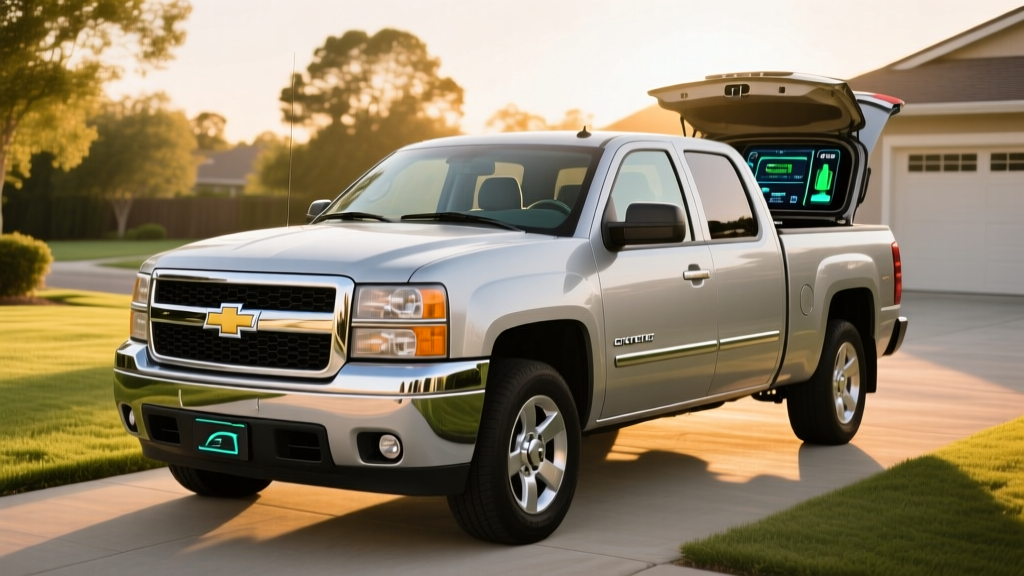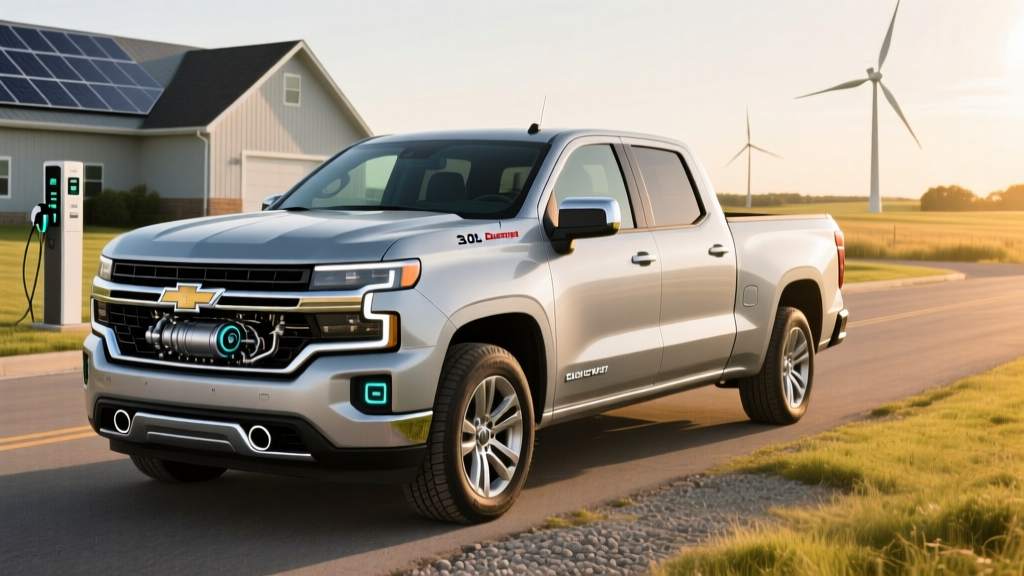
Chevy doesn't sell a full hybrid or plug-in hybrid Silverado as of the 2026 model year — but the 3.0L Duramax turbo-diesel inline-six with GM's mild-hybrid assist system is the closest thing to a hybrid Silverado you can buy today. It pairs a small electric motor-generator with the diesel engine to enable stop-start, brief torque-fill, and regenerative braking, squeezing extra efficiency out of a full-size pickup that still tows over 13,000 pounds.
If you've been searching for a hybrid Silverado expecting a Toyota RAV4-style parallel hybrid or a plug-in with electric-only range, this guide will set expectations straight. We'll break down exactly what Chevy's mild-hybrid system does, the real-world MPG you can expect, how it stacks up against the Ford F-150 PowerBoost (a true full hybrid), and whether this powertrain earns a spot in your driveway.
What the 'Hybrid Silverado' Actually Is: Mild-Hybrid, Not Full HEV or PHEV
Before we get to the numbers, the distinction matters enormously for buyers:
Hybrid Type Definitions
| Type | How It Works | Plug In? | Electric-Only Driving? |
|---|---|---|---|
| Mild Hybrid (MHEV) | Small motor-generator assists gas/diesel engine; enables stop-start and regen braking. Cannot drive on electric power alone. | No | No |
| Full Hybrid (HEV) | Larger electric motor + battery; can drive short distances on electricity alone. Engine and motor work in parallel. | No | Briefly, at low speeds |
| Plug-In Hybrid (PHEV) | Even larger battery + motor; meaningful electric-only range (20–50 mi). Must plug in to maximize benefit. | Yes | Yes, 20–50 miles |
The Silverado's mild-hybrid system falls into the first category. There is no plug, no electric-only mode, and no kWh battery pack to speak of — just a compact 48-volt system that recaptures braking energy and smooths out the stop-start experience. The rival Ford F-150 PowerBoost, by contrast, is a true full hybrid with a 1.5 kWh battery and a 47-hp electric motor embedded in the transmission.
This distinction is why you won't find an EPA electric-only range figure for the Silverado — there isn't one.
Fuel Economy: EPA MPG and Real-World Expectations
The 2026 Silverado 1500 with the 3.0L Duramax LZ0 turbo-diesel (which includes the mild-hybrid assist) returns competitive numbers for a body-on-frame pickup. Here's what the EPA publishes:
| Configuration | City MPG | Highway MPG | Combined MPG |
|---|---|---|---|
| 2WD Crew Cab, Short Box | 24 | 31 | 27 |
| 4WD Crew Cab, Short Box | 22 | 27 | 24 |
| 4WD Crew Cab, Standard Box | 22 | 26 | 24 |
Source: fueleconomy.gov — EPA estimates. Your mileage will vary.
Real-World MPG vs. EPA Sticker
Diesel pickups tend to meet or slightly exceed their EPA highway estimates on flat, unloaded highway runs — we've seen 28–30 MPG on the 4WD Crew Cab at 65–70 mph on level interstate. City driving with frequent stops plays to the mild-hybrid system's strength: the 48V stop-start eliminates idle fuel burn, and regenerative braking recovers energy that would otherwise be lost. Expect 21–23 MPG in mixed suburban driving with the 4WD model.
Where the numbers fall: towing. Hook up a 7,000-pound trailer and expect 14–17 MPG depending on terrain and speed. This is roughly on par with the F-150 PowerBoost under similar loads, though the Ford hybrid can lean on its electric motor for low-speed trailer maneuvering.
Powertrain Specs: Duramax Diesel Meets 48-Volt Assist
| Specification | 2026 Silverado 3.0L Duramax (LZ0) |
|---|---|
| Engine | 3.0L turbocharged inline-6 diesel |
| Engine Output | 305 hp @ 3,750 rpm / 495 lb-ft @ 1,500 rpm |
| Hybrid System | 48V mild-hybrid motor-generator |
| Combined System Output | 305 hp (motor-generator provides torque-fill, not additive peak hp) |
| Transmission | 10-speed automatic |
| 0–60 mph | ~6.8 seconds (4WD Crew Cab, estimated) |
| Max Towing | 13,300 lbs (properly equipped, 2WD) |
| Max Payload | 1,930 lbs |
| Hybrid Battery | ~0.5 kWh, 48V lithium-ion |
| Plug-In Charging | Not applicable — no plug |
The 48-volt motor-generator doesn't add peak horsepower in the way a full-hybrid electric motor does. Instead, it fills torque gaps during gear shifts, powers accessories during stop-start events (so the A/C keeps running when the engine shuts off), and captures kinetic energy under deceleration. The result is a smoother, slightly more efficient driving experience — not a fundamentally different one.
The 495 lb-ft of torque from the Duramax arrives at just 1,500 rpm, which is why this powertrain feels so capable under load. No gas-engine hybrid in the half-ton segment matches that low-end diesel pulling power.
Pricing, Trims, and Tax Credit Eligibility
The 3.0L Duramax engine (which includes the mild-hybrid system) is available across several Silverado trims for 2026. It's a $2,695 upcharge over the 5.3L V8 on most trims.
| Trim | Starting MSRP (4WD Crew Cab) | Diesel Availability |
|---|---|---|
| LT Trail Boss | ~$57,800 | Available |
| RST | ~$59,200 | Available |
| LTZ | ~$62,400 | Available |
| High Country | ~$69,300 | Available |
| ZR2 | ~$73,800 | Available |
Pricing based on 2026 MSRP. Destination charge additional. Verify at chevrolet.com.
Does the Hybrid Silverado Qualify for a Federal Tax Credit?
No. The Silverado's mild-hybrid system does not qualify for the IRS §30D Clean Vehicle Credit. That credit requires a plug-in electric vehicle (PHEV or BEV) with a minimum battery capacity of 7 kWh, along with MSRP caps, buyer income limits, and battery-sourcing requirements. A 48-volt mild-hybrid with a sub-1 kWh battery doesn't come close.
There is no federal tax incentive for buying a conventional hybrid or mild-hybrid vehicle. Some states or local utilities offer minor rebates for hybrid purchases, but these vary widely — check your state energy office or utility provider for specifics.
Battery Warranty and Long-Term Reliability
Hybrid battery longevity is a top concern for any electrified-vehicle buyer. Here, the Silverado's mild-hybrid system has a significant simplicity advantage: the 48V battery pack is tiny (~0.5 kWh), operates in a narrow state-of-charge window, and isn't subjected to the deep charge-discharge cycles that stress full-hybrid or PHEV batteries.
- 48V Hybrid Battery: 8 years / 100,000 miles (GM hybrid/electric component warranty)
- Diesel Powertrain: 5 years / 60,000 miles (powertrain limited warranty)
- Bumper-to-Bumper: 3 years / 36,000 miles
Battery Replacement Cost
Because the 48V mild-hybrid battery is small and relatively simple, replacement cost is far lower than a full-hybrid or EV traction battery. Expect $1,500–$3,000 for a replacement 48V battery pack if it fails outside warranty — a fraction of the $5,000–$15,000+ you'd face for a full-hybrid or PHEV battery. In practice, 48V systems have shown strong durability because the battery is rarely stressed.
The Duramax LZ0 diesel engine itself is new-generation (introduced for the 2023 model year as the "baby Duramax"), and early reliability data from the 2023–2025 model years has been positive, with no widespread systemic failures reported. Long-term data beyond 100,000 miles is still accumulating.
Hybrid Silverado vs. Full Hybrid vs. EV Pickup: Which Fits You?
Silverado Diesel Mild-Hybrid
Pros:
- 495 lb-ft diesel torque for towing (best in class at low rpm)
- 24–27 MPG combined without changing habits — no plug needed
- 13,300-lb max towing capacity
- Lower battery replacement risk vs. full hybrid/PHEV
- Diesel fuel widely available; no range anxiety on long hauls
Silverado Diesel Mild-Hybrid
Cons:
- Not a true hybrid — no electric-only driving, no plug-in capability
- No federal tax credit eligibility
- Diesel exhaust fluid (DEF) maintenance required
- Higher fuel cost per gallon vs. regular unleaded (diesel premium)
- Diesel idle noise and cold-weather startup considerations
Which Pickup Powertrain Is Right for You?
Choose the Silverado diesel mild-hybrid if: You tow heavy trailers regularly, rack up highway miles (where diesel excels), want better fuel economy than a gas V8 without plugging in, and value low-rpm torque over silent electric operation.
Choose the Ford F-150 PowerBoost (full hybrid) if: You want a true hybrid with electric motor assist, slightly better combined MPG (25 combined 4WD), onboard generator capability (Pro Power OnBoard up to 7.2 kW), and don't tow above ~12,700 lbs.
Choose the Silverado EV or Ford F-150 Lightning (full BEV) if: You have home Level 2 charging, your daily driving is under 300 miles, you want zero tailpipe emissions, instant torque, and a frunk — and you can accept reduced towing range (expect 150–200 miles while towing heavy).
Choose a gas-only Silverado (2.7L Turbo or 5.3L V8) if: Budget is the priority, you drive fewer than 12,000 miles/year, and the fuel-cost savings of diesel or hybrid don't justify the upcharge over a 5-year ownership period.
Ownership Costs: Diesel Mild-Hybrid vs. Gas V8 Over 5 Years
The diesel upcharge of ~$2,695 needs to pay for itself at the pump. Here's a simplified 5-year/75,000-mile comparison for a 4WD Crew Cab driven 15,000 miles/year:
| Cost Factor | 3.0L Duramax Diesel MHEV (24 MPG) | 5.3L V8 Gas (19 MPG) |
|---|---|---|
| Fuel Cost (75,000 mi) | ~$12,500 (diesel @ $4.00/gal avg) | ~$13,815 (gas @ $3.50/gal avg) |
| Engine Upcharge | $2,695 | $0 (standard) |
| DEF Fluid (5 years) | ~$350 | $0 |
| Estimated Maintenance | ~$3,200 | ~$2,800 |
| 5-Year Total (fuel + upcharge + maint.) | ~$18,745 | ~$16,615 |
At current fuel prices, the diesel's fuel savings alone don't fully offset the engine upcharge over five years — you'd break even around year 6 or 7, or sooner if you drive more than 15,000 miles/year. The diesel's advantage is most pronounced for high-mileage drivers, frequent highway commuters, and those who value the towing torque. If fuel prices shift (diesel drops relative to gas), the math improves.
Frequently Asked Questions
How many MPG does the hybrid Silverado get?
The 2026 Silverado 1500 with the 3.0L Duramax diesel mild-hybrid achieves 24 MPG combined with 4WD (22 city / 27 highway) and 27 MPG combined with 2WD (24 city / 31 highway), per the EPA. Real-world highway driving unloaded can yield 28–30 MPG with 4WD.
Is there a plug-in hybrid Silverado?
No. Chevrolet does not offer a plug-in hybrid (PHEV) Silverado 1500 for the 2026 model year. The only electrified option is the mild-hybrid system paired with the 3.0L Duramax diesel. The Silverado EV is the all-electric alternative, with up to 440 miles of EPA range in the 4WT configuration.
How far can the hybrid Silverado go on electric only?
It can't. The mild-hybrid system cannot propel the truck on electric power alone. The 48-volt motor-generator only assists the diesel engine — it never drives the wheels independently. If electric-only driving is a priority, you need a PHEV (like the upcoming Ramcharger, which is an extended-range EV) or a full BEV.
Does the Silverado hybrid qualify for any tax credit?
No. The IRS §30D Clean Vehicle Credit requires a plug-in vehicle with at least 7 kWh of battery capacity. The Silverado's mild-hybrid battery is under 1 kWh, making it ineligible. There is no federal tax credit for conventional hybrids or mild-hybrids. Check your state energy office for any local incentives.
Is the Silverado diesel hybrid reliable? What does battery replacement cost?
The 48V mild-hybrid system is low-stress by design, and GM covers the hybrid components for 8 years / 100,000 miles. Battery replacement, if needed out of warranty, runs approximately $1,500–$3,000 — far less than a full-hybrid or EV battery. The LZ0 Duramax engine has shown solid reliability in its first three model years (2023–2025), though long-term data is still building.
Should I get the Silverado diesel hybrid or the Ford F-150 PowerBoost?
If you prioritize highway fuel economy and heavy towing torque, the Silverado diesel wins — 495 lb-ft at 1,500 rpm and up to 31 MPG highway is hard to beat. If you want a true full-hybrid system, onboard generator power (7.2 kW Pro Power), and slightly better combined MPG (25 vs 24 with 4WD), the F-150 PowerBoost is the stronger pick. Test-drive both under load if possible.