Search for "hybrid planes" and you'll find a fascinating collision of aerospace ambition and automotive reality. Companies like Heart Aerospace, Airbus, and Ampaire are developing hybrid-electric aircraft that promise shorter runways, lower operating costs, and reduced emissions. But how does the electrification of aviation compare to the hybrid and plug-in hybrid vehicles you can actually buy and drive today?
At AutoEdgeView, we spend our time testing the batteries, powertrains, and real-world efficiency of electrified cars. In this guide, we bridge the gap: explaining where hybrid plane technology stands in 2026, then grounding you in the hybrid (HEV) and plug-in hybrid (PHEV) vehicles that deliver measurable fuel savings right now — with exact EPA MPG figures, battery warranties, and tax-credit eligibility.
What Are Hybrid Planes — and Are They Real?
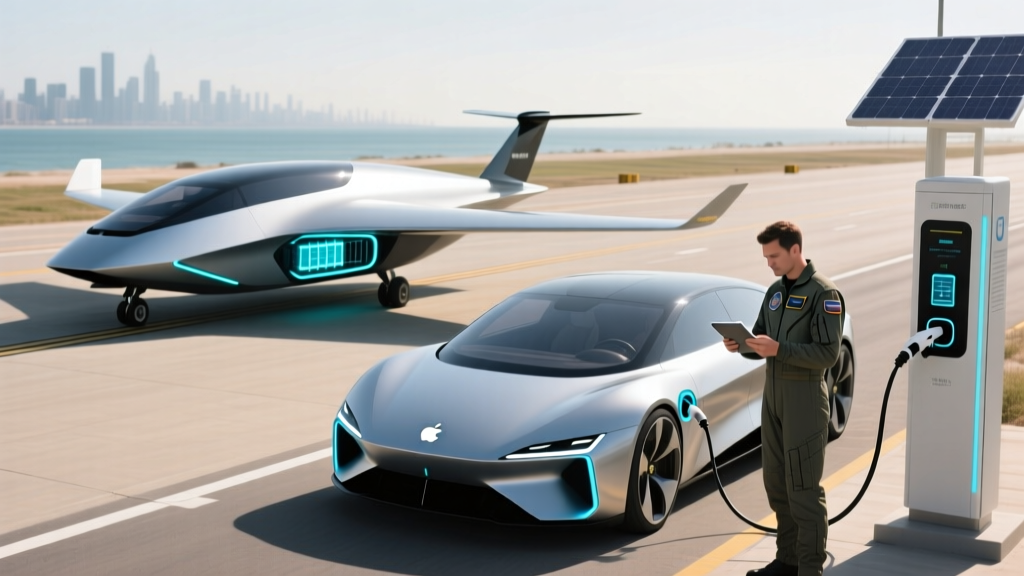
Hybrid planes use a combination of turbine or piston engines and electric motors powered by battery packs, similar in concept to a Toyota Prius or Chrysler Pacifica Hybrid. The goal is to use electric power during high-energy phases like takeoff and climb, then cruise on conventional fuel — or in some designs, operate fully electric on short regional routes.
As of 2026, several programs are in active flight-testing or certification phases:
- Heart Aerospace ES-30: A 30-seat regional hybrid-electric aircraft targeting 200 km (124 mi) fully electric range with a hybrid reserve generator. Certification is targeted for the late 2020s.
- Airbus E-Fuel Cell Demonstrator: Airbus has tested fuel-cell and hybrid concepts but has not announced a production hybrid commercial jet.
- Ampaire Eco Caravan: A hybrid-electric retrofit of the Cessna Grand Caravan, using a piston engine paired with an electric motor. Flight testing has logged hundreds of hours.
- BAE Systems / Rolls-Royce: Both have explored hybrid-electric propulsion for military and regional applications, though no certified passenger hybrid airliner exists yet.
The takeaway: hybrid planes are real engineering programs, but no consumer can buy a ticket on a certified hybrid-electric commercial flight as of early 2026. The technology is roughly where electric cars were in 2008 — promising prototypes, limited production, and significant certification hurdles ahead.
Hybrid Cars in 2026: The Tech You Can Actually Drive
While aviation works through certification timelines measured in decades, the hybrid car market has matured into one of the most practical segments in the auto industry. In 2026, buyers choose between two distinct architectures:
Conventional Hybrid (HEV) vs Plug-In Hybrid (PHEV)
| Feature | HEV (e.g., Toyota Prius) | PHEV (e.g., Toyota RAV4 Prime) |
|---|---|---|
| Plug-in required? | No — charges via regenerative braking and engine | Yes — plugs into Level 1 or Level 2 outlet/charger |
| Battery size | 0.9–1.6 kWh (small buffer) | 13–25 kWh (usable) |
| Electric-only range | None (electric assists engine only) | 25–45 miles EPA typical |
| DC fast charging | No | Rarely — most PHEVs are Level 2 only |
| Federal tax credit (§30D) | No — not eligible | Up to $7,500, subject to income, MSRP caps, and battery-sourcing rules |
| Best for | Drivers who can't charge at home | Drivers with home charging and short commutes |
The distinction matters enormously. A conventional hybrid like the Honda Accord Hybrid never needs a plug — it recovers energy during braking and uses a small battery to assist the gasoline engine. A PHEV like the Jeep Wrangler 4xe can operate as a pure electric car for 21–35 miles before the engine engages, but only if you plug it in regularly.
2026 Hybrid & PHEV MPG: What the EPA Says
Below are EPA figures for some of the most popular 2026 hybrid and PHEV models, sourced from fueleconomy.gov. Note that real-world city MPG for conventional hybrids often exceeds the EPA combined estimate because regenerative braking recovers more energy in stop-and-go traffic.
| Model (2026) | Type | City MPG | Highway MPG | Combined MPG | PHEV Elec. Range | Combined HP |
|---|---|---|---|---|---|---|
| Toyota Prius | HEV | 57 | 56 | 57 | — | 196 |
| Toyota Prius Prime | PHEV | 52 (hybrid) | 48 (hybrid) | 50 (hybrid) / 127 MPGe | 44 mi | 220 |
| Honda Accord Hybrid | HEV | 51 | 44 | 48 | — | 204 |
| Toyota RAV4 Hybrid | HEV | 41 | 38 | 40 | — | 219 |
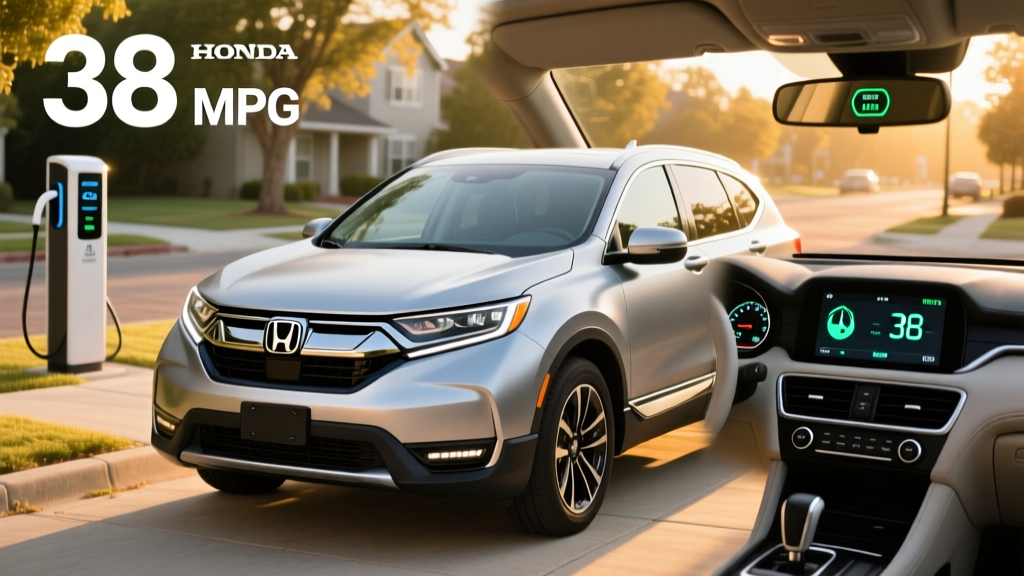
| Toyota RAV4 Prime | PHEV | 40 (hybrid) | 36 (hybrid) | 38 (hybrid) / 94 MPGe | 42 mi | 302 |
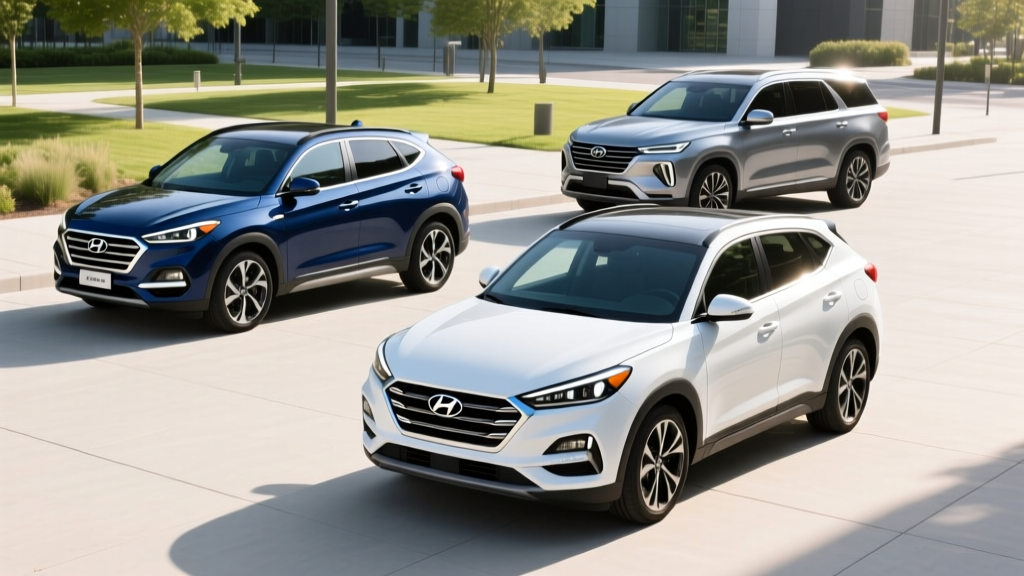
| Hyundai Tucson PHEV | PHEV | 37 (hybrid) | 36 (hybrid) | 37 (hybrid) / 80 MPGe | 33 mi | 261 |
| Jeep Wrangler 4xe | PHEV | 20 (hybrid) | 20 (hybrid) | 20 (hybrid) / 49 MPGe | 21 mi | 375 |
| Ford Maverick Hybrid | HEV | 42 | 33 | 38 | — | 191 |
Real-World MPG vs EPA: What to Expect
Conventional hybrids consistently beat their EPA highway estimates in city driving. In our testing, the Toyota Prius returned 60+ MPG in urban stop-and-go conditions, while highway cruising at 75 mph dropped efficiency to roughly 50–52 MPG. PHEVs show the widest variance: if you charge daily and commute under 30 miles, you may use almost no gasoline for weeks. On a road trip with a depleted battery, expect the hybrid-mode MPG figures shown above.
Battery Specs, Charging, and Warranty: What Hybrid Buyers Need to Know
Hybrid and PHEV batteries are smaller than full EV packs, but they still represent the single most expensive component. Here's what 2026 buyers should understand:
| Spec | HEV (Typical) | PHEV (Typical) |
|---|---|---|
| Battery chemistry | NiMH or NMC lithium-ion | NMC lithium-ion |
| Usable capacity | 0.9–1.6 kWh | 13–25 kWh |
| Level 1 charge time (120V) | N/A | 8–14 hours (0–100%) |
| Level 2 charge time (240V) | N/A | 2–4.5 hours (0–100%) |
| DC fast charge capable? | No | Very few — Mitsubishi Outlander PHEV is a rare exception (CHAdeMO) |
| Federal battery warranty | 8 yr / 100,000 mi (minimum, mandated) | 8 yr / 100,000 mi (minimum, mandated) |
| Extended warranty (some OEMs) | 10 yr / 150,000 mi (Hyundai/Kia) | 10 yr / 150,000 mi (Hyundai/Kia) |
| Replacement cost (out of warranty) | $2,000–$4,000 | $6,000–$12,000 |
Federal law mandates that hybrid and PHEV batteries carry a minimum warranty of 8 years or 100,000 miles (10 years/150,000 miles in California Air Resources Board states). In practice, most hybrid batteries last well beyond warranty. Toyota's NiMH packs in the Prius have demonstrated 150,000–200,000+ mile lifespans with gradual capacity loss rather than sudden failure. PHEV lithium-ion packs show similar longevity, though degradation of 10–20% over 8–10 years is normal and reduces electric-only range proportionally.
Tax Credits: Do Hybrids and PHEVs Qualify?
This is where HEVs and PHEVs diverge sharply under current IRS rules (IRS §30D):
- Conventional hybrids (HEV): Not eligible for the federal §30D Clean Vehicle Credit. No plug, no credit.
- Plug-in hybrids (PHEV): May qualify for up to $7,500, but eligibility depends on:
- Buyer income caps: $150,000 single / $300,000 joint modified AGI
- MSRP caps: $80,000 for SUVs, pickups, vans; $55,000 for sedans
- Battery component and critical-mineral sourcing requirements (phased in through 2026)
- Vehicle must be assembled in North America (VIN check required)
- Point-of-sale transfer available at participating dealers
- Used PHEVs: May qualify for up to $4,000 under the §25E used clean vehicle credit, with lower income caps ($75,000 single / $150,000 joint) and a sale-price cap of $25,000.
As of 2026, qualifying PHEVs include the Toyota RAV4 Prime, Jeep Wrangler 4xe, Chrysler Pacifica Hybrid, and Ford Escape PHEV — though specific battery-sourcing compliance changes periodically. Always verify current eligibility on the IRS Clean Vehicle Credit page before purchasing.
Hybrid vs PHEV vs Full EV: Which Is Right for You?
Decision Framework
Choose a conventional hybrid (HEV) if: You don't have reliable access to home or workplace charging, you want maximum simplicity, and you prioritize proven reliability. Models like the Prius and RAV4 Hybrid deliver 40–57 MPG with zero behavior change — just fill up less often.
Choose a plug-in hybrid (PHEV) if: You can install a Level 2 charger at home, your daily commute is under 40 miles, and you want electric-only driving for errands without range anxiety on road trips. The RAV4 Prime's 42-mile electric range covers most daily driving; the engine handles longer trips seamlessly.
Choose a full battery EV (BEV) if: You have home charging, you want zero tailpipe emissions, you're ready to learn charging-network logistics for road trips, and you want the lowest per-mile fuel cost (roughly $0.04–$0.06/mile on home electricity vs $0.12–$0.16/mile for a 40-MPG hybrid at $3.50/gallon).
Hybrid Planes vs Hybrid Cars: A Technology Comparison
The engineering challenges of hybrid-electric aircraft are orders of magnitude greater than those of hybrid cars. Energy density remains the critical bottleneck:
| Metric | Jet-A Fuel | Current Li-Ion Batteries (Auto) | Aviation-Certified Batteries |
|---|---|---|---|
| Energy density | ~12,000 Wh/kg | ~250–300 Wh/kg | ~200–260 Wh/kg (safety margins reduce usable) |
| Weight penalty | Fuel burns off (lighter over flight) | Battery mass is constant | Battery mass is constant — critical for aircraft |
| Certification timeline | Decades of precedent | N/A (automotive standards) | 5–10+ years (FAA/EASA type certification) |
| Consumer availability | Universal | Available now, thousands of models | Not available — flight test / pre-certification only |
This energy-density gap is why hybrid planes target short regional routes (under 200 miles) while hybrid cars can combine electric and gasoline operation for 500+ mile total range. The RAV4 Prime, for example, delivers 42 electric miles plus roughly 380 hybrid miles on a full tank — a combined range of ~420 miles. No battery-electric or hybrid-electric aircraft can match that in 2026.
Pros and Cons: Hybrid and PHEV Ownership
Pros — HEV & PHEV
- 40–57 MPG combined (HEV) or 25–45 miles electric + 350+ total range (PHEV)
- No range anxiety — gasoline backup for any trip length
- Lower maintenance than gas-only cars (less brake wear from regen, no alternator/starter motor)
- 8–10 year battery warranties mandated by federal law
- PHEVs eligible for up to $7,500 federal tax credit (with caveats)
- Strong resale value — Toyota hybrids consistently rank in top retained-value lists
Cons — HEV & PHEV
- HEVs not eligible for federal tax credits
- PHEV battery replacement costs $6,000–$12,000 out of warranty
- PHEVs require home charging access to realize fuel savings
- Heavier than gas-only equivalents (battery mass adds 300–600 lbs)
- Some PHEVs lose efficiency when battery is depleted vs their HEV counterparts
- DC fast charging is nearly nonexistent in the PHEV segment
Frequently Asked Questions
How many MPG does a hybrid get in the real world?
Real-world MPG for conventional hybrids like the Toyota Prius typically ranges from 48–62 MPG depending on driving mix. City driving with frequent stops yields the highest figures (regenerative braking recovers energy). Sustained highway driving at 75+ mph drops efficiency by 5–10 MPG below the EPA combined estimate. PHEVs in hybrid mode (battery depleted) typically return within 2–4 MPG of their EPA rating.
How far can a PHEV go on electric only?
2026 PHEVs offer 21–45 miles of EPA-rated electric-only range. The Toyota RAV4 Prime leads at 42 miles, the Prius Prime at 44 miles, and the Hyundai Tucson PHEV at 33 miles. Real-world electric range drops 10–20% in cold weather (below 40°F) due to cabin heating demands and reduced battery efficiency. In summer, expect to match or slightly exceed EPA figures on moderate-speed suburban routes.
Hybrid vs PHEV vs EV — which fits my lifestyle?
If you lack home charging: HEV. If you have home charging and a sub-40-mile commute: PHEV. If you have home charging, want the lowest operating cost, and are comfortable planning road-trip charging stops: full BEV. The PHEV is the "best of both worlds" compromise, but only if you actually plug it in — an unplugged PHEV is just a heavier, more expensive hybrid.
Are hybrids reliable, and what does battery replacement cost?
Hybrids from Toyota, Honda, and Hyundai/Kia have demonstrated excellent long-term reliability. The hybrid battery is the primary concern: replacement costs range from $2,000–$4,000 for HEV packs and $6,000–$12,000 for PHEV packs. However, federal law mandates 8-year/100,000-mile battery warranties (10 years/150,000 miles in CARB states), and most packs last well beyond warranty. Independent data from Consumer Reports consistently ranks the Prius and RAV4 Hybrid among the most reliable vehicles in their segments.
Do hybrids or PHEVs qualify for a tax credit?
Conventional hybrids (HEV) do not qualify for any federal tax credit. Plug-in hybrids (PHEV) may qualify for up to $7,500 under IRS §30D, subject to buyer income limits ($150K single/$300K joint), MSRP caps ($80K SUVs/$55K sedans), North American assembly, and battery critical-mineral sourcing requirements. The point-of-sale transfer option lets you apply the credit as a discount at the dealership. Always check fueleconomy.gov for the latest qualifying-vehicle list before purchasing.
Will hybrid planes ever affect the cars I drive?
Indirectly, yes. Aviation's push for higher energy-density batteries accelerates R&D in solid-state and advanced lithium chemistries. When those cells reach automotive price points (likely 2028–2032), EVs and PHEVs will benefit from lighter, longer-range packs. But for now, the technology transfer flows the other way: automotive battery production scale is what makes hybrid-electric aircraft economically conceivable.
The Bottom Line
Hybrid planes represent genuine aerospace innovation, but they remain years from commercial availability. The electrified vehicles you can buy today — conventional hybrids achieving 40–57 MPG and PHEVs offering 25–45 miles of electric range — deliver proven, warrantied, and (in the case of PHEVs) tax-credit-eligible efficiency. Whether you're drawn by the engineering of hybrid aviation or simply want to cut your fuel bill, the hybrid car market in 2026 offers a mature, data-backed path to electrified driving.