The Truth About the Tax Credit for a Hybrid Car in 2026
If you're shopping for an electrified vehicle and searching for a tax credit for a hybrid car, the first thing to know is that the answer depends entirely on which type of hybrid you buy. Conventional hybrids (HEVs) like the Toyota Prius and Honda Accord Hybrid do not qualify for the federal §30D clean vehicle credit. Plug-in hybrids (PHEVs) like the Toyota RAV4 Prime and Jeep Wrangler 4xe may qualify — but only if they meet strict battery-sourcing, MSRP, and buyer-income requirements enforced by the IRS under current §30D rules.
This guide cuts through the confusion. We'll map exactly which 2026 hybrids and PHEVs are eligible, what the credit is actually worth, and whether a hybrid, PHEV, or full EV makes the most financial sense for your driving pattern.
HEV vs PHEV: Why the Distinction Determines Your Tax Credit
Before we get into credit eligibility, you need to understand the fundamental split in the hybrid market:
| Feature | Conventional Hybrid (HEV) | Plug-In Hybrid (PHEV) |
|---|---|---|
| Plugs in to charge? | No — self-charging via regen & engine | Yes — external charging required for EV mode |
| Battery size | 0.6–1.6 kWh (small buffer) | 10–25 kWh (usable) |
| Electric-only driving | Very short, low-speed assists only | 20–45 miles at full highway speed |
| Federal tax credit (§30D) | Not eligible | Potentially eligible (up to $7,500) |
| Home charging needed | No | Recommended (Level 1 or 2) |
| Typical price premium over gas | $1,000–$3,000 | $4,000–$9,000 |
The IRS defines a qualifying clean vehicle under §30D as one with a battery capacity of at least 7 kWh that can be recharged from an external source. That definition immediately excludes every conventional HEV on the market — their batteries are simply too small and cannot be plugged in. The credit was designed to incentivize vehicles that displace gasoline with grid electricity, which is the PHEV and BEV value proposition.
Which 2026 PHEVs Qualify for the Federal Tax Credit?
The §30D credit is not a blanket $7,500 off every plug-in hybrid. It's a two-part credit: up to $3,750 for meeting critical-mineral sourcing requirements and up to $3,750 for meeting battery-component sourcing requirements. A PHEV can qualify for $0, $3,750, or the full $7,500 depending on where its battery materials come from. These rules tighten annually.
Additional eligibility gates for the buyer and vehicle:
- MSRP cap: Vans, SUVs, and pickups must be under $80,000; sedans and other vehicles under $55,000.
- Buyner income cap: Modified AGI must not exceed $150,000 (single), $225,000 (head of household), or $300,000 (joint).
- Final assembly: Vehicle must be assembled in North America.
- FEOC restriction: Battery components and critical minerals cannot be sourced from a Foreign Entity of Concern (primarily targeting Chinese supply chains).
- Point-of-sale transfer: As of 2024, buyers can transfer the credit to the dealer for an upfront price reduction, rather than waiting to claim it at tax filing.
Here's a snapshot of popular 2026 PHEVs and their approximate federal credit status. Always verify current eligibility on the fueleconomy.gov tax credit tracker before purchasing — sourcing rules shift as manufacturers restructure supply chains.
| 2026 PHEV Model | Est. Credit | MSRP Range | EV Range | Combined MPG (gas) |
|---|---|---|---|---|
| Toyota RAV4 Prime | $0–$3,750* | $44,500–$49,000 | 42 mi | 38 MPG |
| Jeep Wrangler 4xe | $3,750–$7,500* | $52,000–$68,000 | 22 mi | 20 MPG |
| Chrysler Pacifica Hybrid | $3,750–$7,500* | $51,000–$59,000 | 32 mi | 30 MPG |
| Hyundai Tucson PHEV | $0–$3,750* | $39,500–$46,000 | 33 mi | 35 MPG |
| Toyota Prius Prime | $0–$3,750* | $34,000–$40,500 | 44 mi | 48 MPG |
| Ford Escape PHEV | $3,750–$7,500* | $38,500–$44,000 | 37 mi | 40 MPG |
*Credit amounts are estimates based on known sourcing data. Confirm with your dealer and the IRS before purchase.
Top 2026 Hybrid & PHEV Picks: MPG, Range, and Powertrain Specs
Whether or not a credit applies, these are the models delivering the best real-world efficiency in 2026.
2026 Toyota Prius Prime (PHEV)
| Metric | Value |
|---|---|
| EPA EV Range | 44 miles (SE trim, 18" wheels) |
| EPA Combined (gas) | 48 MPG |
| EPA City / Highway (gas) | 50 city / 47 highway |
| Combined MPGe (EV mode) | 127 MPGe |
| Battery | 13.6 kWh usable, lithium-ion |
| Combined HP | 220 hp (2.0L I4 + electric motor) |
| 0–60 mph | 6.6 seconds |
| Level 2 charge time (0–100%) | ~4 hours at 3.3 kW |
| DC fast charge | Not supported |
| Base MSRP | $34,000 (SE) |
Real-world note: The Prius Prime consistently exceeds its EPA city rating in stop-and-go traffic because regenerative braking recaptures more energy at low speeds. Expect 52–56 MPG city in warm weather. Highway efficiency drops closer to 44–46 MPG at sustained 75+ mph. EV-only range holds well in moderate temps but expect ~35–38 miles in freezing conditions due to battery chemistry limitations and cabin heating draw.
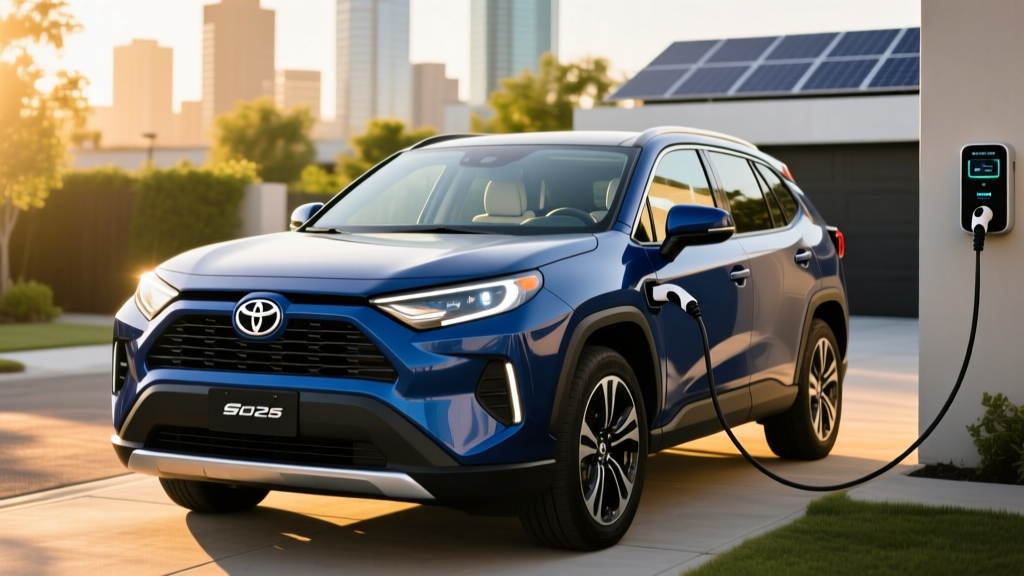
2026 Toyota RAV4 Prime (PHEV)
| Metric | Value |
|---|---|
| EPA EV Range | 42 miles |
| EPA Combined (gas) | 38 MPG |
| EPA City / Highway (gas) | 40 city / 36 highway |
| Combined MPGe (EV mode) | 94 MPGe |
| Battery | 18.1 kWh usable, lithium-ion |
| Combined HP | 302 hp (2.5L I4 + dual electric motors, AWD) |
| 0–60 mph | 5.7 seconds |
| Level 2 charge time (0–100%) | ~2.5 hours at 6.6 kW |
| DC fast charge | Not supported |
| Base MSRP | $44,500 (SE) |
Real-world note: The RAV4 Prime's 302 hp makes it the quickest RAV4 ever sold, and its 6.6 kW onboard charger is twice as fast as most PHEV competitors — meaning a full charge during a typical workday on a Level 2 outlet. Real-world EV range in mixed suburban driving often hits 45+ miles. Highway-only gas driving drops to roughly 32–34 MPG.
2026 Honda Accord Hybrid (HEV — No Plug)
| Metric | Value |
|---|---|
| EPA Combined | 48 MPG |
| EPA City / Highway | 51 city / 44 highway |
| Battery | 1.06 kWh, lithium-ion (self-charging) |
| Combined HP | 204 hp (2.0L I4 + dual motors) |
| 0–60 mph | 7.0 seconds |
| Plugs in? | No — never needs external charging |
| Federal tax credit | Not eligible |
| Base MSRP | $33,500 (Sport) |
Real-world note: Honda's two-motor hybrid system operates primarily as a series hybrid at city speeds — the gas engine generates electricity while the motor drives the wheels. This yields exceptional city MPG. Owners routinely report 52–55 MPG in urban commutes. Highway driving at 80 mph drops closer to 40–42 MPG as the engine engages direct drive.
Battery Longevity: Warranties, Degradation, and Replacement Costs
Hybrid battery replacement anxiety is the single most common objection we hear. Here's what the data actually shows for 2026 models.
Federal Warranty Mandate
Every hybrid and PHEV sold in the US carries a minimum hybrid battery warranty of 8 years / 100,000 miles (10 years / 150,000 miles in CARB states including California, New York, Massachusetts, and others). This is federally mandated and covers capacity loss and defects.
Toyota's hybrid battery track record is the industry benchmark. The original Prius, now 25+ years old, shows that well-managed nickel-metal-hydride and lithium-ion hybrid batteries routinely last 150,000–200,000+ miles before significant degradation. Because HEV batteries are small and never deeply cycled (they operate between roughly 40–80% state of charge), they experience far less stress than full EV batteries.
For PHEVs, the larger battery does undergo deeper cycles, but still within managed limits. Real-world degradation data from high-mileage RAV4 Prime and Prius Prime owners shows approximately 5–10% capacity loss over 100,000 miles — meaning a 42-mile EV range might settle around 37–40 miles after five years of daily use.
| Model | Battery Warranty | Est. Replacement Cost (Out of Warranty) |
|---|---|---|
| Toyota Prius / Prime | 10 yr / 150,000 mi (CARB) | $3,000–$4,500 |
| Toyota RAV4 Prime | 10 yr / 150,000 mi (CARB) | $5,000–$7,500 |
| Honda Accord Hybrid | 8 yr / 100,000 mi (federal) | $3,000–$4,000 |
| Hyundai Tucson PHEV | 10 yr / 100,000 mi | $4,500–$6,500 |
| Jeep Wrangler 4xe | 8 yr / 100,000 mi | $6,000–$9,000 |
For context, a conventional automatic transmission replacement on a gas car can run $3,500–$7,000. Hybrid battery costs are in the same range, but the battery is far less likely to fail catastrophically — degradation is gradual, not binary.
Hybrid vs PHEV vs Full EV: Which Fits Your Life?
Choose a conventional hybrid (HEV) if:
- You cannot charge at home or work (apartment, street parking, no garage).
- You want zero behavior change — just fill up with gas less often.
- Your budget is tighter and you don't want the PHEV price premium.
- You drive primarily in city traffic where hybrids shine (50+ MPG achievable).
- Tax credit eligibility doesn't matter to you (HEVs don't qualify anyway).
Choose a plug-in hybrid (PHEV) if:
- You can charge at home (even a standard 120V outlet adds ~4 miles/hour — enough to refill overnight for a 30-mile EV range).
- Your daily commute is under 40 miles round-trip (you'll barely use gas).
- You take road trips and don't want to plan around charging stations.
- You want the tax credit to offset the higher purchase price.
- You want EV-like driving most days with gas-engine backup for long trips.
Choose a full EV (BEV) if:
- You have reliable home Level 2 charging.
- Your daily driving is under 250 miles and you're willing to plan road-trip charging.
- You want the lowest per-mile fuel cost and near-zero drivetrain maintenance.
- You want the full $7,500 federal credit (more BEVs qualify than PHEVs).
- You want maximum performance and instant torque.
Total Cost of Ownership: Hybrid vs PHEV vs Gas Over 5 Years
Let's compare a realistic 5-year, 75,000-mile ownership scenario for three versions of a compact SUV: a gas model, a conventional hybrid, and a PHEV with a $3,750 credit applied.
| Cost Factor | Gas SUV (28 MPG) | HEV SUV (40 MPG) | PHEV SUV (35 mi EV + 35 MPG) |
|---|---|---|---|
| Purchase price (after credit) | $33,000 | $35,500 | $40,000 – $3,750 = $36,250 |
| Fuel cost (75,000 mi @ $3.50/gal) | $9,375 | $6,563 | $4,200 (gas) + $900 (electric) = $5,100 |
| Maintenance (5 yr) | $4,500 | $3,800 | $3,500 |
| Insurance (5 yr avg) | $7,500 | $7,800 | $8,200 |
| Total 5-yr cost | $54,375 | $53,663 | $53,050 |
The PHEV comes out slightly ahead over 5 years when the tax credit applies — and its advantage grows as electricity costs stay low and gas prices rise. The HEV nearly matches the PHEV's total cost without any charging infrastructure needed, which is why it remains the pragmatic choice for buyers without home charging.
Real-World MPG: What You'll Actually See
EPA ratings are tested under controlled conditions. Here's what hybrid and PHEV owners consistently report in real-world driving:
- City driving favors hybrids dramatically. Regenerative braking recaptures energy at every stop. Expect to match or exceed EPA city ratings in warm weather. The Accord Hybrid's 51 EPA city often yields 54+ in real stop-and-go.
- Highway driving narrows the gap. At sustained 70–80 mph, the electric motor provides less benefit. A hybrid rated at 48 combined may deliver only 42–44 on a flat highway at 75 mph.
- Cold weather impacts PHEVs more than HEVs. Battery chemistry slows in freezing temps, and cabin heating draws from the PHEV's battery, reducing EV range by 20–30%. An HEV's engine waste heat warms the cabin for "free," so its MPG penalty in winter is smaller (~5–10%).
- PHEV owners who never plug in waste money. A PHEV driven exclusively on gas typically gets 2–5 fewer MPG than a comparable HEV because it's hauling a heavier, unused battery. If you won't charge, buy the HEV.
Frequently Asked Questions
Does any conventional hybrid qualify for a federal tax credit?
No. The IRS §30D credit requires a vehicle to have a battery of at least 7 kWh that charges from an external power source. Conventional hybrids (HEVs) like the Toyota Prius, Honda CR-V Hybrid, and Hyundai Sonata Hybrid have batteries under 2 kWh and cannot plug in. They do not qualify for any federal purchase credit. Some states offer small rebates for HEVs — check your state energy office — but there is no federal incentive.
Which plug-in hybrid gets the largest federal tax credit in 2026?
Several PHEVs potentially qualify for the full $7,500, including the Chrysler Pacifica Hybrid and certain Jeep Wrangler 4xe configurations, provided their battery sourcing meets both the critical-mineral and component requirements. However, sourcing compliance shifts throughout the model year. Always confirm with your dealer and cross-reference the fueleconomy.gov credit listing before signing a purchase agreement.
How far can a PHEV drive on electricity alone?
Current 2026 PHEVs offer between 22 and 44 miles of EPA-rated electric-only range. The Prius Prime leads at 44 miles (SE trim). Most compact SUV PHEVs deliver 28–37 miles. This covers the average American's daily round-trip commute of ~32 miles, according to FHWA travel data, meaning many PHEV owners use gasoline only on road trips.
What happens if my hybrid battery fails after the warranty expires?
Out-of-warranty hybrid battery replacement costs range from $3,000 to $9,000 depending on the model. However, catastrophic failure is rare. Most hybrid batteries degrade gradually, losing 5–15% capacity over 150,000+ miles. Independent hybrid shops can often replace individual battery modules for $500–$1,500 rather than the entire pack. Toyota's hybrid battery supply chain is the most robust, with refurbished packs available for under $2,000 for many models.
Is a PHEV worth it if I can only charge on a regular 120V outlet?
Yes, in many cases. A standard 120V household outlet (Level 1) delivers roughly 1.0–1.4 kW, adding about 4–5 miles of EV range per hour of charging. Plug in overnight for 10 hours and you'll recover 40–50 miles — enough to fully replenish most PHEV batteries. The trade-off is slow charging: you can't "top up" quickly during the day. If your daily driving stays under your EV range, Level 1 is perfectly adequate.
Do hybrids cost more to insure than gas cars?
Slightly. Insurance premiums for hybrids and PHEVs typically run 3–8% higher than equivalent gas models due to higher repair costs (specialized high-voltage components) and higher vehicle MSRP. However, the difference is usually $20–$50 per month — easily offset by fuel savings. Get quotes from multiple carriers; some insurers (like Geico and Progressive) offer hybrid/EV-specific discounts.
Bottom Line: Maximizing Your Hybrid Tax Credit and Savings
The tax credit for a hybrid car is really a tax credit for a plug-in hybrid. Conventional HEVs remain outstanding fuel savers — the Prius and Accord Hybrid deliver 48+ MPG with zero lifestyle changes — but they won't put federal money back in your pocket. If the credit matters to your budget, focus your search on PHEVs that currently meet §30D sourcing requirements, confirm eligibility with your dealer, and ensure your income falls within the IRS caps.
If you can charge at home and your commute is under 40 miles, a PHEV like the RAV4 Prime or Prius Prime gives you the best of both worlds: electric daily driving, gas-powered road trips, and a potential $3,750–$7,500 reduction in your effective purchase price. If charging at home isn't possible, an HEV is the smarter, simpler play — no credit, no plug, just dramatically lower fuel bills from day one.