Mercedes-Benz Goes Plug-In: The 2026 Electrified Lineup at a Glance
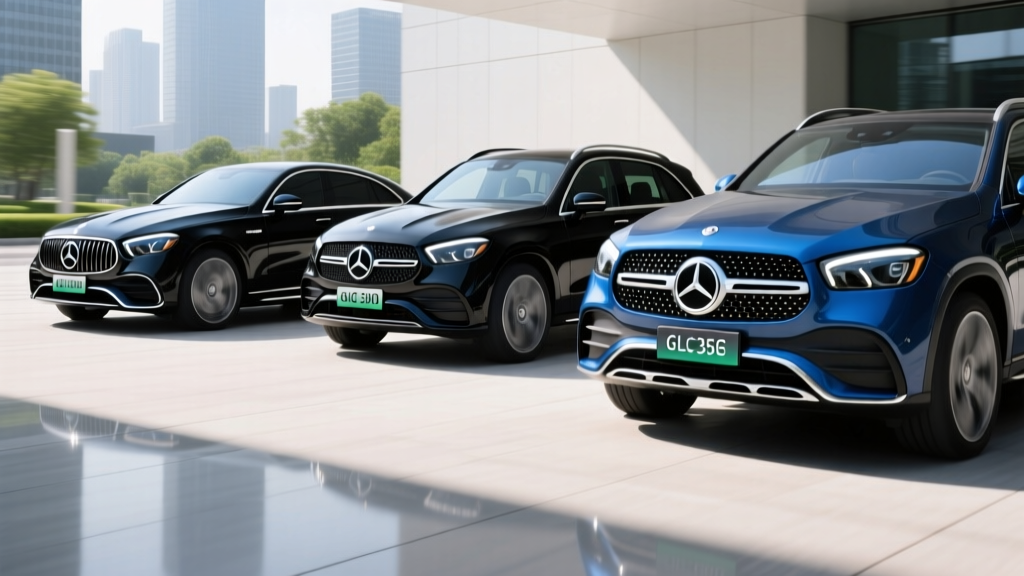
Mercedes-Benz has committed heavily to plug-in hybrid (PHEV) technology across its luxury lineup. For 2026, the brand offers PHEV variants of its best-selling nameplates — the S-Class sedan, GLC compact SUV, and GLE midsize SUV — each pairing a turbocharged gasoline engine with a substantial electric motor and a battery large enough to cover most daily commutes on electricity alone. If you've been searching for a hybrid Mercedes-Benz, the current lineup delivers genuine electric-only usability rather than the token electric assist of older generations.
Before we break down each model, it's critical to understand what Mercedes-Benz actually sells in the hybrid space today.
HEV vs. PHEV: What Mercedes-Benz Actually Offers
Conventional Hybrid (HEV): Uses a small battery recharged by regenerative braking and the engine. No plug. Cannot drive on electric power alone for meaningful distances. Mercedes-Benz does not currently sell a conventional HEV in the U.S. market — the brand skipped this generation entirely.
Plug-In Hybrid (PHEV): Carries a larger battery (typically 20–30 kWh) that you charge via a plug. Can travel 30–50+ miles on electricity alone before the gas engine engages. Every current Mercedes-Benz hybrid in the U.S. is a PHEV.
Bottom line: When you see "hybrid Mercedes-Benz" in 2026, you're looking at a plug-in hybrid that requires access to charging to unlock its full value.
2026 Mercedes-Benz S 580e: The Flagship Plug-In Sedan
The S 580e represents the pinnacle of Mercedes-Benz plug-in hybrid engineering. It pairs a 3.0-liter turbocharged inline-six with a permanently excited synchronous electric motor integrated into the 9G-Tronic automatic transmission. The combined output is a substantial 502 horsepower and 516 lb-ft of torque, delivering a 0–60 mph time of approximately 5.0 seconds — remarkable for a full-size luxury sedan.
| Specification | Value |
|---|---|
| Powertrain | 3.0L turbo I-6 + electric motor |
| Combined Horsepower | 502 hp |
| Combined Torque | 516 lb-ft |
| Battery (usable) | ~28.6 kWh (NMC lithium-ion) |
| EPA Electric Range | ~46 miles |
| EPA MPGe (electric + gas) | ~56 MPGe combined |
| EPA MPG (gas only, charge-depleted) | ~27 city / 32 hwy / 29 combined |
| DC Fast Charging | Yes, up to 60 kW (CCS) |
| Level 2 Charge Time (0–100%) | ~3.5 hours at 9.6 kW |
| 0–60 mph | ~5.0 seconds |
| Base MSRP | ~$121,000 |
2026 Mercedes-Benz GLC 350e: The Compact Luxury PHEV SUV
The GLC 350e 4MATIC is the volume play in the Mercedes-Benz PHEV lineup — a compact luxury SUV that competes directly with the BMW X3 xDrive30e and Audi Q5 TFSI e. It uses a 2.0-liter turbocharged four-cylinder paired with an electric motor for a combined 312 horsepower and 406 lb-ft of torque. The result is a practical, family-friendly SUV that can handle weekday commutes on electricity and weekend road trips on gasoline.
| Specification | Value |
|---|---|
| Powertrain | 2.0L turbo I-4 + electric motor |
| Combined Horsepower | 312 hp |
| Combined Torque | 406 lb-ft |
| Battery (usable) | ~25.4 kWh (NMC lithium-ion) |
| EPA Electric Range | ~39 miles |
| EPA MPGe (electric + gas) | ~59 MPGe combined |
| EPA MPG (gas only, charge-depleted) | ~25 city / 29 hwy / 27 combined |
| DC Fast Charging | Yes, up to 60 kW (CCS) |
| Level 2 Charge Time (0–100%) | ~3.0 hours at 9.6 kW |
| 0–60 mph | ~6.2 seconds |
| Base MSRP | ~$60,500 |
The GLC 350e's 39 miles of electric range covers the average American's daily round-trip commute (roughly 35 miles per FHWA data). Charge nightly at home on a Level 2 station, and you may go weeks without visiting a gas station.
2026 Mercedes-Benz GLE 450e: The Midsize SUV PHEV
Slotting between the compact GLC and the full-size GLS, the GLE 450e 4MATIC offers three-row practicality (with the optional third row) and a more powerful PHEV powertrain. Its 2.0-liter turbo four-cylinder and electric motor combine for 375 horsepower and 479 lb-ft, moving this substantial SUV with surprising urgency.
| Specification | Value |
|---|---|
| Powertrain | 2.0L turbo I-4 + electric motor |
| Combined Horsepower | 375 hp |
| Combined Torque | 479 lb-ft |
| Battery (usable) | ~23.3 kWh (NMC lithium-ion) |
| EPA Electric Range | ~45 miles |
| EPA MPGe (electric + gas) | ~56 MPGe combined |
| EPA MPG (gas only, charge-depleted) | ~23 city / 27 hwy / 25 combined |
| DC Fast Charging | Yes, up to 60 kW (CCS) |
| Level 2 Charge Time (0–100%) | ~2.5 hours at 9.6 kW |
| 0–60 mph | ~5.7 seconds |
| Base MSRP | ~$72,500 |
Side-by-Side: Comparing the 2026 Mercedes-Benz PHEV Lineup
| Attribute | S 580e | GLC 350e | GLE 450e |
|---|---|---|---|
| Body Style | Sedan | Compact SUV | Midsize SUV |
| Combined HP | 502 | 312 | 375 |
| Battery (kWh) | ~28.6 | ~25.4 | ~23.3 |
| Electric Range | ~46 mi | ~39 mi | ~45 mi |
| MPGe Combined | ~56 | ~59 | ~56 |
| Gas MPG (depleted) | 29 comb. | 27 comb. | 25 comb. |
| DC Fast Charge | 60 kW | 60 kW | 60 kW |
| 0–60 mph | 5.0s | 6.2s | 5.7s |
| Base MSRP | ~$121,000 | ~$60,500 | ~$72,500 |
For verified EPA figures on each model, check fueleconomy.gov's side-by-side tool, which lets you compare official ratings directly.
Charging Your Mercedes-Benz PHEV: What You Need to Know
Every 2026 Mercedes-Benz PHEV sold in the U.S. comes equipped with a CCS (Combined Charging System) port, supporting both Level 2 AC charging and DC fast charging. Here's how each level works in practice:
| Level | Power (kW) | Charge Time (0–100%) | Best For |
|---|---|---|---|
| Level 1 (120V outlet) | ~1.4 kW | 18–24 hours | Overnight trickle; not practical for daily use |
| Level 2 (240V, 9.6 kW) | 9.6 kW | 2.5–3.5 hours | Daily home charging; fully replenishes overnight |
| DC Fast (CCS) | Up to 60 kW | ~30 min (10–80%) | Quick top-ups on road trips |
Key distinction — kW vs. kWh: The battery capacity is measured in kilowatt-hours (kWh) — the total energy stored. The charging rate is measured in kilowatts (kW) — how fast energy flows in. A 25.4 kWh battery charging at 9.6 kW takes roughly 2.6 hours from empty (25.4 ÷ 9.6 ≈ 2.6), minus minor efficiency losses.
The 60 kW DC fast-charging capability is a significant advantage over PHEVs from brands that only offer AC charging. On a road trip, you can pull into an Electrify America or EVgo station and add 20–30 miles of electric range in 15 minutes, reducing gasoline consumption on longer journeys.
Federal Tax Credit Eligibility for Mercedes-Benz PHEVs
The IRS §30D Clean Vehicle Credit applies to qualifying plug-in hybrids, not just full battery-electric vehicles. However, eligibility is far from guaranteed and depends on multiple factors that shift annually.
§30D Tax Credit Requirements (2026)
- MSRP Cap: Vans, SUVs, and pickup trucks must have an MSRP ≤ $80,000; sedans ≤ $55,000. The S 580e sedan (~$121K) exceeds the $55K cap and does not qualify. The GLC 350e (~$60.5K SUV) and GLE 450e (~$72.5K SUV) fall under the $80K SUV cap and may qualify if other criteria are met.
- Buyer Income Limits: Modified adjusted gross income must not exceed $300,000 (joint filers), $225,000 (head of household), or $150,000 (single filers).
- Battery Component Sourcing: A percentage of battery components must be manufactured or assembled in North America, and critical minerals must be sourced from the U.S. or free-trade-agreement partners. These thresholds increase annually and may disqualify some models mid-year.
- FEOC Restriction: Vehicles containing battery components from a "foreign entity of concern" (primarily Chinese manufacturers) are ineligible.
- Point-of-Sale Transfer: Eligible buyers can transfer the credit to the dealer at purchase, receiving an upfront price reduction rather than waiting for a tax refund.
- Minimum Battery Capacity: The battery must have at least 7 kWh of capacity — all current Mercedes-Benz PHEVs clear this bar.
Bottom line: The GLC 350e and GLE 450e may qualify for up to $7,500 in federal tax credits, but only if battery sourcing requirements are met and buyer income limits are satisfied. Always verify eligibility on the IRS website and consult a tax professional before purchasing. The S 580e does not qualify due to its sedan MSRP cap.
Battery Warranty, Reliability, and Replacement Costs
Hybrid battery longevity is consistently the top concern among PHEV shoppers. Mercedes-Benz addresses this with a robust warranty and proven NMC (nickel manganese cobalt) battery chemistry.
Mercedes-Benz PHEV Battery Warranty
Coverage: 10 years or 155,000 miles (whichever comes first) on the high-voltage battery in California Air Resources Board (CARB) states; 8 years or 100,000 miles in non-CARB states.
Capacity Threshold: Mercedes-Benz warrants that the battery will retain at least 70% of its original capacity during the warranty period. If degradation drops below this threshold, the battery will be repaired or replaced at no cost.
Real-World Degradation: Based on data from earlier-generation Mercedes-Benz PHEVs (2019–2023), most owners report 5–10% capacity loss over the first 5 years / 60,000 miles — well within the warranty threshold. The larger batteries in current models (23–29 kWh) experience less stress per cycle than older, smaller packs, which should further slow degradation.
Out-of-warranty replacement cost: If a battery replacement is needed after the warranty expires, expect a cost between $8,000 and $15,000 depending on the model, including parts and labor. However, complete battery failure is rare — most degradation is gradual capacity loss, not catastrophic failure. Individual module replacement (rather than the full pack) may be possible at lower cost.
General reliability: Mercedes-Benz PHEVs carry the brand's typical luxury-car reliability profile. The powertrain itself — engine plus electric motor — is well-proven, but the complex electronics, air suspension (on S-Class and GLE), and MBUX infotainment systems can be costly to repair out of warranty. An extended warranty or certified pre-owned purchase is worth considering for long-term ownership. Check NHTSA safety ratings and IIHS crash-test results for the latest data.
Mercedes-Benz PHEV vs. Full EV vs. Gasoline: Which Fits You?
Decision Framework
Choose a Mercedes-Benz PHEV if:
- You have home Level 2 charging access and a daily commute under 40 miles
- You regularly take road trips exceeding 200 miles and don't want to plan around charging stops
- You want electric daily driving but need the flexibility of gasoline for towing, long hauls, or areas with sparse charging infrastructure
- You want luxury features and brand prestige not yet available in many full-EV alternatives at these price points
Choose a full battery-electric vehicle (BEV) if:
- You have reliable home charging and rarely drive more than 250 miles in a single day
- You want the lowest per-mile fuel cost and minimal maintenance (no oil changes, no spark plugs, no transmission fluid)
- You want access to the full $7,500 federal tax credit on vehicles like the Tesla Model S, BMW iX, or Rivian R1S that may have more straightforward credit eligibility
Stick with a gasoline-only vehicle if:
- You have no access to home or workplace charging (a PHEV driven without charging is just a heavier, less efficient gas car)
- Your budget doesn't accommodate the PHEV premium (typically $5,000–$10,000 over the equivalent gas model)
- You drive predominantly long highway miles where the PHEV's electric range provides minimal benefit
Pros and Cons of the 2026 Mercedes-Benz PHEV Lineup
Pros
- 39–46 miles of electric range covers most daily commutes
- DC fast charging (60 kW) is rare among luxury PHEVs — enables road-trip top-ups
- Strong combined horsepower across the lineup (312–502 hp)
- Seamless transitions between electric and gas power — no range anxiety
- Comprehensive battery warranty (8–10 years depending on state)
- GLC 350e and GLE 450e may qualify for up to $7,500 federal tax credit
- MBUX infotainment and advanced ADAS (Level 2 driver-assist) standard
Cons
- S 580e exceeds $55K sedan MSRP cap — no federal tax credit eligibility
- Premium pricing across the board; options push well above base MSRP
- Complex powertrain means higher out-of-warranty repair risk vs. a BEV
- Gas-only MPG is modest once the battery is depleted (25–29 mpg combined)
- Requires home charging access to realize the value proposition — without it, you're carrying dead battery weight
- Mercedes-Benz reliability ratings trail Japanese luxury brands historically
- Cargo space reduced vs. gas-only variants due to battery placement
Frequently Asked Questions
How many MPG does a hybrid Mercedes-Benz get?
It depends on whether the battery is charged. With a full battery, the GLC 350e achieves approximately 59 MPGe combined, the S 580e around 56 MPGe, and the GLE 450e around 56 MPGe. Once the battery is depleted and you're running on gasoline alone, expect 25–29 MPG combined depending on the model. In real-world city driving with frequent regenerative braking, gas-only MPG can slightly exceed EPA estimates. On sustained highway runs, expect 2–4 MPG below the combined figure.
How far can a Mercedes-Benz PHEV go on electric only?
The S 580e leads the lineup with approximately 46 miles of EPA-rated electric range. The GLE 450e manages roughly 45 miles, and the GLC 350e delivers about 39 miles. In real-world conditions — especially cold weather, highway speeds, or hilly terrain — subtract 15–30% from these figures. All three models provide enough electric range for the average American commute (approximately 35 miles round-trip) when charged nightly.
Do Mercedes-Benz hybrids need to be plugged in?
Yes — every current Mercedes-Benz hybrid in the U.S. is a plug-in hybrid (PHEV), meaning it has a large battery designed to be charged via an external power source. You can technically drive a PHEV without ever plugging it in (the gas engine will power the car once the battery is depleted), but doing so defeats the purpose: you'll get worse fuel economy than a conventional gas car because you're hauling hundreds of pounds of unused battery. If you cannot charge at home or work, a PHEV is not the right choice.
Is a Mercedes-Benz hybrid reliable, and what does battery replacement cost?
The PHEV powertrain (engine + motor) is well-proven, but overall vehicle reliability depends on the complex electronics and luxury features that Mercedes-Benz packs into these cars. The high-voltage battery is warrantied for 8 years/100,000 miles (or 10 years/155,000 miles in CARB states) with a 70% capacity retention threshold. Out-of-warranty battery replacement costs range from approximately $8,000 to $15,000 depending on the model. Complete battery failure is uncommon; gradual capacity loss of 5–10% over five years is more typical.
Does a hybrid Mercedes-Benz qualify for a tax credit?
It depends on the model and your circumstances. Under current IRS §30D rules, the GLC 350e (SUV, ~$60,500 MSRP) and GLE 450e (SUV, ~$72,500 MSRP) may qualify for up to $7,500 in federal tax credits because they fall under the $80,000 SUV MSRP cap. The S 580e (sedan, ~$121,000 MSRP) exceeds the $55,000 sedan cap and does not qualify. All models require the buyer to meet income limits ($150K single / $300K joint) and the vehicle must satisfy battery component sourcing and critical mineral requirements, which change annually. Always verify current eligibility at IRS.gov and consult a tax professional.
Can I DC fast charge a Mercedes-Benz PHEV?
Yes. All 2026 Mercedes-Benz PHEVs support DC fast charging via CCS at up to 60 kW. A 10–80% charge takes approximately 25–30 minutes. This is significantly faster than most competitor PHEVs, which often support only Level 2 AC charging. While 60 kW is modest compared to full EVs that charge at 150–350 kW, it's more than adequate for a 23–29 kWh battery pack.
What happens when the battery runs out of charge while driving?
The gasoline engine seamlessly starts and takes over — you won't feel a jolt or interruption. The vehicle transitions into hybrid mode, using the engine for propulsion while the electric motor assists during acceleration and recaptures energy during braking. The transition is one of the smoothest in the PHEV segment, consistent with Mercedes-Benz's luxury positioning.