Why a Hybrid Mercedes Makes Sense in 2026
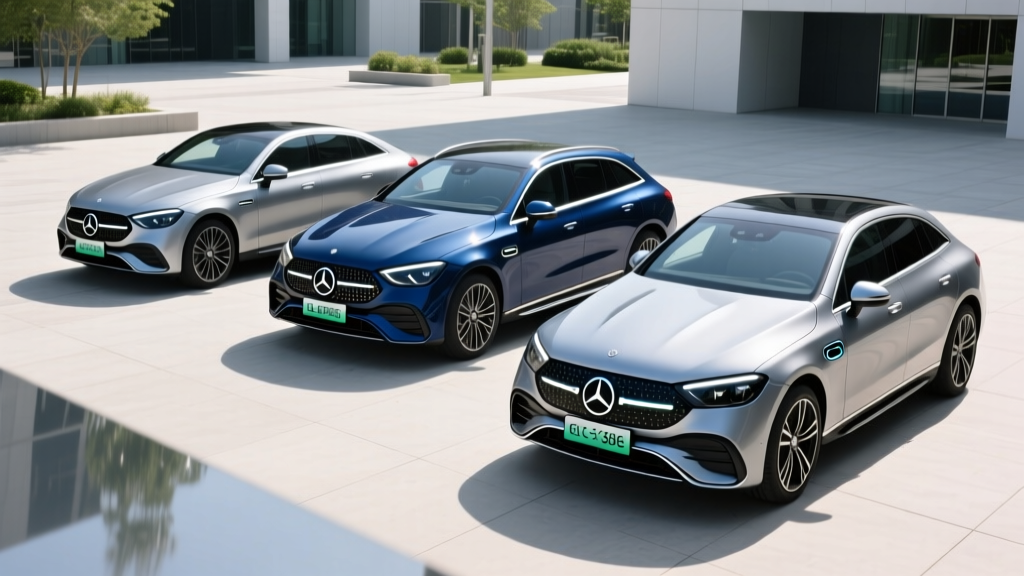
Mercedes-Benz has committed heavily to plug-in hybrid powertrains as a bridge between traditional combustion and full electrification. For 2026, the automaker offers PHEV variants across several of its most popular nameplates — the GLE, GLC, S-Class, and C-Class — each pairing a turbocharged engine with a substantially upsized battery and electric motor compared to earlier generations. The result: genuine electric-only commuting range, luxury-car refinement, and a safety net of gasoline power for road trips.
If you've been searching for a hybrid Mercedes, the current lineup delivers between 44 and 54 miles of EPA-rated electric-only range, combined outputs exceeding 375 hp, and the ability to DC fast charge — a feature many rival luxury PHEVs still lack. But the pricing, tax-credit eligibility, and ownership economics require careful unpacking before you sign a lease or purchase agreement.
HEV vs. PHEV: What Mercedes Actually Sells
Conventional Hybrid (HEV): A small battery recharged by regenerative braking and the engine. No plug. Improves MPG modestly (typically 2-5 MPG over gas-only). Mercedes currently uses a 48-volt mild-hybrid system (EQ Boost) on many gas models — this is not a full hybrid and cannot drive on electric power alone.
Plug-in Hybrid (PHEV): A much larger battery (23–31 kWh usable) that you charge via a plug. Provides 44–54 miles of electric-only driving before the gas engine engages. This is where Mercedes has focused its hybrid engineering for 2026.
The distinction matters because Mercedes markets its 48-volt mild-hybrid models with "EQ" branding, which can confuse shoppers looking for genuine hybrid fuel savings. If you want electric-only commuting, you need the full PHEV — designated with an "e" in the model name (e.g., GLE 450e, S 580e).
2026 Hybrid Mercedes Lineup: Side-by-Side Specs
| Model | Powertrain | Combined HP | Electric Range (EPA) | MPGe (Combined) | Gas MPG (Combined) | Battery (kWh Usable) | Starting MSRP |
|---|---|---|---|---|---|---|---|
| GLC 350e 4MATIC | 2.0L turbo I-4 + electric motor | 312 hp | 54 mi | 80 MPGe | 30 MPG | 23.4 kWh | ~$59,850 |
| GLE 450e 4MATIC | 2.0L turbo I-4 + electric motor | 375 hp | 45 mi | 56 MPGe | 23 MPG | 23.4 kWh | ~$72,350 |
| S 580e | 3.0L turbo I-6 + electric motor | 502 hp | 44 mi | 55 MPGe | 24 MPG | 28.6 kWh | ~$122,850 |
| C 300e (Sedan) | 2.0L turbo I-4 + electric motor | 309 hp | 50 mi | 74 MPGe | 29 MPG | 25.4 kWh | ~$56,900 |
Note: MSRP figures are approximate base prices before destination charges. Trim-level options can add $10,000–$20,000+. Always confirm current pricing at Mercedes-Benz USA.
Charging: How Fast Can a Hybrid Mercedes Recharge?
One of the strongest competitive advantages of the 2026 hybrid Mercedes PHEVs is standard DC fast charging capability — something many luxury PHEVs (from BMW, Audi, and Lexus) still omit or restrict to higher trims.
| Charging Level | Power (kW) | 0–100% Time | Miles of Range Added per Hour |
|---|---|---|---|
| Level 1 (120V household outlet) | ~1.4 kW | ~18–22 hours | ~5–7 mi/hr |
| Level 2 (240V home/public AC) | 7.4 kW (onboard charger) | ~3.5–4.5 hours | ~28–35 mi/hr |
| DC Fast Charge (CCS) | Up to 60 kW | ~30 min (10–80%) | ~90+ mi/hr (electric equivalent) |
At 60 kW DC fast charging, the GLE 450e can replenish from 10% to 80% state of charge in roughly 30 minutes. That's fast enough to recover a full electric commute's worth of range during a lunch stop. On Level 2 at home, a full overnight charge is standard — most owners will plug in at night and wake up with a full battery every morning.
Real-world charging note: The 60 kW peak rate applies primarily between 10–60% SoC. Above 80%, the charge curve tapers significantly to protect battery health, dropping to roughly 15–20 kW. This is normal for PHEV battery packs and is managed automatically by the vehicle's thermal management system.
Real-World MPG vs. EPA Estimates
PHEV fuel economy is notoriously dependent on driver behavior — specifically, how often you charge and how much of your driving falls within the electric-only range.
The PHEV MPG Reality Check:
- If you charge daily and commute under 45 miles: You may use almost no gasoline for months. Owners with short commises report effectively 80–100+ MPGe in practice.
- If you rarely charge: The vehicle operates as a heavy conventional hybrid. Expect the gas-only combined MPG (23–30 MPG depending on model) — or slightly worse, because you're hauling 400–500 lbs of battery and motor dead weight.
- Highway-heavy driving at 75+ mph: Electric range drops 15–20% due to aerodynamic drag. Cold weather (below 32°F) reduces electric range by 20–30% due to battery chemistry and cabin heating demands.
The EPA MPGe figure assumes a blend of electric and gas driving. For a GLE 450e owner who charges every night and drives 35 miles round-trip, actual fuel consumption might be 1–2 gallons per week. For the same owner taking a 400-mile road trip without charging stops, expect roughly 22–24 MPG on gasoline alone — respectable for a 5,400-lb luxury SUV, but not the 56 MPGe sticker figure.
Tax Credit Eligibility for Hybrid Mercedes PHEVs
Under the current IRS §30D Clean Vehicle Credit rules, qualifying PHEVs can receive up to $7,500 in federal tax credits — but eligibility is far from guaranteed and depends on several factors:
- Battery capacity: Must be at least 7 kWh — all Mercedes PHEVs qualify here (23+ kWh).
- MSRP cap: SUVs (GLE, GLC) must be priced at or below $80,000. Sedans (S-Class, C-Class) must be at or below $55,000. The S 580e exceeds the sedan cap. The C 300e may exceed the sedan cap depending on options.
- Buyer income limits: AGI must not exceed $150,000 (single), $225,000 (head of household), or $300,000 (joint filers).
- Battery sourcing and critical minerals: A percentage of battery components must be manufactured or assembled in North America, and critical minerals must be sourced from the U.S. or FTA partners. These thresholds increase annually. Confirm current-year requirements at IRS.gov.
- Point-of-sale transfer: As of 2024, qualifying buyers can transfer the credit to the dealer at purchase, reducing the sale price directly rather than waiting for a tax refund.
Bottom line: The GLC 350e and GLE 450e have the best shot at qualifying for the full or partial credit, depending on battery-sourcing compliance for the specific model year. The S 580e's MSRP disqualifies it. Always verify eligibility with your tax professional and the dealer's fueleconomy.gov listing before purchase.
Battery Warranty, Reliability, and Replacement Cost
Mercedes-Benz covers the high-voltage battery in its PHEVs with a warranty of 6 years or 62,000 miles (whichever comes first) against defects and excessive capacity loss — typically defined as dropping below 70% of original capacity. Some model years may offer extended coverage; confirm your specific vehicle's terms.
Key Battery Facts:
- Chemistry: Mercedes PHEVs use NMC (nickel manganese cobalt) lithium-ion cells, chosen for high energy density in a compact package.
- Expected lifespan: PHEV batteries typically retain 85–90% capacity after 8–10 years with normal use. The smaller pack size (vs. a full EV) means shallower daily cycles, which can actually extend longevity.
- Replacement cost: Out-of-warranty high-voltage battery replacement for a Mercedes PHEV runs approximately $12,000–$18,000 including parts and labor, depending on the model.
- 12V battery: PHEVs still have a conventional 12V battery for accessories. This is separate from the traction battery and follows normal 4–6 year replacement cycles.
On reliability, Mercedes PHEV powertrains add complexity — a turbocharged engine, an electric motor, a high-voltage battery, and associated power electronics all coexist. While the individual components are proven, the integration complexity means more potential failure points than a pure EV or a simple gas car. Owner forums and NHTSA data suggest that most issues relate to software glitches and charging-system faults rather than catastrophic battery failures.
Hybrid Mercedes vs. Full EV vs. Gas: Decision Framework
Choose a Hybrid Mercedes PHEV if:
- You have home charging (Level 2) and a daily commute under 45 miles
- You want electric commuting but regularly take road trips over 300 miles
- You live in an area with limited public DC fast-charging infrastructure
- You want a luxury SUV or sedan without full EV range anxiety
Choose a full EV (e.g., Mercedes EQE, EQS, Tesla, Rivian) if:
- You can charge at home and your daily driving is under 250 miles
- You want the lowest per-mile fuel cost and minimal maintenance
- You want to eliminate gasoline entirely and reduce tailpipe emissions
- You value the smoothest, quietest driving experience
Stick with a gas Mercedes (or mild-hybrid EQ Boost) if:
- You cannot charge at home or at work
- Your daily commute exceeds 60 miles and you rarely take short trips
- You want the lowest upfront purchase price and simplest ownership
Pros and Cons of the 2026 Hybrid Mercedes Lineup
Pros
- 44–54 miles of real electric-only range covers most commutes
- DC fast charging standard (60 kW) — rare for PHEVs
- Combined outputs from 309 to 502 hp — no performance compromise
- Luxury interior, MBUX tech, and driver-assist features
- Gas engine eliminates range anxiety on long trips
- Potential §30D tax credit eligibility on GLC and GLE
Cons
- High starting prices ($57K–$123K); options push well higher
- S 580e and optioned-up C 300e may exceed MSRP caps for tax credit
- Gas-only MPG is mediocre when battery is depleted (23–30 MPG)
- Added weight from dual powertrain affects handling vs. gas-only models
- 6-year/62,000-mile battery warranty is shorter than some competitors
- Complexity of dual powertrain increases long-term repair risk
Frequently Asked Questions
How many MPG does a hybrid Mercedes get?
It depends on the model and how you use it. The GLC 350e achieves an EPA-rated 80 MPGe combined when blending electric and gas driving, and 30 MPG combined on gasoline alone. The GLE 450e rates at 56 MPGe combined and 23 MPG gas-only. The S 580e rates at 55 MPGe combined and 24 MPG gas-only. The C 300e rates at 74 MPGe combined and 29 MPG gas-only. Your real-world numbers depend heavily on how often you plug in.
How far can a hybrid Mercedes go on electric only?
The 2026 PHEV lineup offers between 44 and 54 miles of EPA-rated electric-only range. The GLC 350e leads at 54 miles, the C 300e manages 50 miles, the GLE 450e delivers 45 miles, and the S 580e provides 44 miles. In cold weather or at sustained highway speeds, expect a 15–30% reduction from these figures.
Does a hybrid Mercedes qualify for a tax credit?
Possibly. Under IRS §30D rules, qualifying PHEVs can receive up to $7,500, but eligibility depends on MSRP caps ($80K for SUVs, $55K for sedans), buyer income limits, and battery-sourcing requirements. The GLC 350e and base GLE 450e have the best chance. The S 580e exceeds the sedan MSRP cap. Confirm current-year eligibility at IRS.gov and with your tax professional before purchasing.
Is the hybrid Mercedes battery reliable and what does replacement cost?
Mercedes PHEV batteries use proven NMC lithium-ion chemistry and are warrantied for 6 years or 62,000 miles against defects and excessive degradation. Most PHEV batteries retain 85–90% capacity after 8–10 years. Out-of-warranty replacement costs approximately $12,000–$18,000 depending on the model.
Do I need to plug in a Mercedes PHEV?
Yes — to get the benefit. While a PHEV will operate on its gas engine alone if you never plug it in, you'll miss the electric-only range and the fuel-cost savings that justify the premium. If you cannot charge at home or work, a conventional gas or mild-hybrid Mercedes is a better fit.
Can a hybrid Mercedes DC fast charge?
Yes. All 2026 Mercedes PHEVs support DC fast charging at up to 60 kW via the CCS connector. This enables a 10–80% charge in approximately 30 minutes — significantly faster than most competing luxury PHEVs, which are limited to Level 2 AC charging only.