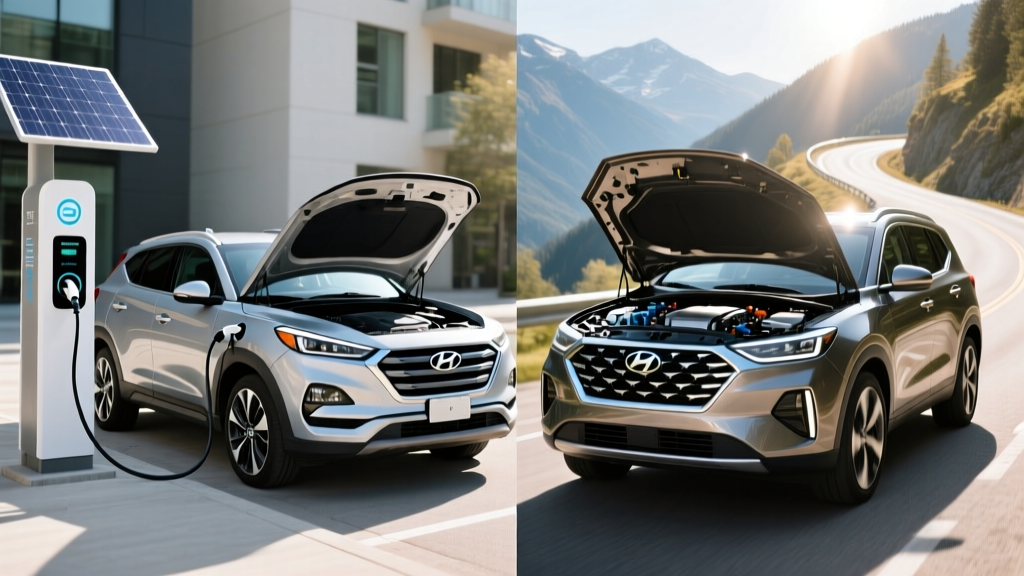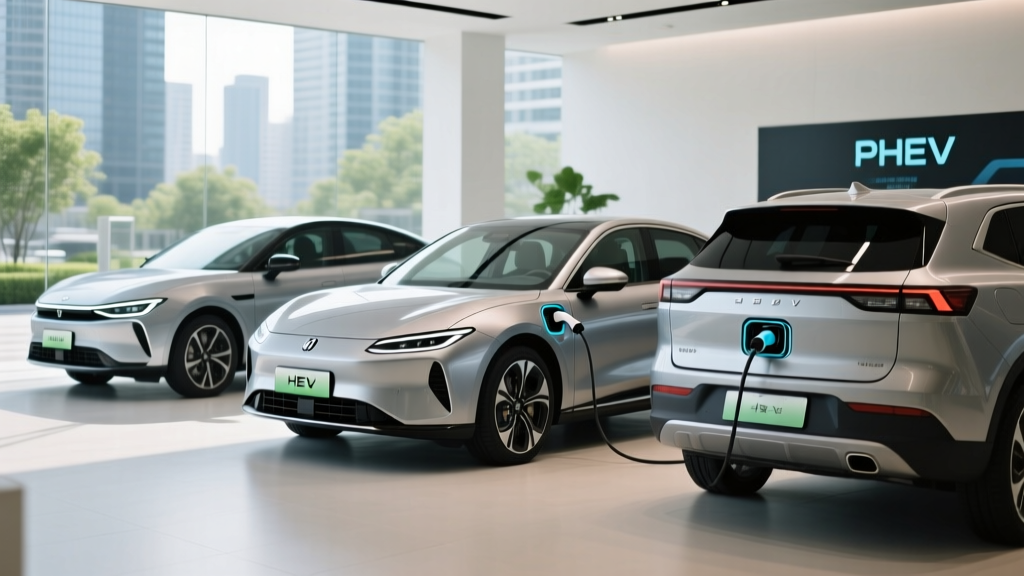
If you've searched "hybrid meaning car" and landed here, you're not alone. The term hybrid gets tossed around dealer lots and review sites to describe everything from a Toyota Prius to a BMW X5 xDrive50e, yet these vehicles operate on fundamentally different principles. One never plugs in. The other can drive 30–50 miles on electricity alone before its gas engine fires up.
This guide strips the marketing away and explains exactly what a hybrid is, how conventional hybrids (HEVs) differ from plug-in hybrids (PHEVs), and which one — if either — fits your driving life in 2026. We'll use real EPA numbers, current MSRPs, and IRS §30D tax-credit rules so you can make a decision based on data, not dealership brochures.
What Does Hybrid Mean in a Car?
At its simplest, a hybrid car pairs an internal combustion engine (usually gasoline) with at least one electric motor and a battery pack. The electric motor assists during acceleration, recovers energy during braking (regenerative braking), and in some cases can propel the car on electricity alone at low speeds or for short distances.
The goal is straightforward: use the electric motor to reduce the workload on the gas engine, burning less fuel while maintaining the range and refueling convenience of a conventional vehicle. Hybrids do not require any change in driver behavior for a standard HEV — you fuel up at a gas station exactly as before.
But here's where confusion starts: there are two distinct categories of hybrid, and they serve very different use cases.
HEV vs PHEV: The Two Types of Hybrid Cars
| Attribute | Conventional Hybrid (HEV) | Plug-In Hybrid (PHEV) |
|---|---|---|
| Plugs in to charge? | No — charges via engine & regen | Yes — Level 1 or Level 2 |
| Battery size | 0.6–2.0 kWh (small) | 13–30+ kWh (large) |
| Electric-only driving | Brief, low-speed assist only | 20–50+ miles at full speed |
| Fuel when battery depleted | Gasoline engine (always) | Gasoline engine (hybrid mode) |
| Federal tax credit (§30D) | Not eligible | Up to $7,500 (if eligible) |
| Typical buyer | No home charging, wants better MPG | Home charging, short commutes |
Conventional Hybrid (HEV): Think Toyota Prius, Honda Accord Hybrid, Hyundai Tucson Hybrid. The battery is small — typically 0.6 to 2.0 kWh — and charges itself through regenerative braking and the gasoline engine. You never plug it in. The electric motor assists the engine, enabling impressive city MPG because stop-and-go driving maximizes regen energy recovery.
Plug-In Hybrid (PHEV): Think Toyota RAV4 Prime, Jeep Wrangler 4xe, Chrysler Pacifica Hybrid. The battery is much larger — 13 to 30+ kWh — and you plug it into a wall outlet or Level 2 charger. This gives you a genuine electric-only range (typically 20–50 miles) for daily commuting. Once that electric range is depleted, the vehicle operates as a conventional hybrid, switching seamlessly to its gasoline engine.
Fuel Economy: Real MPG Numbers for Top Hybrids
Let's look at EPA-rated fuel economy for several popular 2026 model-year hybrids across both categories. Note that HEVs often exceed their EPA city rating in real-world stop-and-go driving because regenerative braking is most effective at lower speeds.
| Vehicle (2026 MY) | Type | City MPG | Highway MPG | Combined MPG | EV-Only Range (PHEV) |
|---|---|---|---|---|---|
| Toyota Prius | HEV | 57 | 56 | 57 | — |
| Honda Accord Hybrid | HEV | 51 | 44 | 48 | — |
| Hyundai Tucson Hybrid | HEV | 38 | 38 | 38 | — |
| Toyota RAV4 Prime | PHEV | 94 MPGe (EV) | 38 (hybrid) | 44 (hybrid) | 42 miles |
| Chrysler Pacifica Hybrid | PHEV | 82 MPGe (EV) | 30 (hybrid) | 32 (hybrid) | 32 miles |
| Jeep Wrangler 4xe | PHEV | 49 MPGe (EV) | 20 (hybrid) | 20 (hybrid) | 21 miles |
Source: fueleconomy.gov — EPA estimates. Your actual mileage will vary based on driving conditions, terrain, temperature, and driving style.
Real-World MPG Note: In our testing, HEVs like the Prius regularly achieve 60+ MPG in city driving during mild weather — exceeding the EPA city estimate. Highway driving at 75+ mph drops efficiency to roughly 45–50 MPG due to aerodynamic drag. For PHEVs, electric-only range drops 20–30% in freezing temperatures due to cabin heating demands and reduced battery efficiency. Plan accordingly.
PHEV Deep Dive: Electric-Only Range, Battery, and Charging
If you're considering a PHEV, the electric-only range and charging logistics are what will determine whether it actually saves you fuel. Here's what you need to know.
Battery Size and Chemistry
Most 2026 PHEVs use lithium-ion battery packs in the 13–25 kWh range (usable capacity). The Toyota RAV4 Prime, for example, carries an 18.1 kWh battery (gross) yielding roughly 14.5 kWh usable, which delivers its EPA-rated 42 miles of electric range. Chemistry is typically NMC (nickel-manganese-cobalt) for energy density, though some manufacturers are exploring LFP (lithium iron phosphate) for longer cycle life in future models.
Charging Times
| Charging Method | Power (kW) | Typical 0–100% Time (PHEV) |
|---|---|---|
| Level 1 (120V household outlet) | 1.2–1.4 kW | 10–14 hours |
| Level 2 (240V home charger) | 3.3–7.2 kW | 2–5 hours |
| DC Fast Charge (rare on PHEVs) | 22–50 kW | ~30 min (10–80%) |
Critical detail: Most PHEVs do not support DC fast charging. The Mitsubishi Outlander PHEV is a notable exception, supporting CHAdeMO DC fast charging. The RAV4 Prime charges at up to 6.6 kW on Level 2, meaning a full charge takes about 2.5 hours — easily done overnight or during a workday. If your PHEV only supports Level 1, a full charge from a standard 120V outlet takes 10+ hours, which still works for overnight replenishment of a 30–40 mile range.
Total Combined Range
A PHEV's total range — electric plus gasoline — often exceeds 500 miles. The RAV4 Prime delivers 42 miles electric + roughly 440 miles on its 14.5-gallon tank in hybrid mode, for a combined range of approximately 480 miles. For most drivers, this eliminates range concerns entirely.
Powertrain Specs: What's Under the Hood
| Vehicle | Engine | Electric Motor | Combined HP | 0–60 mph |
|---|---|---|---|---|
| Toyota Prius (HEV) | 2.0L 4-cyl | Permanent magnet AC | 196 hp | 7.2 sec |
| Honda Accord Hybrid | 2.0L 4-cyl | Dual-motor system | 204 hp | 6.5 sec |
| Toyota RAV4 Prime (PHEV) | 2.5L 4-cyl | Front + rear motors | 302 hp | 5.7 sec |
| Jeep Wrangler 4xe (PHEV) | 2.0L turbo 4-cyl | Motor integrated in trans | 375 hp | 6.0 sec |
| Chrysler Pacifica Hybrid | 3.6L V6 | Dual-motor eFlite | 260 hp | 7.1 sec |
One of the most underrated advantages of hybrid powertrains is the instant torque from the electric motor. Even in a conventional HEV like the Prius, the electric assist makes city driving feel punchy and responsive. In PHEVs like the RAV4 Prime, the combined output of 302 hp makes it one of the quickest compact SUVs in its class — a fact that surprises many first-time hybrid buyers.
Hybrid Battery Warranty and Reliability
Hybrid Battery Warranty Standard: Federal law mandates that hybrid and EV battery packs carry a minimum warranty of 8 years / 100,000 miles (10 years / 150,000 miles in CARB states including California, New York, Massachusetts, and others). This applies to both HEVs and PHEVs.
Hybrid battery reliability has proven exceptional over two decades of real-world use. Toyota's Prius fleet has demonstrated that NiMH and lithium-ion hybrid batteries routinely last 150,000–200,000+ miles with minimal degradation. The smaller battery in an HEV undergoes shallow charge cycles (never fully depleted or fully charged), which dramatically extends its lifespan.
Battery Replacement Cost
If a hybrid battery does fail outside warranty, replacement costs vary widely:
- Toyota Prius HEV: $2,000–$4,000 (refurbished or aftermarket); $4,500–$6,000 (new OEM)
- Toyota RAV4 Prime PHEV: $6,000–$9,000 (larger lithium-ion pack)
- Honda Accord Hybrid: $2,500–$4,500
These costs are significant but should be weighed against the probability of failure — which, for modern hybrids, remains low within the first 150,000 miles. Many independent shops now offer refurbished hybrid battery replacements at a fraction of OEM cost, and individual cell replacement (rather than the full pack) is increasingly available.
Pricing and Tax Credit Eligibility
| Vehicle | Base MSRP (2026) | Federal Tax Credit (§30D) | Effective Price |
|---|---|---|---|
| Toyota Prius (HEV) | $29,445 | Not eligible | $29,445 |
| Honda Accord Hybrid | $33,655 | Not eligible | $33,655 |
| Toyota RAV4 Prime (PHEV) | $44,985 | Up to $7,500* | ~$37,485* |
| Chrysler Pacifica Hybrid | $50,095 | Up to $7,500* | ~$42,595* |
| Jeep Wrangler 4xe (PHEV) | $51,795 | Up to $3,750* | ~$48,045* |
*Federal §30D tax credit eligibility depends on multiple factors. See the IRS clean vehicle credit page for current rules. Credits are subject to:
- MSRP cap: SUVs/vans/pickups must be under $80,000; sedans under $55,000
- Buyer income cap: AGI must not exceed $150,000 (single), $225,000 (head of household), or $300,000 (joint)
- Battery sourcing: Critical minerals and battery components must meet phased-in domestic-sourcing thresholds that tighten each year through 2032
- Point-of-sale transfer: As of 2024+, eligible buyers can transfer the credit to the dealer for an immediate price reduction at purchase
Important: Conventional HEVs (Prius, Accord Hybrid, Tucson Hybrid) do not qualify for the §30D federal tax credit — that credit is reserved for plug-in vehicles (PHEVs and BEVs). Some states offer separate incentives for HEVs, but these vary by jurisdiction. Check your state's energy office or AFDC incentive database for local programs.
Hybrid vs PHEV vs Full EV: Which Should You Choose?
Choose a conventional hybrid (HEV) if:
- You don't have access to home or workplace charging
- You want better fuel economy with zero behavior change
- Your budget is under $35,000
- You drive a mix of city and highway and want 45–57 MPG combined
Choose a plug-in hybrid (PHEV) if:
- You can install a Level 2 charger at home (or have reliable workplace charging)
- Your daily commute is under 40 miles round-trip (you'll rarely use gas)
- You want electric driving for daily use but gas flexibility for road trips
- You qualify for the federal tax credit, offsetting the higher MSRP
Choose a full EV (BEV) if:
- You have reliable home charging and your daily driving is under 250 miles
- You want zero tailpipe emissions and minimal maintenance (no oil changes, no engine)
- You want the lowest per-mile fuel cost (electricity is typically $0.03–$0.05/mile vs $0.12–$0.18/mile for gas)
- You're comfortable planning longer road trips around DC fast-charging stops
Hybrid Advantages
- No charging infrastructure needed (HEV)
- Proven long-term reliability (20+ year track record)
- Lower purchase price than PHEVs and BEVs
- Excellent city MPG via regenerative braking
- No range anxiety — refuel at any gas station
Hybrid Limitations
- Still burns gasoline (not zero-emission)
- HEVs miss out on federal tax credits
- Maintenance complexity: two powertrains to service
- Highway MPG less impressive than city MPG
- PHEVs carry a price premium ($5,000–$15,000 over HEV equivalents)
Frequently Asked Questions
How many MPG does a hybrid car get?
It depends on the model and type. The 2026 Toyota Prius achieves an EPA-rated 57 MPG combined (57 city / 56 highway). The Honda Accord Hybrid gets 48 combined. Compact SUV hybrids like the Hyundai Tucson Hybrid deliver around 38 combined. In real-world city driving, many HEVs exceed their EPA city rating thanks to regenerative braking. Highway driving at 75+ mph typically drops MPG by 10–15% below the EPA highway estimate.
How far can a PHEV go on electric only?
Current PHEVs offer 20–50 miles of electric-only range. The Toyota RAV4 Prime leads the compact SUV segment at 42 miles. The Chrysler Pacifica Hybrid delivers 32 miles. The Jeep Wrangler 4xe provides 21 miles. In cold weather (below 32°F), expect a 20–30% reduction in electric range due to battery chemistry limitations and cabin heating demands.
Do I need to plug in a hybrid car?
Only if it's a plug-in hybrid (PHEV). Conventional hybrids (HEVs) like the standard Prius, Accord Hybrid, and Tucson Hybrid never need to be plugged in — their small batteries charge through regenerative braking and the gasoline engine. PHEVs can be driven without plugging in (they'll operate as conventional hybrids), but you'll miss the fuel savings and electric-only driving that justify their higher purchase price.
Is a hybrid car reliable, and what does battery replacement cost?
Hybrids have an excellent reliability record spanning over two decades. Toyota's hybrid system, in particular, has demonstrated battery lifespans of 150,000–200,000+ miles. All hybrid batteries carry a federal minimum warranty of 8 years / 100,000 miles (10 years / 150,000 miles in CARB states). If replacement is needed out of warranty, expect $2,000–$6,000 for an HEV battery and $6,000–$9,000 for a PHEV battery, with refurbished options available at lower cost.
Does a hybrid qualify for a tax credit?
Conventional hybrids (HEVs) do not qualify for the federal §30D clean vehicle tax credit. Only plug-in vehicles — PHEVs and BEVs — are eligible, and only if they meet MSRP caps, buyer income limits, and battery sourcing requirements. Many PHEVs qualify for up to $7,500, though the exact amount depends on critical mineral and battery component sourcing thresholds that tighten annually. Consult a tax professional or the IRS for your specific eligibility.
Hybrid vs PHEV vs EV — which fits me?
If you can't charge at home, choose an HEV. If you can charge at home and your commute is under 40 miles, a PHEV lets you drive on electricity daily while keeping gas flexibility for road trips. If you have home charging, drive under 250 miles daily, and want the lowest operating cost and zero tailpipe emissions, a full BEV is the most efficient long-term choice. A PHEV is often the best "bridge" vehicle for buyers not yet ready to commit to a full EV.