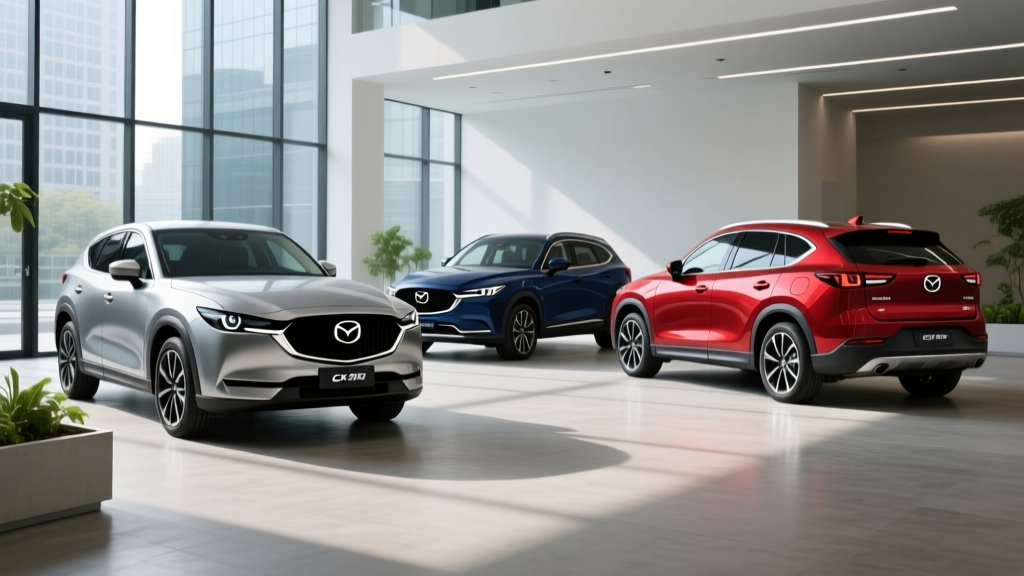
Mazda's electrification strategy in 2026 doesn't chase pure-electric range records. Instead, the brand has committed to plug-in hybrid powertrains across its larger SUV lineup, pairing a 2.5-liter four-cylinder engine with an electric motor and a 17.8 kWh lithium-ion battery. If you're researching a hybrid Mazda SUV, you're looking at three core models: the compact CX-50 Hybrid (a Toyota-sourced conventional HEV), the midsize two-row CX-70 PHEV, and the three-row CX-90 PHEV. Each serves a different buyer, and the differences in electric-only range, pricing, and tax-credit eligibility matter.
This guide breaks down every current Mazda hybrid and plug-in hybrid SUV with exact EPA figures, real-world expectations, warranty coverage, and a decision framework so you can match the right model to your driving pattern.
HEV vs PHEV: How Mazda's Two Hybrid Systems Differ
Before comparing models, it's essential to understand the two distinct hybrid architectures Mazda uses in 2026.
| Feature | Conventional Hybrid (HEV) | Plug-in Hybrid (PHEV) |
|---|---|---|
| Models | CX-50 Hybrid | CX-70 PHEV, CX-90 PHEV |
| Plug-in charging | No — self-charging via regen & engine | Yes — plug in to access electric-only range |
| Battery size | ~1.1 kWh (small buffer) | 17.8 kWh usable |
| Electric-only driving | Brief low-speed assists only | 26–28 miles EPA |
| Fuel type | Gasoline (regular unleaded) | Gasoline + electricity |
| Tax credit eligible | No | Up to $3,750 (§30D, subject to sourcing rules) |
The CX-50 Hybrid uses Toyota's proven hybrid synergy drive — Mazda partnered with Toyota for this powertrain. It never needs to be plugged in and operates like a traditional gas vehicle that happens to be exceptionally efficient. The CX-70 and CX-90 PHEVs, by contrast, are Mazda's in-house plug-in architecture: you plug them into a Level 1 or Level 2 charger to fill the 17.8 kWh battery, drive roughly 26–28 miles on electricity alone, and then the gasoline engine takes over seamlessly for extended trips.
The 2026 Mazda Hybrid SUV Lineup: Specs at a Glance
| Spec | CX-50 Hybrid | CX-70 PHEV | CX-90 PHEV |
|---|---|---|---|
| Powertrain | 2.5L 4-cyl + electric motor (Toyota HEV) | 2.5L 4-cyl + electric motor (PHEV) | 2.5L 4-cyl + electric motor (PHEV) |
| Combined HP | 219 hp | 323 hp | 323 hp |
| Battery | ~1.1 kWh NiMH | 17.8 kWh lithium-ion | 17.8 kWh lithium-ion |
| EPA Electric Range | N/A (HEV) | 26 mi | 26 mi |
| EPA Combined MPG (gas) | 38 MPG | 25 MPG (charge-sustaining) | 25 MPG (charge-sustaining) |
| MPGe (electric + gas) | N/A | 56 MPGe | 56 MPGe |
| 0–60 mph | ~7.8 sec | ~6.3 sec | ~6.5 sec |
| DC Fast Charging | N/A | No (Level 2 AC only) | No (Level 2 AC only) |
| Level 2 Charge Time (0–100%) | N/A | ~2.5 hours (240V, 32A) | ~2.5 hours (240V, 32A) |
| Starting MSRP | $35,395 | $55,895 | $57,395 |
| Federal Tax Credit | Not eligible | Up to $3,750* | Up to $3,750* |
*Tax credit amount depends on critical-mineral and battery-component sourcing requirements under IRS §30D rules. Credit can be transferred to the dealer at point of sale. Income caps apply: $150K single / $300K joint filers. Confirm eligibility with your tax professional before purchase.
Fuel Economy Breakdown: EPA vs Real-World MPG
Hybrid efficiency varies dramatically between city and highway driving. Regenerative braking recovers energy in stop-and-go traffic, which is why hybrids often exceed their EPA city ratings in real-world urban use. Highway driving, where the engine runs continuously, tells a different story.
| Model | EPA City | EPA Highway | EPA Combined | Real-World Expectation |
|---|---|---|---|---|
| CX-50 Hybrid | 39 MPG | 37 MPG | 38 MPG | 36–42 MPG (city-favorable); 33–36 MPG highway-heavy |
| CX-70 PHEV (gas only) | 24 MPG | 26 MPG | 25 MPG | 23–27 MPG once battery is depleted |
| CX-90 PHEV (gas only) | 24 MPG | 26 MPG | 25 MPG | 22–27 MPG once battery is depleted |
For the PHEV models, the 25 MPG combined figure only applies once the battery is depleted (charge-sustaining mode). If your daily commute is under 26 miles and you charge at home nightly, you may use very little gasoline at all. On a 300-mile road trip, however, you'll burn fuel at roughly the same rate as a conventional midsize SUV after the first 26 electric miles.
Real-World Range Note: The PHEV models' 26-mile electric range drops to approximately 18–22 miles in cold weather (below 35°F) due to cabin heating demands and reduced battery efficiency. In mild conditions with light acceleration, owners report achieving 28–30 miles. Total combined range (electric + full gas tank) exceeds 430 miles for both PHEVs.
Electric-Only Range and Charging: What PHEV Owners Need to Know
The CX-70 and CX-90 PHEV share the same 17.8 kWh lithium-ion battery pack, delivering an EPA-rated 26 miles of electric-only driving. This is enough to cover most daily commutes and errands without engaging the gasoline engine — provided you charge regularly.
Charging specifics:
- Level 1 (120V household outlet): ~7–8 hours for a full charge. Practical for overnight top-ups if you drive less than the full 26 miles daily.
- Level 2 (240V, 32A home charger): ~2.5 hours from empty to full. This is the recommended setup for daily PHEV use.
- DC fast charging: Not supported. Mazda's PHEV system uses an AC-only charge port (J1772 connector). This is typical for PHEVs in this class — the relatively small battery doesn't justify DC fast-charge hardware cost or weight.
One practical note: the onboard charger accepts up to approximately 7.2 kW on Level 2. If your home charger is rated higher (e.g., 48A / 11.5 kW), the vehicle will only draw what it can accept. A 32A Level 2 charger is the sweet spot for cost and performance with these models.
Pricing, Tax Credits, and Total Cost of Ownership
Mazda's hybrid SUVs span a wide price range. Here's where each model lands before and after potential incentives.
| Model & Trim | MSRP | Est. Federal Credit | Effective Price |
|---|---|---|---|
| CX-50 Hybrid Preferred | $35,395 | $0 (HEV not eligible) | $35,395 |
| CX-70 PHEV Preferred | $55,895 | Up to $3,750 | ~$52,145 |
| CX-90 PHEV Preferred | $57,395 | Up to $3,750 | ~$53,645 |
| CX-90 PHEV Premium Plus | $63,295 | Up to $3,750 | ~$59,545 |
The PHEV models' federal tax credit is not guaranteed at the full $7,500 level. Under current §30D rules, the credit is split: $3,750 for meeting critical-mineral sourcing requirements and $3,750 for battery-component sourcing. As of 2026, Mazda's PHEV battery supply chain qualifies for the critical-minerals portion, yielding up to $3,750. This can be applied as a point-of-sale rebate through a participating dealer, reducing your out-of-pocket cost immediately rather than waiting for a tax return. Always verify current eligibility on IRS.gov before signing a purchase agreement.
Operating cost comparison: Charging the CX-90 PHEV's 17.8 kWh battery at the U.S. average electricity rate of ~$0.17/kWh costs approximately $3.03 per full charge. That delivers 26 miles of driving, or roughly $0.12 per mile on electricity. At $3.50/gallon and 25 MPG, the same distance on gasoline costs $3.64. The savings per mile are modest compared to a full EV, but they compound over years of short-commute driving where electricity does most of the work.
Reliability, Battery Warranty, and Long-Term Costs
Battery longevity is the most common concern among first-time hybrid buyers. Here's what Mazda covers and what the data shows.
Mazda Hybrid Battery Warranty (2026 models):
- CX-50 Hybrid (Toyota-sourced HEV system): 10 years / 150,000 miles hybrid battery warranty (in CARB states); 8 years / 100,000 miles federally.
- CX-70 & CX-90 PHEV: 8 years / 100,000 miles high-voltage battery warranty (federally mandated minimum). Some states with CARB adoption extend this to 10 years / 150,000 miles.
- Warranty trigger: Typically activates if battery capacity drops below ~70% of original capacity within the warranty period.
Real-world data from Toyota's hybrid systems (relevant to the CX-50 Hybrid) shows exceptional longevity, with many units exceeding 200,000 miles without significant degradation. Mazda's PHEV system is newer, but the 17.8 kWh pack is conservatively tuned — it doesn't charge to true 100% or discharge to true 0%, using a buffer to protect long-term cell health. This is standard practice across the industry and significantly extends cycle life.
Out-of-warranty replacement cost: If a PHEV battery requires replacement beyond the warranty window, expect $8,000–$12,000 for the pack plus labor at a Mazda dealership. The CX-50 Hybrid's smaller Toyota-sourced battery is less expensive to replace, typically $3,000–$5,000. These are worst-case scenarios — the vast majority of hybrid batteries outlast the vehicle's useful life.
For reliability ratings, check current scores from IIHS and consumer reliability surveys. Mazda as a brand has trended upward in reliability rankings over the past several years, and the Toyota-sourced hybrid system in the CX-50 carries one of the strongest track records in the industry.
Which Hybrid Mazda SUV Fits Your Driving Pattern?
Choose the CX-50 Hybrid if:
- You want maximum fuel efficiency without plugging in
- Your budget is under $40K
- You drive a mix of city and highway and want 38 MPG combined without thinking about it
- You don't have access to home charging
- You only need two rows of seating
Choose the CX-70 PHEV if:
- You have a garage or driveway where you can install a Level 2 charger
- Your daily commute is under 26 miles round-trip
- You want a sporty two-row midsize SUV with 323 hp and the option to drive on electricity most days
- You take occasional road trips and don't want range limitations
Choose the CX-90 PHEV if:
- You need three rows of seating for family duty
- You can charge at home and your daily driving fits within 26 electric miles
- You want premium interior quality and towing capacity (3,500 lbs) alongside electrified efficiency
- You're upgrading from a conventional V6 SUV and want lower operating costs without going full EV
Consider a full EV instead if:
- Your daily driving rarely exceeds 200 miles
- You have reliable home charging
- You want to eliminate gasoline purchases entirely
- You qualify for the full $7,500 federal EV tax credit on a competing model
Pros and Cons: The Honest Assessment
Pros
- CX-50 Hybrid delivers 38 MPG combined with no plug-in hassle — best efficiency in Mazda's lineup
- PHEV models offer 26 miles electric for daily commuting, 430+ total range for road trips
- 323 hp in the PHEVs makes them the most powerful Mazda SUVs available
- Mazda's interior quality and driving dynamics remain class-competitive
- AWD is standard on all hybrid models — no FWD compromise
- Toyota hybrid system in CX-50 has a decades-long reliability track record
Cons
- PHEV electric range (26 mi) trails segment leaders like the RAV4 Prime (42 mi)
- No DC fast charging on PHEVs — not an issue for home chargers, but limits public charging utility
- Charge-sustaining MPG (25) is unremarkable for the PHEV's size and weight once the battery depletes
- PHEV pricing starts above $55K — significantly higher than the CX-50 Hybrid
- Federal tax credit is limited to $3,750, not the full $7,500, due to battery sourcing
- CX-50 Hybrid is the only conventional HEV; no hybrid option exists for the smaller CX-30 or CX-5
Frequently Asked Questions
How many MPG does a hybrid Mazda SUV get?
The CX-50 Hybrid achieves 39 city / 37 highway / 38 combined MPG — the most efficient Mazda SUV. The CX-70 and CX-90 PHEVs deliver 25 MPG combined once the battery is depleted, but 56 MPGe when factoring in electric-only driving. In real-world city driving, the CX-50 Hybrid often exceeds 40 MPG thanks to aggressive regenerative braking.
How far can the Mazda PHEV SUVs go on electric only?
Both the CX-70 PHEV and CX-90 PHEV are EPA-rated for 26 miles of electric-only range. In mild weather with gentle driving, expect 28–30 miles. In cold weather (below 35°F) or with aggressive acceleration, expect 18–22 miles. After the battery depletes, the gasoline engine takes over seamlessly with no driver intervention required.
Does a hybrid Mazda SUV qualify for a tax credit?
The CX-50 Hybrid (conventional HEV) does not qualify for any federal tax credit. The CX-70 PHEV and CX-90 PHEV may qualify for up to $3,750 under IRS §30D, depending on battery-sourcing compliance and buyer income limits ($150K single / $300K joint). This credit can be transferred to the dealer at point of sale as an immediate rebate. Check current eligibility at fueleconomy.gov.
Is the Mazda hybrid battery reliable, and what does replacement cost?
Mazda's hybrid batteries are covered for 8 years / 100,000 miles (10 years / 150,000 in CARB states). The CX-50 Hybrid's Toyota-sourced system has an exceptional reliability record spanning decades. Out-of-warranty replacement runs $3,000–$5,000 for the CX-50 Hybrid and $8,000–$12,000 for the PHEV models, though most hybrid batteries last the lifetime of the vehicle.
Hybrid vs PHEV vs EV — which Mazda SUV should I buy?
Choose the CX-50 Hybrid (HEV) if you want simple, no-plug efficiency under $40K. Choose the CX-70 or CX-90 PHEV if you can charge at home and want electric commuting with gas-powered road-trip freedom. Consider a full EV (like the Mazda MX-30 or a competitor) only if your daily range needs are modest and you want zero gasoline use. PHEVs are the best bridge for drivers who aren't ready to commit to full electric but want meaningful fuel savings on daily drives.
Do I need to plug in the CX-50 Hybrid?
No. The CX-50 Hybrid is a conventional hybrid (HEV) that charges its small battery through regenerative braking and the gasoline engine. You fuel it like any other gas car — it simply uses less fuel. Only the CX-70 and CX-90 PHEVs benefit from being plugged in.
Can the Mazda PHEV SUVs tow?
Yes. The CX-90 PHEV is rated for up to 3,500 pounds of towing capacity when properly equipped. The CX-70 PHEV shares a similar rating. The CX-50 Hybrid is rated for up to 3,500 pounds as well, though towing will reduce fuel economy significantly — expect 28–32 MPG instead of the rated 38 combined.