Jeep's Plug-In Hybrid Lineup: What Buyers Need to Know
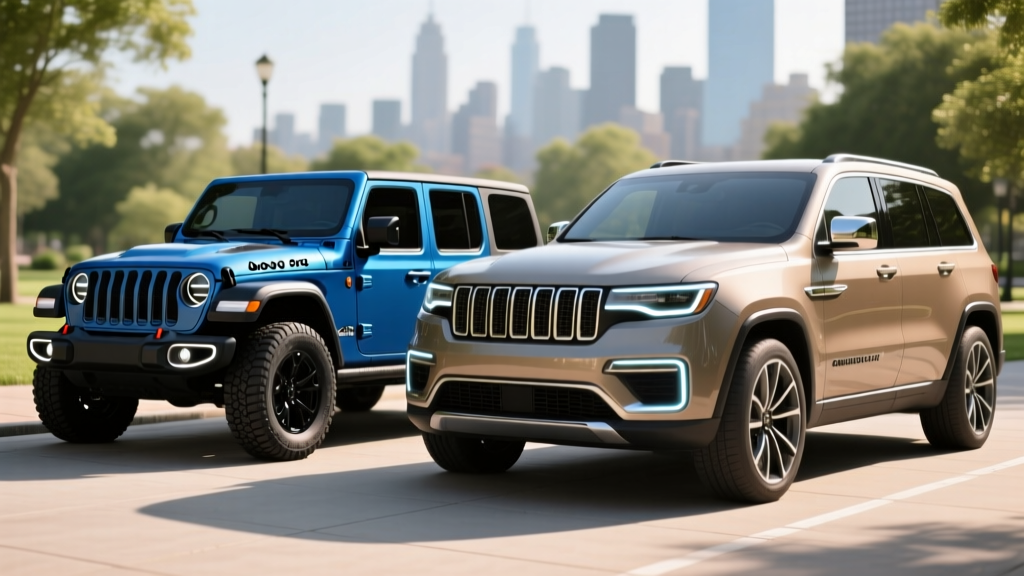
Jeep offers two electrified models in the U.S. market for 2026, and both are plug-in hybrids (PHEVs) wearing the 4xe badge: the Wrangler 4xe and the Grand Cherokee 4xe. Neither is a conventional hybrid (HEV) — both require plug-in charging to unlock their full efficiency potential, and both pair a turbocharged engine with an electric motor and a high-voltage battery large enough for meaningful electric-only driving.
If you've been searching for hybrid Jeeps, the 4xe lineup represents Jeep's answer to buyers who want trail capability or family SUV space without committing to a full battery-electric vehicle. But the two models serve very different use cases, and their specs diverge significantly on range, price, and powertrain output. This guide breaks down the exact numbers you need to decide between them — or to determine whether a PHEV Jeep fits your life better than a full EV or a conventional gas model.
HEV vs. PHEV: Why Jeep Went Plug-In Only
Before diving into specs, it's worth clarifying a common point of confusion. The automotive market splits electrified vehicles into two main categories:
Conventional Hybrid (HEV)
- No plug required. The battery recharges through regenerative braking and the engine.
- Small battery (typically 1–2 kWh).
- No electric-only range beyond brief low-speed assist.
- Example: Toyota RAV4 Hybrid, Honda CR-V Hybrid.
Plug-In Hybrid (PHEV)
- Plugs in to charge via Level 1 (120V) or Level 2 (240V).
- Larger battery (14–25+ kWh usable) enabling electric-only driving.
- Electric-only range of 20–50+ miles before the engine engages.
- Example: Jeep Wrangler 4xe, Jeep Grand Cherokee 4xe.
Jeep does not currently sell a conventional HEV in the U.S. Every electrified Jeep is a PHEV. That matters for your daily routine: to get the advertised efficiency, you need access to a plug — ideally a Level 2 home charger, though Level 1 (standard 120V outlet) works for overnight top-ups given the modest battery sizes.
2026 Wrangler 4xe: Specs, Range, and Efficiency
| Attribute | Value |
|---|---|
| Powertrain | 2.0L turbo I-4 + electric motor (integrated in 8-speed auto) |
| Combined Horsepower | 375 hp / 470 lb-ft torque |
| Battery (usable) | 17.3 kWh (NMC lithium-ion) |
| EPA Electric-Only Range | 22 miles |
| EPA Combined MPGe (electric + gas) | 49 MPGe |
| EPA MPG (gas-only, charge-sustaining) | 20 city / 20 hwy / 20 combined |
| Total Combined Range | ~370 miles (electric + gas) |
| Level 2 Charge Time (0–100%) | ~2.5 hours at 7.2 kW |
| DC Fast Charging | Not available |
| 0–60 mph | ~6.0 seconds |
| Towing Capacity | 3,500 lbs |
| Starting MSRP (Willys 4xe) | ~$51,790 |
| Battery Warranty | 8 years / 100,000 miles |
The Wrangler 4xe uses a P2 hybrid architecture — the electric motor sits between the engine and the ZF 8-speed automatic transmission, allowing it to drive the wheels independently at low speeds or assist the turbo four under load. The 17.3 kWh battery is mounted under the rear seat, preserving the Wrangler's ground clearance and approach/departure angles that matter off-road.
Real-World Electric Range Expectations
The EPA rates the Wrangler 4xe at 22 miles electric-only. In real-world driving, expect 18–20 miles in mixed conditions and as low as 14–16 miles in cold weather (below 40°F) or at sustained highway speeds. City driving with frequent regenerative braking can push it to the full 22 or slightly above. Once the battery depletes, the 2.0L turbo takes over and you're operating a ~4,800-lb boxy SUV at 20 MPG combined — which is the tradeoff for off-road hardware and a solid rear axle.
2026 Grand Cherokee 4xe: Specs, Range, and Efficiency
| Attribute | Value |
|---|---|
| Powertrain | 2.0L turbo I-4 + electric motor (integrated in 8-speed auto) |
| Combined Horsepower | 375 hp / 470 lb-ft torque |
| Battery (usable) | 17.3 kWh (NMC lithium-ion) |
| EPA Electric-Only Range | 26 miles |
| EPA Combined MPGe (electric + gas) | 56 MPGe |
| EPA MPG (gas-only, charge-sustaining) | 23 city / 24 hwy / 23 combined |
| Total Combined Range | ~440 miles (electric + gas) |
| Level 2 Charge Time (0–100%) | ~2.5 hours at 7.2 kW |
| DC Fast Charging | Not available |
| 0–60 mph | ~6.0 seconds |
| Towing Capacity | 6,000 lbs (4x4); 7,200 lbs (with tow package) |
| Starting MSRP (base 4xe) | ~$62,495 |
| Battery Warranty | 8 years / 100,000 miles |
The Grand Cherokee 4xe shares the same basic P2 powertrain as the Wrangler 4xe — identical 375 hp combined output, same 17.3 kWh battery, same 8-speed automatic with integrated motor. The difference is the vehicle wrapping around it: the Grand Cherokee is more aerodynamic, lighter in some trims, and tuned for on-road comfort, which yields better efficiency across the board.
The EPA rates the Grand Cherokee 4xe at 26 miles electric-only and 23 MPG combined once the battery is depleted. In real-world commuting, owners who charge nightly and drive under 25 miles per day report using little to no gasoline for weeks at a time. On a road trip with a depleted battery, expect 21–23 MPG at highway speeds — respectable for a midsize three-row-capable SUV, but not Prius territory.
Side-by-Side: Wrangler 4xe vs. Grand Cherokee 4xe
| Spec | Wrangler 4xe | Grand Cherokee 4xe |
|---|---|---|
| Electric-Only Range (EPA) | 22 mi | 26 mi |
| Gas-Only MPG (combined) | 20 MPG | 23 MPG |
| MPGe (combined) | 49 MPGe | 56 MPGe |
| Combined HP / Torque | 375 hp / 470 lb-ft | 375 hp / 470 lb-ft |
| Battery Usable Capacity | 17.3 kWh | 17.3 kWh |
| Level 2 Charge Time | ~2.5 hrs | ~2.5 hrs |
| DC Fast Charge | No | No |
| Towing Capacity | 3,500 lbs | 6,000–7,200 lbs |
| Starting MSRP | ~$51,790 | ~$62,495 |
| Off-Road Capability | Excellent (solid axle, lockers) | Moderate (Quadra-Trac II) |
| Seating | 5 passengers | 5–7 passengers |
Charging: What You Need at Home
Neither the Wrangler 4xe nor the Grand Cherokee 4xe supports DC fast charging. This is a deliberate engineering choice — the 17.3 kWh battery is small enough that Level 2 charging fills it in roughly 2.5 hours, and Jeep prioritized packaging and cost over DC capability. For context, a DC-capable PHEV like the Chrysler Pacifica Hybrid also has a similarly sized battery and also lacks DC fast charging.
Here's what charging looks like in practice:
| Charging Level | Power | 0–100% Time | Range Added per Hour |
|---|---|---|---|
| Level 1 (120V household) | ~1.4 kW | ~12–14 hours | ~2 miles of EV range |
| Level 2 (240V, 32A) | 7.2 kW | ~2.5 hours | ~9–10 miles of EV range |
| DC Fast Charge | N/A | N/A | Not supported |
Practical advice: A Level 2 home charger is strongly recommended. With a 240V/32A circuit (NEMA 14-50 outlet or hardwired wallbox), you'll fully replenish the battery in about 2.5 hours — meaning you can charge during the workday if you work from home, or easily overnight. Level 1 technically works but at 12–14 hours for a full charge, you may not fully top off if you drive extensively and only plug in at night. Expect a Level 2 home installation to cost $500–$1,500 for the charger and electrician labor if your panel has capacity; a panel upgrade can add $1,500–$3,000.
Tax Credit Eligibility: §30D Federal Credit for Jeep 4xe Models
Under the current IRS §30D Clean Vehicle Credit rules, PHEVs can qualify for up to $7,500 — but eligibility depends on several requirements that change periodically and are subject to battery sourcing, MSRP caps, and buyer income limits.
- MSRP Cap: SUVs must have an MSRP at or below $80,000. Both the Wrangler 4xe and Grand Cherokee 4xe base trims fall under this cap, but loaded Grand Cherokee Summit Reserve 4xe trims may exceed it.
- Buyer Income Limits: Modified adjusted gross income must not exceed $150,000 (single), $225,000 (head of household), or $300,000 (joint).
- Battery Sourcing: The $7,500 credit splits into two halves — $3,750 for critical minerals and $3,750 for battery component sourcing. Vehicles with any battery components from a "foreign entity of concern" (FEOC) may lose part or all of the credit. Check the latest fueleconomy.gov listings for current Jeep 4xe eligibility, as sourcing rules tighten annually.
- Point-of-Sale Transfer: As of 2024, buyers can transfer the credit to the dealer at purchase, reducing the sale price directly rather than waiting to claim it on their tax return.
- U.S. Final Assembly: Both Jeep 4xe models are assembled in the U.S. (Toledo, OH for Wrangler; Detroit, MI for Grand Cherokee), satisfying the assembly requirement.
Critical caveat: Battery sourcing requirements have tightened significantly since 2024, and some PHEV models that previously qualified for the full $7,500 now qualify for $3,750 or $0 depending on supply-chain changes. Always verify the specific trim and model year on fueleconomy.gov or with your dealer before assuming the full credit applies. Consult a tax professional for your personal situation.
Battery Longevity, Warranty, and Replacement Cost
Jeep 4xe High-Voltage Battery Warranty
Stellantis covers the 17.3 kWh hybrid battery for 8 years or 100,000 miles (whichever comes first), with a capacity retention threshold of 70%. If the battery degrades below 70% of its original capacity within the warranty period, Jeep will repair or replace it at no cost. In California and states following CARB rules, the warranty extends to 10 years / 150,000 miles.
PHEV batteries experience less stress than full EV batteries because they operate in a narrower state-of-charge window — the vehicle's software maintains a buffer at both the top and bottom to protect the cells. Based on data from similar PHEV platforms (the Pacifica Hybrid has been on the road since 2017), widespread battery failures have been uncommon. Most PHEV batteries retain 85–95% capacity after 5 years of normal use.
If you do need an out-of-warranty replacement, expect a Jeep 4xe high-voltage battery to cost between $8,000 and $12,000 including labor, based on current Stellantis parts pricing and independent hybrid repair shop estimates. This is lower than full EV battery replacements because the pack is smaller, but it's still a significant expense to factor into long-term ownership planning beyond year 8.
Reliability and Ownership Considerations
The Wrangler 4xe and Grand Cherokee 4xe share a powertrain that has been in production since the 2021 model year. Early model years (2021–2022) saw some software-related recalls and a notable NHTSA recall for certain Wrangler 4xe battery packs related to potential fire risk when charging — Stellantis addressed this with software updates and, in some cases, battery module replacements. By the 2025–2026 model years, most of these early issues have been resolved through running changes.
General reliability considerations for Jeep 4xe models:
- Powertrain complexity: You have both a turbocharged gas engine and a high-voltage electric system. Maintenance includes standard engine oil changes, plus monitoring the electric motor coolant and inverter system.
- Regenerative braking: The electric motor handles much of the deceleration, which reduces wear on the friction brake pads. Many 4xe owners report original brake pads lasting 60,000+ miles.
- Insurance: PHEVs typically carry a 5–15% insurance premium over their gas-only equivalents due to higher repair costs for the high-voltage system. Get quotes before purchasing.
- Resale value: The Wrangler 4xe has held value well due to strong demand in the off-road community. The Grand Cherokee 4xe depreciates more in line with mainstream midsize SUVs.
Hybrid Jeep vs. Full EV vs. Gas: Which Fits You?
Choose a Jeep 4xe (PHEV) if:
- You can charge at home (Level 1 or Level 2) and your daily commute is under 25 miles.
- You need off-road capability (Wrangler) or towing capacity (Grand Cherokee) that current EVs can't match at this price point.
- You take road trips where charging infrastructure is sparse — the gas engine eliminates range anxiety entirely.
- You want to reduce fuel consumption without committing to a full EV lifestyle change.
Choose a Full EV if:
- Your daily driving is predictable and within the range of a modern EV (250–350+ miles).
- You have reliable home charging and access to DC fast chargers for road trips.
- You want zero tailpipe emissions and the lowest per-mile "fuel" cost.
- You don't need serious off-road or heavy-towing capability.
Choose a Gas-Only Jeep if:
- You cannot charge at home (apartment, no garage, no electrical access).
- Your budget is tighter — gas-only Wrangler and Grand Cherokee models start $10,000–$15,000 lower.
- You drive mostly highway miles where the PHEV's electric range provides minimal benefit.
Jeep 4xe Pros
- 375 hp / 470 lb-ft gives strong acceleration for a heavy SUV
- Electric-only mode for silent, zero-emission neighborhood driving
- Full off-road capability retained (Wrangler 4xe Rubicon)
- No range anxiety — gas engine covers long trips
- Eligible for up to $7,500 federal credit (verify current sourcing rules)
- Regen braking extends brake pad life significantly
Jeep 4xe Cons
- Only 22–26 miles electric range — less than competitors like the RAV4 Prime (42 mi)
- No DC fast charging — impractical to charge on road trips
- Gas-only MPG is mediocre (20–23 combined) once battery depletes
- High MSRP — $52K–$62K+ before incentives
- Complex powertrain means two systems to maintain long-term
- Cold weather reduces electric range by 20–30%
Frequently Asked Questions
How many MPG do hybrid Jeeps get?
The 2026 Wrangler 4xe gets 20 MPG combined (20 city / 20 highway) when running on gas alone after the battery is depleted. The Grand Cherokee 4xe achieves 23 MPG combined (23 city / 24 highway). When factoring in electric-only driving, the Wrangler rates at 49 MPGe and the Grand Cherokee at 56 MPGe. In real-world city driving with regular charging, many owners use far less fuel than these numbers suggest because a large share of miles are covered on electricity.
How far can Jeep 4xe models go on electric only?
The Wrangler 4xe delivers 22 miles EPA electric-only, and the Grand Cherokee 4xe manages 26 miles EPA electric-only. Real-world results vary: expect 18–20 miles from the Wrangler and 22–24 miles from the Grand Cherokee in mixed driving, dropping to 14–18 miles in cold weather or at sustained highway speeds above 65 mph.
Can I charge a Jeep 4xe at a public fast charger?
No. Neither the Wrangler 4xe nor the Grand Cherokee 4xe supports DC fast charging. They are limited to Level 1 (120V) and Level 2 (240V) AC charging. The onboard charger accepts up to 7.2 kW on Level 2, filling the 17.3 kWh battery in about 2.5 hours. Public Level 2 chargers (ChargePoint, EVgo L2, etc.) work fine, but you won't benefit from 50–350 kW DC fast chargers.
Are Jeep 4xe hybrids reliable?
The 4xe powertrain has been in production since 2021, and by the 2025–2026 model years, most early software and battery-related issues have been addressed. The high-voltage battery carries an 8-year/100,000-mile warranty (10 years/150,000 miles in CARB states). Long-term data from the Pacifica Hybrid, which shares similar architecture, suggests the battery and electric motor are durable. The primary reliability risk is the added complexity of maintaining both a turbocharged engine and a high-voltage system compared to a gas-only or full-EV vehicle.
What does it cost to replace a Jeep 4xe hybrid battery?
Out-of-warranty replacement for the 17.3 kWh high-voltage battery is estimated at $8,000–$12,000 including parts and labor. This is covered under the 8-year/100,000-mile warranty if capacity drops below 70%. Most PHEV owners never need a battery replacement within the typical ownership period, but it's a cost to consider if you plan to keep the vehicle past 100,000 miles.
Do hybrid Jeeps qualify for the $7,500 federal tax credit?
The Jeep Wrangler 4xe and Grand Cherokee 4xe have historically qualified for partial or full §30D federal tax credits. However, eligibility depends on current battery sourcing rules (FEOC restrictions), MSRP caps ($80,000 for SUVs), and buyer income limits. Some trims and model years may qualify for $3,750, $7,500, or $0 depending on supply-chain compliance. Always check fueleconomy.gov for the latest eligibility data and consult a tax professional.
Is a Jeep 4xe better than a full EV like the Tesla Model Y or Ford Mustang Mach-E?
It depends on your use case. If you need off-road capability, towing capacity above 3,500 lbs, or the ability to drive cross-country without planning charging stops, the Jeep 4xe PHEVs offer advantages that current EVs can't match at similar prices. If your priority is the lowest operating cost, the longest electric range, or zero emissions, a full EV like the Model Y (320+ miles EPA) or Mach-E (250–320 miles EPA) is a better fit. The 4xe's 22–26 mile electric range covers short commutes but isn't comparable to a full EV for daily electric driving.