The Honda Ridgeline Is Finally Going Hybrid — Here's What Buyers Need to Know
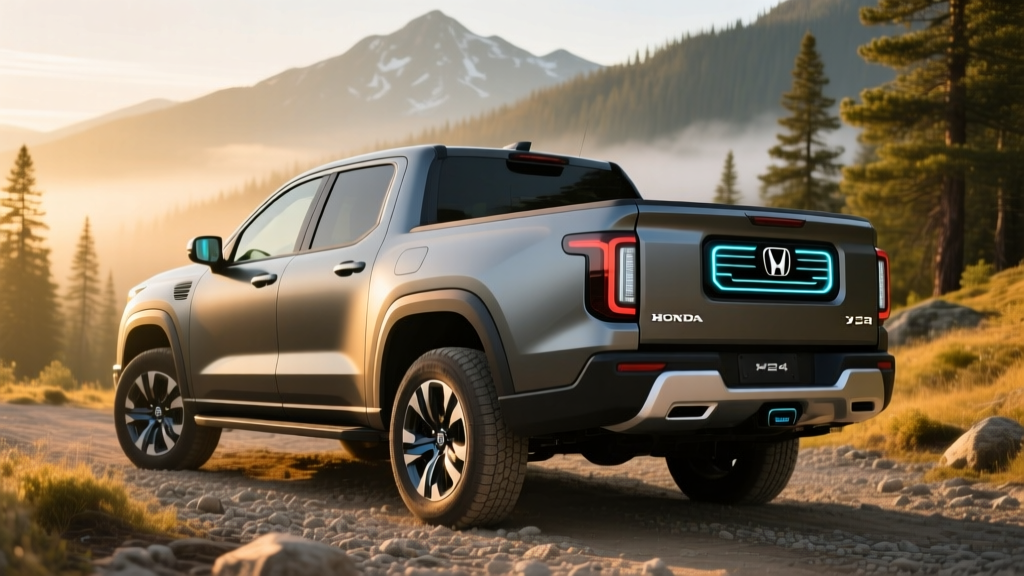
For years, the Honda Ridgeline has occupied a unique niche: a unibody midsize pickup that prioritizes on-road comfort and daily-driver practicality over off-road bravado. Now, Honda is bringing electrification to the Ridgeline lineup. The hybrid Honda Ridgeline represents Honda's push to improve fuel economy and low-end torque in a truck segment where competitors like the Ford Maverick Hybrid and Toyota Tacoma Hybrid (i-FORCE MAX) have already staked their ground.
But what kind of hybrid is it? Will it be a conventional hybrid (HEV) that you never plug in, or a plug-in hybrid (PHEV) with electric-only range? What kind of MPG can you realistically expect? And does it qualify for any federal tax incentives? This guide breaks down everything confirmed and projected about the hybrid Ridgeline so you can decide whether it belongs on your shortlist.
HEV vs PHEV: Which Hybrid Ridgeline Is Coming?
Conventional Hybrid (HEV)
- No plug required — the battery recharges through regenerative braking and the engine
- Smaller battery (typically 1–2 kWh)
- Improved MPG across all driving, especially city
- No electric-only driving range to speak of
- Lower upfront cost, simpler ownership
Plug-In Hybrid (PHEV)
- Plugs in to charge — Level 1 (120V) or Level 2 (240V)
- Larger battery (typically 12–20 kWh)
- Electric-only range of 25–50 miles before the engine kicks in
- Can operate as a full EV for short commutes
- Higher upfront cost, but eligible for federal tax credits (if requirements are met)
Honda's two-motor hybrid system — the same architecture used in the CR-V Hybrid and Accord Hybrid — is the most likely candidate for the Ridgeline. Based on Honda's global product strategy and statements through early 2026, the Ridgeline will launch as a conventional hybrid (HEV) using a variant of Honda's e:HEV two-motor system paired with a 3.5-liter V6. A PHEV variant has not been confirmed for the North American Ridgeline at this time, though Honda's e:PHEV system exists in other global models and could follow in a future model year.
This means the hybrid Ridgeline will not need to be plugged in. You fuel it like a normal truck, and the hybrid system handles energy recovery and electric assist automatically.
Expected Fuel Economy: EPA MPG and Real-World Projections
The current gas-only Honda Ridgeline is rated by the EPA at 18 city / 24 highway / 21 combined MPG (fueleconomy.gov). That's respectable for a midsize crew-cab pickup with standard AWD, but it leaves significant room for improvement — room the hybrid system is designed to fill.
| Configuration | City MPG | Highway MPG | Combined MPG |
|---|---|---|---|
| 2026 Ridgeline (gas-only, AWD) | 18 | 24 | 21 |
| Hybrid Ridgeline (projected HEV, AWD) | 24–27 | 26–29 | 25–28 |
| Ford Maverick Hybrid (FWD, for comparison) | 42 | 33 | 37 |
| Toyota Tacoma i-FORCE MAX Hybrid (4WD) | 22 | 24 | 23 |
Real-world MPG note: Honda's two-motor hybrid system excels in city driving, where the electric motor handles low-speed propulsion and the engine acts primarily as a generator. In our experience with Honda hybrids (CR-V, Accord), city MPG often exceeds the EPA estimate by 1–3 MPG in moderate temperatures. Highway driving is less dramatically improved because the engine is already operating efficiently at steady speeds. Expect the hybrid Ridgeline to deliver its biggest gains in stop-and-go commuting and suburban errands — exactly where most Ridgeline owners spend their miles.
Cold-weather impact: like all hybrids, expect a 5–10% MPG reduction in freezing temperatures. The engine runs more frequently to provide cabin heat and maintain battery temperature, reducing the electric motor's contribution.
Powertrain: What's Under the Hood
| Specification | Projected Detail |
|---|---|
| Engine | 3.5L V6 + two-motor hybrid system |
| Combined System Horsepower | ~310–330 HP (estimated) |
| Combined System Torque | ~310–340 lb-ft (estimated) |
| Transmission | e-CVT (Honda two-motor direct-drive) |
| Drivetrain | AWD (torque-vectoring i-VTM4 rear axle) |
| Hybrid Battery | ~1.3–1.7 kWh lithium-ion (HEV) |
| Towing Capacity | 5,000 lbs (expected, matching gas model) |
| Payload Capacity | ~1,500–1,580 lbs (estimated) |
| 0–60 MPH | ~6.5–7.0 sec (estimated, improved from gas model's ~7.2 sec) |
Honda's two-motor hybrid system uses one motor primarily as a generator and the second as the drive motor. At highway speeds, a lock-up clutch allows the engine to directly drive the wheels for maximum efficiency. This is fundamentally different from Toyota's planetary-gear hybrid system, and in practice, Honda's setup feels more like driving an EV at low-to-mid speeds because the electric motor is doing the actual driving.
The addition of electric torque fill should make the Ridgeline feel noticeably more responsive from a stop — a welcome improvement for merging and passing. Honda's i-VTM4 torque-vectoring AWD system is expected to carry over, which gives the Ridgeline a legitimate advantage in wet and snowy conditions over competitors with part-time 4WD systems.
Pricing, Trims, and Tax Credit Eligibility
The current 2026 gas-only Ridgeline starts at approximately $42,295 (including destination) for the Sport trim and climbs to around $50,000 for the top Black Edition. A hybrid powertrain will add cost — typically $1,500 to $2,500 based on Honda's hybrid premium in the CR-V lineup.
| Trim (Projected) | Gas MSRP | Hybrid MSRP (Estimated) |
|---|---|---|
| Sport | $42,295 | $44,000–$44,800 |
| RTL | $44,495 | $46,200–$47,000 |
| RTL-E | $47,095 | $48,800–$49,600 |
| Black Edition | $49,995 | $51,700–$52,500 |
Does the Hybrid Ridgeline Qualify for a Federal Tax Credit?
Here's where the HEV vs PHEV distinction matters enormously. Under current IRS §30D Clean Vehicle Credit rules:
- Conventional hybrids (HEVs) do NOT qualify for the federal §30D tax credit. The credit applies only to plug-in electric vehicles (BEVs and PHEVs) with a minimum battery capacity of 7 kWh.
- If Honda releases a PHEV Ridgeline in the future, it could potentially qualify for up to $7,500 — but only if it meets all of the following:
- MSRP under $80,000 (trucks/vans/SUVs threshold)
- Buyer income under $300,000 (joint) / $225,000 (head of household) / $150,000 (single)
- Battery critical minerals and components sourcing requirements (which change annually and have become increasingly restrictive)
- Final assembly in North America (the Ridgeline is built in Lincoln, Alabama — this requirement would likely be met)
- The credit can now be transferred to the dealer as a point-of-sale discount, effectively reducing the purchase price at the dealership rather than waiting for tax filing.
Bottom line: If the Ridgeline launches as an HEV, expect no federal tax credit. The fuel savings alone will need to justify the hybrid premium. Some states offer their own hybrid or efficiency incentives — check your state's energy office or AFDC state incentive database for local programs.
Battery Warranty, Reliability, and Long-Term Costs
Honda Hybrid Battery Warranty
Honda covers its hybrid battery components for 8 years / 100,000 miles (whichever comes first) under its standard hybrid system warranty. In states that follow California Air Resources Board (CARB) emissions standards — including California, New York, Oregon, Washington, and several others — hybrid battery coverage extends to 10 years / 150,000 miles.
The hybrid system warranty also covers the electric drive motors, power control unit, and related components.
Reliability outlook: Honda's two-motor hybrid system has been in production since 2014 (Accord Hybrid) and has proven robust. Unlike early-generation hybrid systems from other manufacturers, Honda's design avoids the complex planetary gearset, using a simpler clutch-based direct-drive arrangement. The hybrid battery in a conventional HEV is relatively small (~1.3–1.7 kWh) and operates in a shallow state-of-charge window (roughly 40–80% SoC), which dramatically reduces degradation stress compared to a full BEV battery.
Battery replacement cost: If the hybrid battery does fail outside warranty, replacement cost for a Honda HEV battery pack typically ranges from $2,000 to $4,000 including labor. This is significantly less than a PHEV or BEV battery replacement. However, based on Honda's track record with the Accord and CR-V Hybrid, out-of-warranty battery failures remain uncommon within the first 150,000 miles.
Who Should Choose the Hybrid Ridgeline vs a Full EV or Gas Truck?
Choose the Hybrid Ridgeline If:
- You commute in stop-and-go traffic and want 25–28 MPG instead of 21
- You need a crew-cab pickup with AWD but don't tow more than 5,000 lbs
- You want improved low-end torque without sacrificing reliability or adding plug-in complexity
- You don't have access to home or workplace charging (no plug needed)
- You want a truck today without waiting for EV charging infrastructure to mature
Stick with the Gas Ridgeline If:
- Your driving is overwhelmingly highway (hybrid gains are smaller at steady speeds)
- The $2,000+ hybrid premium doesn't pencil out given your annual mileage
- You prioritize the lowest possible purchase price
Consider a Full EV Pickup Instead If:
- You have reliable home Level 2 charging
- Your daily driving is under 250 miles and you rarely tow heavy loads
- You want to eliminate fuel costs entirely and qualify for the full §30D credit
- Models like the Rivian R1T or Chevrolet Silverado EV fit your budget and needs
Pros
- 4–7 MPG improvement over gas model, especially in city driving
- Electric torque fill improves acceleration feel and responsiveness
- No plug-in required — zero change to fueling habits
- Retains Ridgeline's class-leading ride quality and in-bed trunk
- Strong hybrid battery warranty (8–10 years)
- i-VTM4 AWD remains one of the best systems for snow and rain
Cons
- No federal tax credit for HEV models
- $2,000+ price premium over gas-equivalent trims
- Not the most fuel-efficient hybrid truck (Maverick Hybrid gets 37 combined)
- Towing capacity unchanged at 5,000 lbs (less than body-on-frame rivals)
- Hybrid battery adds weight, slightly reducing payload
- PHEV variant not confirmed — no electric-only commuting option
Hybrid vs PHEV vs EV Pickup: Which Fits You?
The electrified truck market in 2026 gives buyers genuine choices across the spectrum:
| Factor | Hybrid (HEV) | Plug-In Hybrid (PHEV) | Battery Electric (BEV) |
|---|---|---|---|
| Plug-in Required? | No | Yes (recommended) | Yes (required) |
| Electric-Only Range | None | 25–50 mi | 250–400 mi |
| Fuel Cost per Mile | ~$0.14–0.17 | ~$0.05–0.14 | ~$0.03–0.06 |
| Federal Tax Credit | $0 | Up to $7,500* | Up to $7,500* |
| Home Charging Needed? | No | Recommended | Essential |
| Upfront Price Premium | +$1,500–$2,500 | +$4,000–$7,000 | +$5,000–$15,000+ |
| Best For | No-charging-access buyers | Short-commute + weekend trips | Home chargers, low running cost |
* §30D credit subject to MSRP, income, and battery sourcing requirements per IRS guidelines. Verify eligibility before purchase.
For most Ridgeline buyers — suburban homeowners who use their truck for daily commuting, weekend projects, and the occasional camping trip — the conventional hybrid is the lowest-friction upgrade. You get better fuel economy, improved acceleration, and zero lifestyle change. If Honda eventually offers a PHEV Ridgeline with 30+ miles of electric range, it would be a compelling option for buyers with home charging and short commutes, but that model doesn't exist yet.
Frequently Asked Questions
How many MPG does the hybrid Honda Ridgeline get?
Based on Honda's two-motor hybrid system performance in the CR-V Hybrid and Accord Hybrid, we project the hybrid Ridgeline at approximately 25–28 MPG combined — a meaningful improvement over the gas model's 21 combined MPG. Official EPA figures will be published closer to the on-sale date. City driving should see the largest gains, potentially reaching 26–28 MPG in stop-and-go conditions.
Does the hybrid Ridgeline need to be plugged in?
No. The hybrid Ridgeline is expected to be a conventional hybrid (HEV), meaning the battery recharges automatically through regenerative braking and the gasoline engine. You fuel it normally at any gas station. No home charger, no public charging, no cables.
How far can it go on electric only?
As a conventional hybrid, the Ridgeline will not have meaningful electric-only range. It can creep short distances (a few hundred yards) at low speed on electric power alone, but the engine starts automatically when more power is needed. If Honda introduces a PHEV variant in the future, expect 25–40 miles of electric-only range — but that model has not been confirmed.
Is the hybrid Ridgeline reliable, and what does battery replacement cost?
Honda's two-motor hybrid system has been in production since 2014 and has demonstrated strong reliability. The hybrid battery is covered for 8 years/100,000 miles (10 years/150,000 miles in CARB states). Out-of-warranty battery replacement typically costs $2,000–$4,000, though failures within 150,000 miles are uncommon based on Honda's track record with the Accord and CR-V Hybrid.
Does the hybrid Honda Ridgeline qualify for any tax credit?
The conventional hybrid (HEV) Ridgeline does not qualify for the federal §30D Clean Vehicle Credit, which is reserved for plug-in vehicles (BEVs and PHEVs). Some states may offer efficiency or hybrid-specific incentives — check your state's energy office or the Alternative Fuels Data Center for local programs. If Honda releases a PHEV Ridgeline in the future, it could potentially qualify for up to $7,500 depending on MSRP, buyer income, and battery sourcing requirements.
How does the hybrid Ridgeline compare to the Ford Maverick Hybrid and Toyota Tacoma Hybrid?
The Ford Maverick Hybrid achieves an EPA-rated 37 MPG combined but is a smaller, FWD compact truck with lower towing and payload capacity. The Toyota Tacoma i-FORCE MAX Hybrid delivers strong torque (465 lb-ft) for off-road and towing but returns only about 23 MPG combined. The hybrid Ridgeline occupies the middle ground: a comfortable, AWD midsize crew cab with moderate MPG gains and 5,000-lb towing — aimed at daily drivers who want a truck, not a dedicated off-roader or work truck.
When will the hybrid Honda Ridgeline be available?
Honda has signaled hybrid expansion across its lineup, and the Ridgeline is expected to receive the hybrid treatment for the 2027 model year. Exact timing, final specifications, and pricing will be confirmed by Honda closer to launch. We'll update this guide as official information becomes available.