Understanding Hybrid Fuel Economy: What You Need to Know
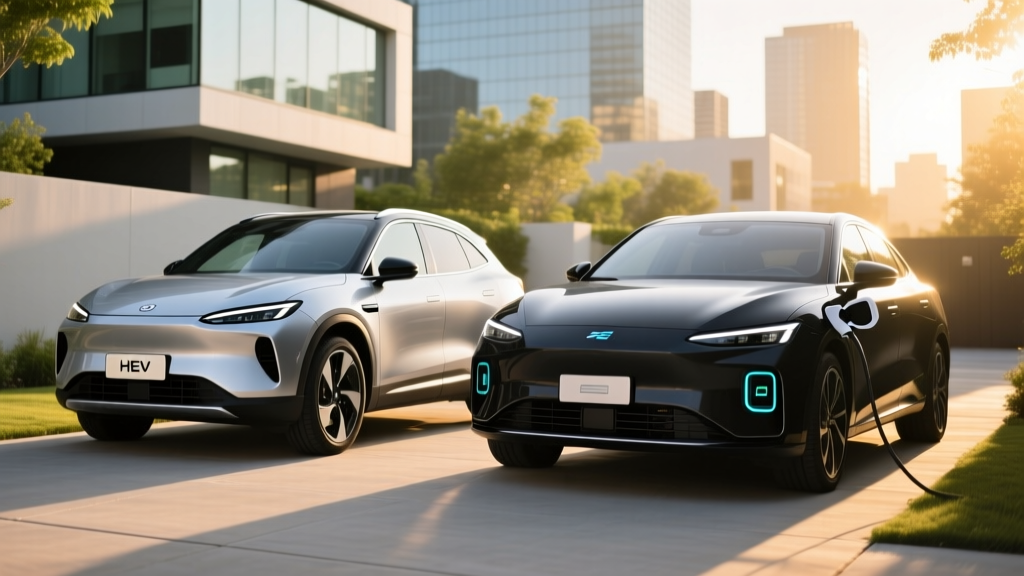
The term "hybrid fuel" gets thrown around a lot, but it isn't a specific type of fuel — it refers to how hybrid powertrains use fuel more efficiently by combining a gasoline engine with one or more electric motors. Whether you're looking at a conventional hybrid (HEV) that never plugs in or a plug-in hybrid (PHEV) that can drive on electricity alone for 30+ miles, the goal is the same: dramatically reduce fuel consumption without sacrificing range or convenience.
This guide breaks down exactly how hybrid fuel efficiency works in 2026, comparing real-world MPG figures, electric-only range, battery longevity, tax credit eligibility, and total ownership costs across popular models. If you're weighing a hybrid against a full EV or a traditional gas car, the data below will clarify which powertrain fits your driving pattern.
HEV vs PHEV: The Fundamental Difference
Conventional Hybrid (HEV)
An HEV uses a small battery (typically 1.0–1.6 kWh) that charges exclusively through regenerative braking and the gasoline engine. You never plug it in. The electric motor assists during acceleration and enables brief low-speed electric driving, but the engine remains the primary power source. Think of it as a gas car that's 30–50% more fuel-efficient in city driving.
Plug-In Hybrid (PHEV)
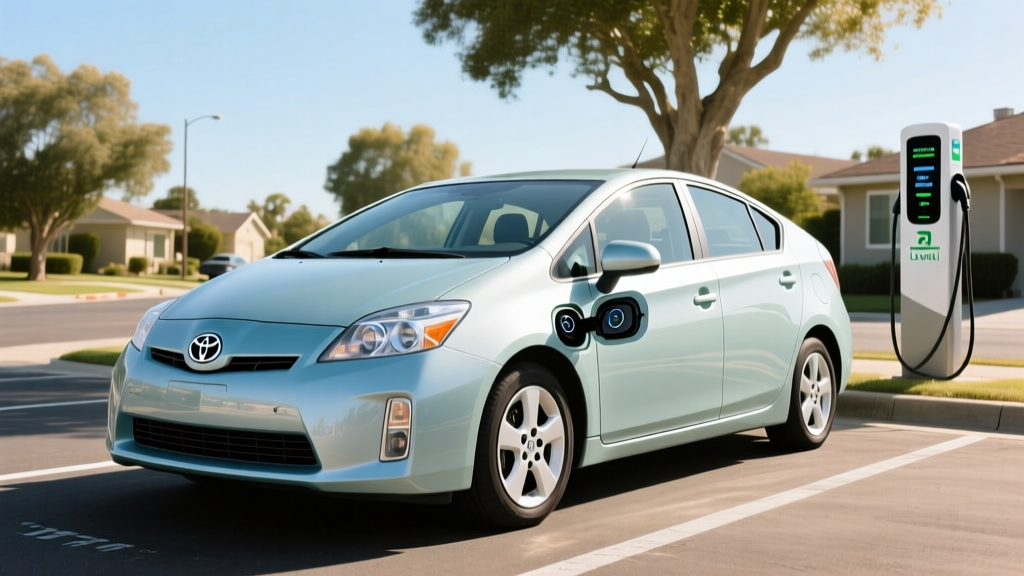
A PHEV carries a much larger battery (12–25+ kWh usable) and can be plugged into a Level 1 or Level 2 charger. It delivers 25–50 miles of pure electric range before the gasoline engine engages. Once the battery depletes, it operates exactly like a conventional hybrid. PHEVs bridge the gap between gas cars and full EVs — ideal for drivers who want daily electric commuting without range anxiety on road trips.
Hybrid Fuel Economy: EPA MPG Across Popular 2026 Models
Below is a snapshot of EPA-rated fuel economy for some of the most popular hybrid vehicles currently on sale. Data sourced from fueleconomy.gov.
| Model (2026) | Type | City MPG | Hwy MPG | Combined MPG | EV Range (mi) |
|---|---|---|---|---|---|
| Toyota Prius | HEV | 57 | 56 | 57 | N/A |
| Toyota Prius Prime | PHEV | 52 (hybrid mode) | 48 (hybrid mode) | 52 (hybrid) / 127 MPGe | 44 |
| Toyota RAV4 Hybrid | HEV | 41 | 38 | 40 | N/A |
| Toyota RAV4 Prime | PHEV | 40 (hybrid mode) | 36 (hybrid mode) | 38 (hybrid) / 94 MPGe | 42 |
| Honda CR-V Hybrid | HEV | 43 | 36 | 40 | N/A |
| Ford Escape PHEV | PHEV | 40 (hybrid mode) | 37 (hybrid mode) | 39 (hybrid) / 105 MPGe | 37 |
| Hyundai Tucson PHEV | PHEV | 35 (hybrid mode) | 35 (hybrid mode) | 35 (hybrid) / 80 MPGe | 33 |
Real-World MPG vs. EPA Estimates: What Hybrid Owners Actually See
One of the most consistent patterns in hybrid ownership is that real-world city MPG often exceeds the EPA sticker, while highway MPG sometimes falls slightly below. This is the opposite of what happens with gas-only cars, and it's a direct result of how hybrid systems work.
In stop-and-go city traffic, regenerative braking recaptures kinetic energy every time you slow down, feeding it back into the battery. The engine shuts off at stops and during low-speed coasting. Toyota Prius owners, for example, frequently report 58–62 MPG in urban driving against the EPA's 57 MPG city rating. The Honda CR-V Hybrid similarly tends to deliver 44–46 MPG in city conditions versus its 43 MPG EPA city figure.
Highway driving is where hybrids lose their edge relative to city driving. At sustained 70–80 mph speeds, regenerative braking events are rare, and the engine does most of the work. Expect highway MPG to land within 1–3 MPG of the EPA estimate — sometimes slightly below if you're driving into headwinds or at speeds above 75 mph.
For PHEVs, real-world electric-only range varies with temperature and driving style. The Prius Prime's 44-mile EPA EV range typically delivers 40–48 miles in mild weather with moderate acceleration, but drops to 30–35 miles in freezing temperatures due to battery chemistry limitations and cabin heating demands. Preconditioning the cabin while plugged in can recover 3–5 miles of that cold-weather loss.
PHEV Battery Size, Charging, and Electric-Only Range
PHEV batteries range from roughly 12 kWh to 25+ kWh of usable capacity. Unlike full EVs, most PHEVs do not support DC fast charging — they charge via Level 1 (120V household outlet) or Level 2 (240V home/public charger). Here's what charging looks like for popular PHEVs:
| PHEV Model | Battery (kWh usable) | EV Range (mi) | Level 2 Charge Time | DC Fast Charge | Combined HP |
|---|---|---|---|---|---|
| Toyota Prius Prime | 13.6 | 44 | ~4 hours | No | 220 |
| Toyota RAV4 Prime | 18.1 | 42 | ~2.5 hours | No | 302 |
| Ford Escape PHEV | 14.4 | 37 | ~3.5 hours | No | 210 |
| Hyundai Tucson PHEV | 13.8 | 33 | ~3.5 hours | No | 261 |
| Jeep Wrangler 4xe | 17.3 | 22 | ~3 hours | No | 375 |
The absence of DC fast charging on most PHEVs is a deliberate engineering trade-off: the batteries are small enough that a Level 2 charger replenishes them fully overnight or during a workday, and adding DC fast-charge hardware would increase cost and weight for minimal practical benefit.
Hybrid Battery Reliability, Warranty, and Replacement Cost
Hybrid Battery Warranty Standard
Federal law mandates that hybrid and PHEV batteries carry a minimum warranty of 8 years or 100,000 miles (whichever comes first). In California Air Resources Board (CARB) states — which include CA, NY, MA, WA, OR, CT, and others — the warranty extends to 10 years or 150,000 miles.
This warranty covers battery capacity loss below a manufacturer-defined threshold (typically 60–70% of original capacity) as well as complete failure.
Hybrid battery reliability has improved dramatically over two decades of production. Toyota's hybrid synergy drive system, now in its fifth generation, has demonstrated exceptional longevity. Data from fleet operators and long-term ownership surveys show that Prius hybrid batteries routinely last 150,000–200,000+ miles before any significant capacity loss. It's common to see Prius taxis and rideshare vehicles surpass 300,000 miles on the original battery.
PHEV batteries experience more charge cycles (because they're cycled deeper daily), but the larger capacity provides a buffer. A RAV4 Prime owner who charges nightly and drives 40 electric miles daily is putting roughly 365 full cycles per year on the battery. Modern lithium-ion PHEV batteries are rated for 1,500–3,000+ cycles before significant degradation, translating to 15+ years of typical use.
Battery Replacement Cost
If a hybrid battery does fail outside warranty, replacement costs vary by model:
- Toyota Prius HEV: $2,000–$3,500 (refurbished/aftermarket) or $3,500–$4,500 (OEM new)
- Toyota RAV4 Prime PHEV: $5,000–$8,000 (larger battery pack)
- Honda CR-V Hybrid: $2,500–$4,000
- Ford Escape PHEV: $4,500–$7,000
Independent hybrid battery rebuilders can often replace individual failed cells within a pack for $500–$1,500, extending the pack's life at a fraction of the full replacement cost. This is an option increasingly available for Toyota and Honda models with large installed bases.
Pricing and Tax Credit Eligibility for Hybrids and PHEVs
Conventional hybrids (HEVs) do not qualify for the federal §30D clean vehicle tax credit. That credit is reserved for plug-in vehicles — battery electric vehicles (BEVs) and plug-in hybrids (PHEVs) that meet specific battery capacity, sourcing, MSRP, and buyer income requirements.
§30D Federal Tax Credit Checklist for PHEVs (2026)
- Battery capacity: At least 7 kWh
- MSRP caps: ≤$55,000 for sedans/wagons; ≤$80,000 for SUVs/trucks/vans
- Buyer income caps (MAGI): ≤$150,000 single; ≤$225,000 head of household; ≤$300,000 joint
- Battery sourcing: Critical minerals and battery components must meet phased-in domestic/free-trade sourcing thresholds (percentages increase annually through 2029)
- Point-of-sale transfer: Eligible buyers can transfer the credit to the dealer at purchase, reducing the vehicle price directly — no need to wait for tax filing
- Maximum credit: Up to $7,500 ($3,750 for critical minerals + $3,750 for battery components)
Full rules at irs.gov. Eligibility varies by model and production date — always verify the specific VIN on the IRS qualifying vehicle list before purchasing.
| Model (2026) | Base MSRP | Federal Credit Eligible? | Effective Price (after max credit) |
|---|---|---|---|
| Toyota Prius HEV | $29,445 | No | $29,445 |
| Toyota Prius Prime PHEV | $34,095 | Yes (verify VIN) | ~$26,595 |
| Toyota RAV4 Hybrid | $33,425 | No | $33,425 |
| Toyota RAV4 Prime PHEV | $44,515 | Yes (verify VIN) | ~$37,015 |
| Ford Escape PHEV | $39,400 | Yes (verify VIN) | ~$31,900 |
Some states offer additional rebates or credits for PHEVs — California's CVRP program, for example, may provide up to $2,000 for eligible PHEV buyers (income-dependent). Check your state energy office or AFDC state incentive database for current local programs.
Hybrid vs PHEV vs EV: Which Powertrain Fits You?
Choose a Conventional Hybrid (HEV) If:
- You don't have access to home or workplace charging
- You want maximum fuel efficiency with zero behavior change — no plugging in, no range planning
- You drive a mix of city and highway miles and want 40–57 MPG combined
- Your budget is under $35,000 and you want the lowest upfront cost among electrified vehicles
- You keep vehicles 8–12 years and want proven long-term reliability
Choose a Plug-In Hybrid (PHEV) If:
- You have reliable home charging (even a standard 120V outlet works overnight for most PHEVs)
- Your daily commute is under 40 miles round-trip — you can drive mostly on electricity
- You regularly take road trips exceeding 200+ miles and don't want to plan around charging stations
- You want the $3,750–$7,500 federal tax credit to offset the PHEV price premium
- You live in a region with extreme cold where EV range loss is a concern
Choose a Full EV (BEV) If:
- You have reliable Level 2 home charging and access to DC fast chargers for road trips
- You want zero tailpipe emissions and the lowest per-mile fuel cost ($0.03–$0.05/mi on home electricity vs $0.10–$0.15/mi for hybrids)
- You qualify for the full $7,500 federal tax credit plus state incentives
- Your daily driving is under 250 miles and you're comfortable with charging logistics on longer trips
Frequently Asked Questions
How many MPG does a hybrid get compared to a gas car?
The gap is substantial, especially in city driving. A Toyota Prius HEV achieves 57 MPG combined versus roughly 30–33 MPG combined for a comparable gas-only compact sedan like the Honda Civic or Toyota Corolla. In city driving specifically, the hybrid advantage widens further: the Prius delivers 57 MPG city while the Civic achieves about 31 MPG city. That's an 84% improvement in urban fuel economy, driven by regenerative braking and engine-off operation at low speeds.
How far can a PHEV go on electric only?
Current 2026 PHEVs offer 22–50 miles of electric-only range depending on the model. The Toyota Prius Prime leads at 44 miles, the RAV4 Prime delivers 42 miles, and the Ford Escape PHEV provides 37 miles. These distances cover the majority of American daily commutes — the average US one-way commute is approximately 16 miles according to Census data, meaning most PHEV owners can complete their daily driving entirely on electricity if they charge at home each night.
Is a hybrid reliable, and what does battery replacement cost?
Hybrids from Toyota, Honda, and Hyundai/Kia have demonstrated excellent long-term reliability. Toyota's hybrid system has over 25 years of production history, and battery packs routinely last 150,000–200,000+ miles. The federal warranty mandate requires 8 years/100,000 miles of coverage (10 years/150,000 miles in CARB states). Out-of-warranty replacement costs range from $2,000–$4,500 for HEV batteries and $4,500–$8,000 for PHEV batteries, with refurbished and cell-level repair options available at lower costs.
Does a hybrid qualify for any tax credit?
Conventional hybrids (HEVs) do not qualify for the federal §30D clean vehicle tax credit. Only plug-in vehicles — PHEVs and BEVs — are eligible, and even then, eligibility depends on the vehicle's MSRP, battery sourcing, and the buyer's income. Qualifying PHEVs like the Prius Prime and RAV4 Prime can receive up to $7,500 depending on how many of the credit's two components (critical minerals and battery components) the vehicle satisfies. Always check the IRS qualifying vehicle list for the specific model year and VIN.
Do I need to plug in a hybrid?
No — only plug-in hybrids (PHEVs) require or benefit from plugging in. A conventional hybrid (HEV) like the Prius, RAV4 Hybrid, or Honda CR-V Hybrid charges its small battery entirely through regenerative braking and the gasoline engine. You simply fill it with gas and drive. If you buy a PHEV but never plug it in, it will still function as a conventional hybrid, though you'll miss out on the electric-only range and fuel savings that justify the PHEV price premium.
What is the total range of a PHEV when combining electric and gas?
Total combined range (EV + gasoline) for most PHEVs falls between 400 and 600+ miles. The Prius Prime, for example, delivers 44 electric miles plus roughly 470 miles on its 10.6-gallon tank in hybrid mode, for a total range of approximately 510+ miles. The RAV4 Prime achieves around 42 electric miles plus roughly 440 gas miles, totaling approximately 480+ miles. This total range exceeds most full EVs and eliminates range anxiety entirely on long road trips.